
B-29 pilots, navigators and bombardiers completed about 21 months of intensive training through a progressive series of schools and multi-state bases in preparation for combat deployment. Each training stage required timely passage of rigorous physical, aptitude, knowledge and skill tests to progress to the next. Cadets successfully completing the training as Pilots, Bombardiers and Navigators became commissioned 2nd Lieutenant Officers. Cadets who “washed out” (didn’t pass training) at any level were held back or re-assigned to train for another position, often a non-officer, enlisted position such as Flight Engineer, Radar Operator, gunner or ground crew specialist.
Ground crew training began with 112 days of basic airplane mechanics. Basic mechanic graduates were sent to factory schools, such as the Boeing Aircraft facility in Seattle for advanced B-29 maintenance training. Separate, months-long specialty courses were given in specific instrumentation, engine repair and replacement, electrical systems, radio and radar systems and armament.
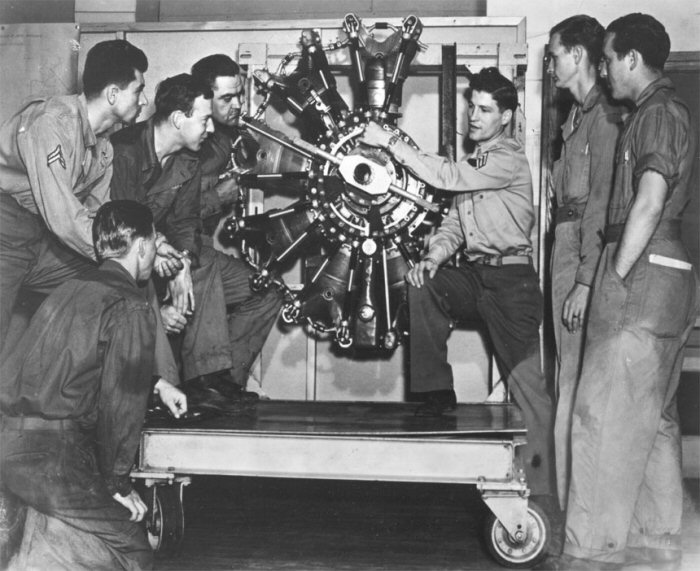
Airplane Mechanics Ground School, Foster Field TX 1942
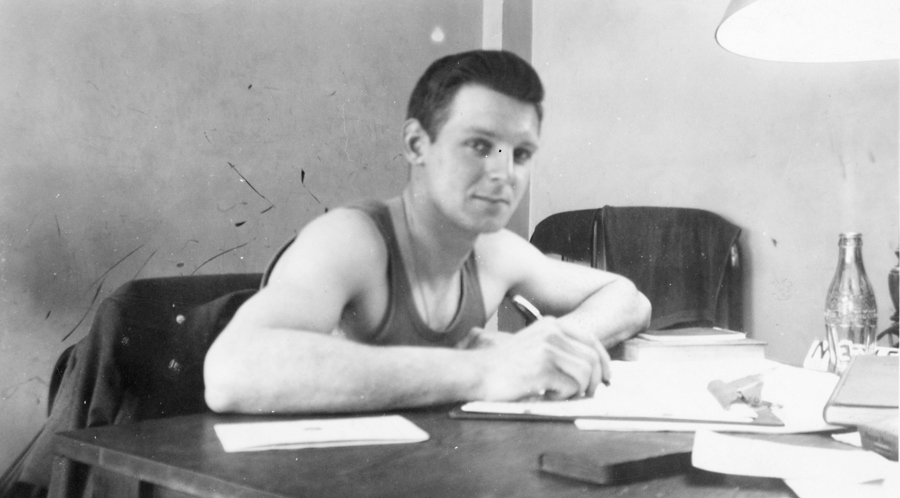
Marty Eichelman at Davidson College, NC .Courtesy Marty Eichelman
College Training Detachments
Following the passage of qualifying physical and mental examinations and Basic Training, Army Air Force cadets were assigned to College Training Detachments at selected college campuses for 5 months. The College Training Detachment program was started in 1943. Studies included basic college courses in math (trigonometry), physics, history, geography and English taught by civilian college faculty and military training courses in direct communications and first aid taught by Army Air Force personnel.
Classification and Preflight Training
Following college training cadets were transferred to one of several Army Air Force bases for Classification and 9 weeks of Preflight training. Cadets were assigned to pilot, bombardier or navigator training based on preference and qualification test scores. Preflight training included courses in Morse code, additional math and physics, maps and charts, aircraft and naval forces identification, and gunnery training with pistols, rifles and submachine guns.
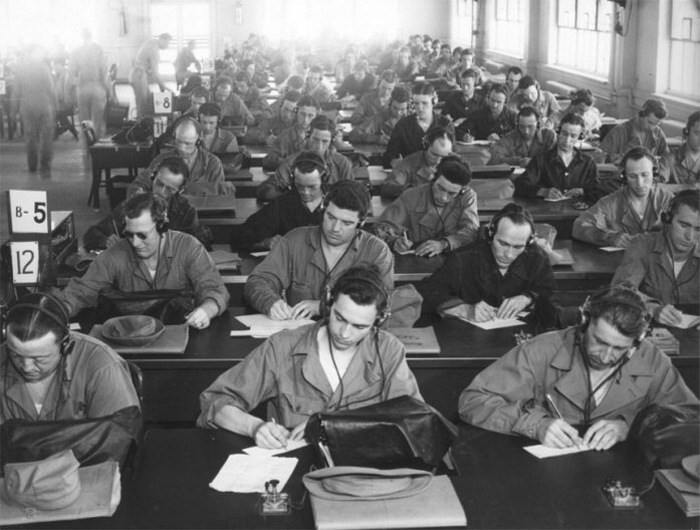
Preflight Morse code class
Preliminary and Advanced Training
Following Preflight, cadets entered Preliminary and Advanced Training specific to their assigned position. The Advanced training took about 15 weeks to complete with an additional 2 weeks of aircraft gunnery training. Pilot training was divided into Primary, Basic and Advanced Flight schools
Primary Flight Training
Pilot trainees were transferred from Preflight to one of the Army’s elementary flying schools, each stationed at a civilian airport with civilian instructors under contract to the Air Forces. Instruction was split between Ground School and flight instruction. Ground School courses included flight theory, engines, propellers, hydraulic systems, weather and navigation. During flight instruction cadets learned to fly straight and level, climb, make climbing turns, glides, gliding turns, use trim tabs and land in Primary Trainers, like the Ryan PT22. With proficiency, trainees advanced to short takeoffs and spins. Trainees were expected to solo following 8-12 hours of instruction. Cadets not soloing by 13 hours were washed out. After soloing, instruction emphasized stalls, spins, forced landings, loops, snap rolls and crosswind landings. Graduation from Primary required completing 65 flight hours and passing a final test flight with an army pilot officer.
Primary was a common wash-out point for cadets learning they didn’t have what it took to become a pilot.
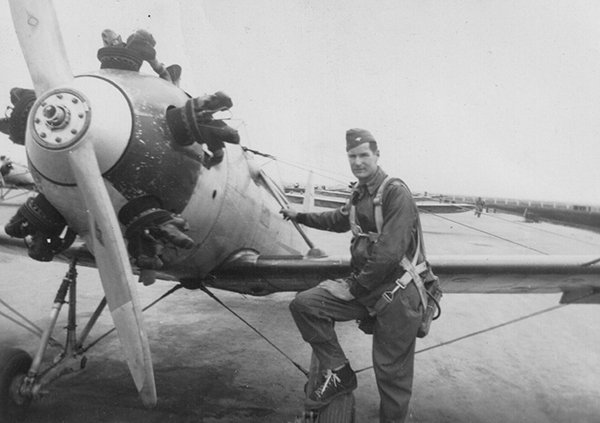
Ed Vincent with Ryan PT22 trainer, Visalia 1943
Basic Flight Training
In Basic Flight training, cadets received 70 hours of flight time over a 9-week course operating an airplane of greater weight, horsepower and speed, such as a North American BT-9. Training included instrument night flights, formation and cross-country flights and two-way radio operation. Basic Ground School included navigation and flight plans, weather phenomenon, 10 hours of Aircraft Maintenance and inspection, application of aircraft instruments and officer training. Based on test results, graduating cadets were classified for Bomber or Fighter training at the conclusion of Basic and were transferred to Advanced Flight training with twin or single engine aircraft, respectively.
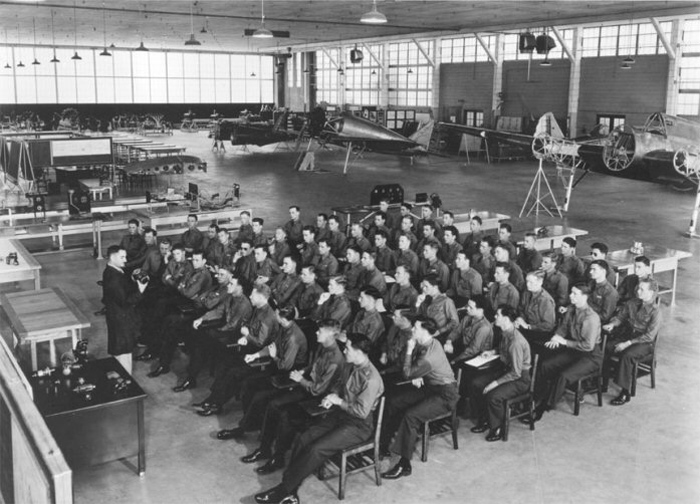
Ground School, Randolph Field, TX
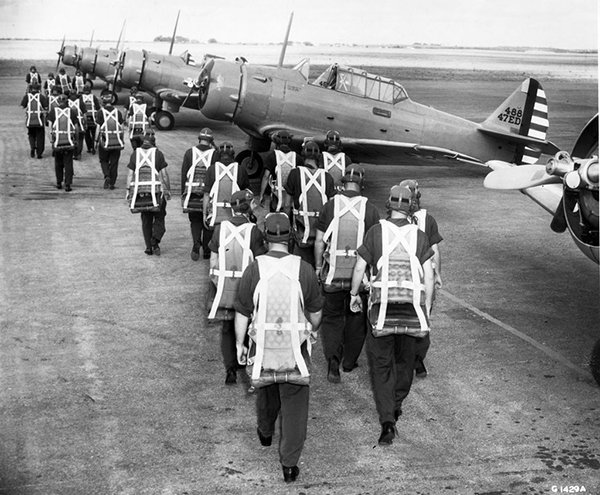
North American BT-9C Basic Trainer, Randolph Field, TX
Advanced Flight Training – Twin Engine
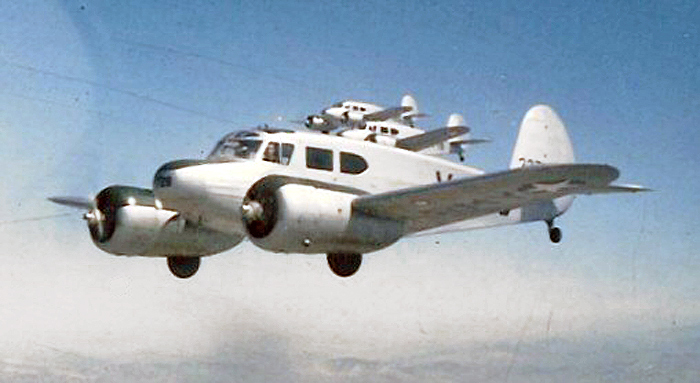
In Advanced Flight School, cadets flew twin engine trainers, like the Cessna AT-17, to prepare for the type of multi-engine aircraft and flight conditions they would experience in bombers. The twin engine advanced trainers were heavier and faster aircraft than prior single engine trainers and, like bombers, had adjacent pilot and co-pilot seats, wheel instead of stick control, hydraulic flaps, retractable wheels, constant speed props and more sophisticated instrumentation and navigation.
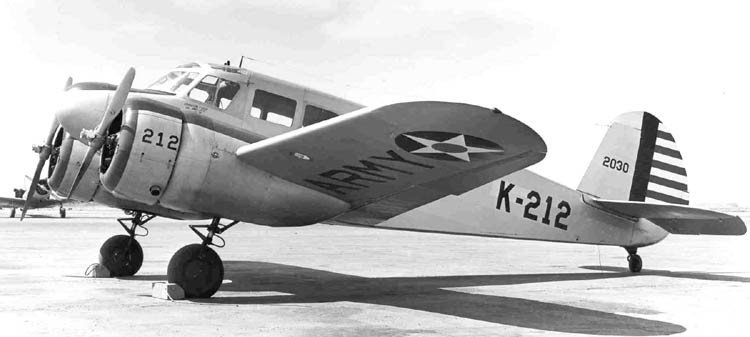
Cessna AT-17 courtesy Bill Larkins
From this point forward, training flights were always conducted with a co-pilot, either an instructor or with another cadet sitting at the co-pilot controls. Training focused on instrument, night, formation and cross-country flights including radio “beam” navigation. Cadets needed to complete 70 flight hours as pilot in 9 weeks to graduate Advanced Training school. Ground school included the study of bombers, such as the B-25.
Combat Crew Training – Bombers
Following twin engine Advanced Training, cadets graduated directly to bomber training, typically with the Boeing B-17. The significantly heavier, four-engine, more instrument-sophisticated heavy bomber required training in simulators, passing instrument training and about 40 hours of instructor flight time before soloing. A common washout at this point was not passing instrument training.

B-17 Bomber
Flight training was done with a three man crew of pilot, co-pilot / instructor and engineer flying about 5 hours per day. Training included high altitude flight, bombing approaches, bombing simulations with the Norden bombsight and advanced instrument work, instrument landing and radio compass navigation. Cadets flew a minimum of 105 hours to qualify as a bomber pilot.
B-29 Training – Grand Island AAF, Nebraska
The men selected for B-29 training and assigned to the 6th Bomb Group arrived at Grand Island AAF, Nebraska in the July-August 1944 timeframe. Full crews were assigned and trained together for the first time. Initially, training continued on B-17s as very few B-29s were available at that time. Grand Island received its first B-29 in June 1944.

B-29 training plane Grand Island

Gunner trainer, Grand Island AAF
In addition to qualification training for the “super heavy” B-29 bomber, the crews extensively trained in long distance celestial navigation, remote control gunnery, precision Norden bombsight and radar bombing, including use of “synthetic” ground simulators. Camera bombing exercises were conducted in flights over major cities. The training included 15 hour open ocean flights over the Caribbean Sea from bases in Cuba and Puerto Rico with radar bombing, formation bombing and camera gunnery exercises. Crews needed to fly at least one 3000 mile non-stop B-29 flight to complete B-29 training.
Grand Island was also site to B-29 maintenance training. Maintenance personnel took 25 hours of classroom training by Boeing certified specialists in addition to daily training in their maintenance specialty.
Marianas bombing training
Crew training continued after deployment to Tinian with regular live bombing missions conducted on targets of small islands in the Marianas, some still Japanese occupied. On-going specialized classes were also given at the 6th Bomb Group Camp. These were conducted prior to and after the start of initial 6th Bomb Group combat bombing missions over Japan in February 1945.

6th planes bomb Maug Island in training © 6th Bomb Group Association. All Rights Reserved

PACIFIC WAR – OVERVIEW
Brief overview of the Pacific War 1941-1945 >

THE B-29 BOMBER
Tour and specs of the most advanced bomber of WW2 >
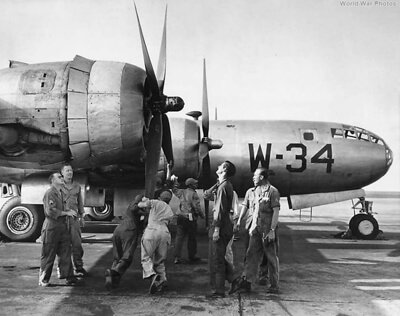
FLIGHT PROCEDURES
Briefing, pre-flight, take-off, assembly, bomb run, landing >

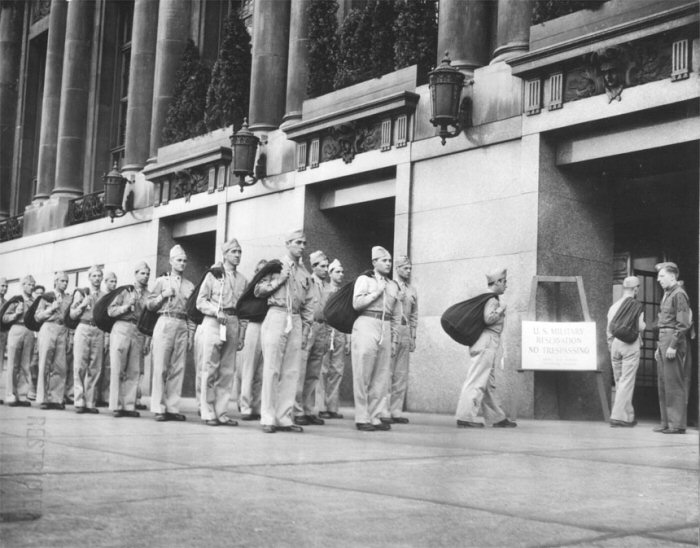
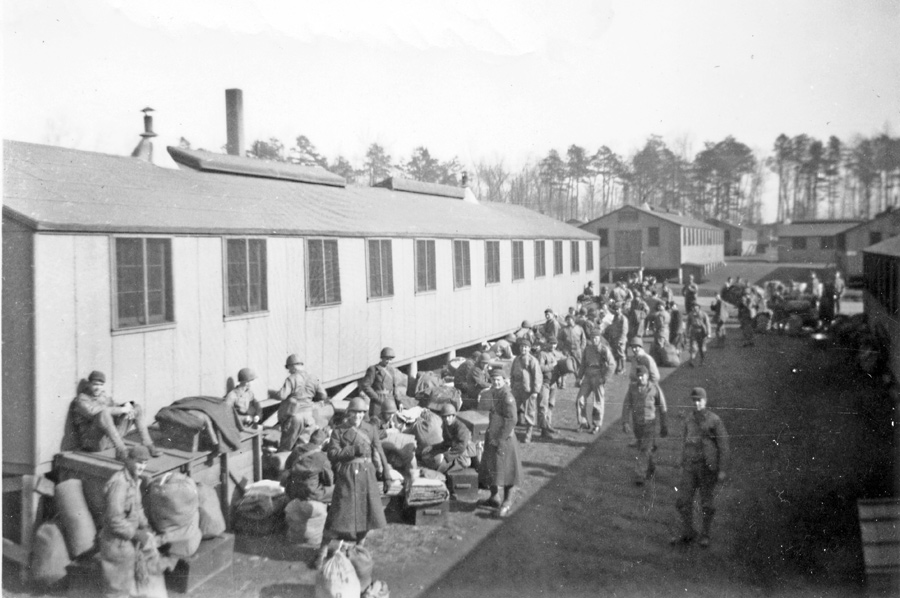
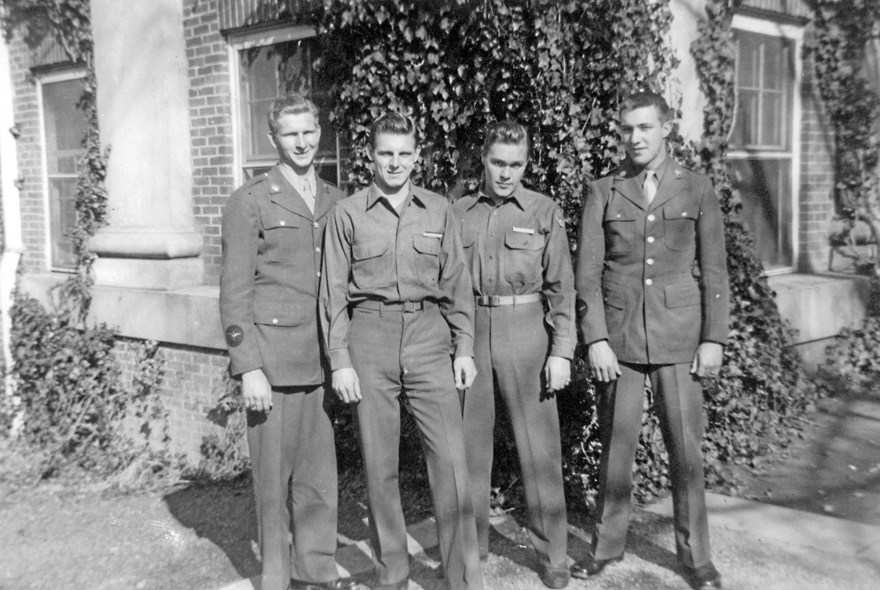
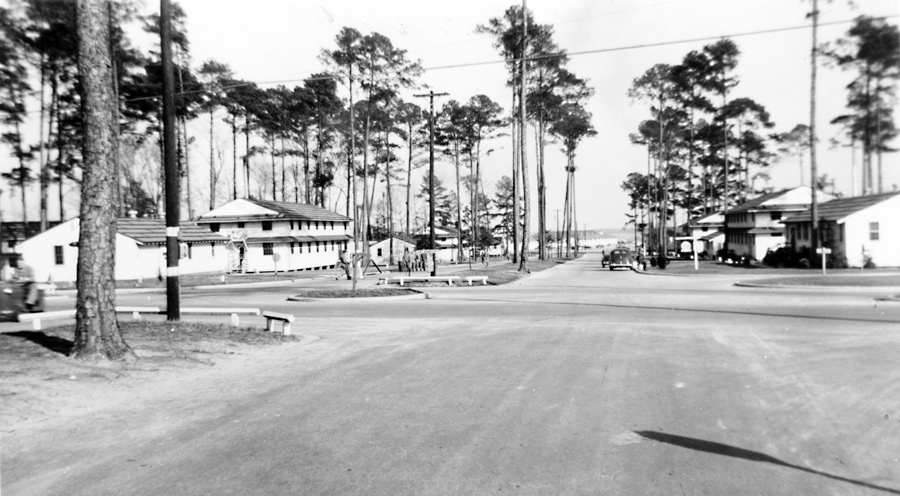
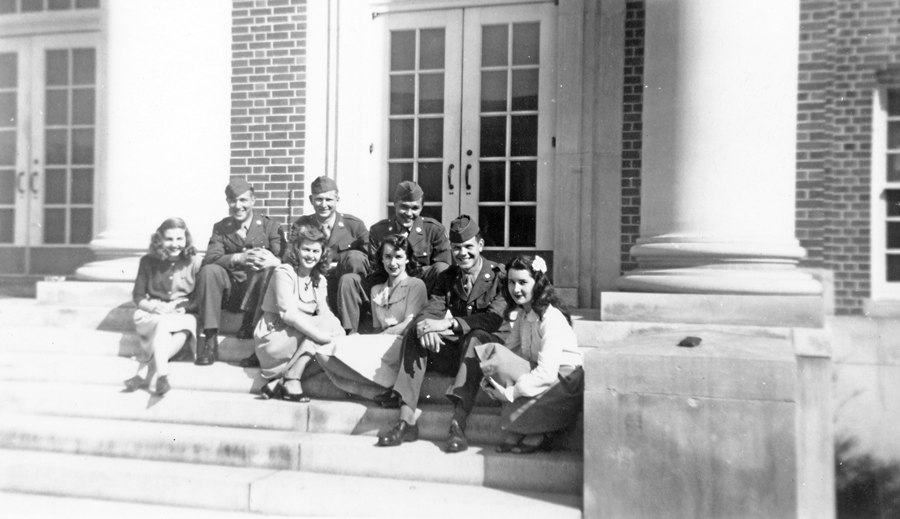
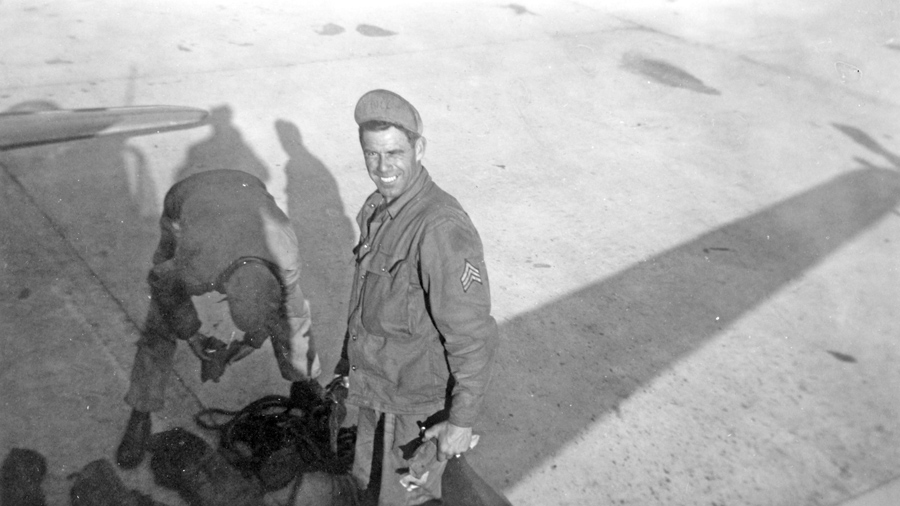
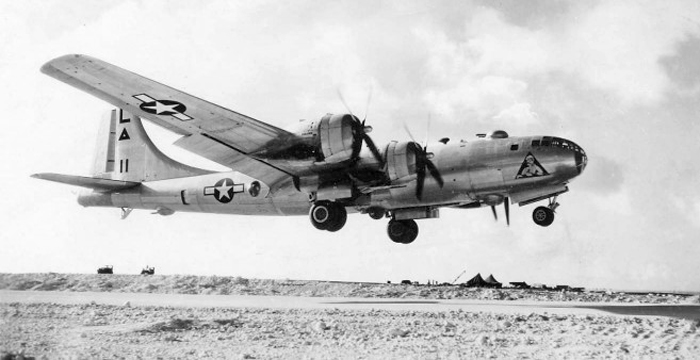
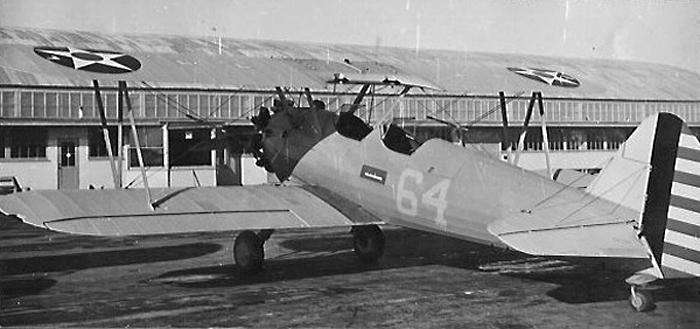
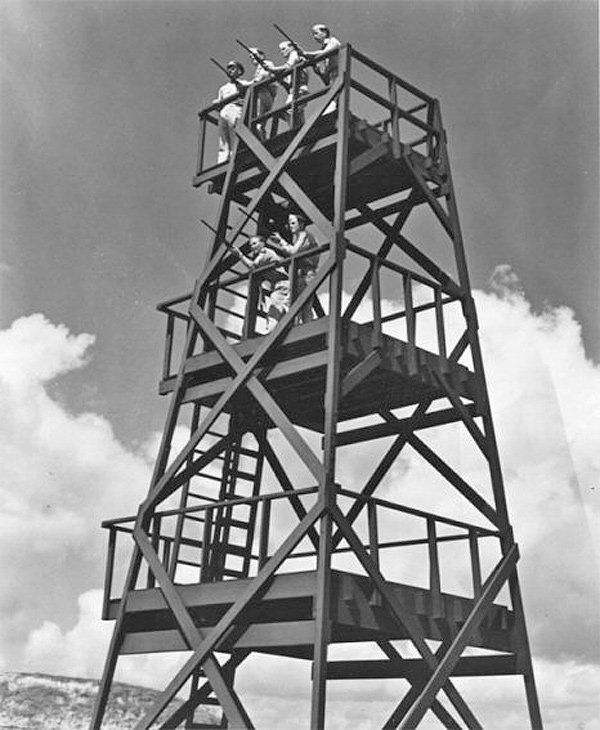
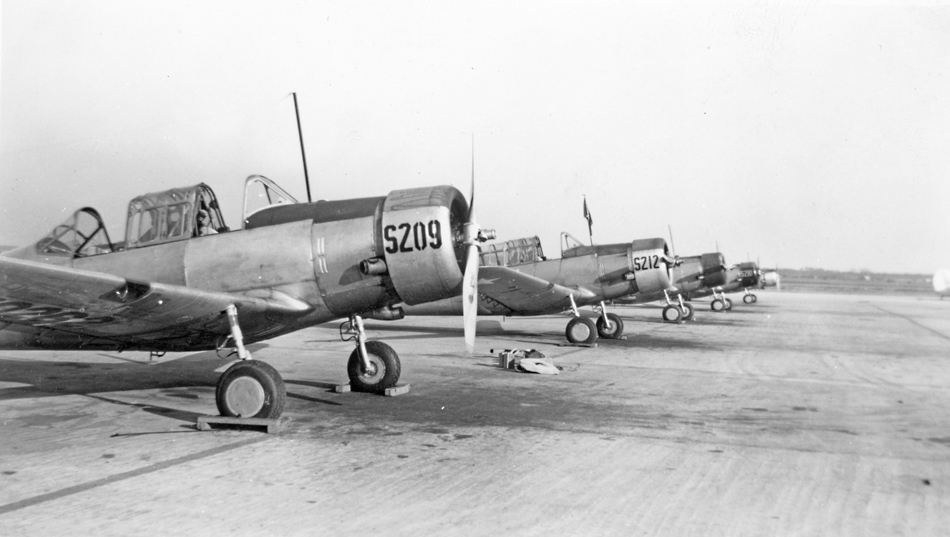
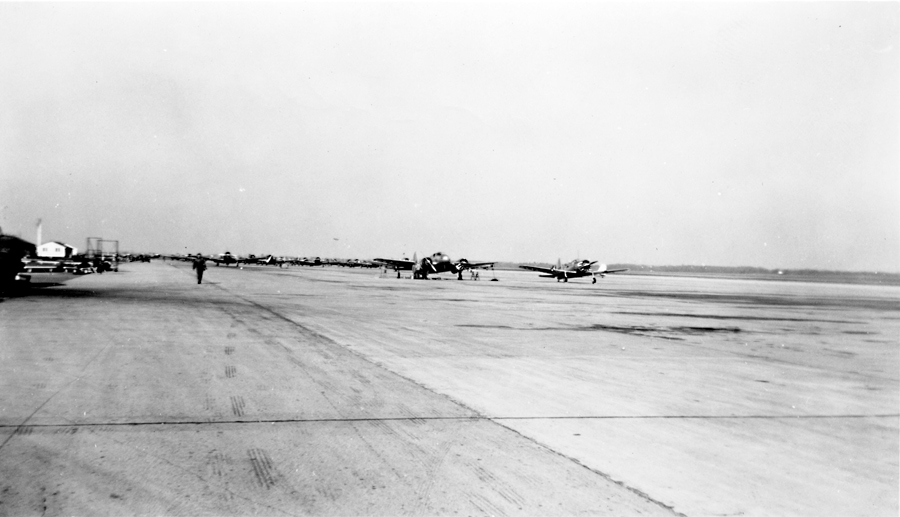
Stateside pictures of flight school training, personnel and aircraft leading to deployment at Tinian Island.

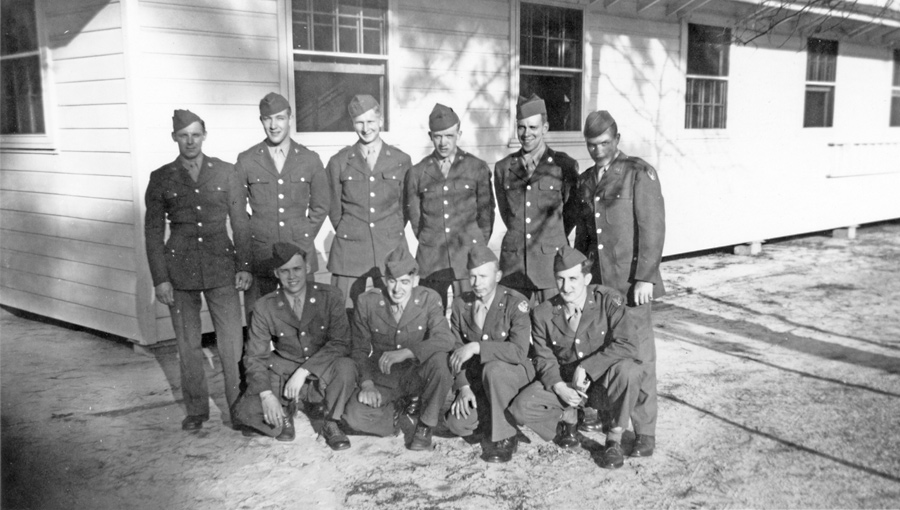
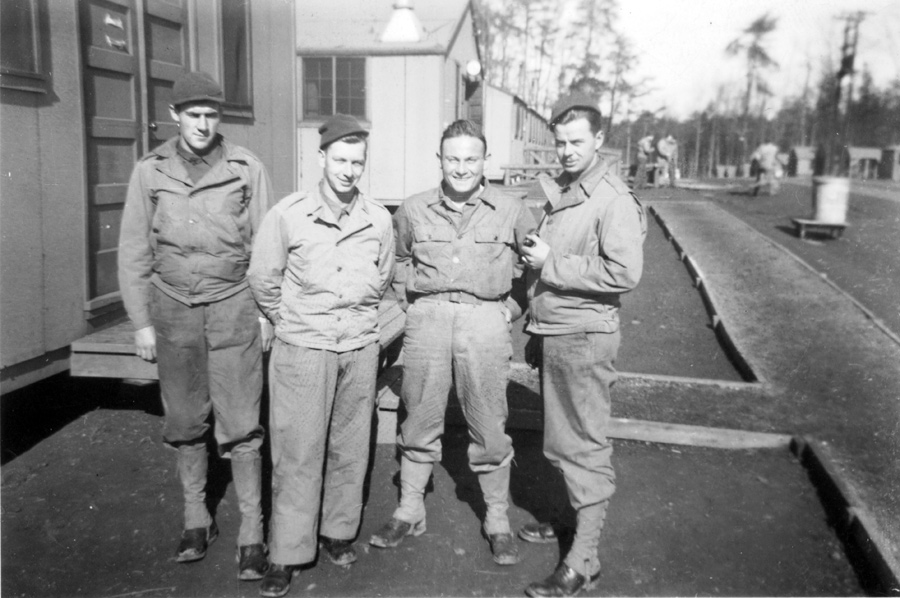
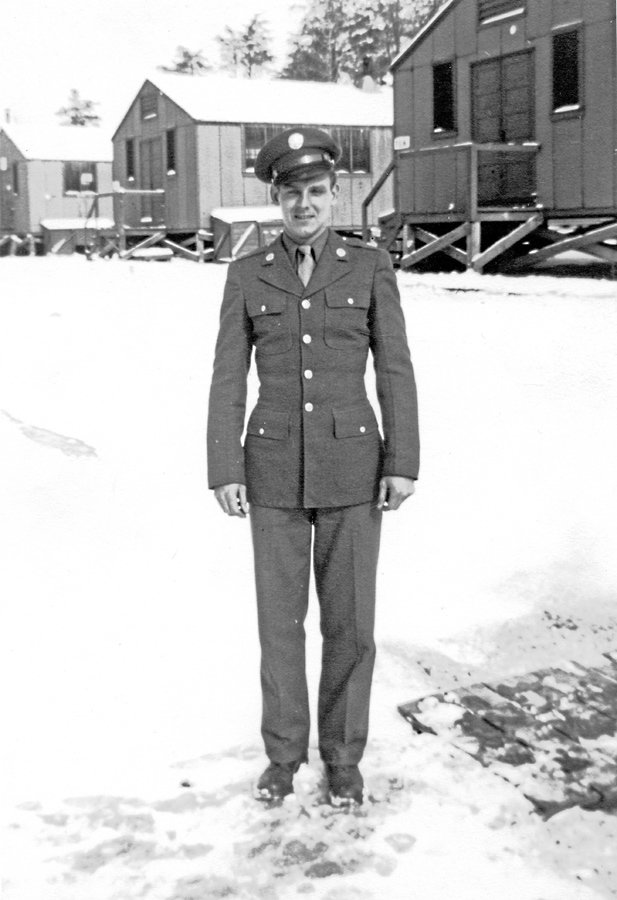
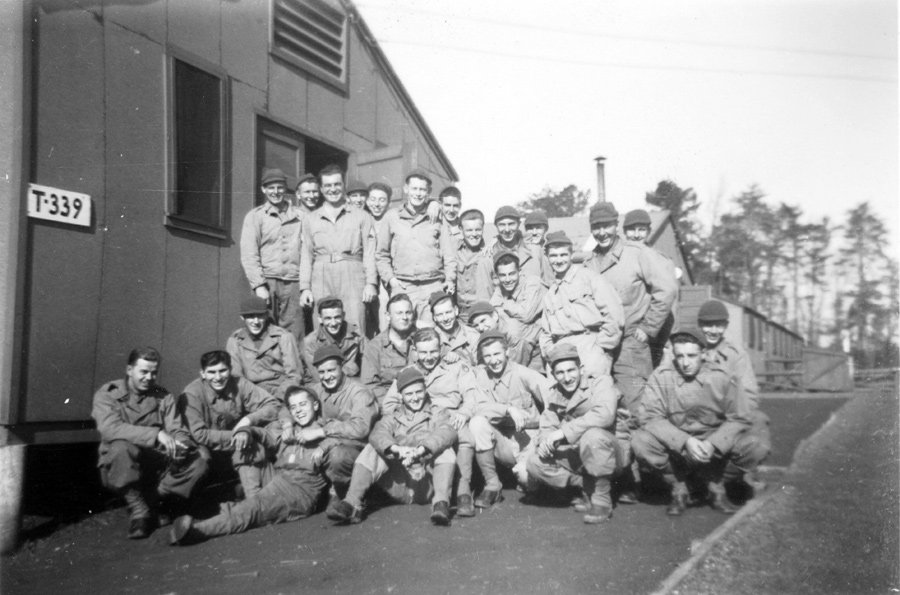
Original photos depicting Shaw Field in South Carolina. PHOTOS: ©Eichelman, ©Frank Barrella, ©Percy Tucker, and the Air Force Historical Research Agency. All Rights Reserved.
AWARDS

Roma Conroy, wife of Corporal Harold J. Conroy, 39th BS maintenance, stands by the memorial. PHOTO: Provided by their son, Phil Conroy, who was born in Grand Island after the war.
THE PLAQUE
The men and women of the 6th Bomb Group Association thank the people of Grand Island for their warm hospitality when we trained here in 1944/1945 before leaving for the Pacific Theatre of war to fly 1,750 World War II B-29 combat missions over Japan. We of the 20th Air Force were the first to use air power to end a major war without an invasion of the enemy’s homeland. The 16′ 7″ propellor is just one of the four which pulled each giant B-29 into the sky!
Dedicated by The 6th Bomb Group Association – Oct 1993
Design by Ed Allgor


