
THE ART OF DECEPTION – Enola Gay was a special Silverplate B-29 of the Top Secret 509th Composite Group based on Tinian Island, Pacific during WWII. The plane was made to look like it was part of the 6th Bomb Group, hidden in the Sixth Bomb Group hardstand area with 6BG Circle R tail marking to fool Japanese spies. On August 6, 1945, the Enola Gay became the first aircraft to drop an atomic bomb.

Enola Gay with 6th Bomb Group tail marking © Bill Webster
Atomic Bombing of Hiroshima and Nagasaki
by
Scott B. Davis
Honorary member 509th Composite Group (1944-1946)
©2025 Scott B. Davis. All Rights Reserved
Additional content copyright © 2025 6th Bomb Group Assoc. All Rights Reserved
Editor’s Note: This article is an excerpt from author Scott B. Davis’ document Top Secret 509th – The Atomic Bomb Group . The article title, pictures, links and highlights have been added to the original document to complement the author’s writing.
Operation Downfall – Planned Invasion of Japan
PREDICTIONS OF CASUALTIES FROM BOTH THE ALLIES AND JAPAN NUMBERED IN THE MILLIONS
Another plan was in the works to hopefully bring the war in the Pacific to an end. Most Americans were probably never aware of it, but for the approximately 2,000,000 troops that were staged stateside, in Europe, on Pacific Islands, or aboard ships, they quietly remembered it as an experience they were blessed to have missed. Even before the surrender of Nazi Germany on May 8, 1945, plans were underway for the largest operation of the Pacific War, Operation Downfall, the Allied invasion of Japan. Predictions of casualties from both the Allies and Japan numbered in the millions. As a result, completion and successful testing of the atomic bomb moved that particular option to the front burner.

Operation Downfall map
Potsdam Declaration
THE ALLIES DEMANDED THE UNCONDITIONAL SURRENDER OF THE IMPERIAL JAPANESE ARMED FORCES IN THE POTSDAM DECLARATION ON JULY 26TH, THE ALTERNATIVE BEING “PROMPT AND UTTER DESTRUCTION.” JAPAN IGNORED THE ULTIMATUM, AND THE WAR CONTINUED.
The final items of preparation for the operation came July 25th and 29th. The orders designated four targets: Hiroshima, Kokura, Niigata, and Nagasaki, and ordered the attack to begin as early as the next week, weather permitting.
Hiroshima
For the bomb code-named “Little Boy”, the Hiroshima bomb, the uranium-235 projectile and partially assembled bombs without the fissile components were delivered to Tinian on the cruiser USS Indianapolis. Three C-54s of the 320th Troop Carrier Squadron, each with three of the uranium-235 target rings landed at North Field on July 28th.
FINALLY, TIBBETS TOLD THE MEN ABOUT THEIR MISSION TO BOMB JAPAN AND THE IMMENSELY DESTRUCTIVE NATURE OF THE BOMB
Later that day, men of the 509th Composite Group assembled for a briefing. Finally, Tibbets told the men about their mission to bomb Japan and the immensely destructive nature of the bomb. Tibbets did not, however, reveal it was a nuclear weapon. At this briefing were the six crews of the 509th that would participate in dropping Little Boy and top officials from Washington.
THIS BOMB THAT YOU ARE GOING TO USE IS NOT AN ORDINARY BOMB. IT IS NOT A THOUSAND POUNDER, IT IS NOT A TEN-TON BLOCKBUSTER, THIS BOMB HAS THE STRENGTH OF TWENTY THOUSAND TONS OF TNT
“During your training period you were called upon to do many strange things,” Tibbets said. “There was a reason for all of that, because this bomb that you are going to use is not an ordinary bomb. It is not a thousand pounder, it is not a ten-ton blockbuster, this bomb has the strength of twenty thousand tons of TNT.”
The 509th were further informed that the mission would occur as soon as the weather cleared, what their targets were, and that the Japanese would not be expecting them. Three crews were to fly ahead to assess the weather and to relay the information to the bomb carrier. The other two crews were to accompany the bomb carrier as observation units. Finally, the men were told that until the mission occurred, they could not discuss the mission, even among themselves.
On August 5th, the weather cleared and the Enola Gay, piloted by Colonel Tibbets, was maneuvered over a bomb loading pit and then taxied to Runway Able at North Field. At 2:45 AM on August 6, the B-29 named after Tibbets’ mother took off. The gun type fission weapon was armed by the weaponeers after takeoff.
Enola Gay backing over pit
Lifting Little Boy Atomic Bomb from Atomic Bomb Pit into Enola Gay
Little Boy atomic bomb in loading pit
Hydraulic lift used to raise atomic bomb into Enola Gay
ON AUGUST 6TH AT 8:15 AM HIROSHIMA TIME, THE LITTLE BOY BOMB WAS DROPPED ON HIROSHIMA.
On August 6th at 8:15 AM Hiroshima time, the Little Boy bomb was dropped on Hiroshima. The Enola Gay and her trailing escorts, The Great Artiste and Necessary Evil immediately began their evasive maneuvers. About 45 seconds later the bomb exploded at an altitude of 1968’ and the first shock wave overtook the aircraft a minute after the blast. It exploded with the energy of 15 kilotons of TNT. The crews arrived back on Tinian at 2:58 PM without incident, after about 12 hours in the air.
Hiroshima atomic bomb blast August 6, 1945
Rare Footage of 509th Composite Group and Atomic Missions. Narrated by Anderson Giles, 6th Bomb Group Associate.
Description: 509th film recordings of top secret Wendover bombing trials, Tinian inner sanctum atomic bomb assembly buildings, atomic bomb loading and drops on Hiroshima and Nagasaki, crew interviews after atomic bombings (34:49 min).
The aircraft assigned to the Hiroshima mission consisted of three weather recon planes, two observations planes, a strike spare aircraft located on Iwo Jima and the Enola Gay, the weapon delivery plane.
Aircraft Assignments
Hiroshima Mission – 06AUG45
| Aircraft | Crew | Pilot | Mission |
|---|---|---|---|
| Enola Gay | B-9 | Col. Tibbets | Weapon Delivery |
| Straight Flush | C-11 | Capt. Eatherly | Weather recon (Hiroshima) |
| Jabit III | B-6 | Capt. Wilson | Weather recon (Kokura) |
| Full House | A-1 | Capt. Taylor | Weather recon (Nagasaki) |
| The Great Artiste | C-15 | Major Sweeney | Blast instrumentation |
| Necessary Evil | B-10 | Capt. Marquardt | Observation & Photography |
| Big Stink | B-8 | 1Lt. McKnight | Strike spare Iwo Jima |
The Enola Gay carried a blended crew, with Col. Tibbets replacing the regular Aircraft Commander, Capt. Robert Lewis, who was bumped to the right seat.
Enola Gay Crew
Special Mission 13 Hiroshima 06AUG45
| Col. Paul Tibbets Jr. | Pilot and Aircraft Commander |
| Capt. Robert Lewis | Co-pilot; Enola Gay’s regular Aircraft Commander |
| Major Thomas Ferebee | Bombardier |
| Capt. Theodore “Dutch” Van Kirk | Navigator |
| Capt. William Parsons, USN | Weaponeer and Mission Commander |
| 1Lt. Jacob Beser | Radar Countermeasures |
| 2Lt. Morris Jeppson | Assistant Weaponeer |
| SSgt. George “Bob” Caron | Tail Gunner |
| SSgt. Wyatt Duzenbury | Flight Engineer |
| Sgt. Joe Stiborik | Radar Operator |
| Sgt. Robert Shumard | Assistant Flight Engineer |
| PFC Richard Nelson | VHF Radio Operator |
Nagasaki
Bockscar was to be the strike aircraft for the second atomic bomb, the F31 store.
B-29 Bockscar
The components for the bomb code-named the Fat Man arrived by air. The bomb’s plutonium core initiator was flown from Kirtland to Tinian by C-54 in the custody of Project Alberta couriers. Three Fat Man high explosive pre-assemblies designated F31, F32, and F33 were picked up at Kirtland on July 28th by three B-29’s and transported to North Field, arriving August 2nd. Again, the loading pit was used to hoist the weapon into the front bomb bay.
Fat Man atomic bomb in assembly
Fat Man atomic bomb assembled (Tinian)
On August 9th, the second atomic mission was put into play. Four planes and four crews from the Hiroshima mission flew again, but in different roles, taking off at 3:49 AM Tinian time. The safety plugs were removed in flight.
The initial target, Kokura, was reported to be obscured by clouds by the Enola Gay in its role this mission as a weather recon aircraft, Bockscar proceeded to Nagasaki. Although under strict orders to drop the bomb visually, after fifty minutes of waiting for clear conditions and running tight on fuel, the call was made to drop the bomb by radar.
At the last minute, a break in the clouds emerged and enabled the bombardier to release visually. The “Fat Man” atomic bomb exploded over the city of Nagasaki at 11:02 AM Nagasaki time at an altitude of 1650’ releasing the energy of 21 kilotons of TNT. Both the Little Boy and Fat Man bombs used proximity fuses to detonate above the ground, intensifying the effect of the blasts. Again, the three aircraft performed evasive maneuvers and headed home.
Due to its fuel shortage, Bockscar made an emergency landing on Okinawa at 2:00pm Tinian time. They landed with seven gallons of fuel left, which was less than a minute of flight time. It arrived back at Tinian at 11:06 PM.
The total mission time was 19 hours, the mission unfolding very differently from the Hiroshima mission due to several glitches, including the delayed arrival of photo plane Big Stink, a faulty fuel transfer pump, adverse weather conditions both approaching and over target resulting in three bomb runs that could not be completed before the target finally opened up.
Nagasaki atomic bomb blast
Aircraft Assignments
Nagasaki Mission – 09AUG45
| Aircraft | Crew | Pilot | Mission |
|---|---|---|---|
| Bockscar | C-15 | Major Sweeney | Weapon Delivery |
| Enola Gay | B-10 | Capt. Marquardt | Weather recon (Kokura) |
| Laggin’ Dragon | B-8 | 1Lt. McKnight | Weather recon (Nagasaki) |
| The Great Artiste | C-13 | Capt. Bock | Blast Instrumentation |
| Big Stink | C-14 | Major Hopkins | Observation & Photography |
| Full House | A-1 | Capt. Taylor | Strike spare Iwo Jima |
For the Nagasaki mission there were two weather recon planes, two observation planes, the strike spare on Iwo Jima and the weapon delivery aircraft.
Bockscar Crew
Special Mission 16 Nagasaki 09AUG45
| Major Charles Sweeney | Aircraft Commander |
| 1Lt. Charles Albury | Pilot |
| 2Lt. Fred Olivi | Third Pilot |
| Capt. Kermit Beahan | Bombardier |
| Capt. James Van Pelt | Navigator |
| Frederick Ashworth | Weaponeer and Mission Commander |
| 1Lt. Jacob Beser | Electronic Countermeasures |
| SSgt. Albert Dehart | Tail Gunner |
| M/Sgt. John Kuharek | Flight Engineer |
| Sgt. Raymond Gallagher | Asst. Flight Engineer |
| SSgt. Edward Buckley | Radar Operator |
| Sgt. Abe Spitzer | Radar Operator |
| Cpl. Ape Spitzer | VHF Radar Operator |
Official Japanese surrender Sept. 2, 1945 aboard USS Missouri
The Japanese Emperor Hirohito announced the country’s surrender on August 15, 1945.
The 509th Composite Group had officially completed its mission for which it had been specifically created and trained, to deliver the atomic bombs. In October 1945, the 509th departed Tinian and proceeded to Roswell, New Mexico, where it was assigned a new commander and later became part of the Strategic Air Command.
Scott B. Davis
Author Bio: Scott B. Davis is the son of 1Lt. Harry B. Davis, Silverplate B-29 “Laggin’ Dragon” pilot, WWII. He served in Vietnam and his family also includes veterans of WWI and the Middle East/Afghanistan Wars. He was a member of the legacy 509th Composite Group until it disbanded in 2015. He is active as an officer of the Veterans of Foreign Wars and volunteers as a docent for the Pennsylvania Military Museum.

WAS THE ATOMIC BOMB NECESSARY TO END WWII?
Japanese and American perspectives >

EFFECTS OF THE ATOMIC BOMBS
Human and Physical Toll on Hiroshima and Nagasaki >
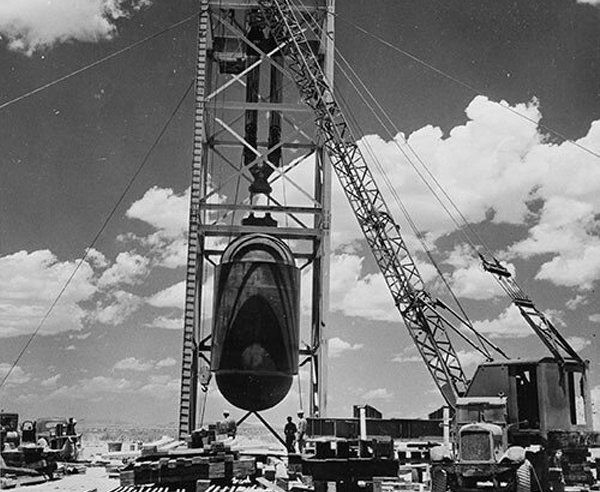
TOP SECRET 509TH – ATOMIC BOMB GROUP
Development and delivery of the atomic bombs 1939-1945 >
Legacy
Individuals can view the anniversary of the bombings in different ways. Some say it was not justified, and others disagree. But in Hiroshima each year, a tribute is paid to the many men and women, most of them civilians, who died in the bombings. The country lobbies against use all nuclear weapons. In the United States, tributes are paid each year on Memorial Day and Veterans Day, honoring those Americans who fought in WWII and other conflicts. In the decades after Hiroshima and Nagasaki, the United States has threatened to use its nuclear weapons many times, but restraint has always prevailed. It is a symbol of America’s values and morals that since 1945, the United States had deliberately chosen not to use nuclear bombs or tactical nuclear weapons in any of the wars it has fought since WWII. The government and the population at large works to continue that legacy.
Excerpted from: veterans.nv.gov/august-marks-atomic-bomb-anniversary/
Nose Art of the 509th Composite Group
SILVERPLATE B-29 AIRCRAFT, CREW & AIRCRAFT COMMANDER

Top Secret. 509th CG crew B-8, 1Lt. Charles F. McKnight

Strange Cargo. 509th CG crew A-4, 1Lt Joseph E. Westover

Bockscar. 509th CG crew C-13, Capt. Frederick C. Bock

Enola Gay. 509th CG crew B-9, Capt. Robert A. Lewis

Full House. 509th CG crew A-1, Capt. Ralph R. Taylor

Some Punkins. 509th CG crew B-7, Capt. James N. Price

Straight Flush. 509th CG crew C-11, Capt. Claude R. Eatherly

Next Objective. 509th CG crew A-3, Lt. Ralph N. Devore

Up an’ Atom. 509th CG crew B-10, Capt. George W. Marquardt

The Great Artiste. 509th CG crew C-15, 1Lt Charles D. Albury

Big Stink. 509th CG crew A-5, Lt. Col. Thomas J. Classen

Necessary Evil. 509th CG crew C-14, Lt. Norman W. Ray

Laggin’ Dragon. 509th CG crew A-2, Capt. Edward M. Costello

Luke the Spook. 509th CG crew C-12, Capt. Herman S. Zahn

Jabit III. 509th CG crew B-6, Capt. John A Wilson
These aerial target photos photographs were taken before and after the bombing of Hiroshima by Bill Webster and Iner Nielsen. The Enola Gay was parked with and identified (Circle R tail markings) with the 6th Bomb Group to disguise its special presence on Tinian.


THE ENOLA GAY TODAY | Steven F. Udvar-Hazy Center, Smithsonian National Air and Space Museum, Washington D.C. PHOTOS: Kent Vincent


