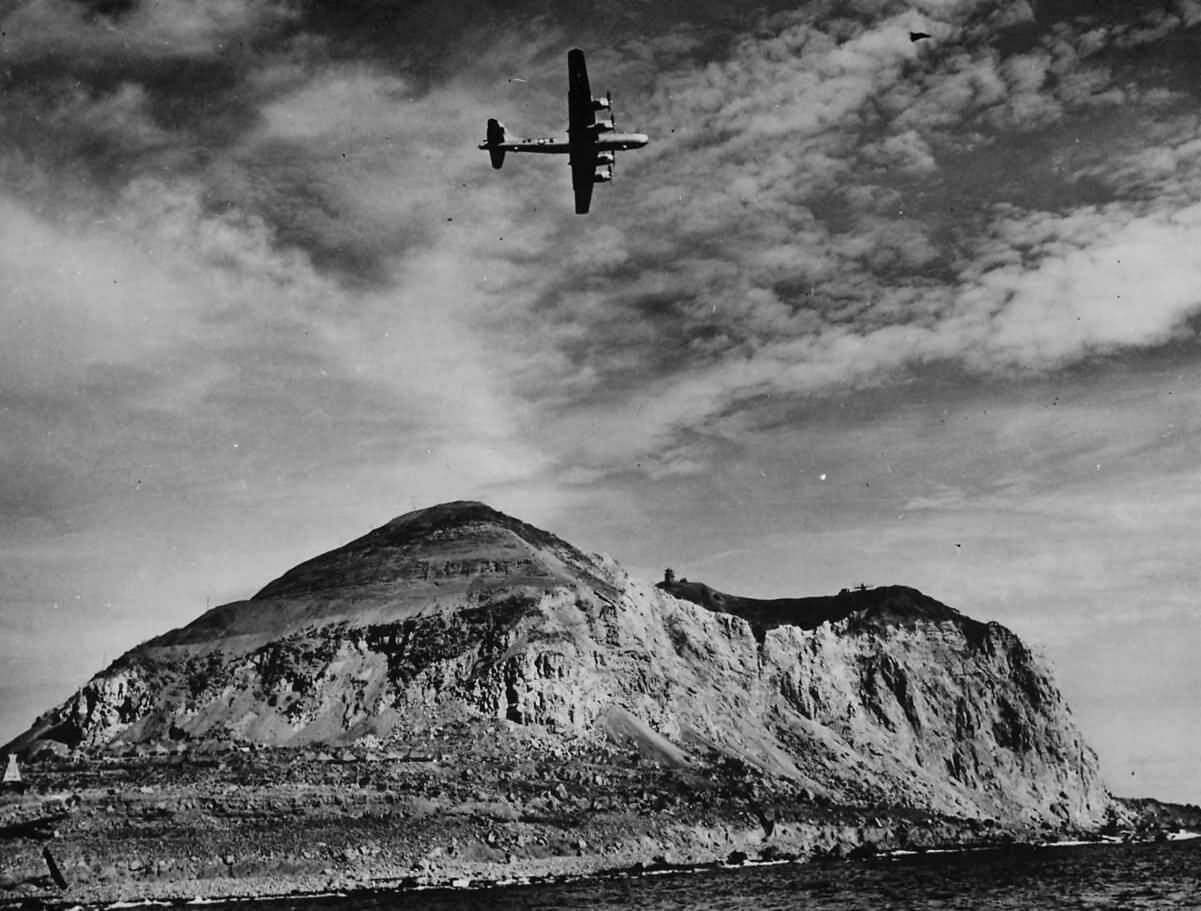
U.S. Marines Capture Iwo Jima (Flag raised over Iwo Jima) March 1945
by
1st Lt Harry H George, B-29 Co-Pilot
6th Bomb Group, Tinian 1945
Editor’s note: Images added to compliment author’s writing
One of World War II’s most famous and lasting images is the photograph of U.S. Marines raising a flag atop Mount Suribachi on Iwo Jima. Thousands of Americans died to gain control of this tiny island. Why was it so important for American forces? The answer is simple. The U.S. needed Iwo Jima’s airbases.
Safe Haven
After American forces captured the Mariana Islands in the summer of 1944, B-29 bombers began flying their payloads to Japan. The planes had to travel almost 3,000 miles, much of it over enemy territory. Planes damaged over Japan by fighter planes or anti-aircraft fire might not be able to complete the 1,500-mile return trip to the Marianas. They needed a safe haven. Iwo Jima, halfway between Tokyo and the Marianas, was ideal. American landing strips on Iwo Jima would not only provide emergency assistance, but could also be a base for American fighter escorts.

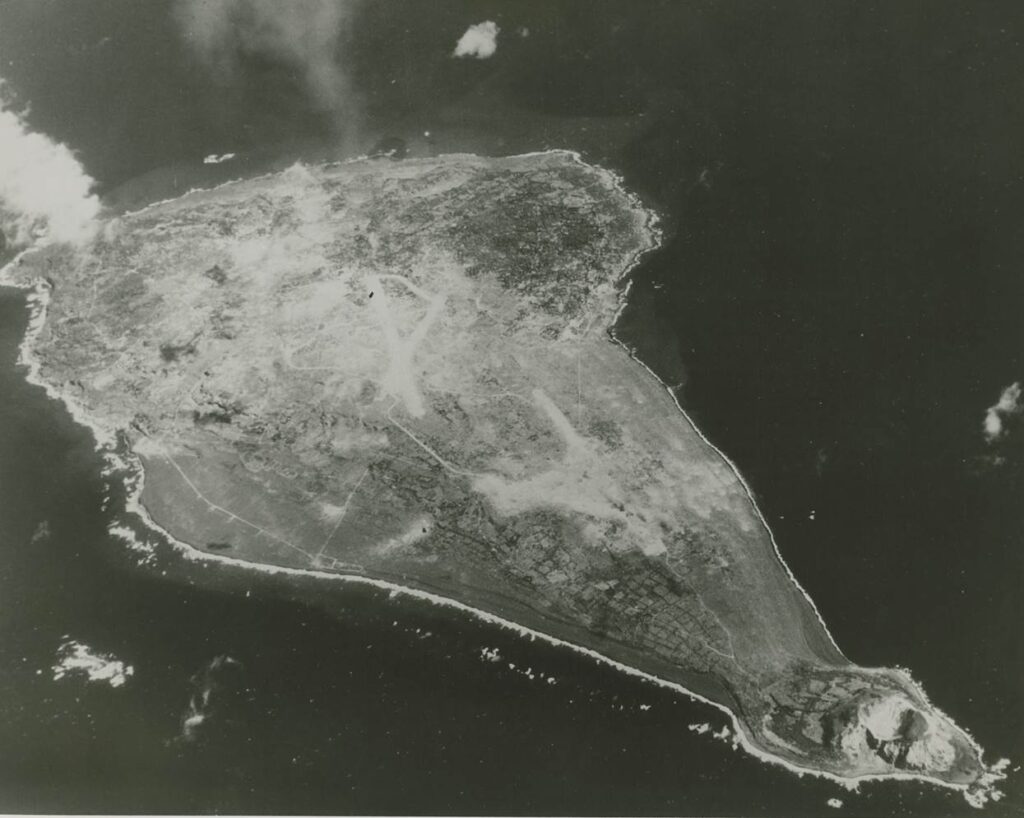
Iwo Jima Island 1945
Serious Threat
The other reason American forces needed Iwo Jima was to eliminate the threat of the Japanese planes based there. Japanese fighters had been attacking B-29s in the air and on the ground. Initially, more B-29s were lost on airstrips in the Mariana Islands than were shot down over Japan. The Japanese set up early warning radar alerts on Iwo Jima, and took away the B-29s’ element of surprise. There was no question in the minds of U.S. strategists: Iwo Jima had to be captured and its airbases turned over to American forces.
A Long and Fierce Fight
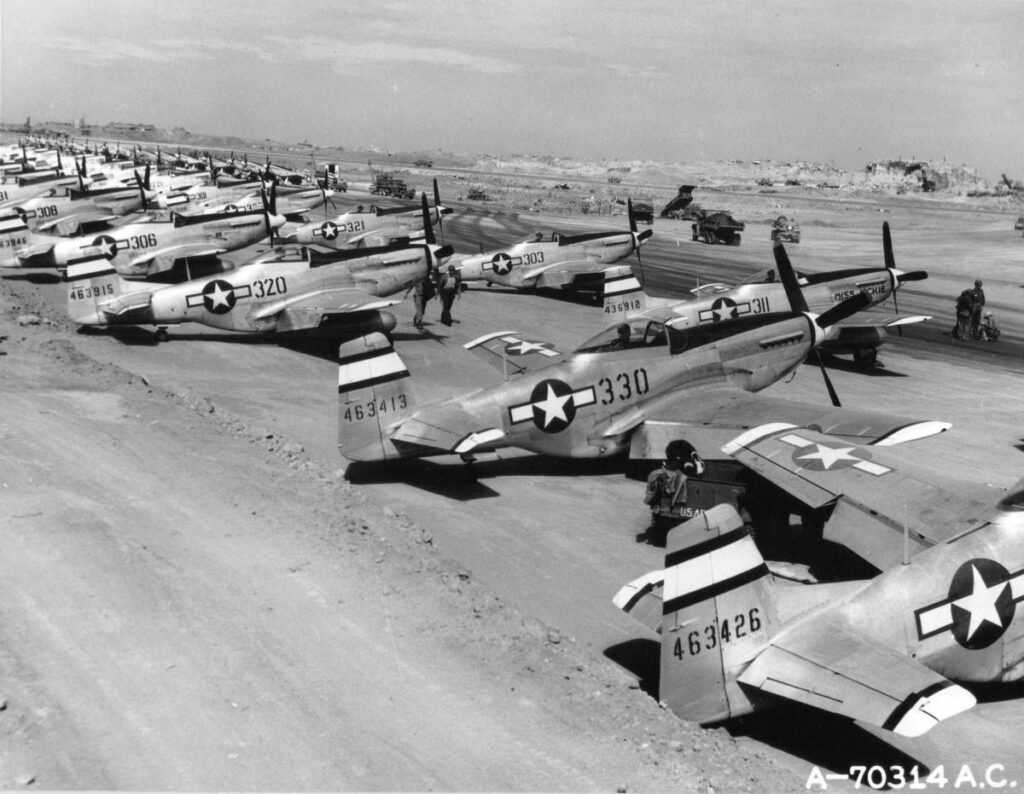
D-Day for Iwo Jima was February 19, 1945. The 30,000 Marines who came ashore that first day had to uproot 21,000 Japanese defenders in well-fortified underground bunkers. An open, barren, moon-like landscape provided little to no protection for the exposed American forces. It would take the Marines more than a month of yard-by-yard fighting over inhospitable terrain to secure the island. The battle for Iwo Jima was over on March 26, 1945. Less than two weeks later, on April 7, the Americans had converted it into an offensive asset: 108 P-51 Mustang fighters took off from the island, supporting a fleet of B-29s heading for Japan on a bombing raid.

Marines attack Iwo Jima
Heavy Losses
Securing Iwo Jima came at a great cost to the Marine Corps and the Navy. More than 75,000 Americans fought at Iwo Jima. Almost 7,000 were killed and more than 24,000 wounded. Almost 6,000 of the dead were U.S. Marines. Nearly all of the Japanese defenders died. But the B-29 crews who had gained a new base were grateful.
Every time I see or meet a Marine, I’ll head him to the nearest bar and buy him a drink, because [if] it hadn’t been for them, I probably wouldn’t be here, I know, and our crew wouldn’t. Always grateful to Marines.
Editor’s Note: After U.S. Marines took Iwo Jima in March 1945, some 2400 B-29s made emergency landings on or near the island, saving almost 27,000 American airmen, including author Harry George and his crew. See his related article Iwo Jima: The Marines Did It For the B-29s
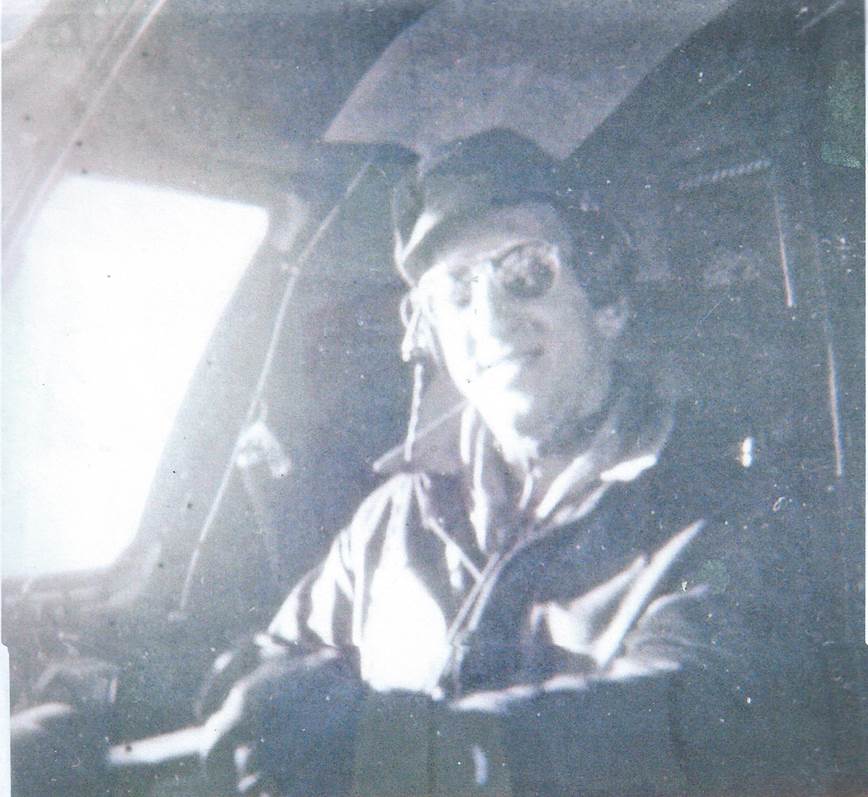
1st Lt. H. Harry George
Bio: Harry George was a 6th Bomb Group B-29 co-pilot operating from Tinian Island during the Pacific War. Following the war, he co-founded the 6th Bomb Group Association and later became the Historian of the 509th WWII Nuclear Bomb Group. He was sought and appeared in several post-war documentaries, including: American Experience, Victory in the Pacific, People and Events and on PBS – “Harry George and the Strategic Importance of Iwo Jima.”