
by
Scott B. Davis
Honorary member 509th Composite Group (1944-1946)
©2025 Scott B. Davis. All Rights Reserved
Additional content copyright © 2025 6th Bomb Group Assoc. All Rights Reserved
Editor’s Note:This article is an excerpt from author Scott B. Davis’ document Top Secret 509th – The Atomic Bomb Group. Title, pictures, links and highlights have been added to the original document to complement the author’s writing.

Enola Gay Silverplate B-29 on Tinian with 6BG tail marking. ©Photo by Bill Webster
The 509th Composite Group and Project Silverplate
THE ROLE OF THE 509TH COMPOSITE GROUP WAS TO FACILITATE PROJECT ALBERTA, DESIGNING THE WEAPONS TO HOUSE THE BOMB, TESTING, AND TRAINING AIR CREWS TO MAN PROJECT SILVERPLATE BOMBERS, A SPECIAL VERSION OF THE BOEING B-29 SUPERFORTRESS DESIGNED AND PRODUCED SPECIFICALLY TO DELIVER THE ATOMIC BOMB.

509th Patch
In January 1940, the Army Air Corps chose Boeing’s Model 345 design and the aircraft’s prototype first flew in September of 1942. The criteria for the new bomber included a speed of 400 mph and carrying 10 tons of bombs with a 2500 mile combat radius. The engineering, design and production of the B-29 was one of the many examples of the massive and highly successful American war effort and eventually became the nation’s largest military expenditure during WWII.
GIVEN THE EXPECTED EXPLOSION, SHOCKWAVE BLASTS, AND RADIATION FROM THE A BOMB, THE SILVERPLATE B-29’S REQUIRED A HIGH-PERFORMANCE ENVELOPE
Given the expected explosion, shockwave blasts, and radiation from the A Bomb, the Silverplate B-29’s required a high-performance envelope. Early Silverplate models were retrofitted with modifications made and used for testing and training.
In August 1944, The Glenn L. Martin Plant in Omaha, Nebraska began constructing the Phase 2 Silverplates. The first of these 17 planes arrived at the 509th HQ in Wendover [Air Base], Utah in October. Upon arrival, maintenance crews began to remove the upper and lower turrets to lighten the aircraft. Three were used for the Los Alamos test programs building ballistic tables and helping design bomb components. The other 14 were used for aircrew training.
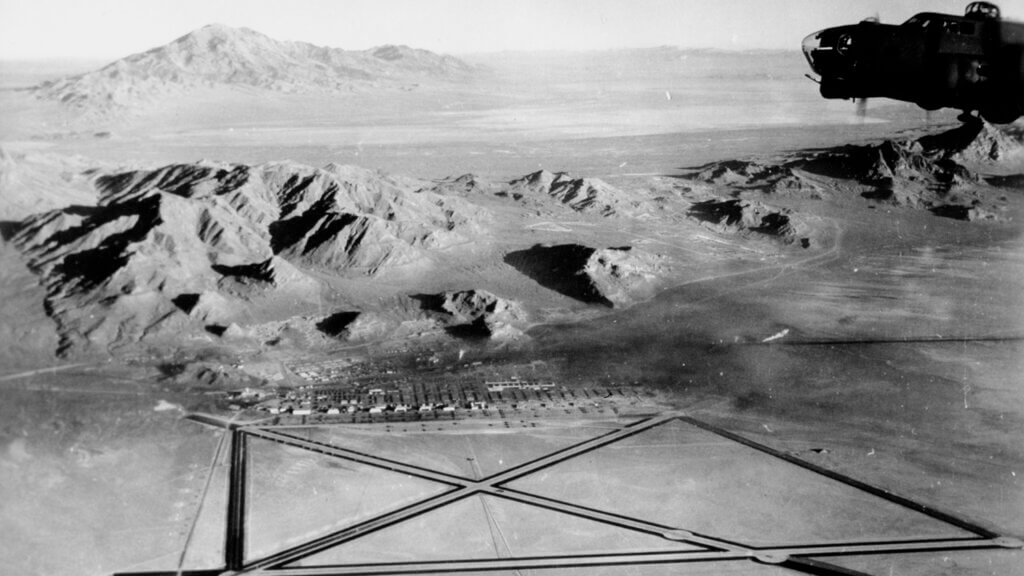
Wendover Air Base, Utah
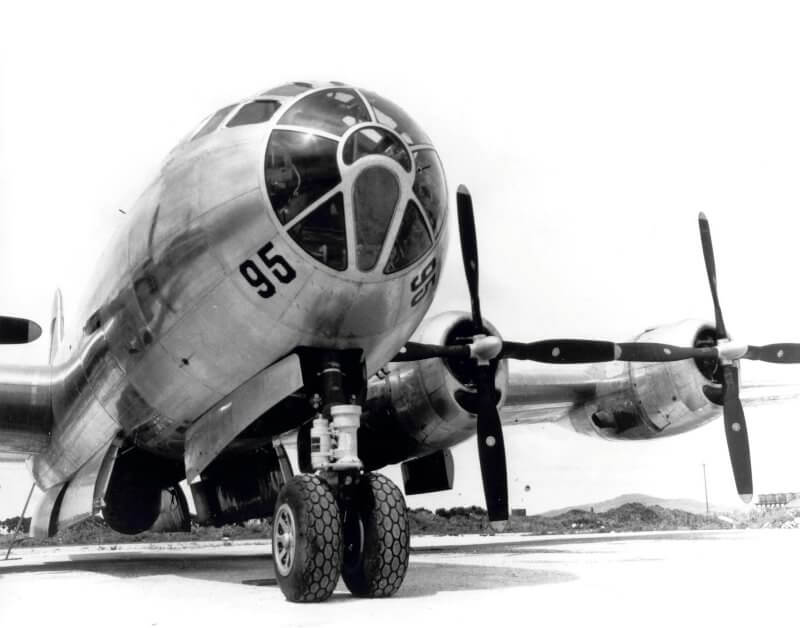
Laggin’ Dragon B-29 Silverplate without nose art
THE SILVERPLATE AIRCRAFT WERE EQUIPPED WITH FUEL-INJECTED ENGINES, CURTISS ELECTRIC REVERSIBLE-PITCH PROPELLERS, PNEUMATIC BOMB BAY DOORS, ARMOR PLATING OMITTED AND ALL GUN POSITIONS, EXCEPT FOR THE TAIL GUN, ELIMINATED
However, in January 1945, it was decided that instead of modifying the current fleet, the Martin Plant in Omaha would provide 20 new Silverplate aircraft that incorporated all the changes and modifications. This third batch of aircraft was significantly different from the first two. New engines, the Wright R-3350-41 had better cooling, fuel injection, and improved fuel and manifold systems. Mounted on these engines were new Curtis Electric propellers with reverse pitch capability, allowing the plane to improve power braking when landing. Additionally, the bomb bay doors used pneumatic actuators, replacing the slower hydraulic system and allowing for a shorter transition period when opening and closing the doors. The defensive turrets were also omitted as part of Phase III, with aircraft rolling off the production line retaining only the rear gunner’s twin .50 caliber M2 Browning machine guns.
Perhaps most importantly, the bomb bay was now fitted with an H-frame structure with improved sway braces that accommodated both Little Boy and Fat Man [atomic] bomb casings. The bomb bays also included both a dual electric and manual release system for the payload as it sat in the forward bay.
A new crew position, “Weaponeer” was also created. Just behind the radioman’s seat, an electronics test officer station was installed. This new crewman monitored the electronic equipment and cables associated with the bomb.
AFTER RELEASE OF THE WEAPON, THE AIR CREW WAS TO EXECUTE A 155-DEGREE DIVING RIGHT TURN AT A 60-DEGREE ANGLE OF BANK, LOSING 1,700 FEET OF ATTITUDE AT FULL POWER TO GIVE THE CREW A 10-MILE SEPARATION FROM THE POINT OF IMPACT
These modifications were required not only to deliver the bomb over Japan but also, perhaps more importantly, to make good the egress of the plane and crew from the target area once the weapon was delivered. The B-29 is a large aircraft, with a 141-foot wingspan and a 99-foot fuselage, and weighing 105,000 pounds. Despite this large size, after the release of the weapon, the air crew was to execute a 155-degree diving right turn at a 60-degree angle of bank. While losing 1,700 feet of attitude, the plane’s engines also had to be flown at full power to give the crew a 10-mile separation from the point of impact. The lightening of the load, the more powerful engines, and the quick cycling of the weapons bomb bay door were all important factors in putting as much distance as possible between the bomber and bomb explosion.
In April 1945, the 509th began taking delivery of the third modification Silverplates coming off the assembly line at the Martin plant in Omaha. The crews who received their new airplanes soon flew from Wendover in small groups to the Pacific Theatre, and those left behind, waiting impatiently, continued to refine weapon delivery techniques and procedures.
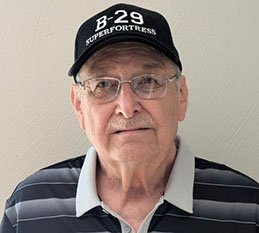
Scott B. Davis
Author Bio: Scott B. Davis is the son of 1Lt. Harry B. Davis, Silverplate B-29 “Laggin’ Dragon” pilot, WWII. He served in Vietnam and his family also includes veterans of WWI and the Middle East/Afghanistan Wars. He was a member of the legacy 509th Composite Group until it disbanded in 2015. He is active as an officer of the Veterans of Foreign Wars and volunteers as a docent for the Pennsylvania Military Museum.
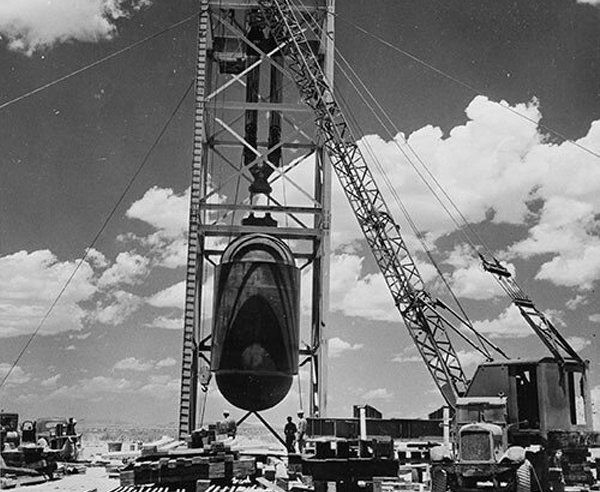
TOP SECRET 509TH – ATOMIC BOMB GROUP
Development and delivery of the atomic bombs 1939-1945 >

THE ATOMIC BOMBING OF HIROSHIMA AND NAGASAKI
Justification and mission details >

THE B-29 BOMBER
Tour and specs of the most advanced bomber of WW2 >
Nose Art of the 509th Composite Group
SILVERPLATE B-29 AIRCRAFT, CREW & AIRCRAFT COMMANDER

Top Secret. 509th CG crew B-8, 1Lt. Charles F. McKnight

Strange Cargo. 509th CG crew A-4, 1Lt Joseph E. Westover

Bockscar. 509th CG crew C-13, Capt. Frederick C. Bock

Enola Gay. 509th CG crew B-9, Capt. Robert A. Lewis

Full House. 509th CG crew A-1, Capt. Ralph R. Taylor

Some Punkins. 509th CG crew B-7, Capt. James N. Price

Straight Flush. 509th CG crew C-11, Capt. Claude R. Eatherly

Next Objective. 509th CG crew A-3, Lt. Ralph N. Devore

Up an’ Atom. 509th CG crew B-10, Capt. George W. Marquardt

The Great Artiste. 509th CG crew C-15, 1Lt Charles D. Albury

Big Stink. 509th CG crew A-5, Lt. Col. Thomas J. Classen

Necessary Evil. 509th CG crew C-14, Lt. Norman W. Ray

Laggin’ Dragon. 509th CG crew A-2, Capt. Edward M. Costello

Luke the Spook. 509th CG crew C-12, Capt. Herman S. Zahn

Jabit III. 509th CG crew B-6, Capt. John A Wilson


