
A B-29 Flight Engineer’s Experiences During World War II
by
Lawrence Stewart
B-29 Flight Engineer
6BG, Tinian 1945
First publication July 2024
Original memoir copyright © 2024 Lawrence Steward. All Rights Reserved
Additional content copyright © 2024 6th Bomb Group Assoc. All Rights Reserved
Editor’s Note: Combat in the Pacific Theater – A B-29 Flight Engineer’s Experiences During World War II is an exceptional historical autobiography of the B-29 bombing campaign over Japan in 1945. It was written by then 1st Lt. Lawrence Stewart, who served as a B-29 flight engineer in the 6th Bomb Group at the age of 22. The document chronicles this important history, training through Japanese surrender, first-hand, highlighting the operation and procedures of the B-29 for each mission. Over 175 pictures as well as dozens of historically significant chapter and sub-chapter headings and links have been added to complement the author’s writing.
TABLE OF CONTENTS
Prologue
When the Japanese attacked Pearl Harbor on 7 December, 1941, I was attending the Michigan College of Mining and Technology, located at Houghton, Michigan. Although many of my compatriots waited to be called up for active duty by the local draft board, I and several friends volunteered for the Enlisted Reserve Corps, Air Corps branch, of the United States Army. College volunteers were assigned to career fields in the Army Air Forces based upon their number of years of schooling. As I was in my sophomore year, I was accepted into the Armament career field and I successfully completed my physical examination during the fall of 1942. At the end of the winter term, I decided to remain home in Sault Ste. Marie, commonly known as the “Soo”, Michigan, as I expected to be called to active duty in the near future.
THERE IS AN ACUTE NEED FOR AVIATION CADET MAINTENANCE ENGINEERS
In February, 1943, I received a letter from Headquarters, Army Air Forces stating:
- “There is an acute need for Aviation Cadet Maintenance Engineers to fill classes in the near future.”
- “The educational requirements for ground duty training as an aviation cadet in maintenance engineering had been lowered to two years of engineering in an accredited college or university or the equivalent thereof.”
- “As you no doubt realize by the news dispatches of the past few weeks, all men in the Air Corps Enlisted Reserve may be called to active duty at any time in the near future. The quotas for classes in Aviation Cadet Armament training, for which you were qualified, have been substantially reduced and it is not probable that you will be assigned to class at an early date. In the event Air Corps Enlisted Reservists for ground duty training are called to active duty it may be necessary for you to remain on active duty in the grade of private, unassigned, for a period of a year or more before you will be assigned to training as an aviation cadet in armament.”
- “In view of the need of maintenance engineers, it is requested that you immediately advise this office on the attached return form, if you desire to transfer your application from aviation cadet armament training to aviation cadet engineering training. RepIy should be addressed to Headquarters Army Air forces, Military Personnel Division, Aviation Cadet Section, Washington, D.C.”
I immediately submitted my application for the aviation cadet engineering training program. A short time later I received a letter stating that I had been accepted for the engineering training program and that orders would follow shortly thereafter directing me to report for active duty.
I had applied for a job with the construction company enlarging the smallest of the four Soo Locks, upon my return home. I was hired as an assistant for the section associated with drilling and removing concrete from the walls of the old lock. After working at this job for several months, I was called up for active duty.
Flight Engineer Training
Basic Training
On 11 April, 1943, I was notified that I was appointed as an Aviation Cadet effective 19 May and would be placed on active duty that same day. I was to commence travel to arrive at the Army Air Force Technical School located near Boca Raton, Florida by 21 May. I was told to wear my civilian clothes to the duty station where I would be issued uniforms and equipment. My assignment was for nine weeks of basic training starting on 29 May. And I was instructed to pay my transportation cost and the government would later reimburse me at five cents a mile. I took the passenger train from the Soo and I was surprised when the train passed through Donnelly, Minnesota. I saw the home of Aunt Gertrude and Uncle Ed, my last glimpse of a familiar landmark as I headed for Florida.

Boca Raton training facility
The train arrived at Boca Raton in early evening and many civilians, myself included, were transported by a military bus to our destination, a former plush country club leased by the Army Air Corps for basic training of newly assigned cadets. The country club had been turned into an austere facility for housing cadets undergoing training. Two cadets were assigned to a room containing a bathroom with shower stall. However, it was a problem getting cleaned up due to the extremely short break periods and the normal lack of hot water. The majority of the cadets were civilians who were called Feather Merchants. Men with combat experience were also assigned to our class.
The next day we were issued military clothing and equipment, including gas masks. At the local Base Exchange, I purchased some basic grooming items and a foot locker to keep my belongings in. A short time later, I packed up my civilian clothes and sent them home. We were also issued Dog Tags, that is metal identification tags, with our names and newly assigned serial numbers inscribed. I was assigned the serial number 17115184, which I had to memorize. The tags were attached to a small metal chain which we placed around our necks.
On 11 April, 1943, I was notified that I was appointed as an Aviation Cadet effective 19 May and would be placed on active duty that same day. I was to commence travel to arrive at the Army Air Force Technical School located near Boca Raton, Florida by 21 May. I was told to wear my civilian clothes to the duty station where I would be issued uniforms and equipment. My assignment was for nine weeks of basic training starting on 29 May. And I was instructed to pay my transportation cost and the government would later reimburse me at five cents a mile. I took the passenger train from the Soo and I was surprised when the train passed through Donnelly, Minnesota. I saw the home of Aunt Gertrude and Uncle Ed, my last glimpse of a familiar landmark as I headed for Florida.
The train arrived at Boca Raton in early evening and many civilians, myself included, were transported by a military bus to our destination, a former plush country club leased by the Army Air Corps for basic training of newly assigned cadets. The country club had been turned into an austere facility for housing cadets undergoing training. Two cadets were assigned to a room containing a bathroom with shower stall. However, it was a problem getting cleaned up due to the extremely short break periods and the normal lack of hot water. The majority of the cadets were civilians who were called Feather Merchants. Men with combat experience were also assigned to our class.
The next day we were issued military clothing and equipment, including gas masks. At the local Base Exchange, I purchased some basic grooming items and a foot locker to keep my belongings in. A short time later, I packed up my civilian clothes and sent them home. We were also issued Dog Tags, that is metal identification tags, with our names and newly assigned serial numbers inscribed. I was assigned the serial number 17115184, which I had to memorize. The tags were attached to a small metal chain which we placed around our necks.
During one of our first instructional meetings, when we were allowed to sit down and relax, the instructors asked for volunteers. I didn’t volunteer, but those cadets who did were ordered to pick up trash and field strip cigarette butts. And so I learned to be careful about volunteering in the Army.
Cadets were assigned to various squadrons based upon the letter of the cadet’s last name. Squadron K was my squadron during my stay at Boca Raton. We were issued old army rifles, learned basic training, performed formation marching, did calisthenics army style, went on night hikes and pulled sentry duty with our unloaded rifles. Several times we were awakened about midnight and formed up for forced marching into the wee hours of the morning. And although we had hiked during the night, we fell out for normal duty in the morning.
Sometimes, following calisthenics, we were marched to the Atlantic ocean where we paired up for swimming. Frolicking and swimming in the ocean was a new experience for me and I enjoyed the outings very much. However, we had to watch out for jellyfish which could provide very powerful stings. When we returned to put on our socks and shoes, we weren’t allowed to brush the sand off our feet or dry them. Instead we were told to get dressed immediately and then we were marched back to the barracks in wet underwear with sand in our socks and shoes, which was quite an ordeal. Apparently it was part of the toughening up process for military life. We were also assigned to Kitchen Police (KP) duty on a rotating basis. We peeled potatoes, set up the silverware and dishes, and served fellow cadets their noon and evening meals.
Drill teams had been established and I volunteered to participate on our squadron team. We carried unloaded rifles and practiced almost every day after normal duty hours. The favorite part of the routine was the silent drill where many commands were given and then the commands were carried out in silence. Competition was held periodically between the various squadron drill teams. We also completed several instructional courses during our stay at the training base, including the standard American Red Cross course on providing first aid to the injured.
During the first three months we were assigned as underclass cadets and we were occasionally hazed by upper class cadets. As underclass cadets, we weren’t allowed to leave the area. When we had completed three months of training, we were upgraded to upper class cadets and we were given additional privileges, including visitations to Boca Raton. There wasn’t much for a cadet to do in this village except eat, drink low percentage beer or soda pop and walk along the ocean front or village streets. I didn’t see many women my age around that area. When walking along quiet streets at night time, I heard rustling sounds which I discovered were made by fiddler crabs as they scurried away. There certainly were many crabs around the Boca Raton area!
College Training Detachment – Yale
Upon graduation from the basic training course during July, I packed my foot locker and joined fellow graduates for our departure from Boca Raton. We travelled by passenger train to New Haven, Connecticut where we were assigned to cadet squadrons located at the Army Air Forces Technical Training Center at Yale University. Cadets were assigned to these squadrons according to their career fields. I was attached to the one involved with the six months Aircraft Maintenance Engineering Course.
The Army Air Corps had a contract with university officials to billet the military cadets while they were attending these classes. When stationed at Yale, cadets followed the routine previously established by military personnel and we marched in formation to all military affairs. After we were wakened about five o’clock in the morning; we dressed, made our beds, cleaned the rooms, and gathered our books and course material for the day’s classes. We went outside for roll call and then we marched to the mess hall located in the university area for breakfast.
WE LEARNED METHODS FOR REPAIRING ALL TYPES OF AIRCRAFT STRUCTURAL FAILURES AND WERE TAUGHT TO OPERATE AIRCRAFT ENGINES ON TEST STANDS

Cadets march at Yale University
After eating, we marched to the local airfield and our designated classrooms. Here we were taught aircraft sheet metal repair procedures by military instructors. We learned methods for repairing all types of aircraft structural failures, and we had hands-on experience making various repairs in the classrooms. We were also taught to operate aircraft engines on test stands and on nonflyable aircraft parked on the apron near the classrooms. Some of the military aircraft that I worked on included P-36, P-40, and P-47 fighters. Walt Disney films were used to inform us about military affairs, such as security when around civilians, that is, to keep our mouths shut regarding military matters.
The classes were arranged so that we went to school in the morning, returned to the university area for dinner, and then back to our rooms for changing into workout clothes. From there we marched to the university sports area and field house. The field house contained the gymnasium, swimming pool, boxing rings and other associated sports rooms. An obstacle course was located outdoors near the field house.
Various cadet squadrons were rotated through these facilities. When I and fellow cadets from our squadron went to the field house for swimming, boxing, judo and calisthenics, other cadets were assigned to the obstacle course. And conversely, when we were assigned to the obstacle course, other cadets were attending the various workout rooms in the field house. During the training sessions at the field house we were taught basics of boxing, wrestling and judo. We were also taught how to defend ourselves and to maim and kill the enemy.
Periodically we would go on hiking trips taking our gas masks and containers along. Sometimes a signal was given to don our gas masks and start running. We continued to run for several miles with our gas masks on until the signal was given to remove the masks. When the weather was too bad for hiking or negotiating the obstacle course, we would run up and down the stairs of the field house during our workout time period.
One Saturday afternoon we marched to the university stadium to participate in the football game between the Army’s West Point team and the Yale University team. I saw one of the greatest collegiate teams in action, with Glenn Davis and Butch Blanchard leading the cadets from West Point to a lopsided score. Newly assigned cadets weren’t allowed to leave the university area, except to attend classes and to participate in mandatory inspections held at the New Haven park located near the university.
My roommate, Jim Thornton from Montana, and I managed to gather gigs or penalties for small infractions of military rules, such as shoes not properly shined, brass fittings not sufficiently polished, floors slightly dirty, dust in the area, and beds not made up to specifications. After we amassed the allotted number of gigs, resulting in solitary walks around the New Haven park on Friday evenings, Jim and I caught on to the Army way of accomplishing these tasks. Thereafter we managed to forego additional gigs and subsequent marching tours.
For entertainment, dances were held in the university ballroom on Saturday nights and local women were invited to attend these dances. Glenn Miller and his orchestra joined the Army Air Corps cadre at Yale while I was stationed there. Glenn Miller’s band played at these dances and his band led the cadet squadrons passing in review after our stationary inspection on Saturday mornings. We enjoyed this part of the weekly inspection and oh, how we marched to the swinging music of the St. Louis Blues and similar jazzed up marching songs!
Halfway through the course, we became senior cadets and we were allowed to leave the university area on weekends. Many cadets, myself included, went to town on weekends to wander around the town and attend movies. While attending a movie, I met Mabel, a very nice young woman. She and her younger brother were orphans and they were living with an aunt in New Haven. I visited them at her aunt’s house many times and several times I stayed overnight during subsequent weekends. After falling in love, Mabel and I became engaged and I gave her an engagement ring. We planned on getting married after the war was over. Although our time together was short, it was a very enjoyable time for both of us.

Major Glenn Miller playing at Yale
AN URGENT REQUEST WAS RECEIVED FOR GRADUATING CADETS TO VOLUNTEER FOR FLIGHT ENGINEER TRAINING
Several weeks prior to graduation, an urgent request was received for graduating cadets to volunteer for flight engineer training. Only cadets who didn’t wear glasses were asked to take the flight physical. However, so many cadets failed the physical that I and fellow cadets, who wore glasses, were asked to take a modified pilot’s flight physical which most of us passed. The flight physical was similar to a pilot’s examination, except for the wearing of glasses.
As we neared the end of our maintenance course, we were asked to volunteer for the new flight engineer training program. When I asked if I could get leave prior to my assignment as a maintenance officer, I was informed that none of my graduating class would be given leave. So I said what the heck, I might as well go to flight school and become an aircrew member and so I signed up for the flight engineer training program.
During the final days of our training, groups of cadets were sent to a local Army airfield. Here we practiced our newly learned maintenance skills on old and damaged military airplanes. We also pulled sentry duty and participated in several unannounced night marches. During these marches we bivouacked for the night in woods located along the route. In the morning we folded up our shelters, marched back to the airfield and resumed our training duties. One day we were given an orientation ride in an old Army B-25 bomber that was flown in specifically for that purpose. We drew straws to determine our seating on the airplane and I ended up in the upper gunner’s turret, flying backwards.
A popular song during that time period was titled “Oh What A Beautiful Morning” from the Broadway hit “Oklahoma.” Fellow cadets and ground personnel selected that record whenever they played the nickelodeons located in the mess hall and barracks. It was played constantly and from that time on, I never really enjoyed that song.
When we returned to the university, local clothiers contacted us and tailor made our new officer uniforms. On 19 January, 1944, I was honorably discharged as an Aviation Cadet after successfully completing the Aircraft Maintenance Engineering Course. An official letter, dated 20 January, 1944, confirming my commission as an officer stated “The Secretory of War has directed me to inform you that the President has appointed and commissioned you a temporary Second Lieutenant, Army of the United States this date. This commission will continue in force during the pleasure of the President of the United States for the time being and for the duration of the war and six months thereafter unless sooner terminated.” I was also issued new identification tags with my newly assigned officer serial number, A0868600, blood type of A positive and the letter C for my religious preference, stamped on them. It was a proud day on January the 20th, when I and fellow students attended graduation exercises, which were held in the university auditorium. Girlfriends and wives pinned on Second Lieutenant bars onto the uniforms of the newly commissioned Army officers. Mabel pinned shiny new Second Lieutenant bars onto my brand new uniform.
The next day we received orders for our new assignments. I was directed to report to the training detachment of the Army Air Forces Technical Training Command located at the Boeing Aircraft Factory near Seattle. The orders further directed that, upon completion of training at the Boeing Company, I was to report to the Flight Engineer School run by the Army Air Corps Training Command at Lowry Field, Colorado, for the second port of the flight engineer training program.
B-29 Flight Engineer School – Boeing Aircraft Factory
I packed my belongings in my foot locker and several days later I said goodbye to Mabel when I and other newly commissioned officers boarded the train for New York. After a short delay at the New York station, we got on a troop train bound for Seattle, Washington. It took about three days to reach our destination and I enjoyed viewing the vast plains and snowcapped mountains along the route. It was my first trip into the western regions of our great country.
WE TRAVELLED TO THE BOEING AIRCRAFT FACTORY, LOCATED AT RENTON, TO BEGIN OUR TRAINING SESSIONS
When we arrived at Seattle, we were bussed to a military housing area near Renton Field. We were assigned to a barracks building which was our home during our stay with the Army Air Force Training Command. On the following Monday we travelled to the Boeing Aircraft Factory, located at Renton, to begin our training sessions.
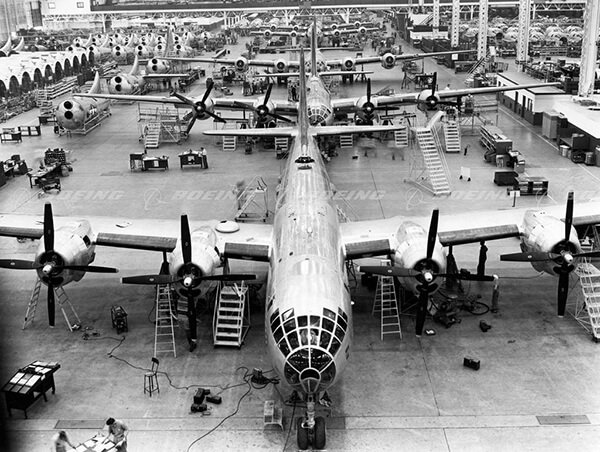
Boeing B-29 Aircraft Factory Renton 1944
HERE I SAW MY FIRST B-29S. THEY WERE THE BIGGEST AIRPLANES I HAD EVER SEEN!
Here I saw my first B-29s, which were parked near the main assembly building. Boy, was I ever impressed with the size of those airplanes. They were the biggest airplanes I had ever seen! The B-29s were the largest bombers in operational use at that time, and as a potential mechanical engineer I was interested in the statistics of the mighty bomber. It had a wingspan of 141 feet and a fuselage that was 99 feet long. The tail structure towered into the air about as high as the top of a three story house. Four main fuel tanks, located internally in the wing structure, had a capacity of 9,150 gallons. And it had a cruising speed of 220 miles per hour carrying a full load in the two bomb bays.

B-29 at Boeing Aircraft Factory Renton

R-3350 Wright engine
IT WAS THE MOST POWERFUL ENGINE INSTALLED IN ANY AIRPLANE. AS A RESULT, THE B-29 HAD A CRUISING ALTITUDE, SPEED AND RANGE MUCH GREATER THAN HER PREDECESSORS.
Each of four R-3350 Wright engines was connected to two turbo superchargers. The superchargers, operated by the exhaust gasses from the engines, improved the high altitude performance of the engines. They provided sea level power up to an altitude of 33,000 feet. A large four-bladed propeller was attached to the engine. It was the most powerful engine installed in any airplane at that time! As a result, the B-29 had a cruising altitude, speed and range much greater than her predecessors. Other innovations included pressurized cabins and remotely controlled guns. The B-29 was designed as an all-weather bomber which could operate at night and in cloud cover using a new radar system and bombsight.
To support the huge airplane, a dual-wheeled tricycle landing gear was utilized.
I noticed that there were four turrets located on the fuselage; one on top of the forward cabin, a second situated topside behind the gunner’s compartment, a third located directly opposite the forward top turret on the underside of the fuselage, and the fourth located below the rudder on the lower fuselage surf ace. Another gun position was located at the tail gunner’s position. Two .50 caliber machine guns were mounted in each turret and at the tail gunner’s location except for the upper forward turret which carried four machine guns. Sometime later, I learned that the forward upper turret was primarily controlled by the bombardier and secondarily by the Central Fire Control or “‘CFC- gunner. The upper aft turret was controlled by the CFC gunner. The right and left (side) gunners individually controlled the lower forward and aft turrets and either gunner could control both turrets. In addition, the bombardier had secondary control of the lower forward turret. The tail turret was primarily the tail gunner’s responsibility. However, either side gunner could also operate this turret. It truly was a Superfortress, the official name bestowed on the B- 29.

B-29 cutaway illustration, PBS. Annotation added
Later, I boarded a B-29 for an orientation and familiarization tour. The forward entry point was located in the nose gear wheel well, which contained a built-in ladder. I noticed that the forward turret protruded into the forward cabin to the left of the flight engineer’s panel which left little room for the radio operator, navigator and flight engineer to move around in.
THERE WERE THREE PRESSURIZED AREAS FOR THE CREW
There were three pressurized areas for the crew. The forward compartment contained the bombardier, pilots, flight engineer, navigator and radio operator stations. The bombardier’s station was located in the nose of the airplane.

B-29 cockpit © Kent Vincent

Forward pressurized compartment

B-29 Aircraft Commander controls © Kent Vincent
The aircraft commander’s position was on the left side and the pilot’s position was on the right side of the cockpit, above and behind the bombardier.

B-29 Flight Engineer’s station © Kent Vincent
The flight engineer’s station was located on the right side directly behind the pilot, with the flight engineer facing to the rear of the air plane.

Navigator’s celestial navigation astrodome © Kent Vincent
The windowless radio operator’s station was located behind the flight engineer’s station. An escape hatch containing a small window was located at the flight engineer’s position. Another small window was situated near the navigator’s station.

Tunnel, forward and aft bomb bay section
The forward crew compartment, connected by a pressurized tunnel with the gunner’s compartment, was located behind the bomb bays.

Gunner sighting blister © Kent Vincent
Three gunners and the radar operator occupied this area, which also contained several bunks. Two sighting blisters were located on the left and right sides of the fuselage for the side gunners.

CFC gunner top blister
A third blister, located on the topside of the fuselage, was for the CFC gunner. This position contained a master panel from which the CFC gunner could transfer control of the turrets as explained previously.

Radar operator station
The radar operator’s station, another windowless area, was located to the rear of the gunner’s stations and a radar set was installed at his station.

Aft pressurized compartment
A small circular screen of the radar scope enabled the radar operator to determine land areas and target locations. The radar instrument, which reflected radio waves, was used by the radar operator to find the target area by observing radar reflections when the airplane approached the target area or a land mass.

Tail gunner compartment
CABIN PRESSURE WAS AUTOMATICALLY MAINTAINED AT AN 8,000 FOOT ALTITUDE LEVEL UP TO 30,000 FEET
The tail gunner’s position, located at the end of the fuselage, was the third pressurized compartment. It was a small compartment containing a bullet proof window.
The tail gunner entered this compartment prior to pressurization, since there was an unpressurized area separating the gunner’s and the tail gunner’s compartments. The forward and rear crew compartments contained cabin pressure valves, which were opened upon crew entry for a flight. When open, cabin pressure was automatically maintained at an 8,000 foot altitude level up to 30,000 feet.

Tail section
THE THREE PRESSURIZED AND HEATED COMPARTMENTS ALLOWED CREW MEMBERS TO OPERATE IN A SHIRT SLEEVE ENVIRONMENT WITHOUT THE USE OF OXYGEN MASKS AT HIGH ALTITUDE.
We proceeded into the main building where we entered a side room that contained mockups and cutaways of various B-29 subassemblies which were used by Boeing instructors for training purposes. After each training session, we went to the assembly areas for observation of assembly methods and procedures.
Utilizing this method of instruction, we learned all about the basic construction of the B-29. We observed the subassembly of major units including the cabin compartments, wings, rudder, elevators and landing gear. We also visited the main assembly lines where the subassemblies were brought together and attached. Then the final wiring and hydraulic hookups, and mechanical attachments were made.

Mating of the wing section with the bomb bays
WE BECAME INTIMATELY FAMILIAR WITH THE CONSTRUCTION AND ASSEMBLY OF THE MANY PARTS AND COMPONENTS OF THE AIRPLANE
We followed a completed B-29 as it rolled off the final assembly line and watched factory personnel checkout the newly completed airplane. As a result, we became intimately familiar with the construction and assembly of the many parts and components of the airplane. We were informed that as competent flight engineers, we must be able to tell the pilot immediately why an engine was malfunctioning by checking instruments on the flight engineer’s panel. In addition, the flight engineer was expected to be familiar with all potential engine problems, the probable causes, and the correction of each problem during flight.
On weekends, we were free to do whatever we wanted to do. While many of my compatriots went night clubbing, I stayed around the officer’s club and the local area. One weekend I travelled to a lumber town in Oregon to visit my grandmother, Johanna, where she worked at a local restaurant. She had tagged along with a cousin who was cutting timber in the area to support the war effort. After one of the main meals, I was informed that the entree was horse meat, with a deep red color and a sweet taste. That was the one and only time I ate horse meat that I was aware of! On Sunday night I returned to the Seattle area.
My class completed the factory training course during April. We received a certificate of Technical Aircraft Training which was signed by representatives of the Boeing Company Flying Fortress School, B-29 Division. After graduating, I and fellow officers departed by train for Lowry Field, a training base located near Denver, Colorado to participate in the cruise control portion of the flight engineer training program.
B-29 Flight Engineer Training – Lowry Field, CO
WE WERE TAUGHT CRUISE CONTROL PROCEDURES AND COMPUTED FUEL CONSUMPTION
When we arrived at Lowry Air Field, we were assigned to the Bachelor Officer’s Quarters (BOO). And prior to starting the three-month training course, we were placed on flying status as student aircraft engineers which meant that we would receive flight pay during this training phase. We attended classes where we were taught cruise control procedures and computed fuel consumption based on normal four engine operation under various flight conditions. Fuel consumption under adverse conditions, such as three engine operation, was also computed. These fuel consumption figures were used to prepare estimated fuel flow charts, called “How-Goes-It” charts which were used during flight for comparison with actual fuel consumption. They enabled the flight engineer to monitor his fuel consumption and to make corrections as needed. Cruise control theories developed in the classroom were put into practice during local flights in modified B-17 and B-24 bombers

Lowry Field 1940
It was at Lowry field that I received my “Dear John” letter from Mabel, except that it was written by her aunt, and my engagement ring was enclosed. I wrote Mabel several times regarding the letter, but she never answered any of them. So much for wartime romances. I vowed to stay away from future entanglements and to have a good time during the remainder of my wartime stay in the military.
Sometimes on Saturday mornings, I went to the local barber shop on base for a haircut. It was also a free day to take care of sundry tasks, such as exchanging dirty clothing for clean clothing at the base laundry. For exercise we played games, mostly softball, during afternoons and on weekends.
Several of my fellow officers had automobiles and sometimes I rode with them to Denver on Saturday afternoon where we had an evening meal at a popular hotel while we discussed the latest news. Later we went to Elich’s Gardens, a favorite dance pavilion, where we met and danced with local women. They went to the pavilion for companionship and entertainment. Some members of our group paired up with female companions and we didn’t see them until the next day.
Several students dated army nurses assigned to the field hospital that I met at the officer’s club, where I ate most of my meals. One nurse came down with rheumatic fever. When we visited her at the hospital, I noted that the shades were drawn and she wasn’t allowed to get out of bed. These procedures were established to minimize complications that could result from the disease.

B-24 bomber
Early one Friday morning in July, near the end of the training phase, several student flight engineers, myself included, departed on a long distance flight to practice on long range cruise control procedures in a modified B-24. We landed late that afternoon at the Douglas Air Field in Arizona. After checking into a local hotel, we went to a nearby restaurant for our evening meal. Afterwards, several of us went to the Douglas community building where a dance was being held. I had a great time visiting and dancing with a young woman from the local community. In the morning we returned to the airfield and boarded the B- 29. Several students immediately donned oxygen masks and inhaled pure oxygen to clear away the cobwebs, so as to speak, as we took off for Lowry Field. It seems that they had a rough night at Douglas. During the return flight, we again practiced on our long range cruise procedures.
WE GRADUATED IN EARLY JULY AS FLIGHT ENGINEERS AUTHORIZED TO FLY ON THE MIGHTY B-29 BOMBER
The three months of training rapidly passed by and we graduated in early July, as flight engineers authorized to fly on the mighty B-29 bomber. As an insignia had not been specifically designed for flight engineers, which was a new specialty established for the B-29, we were authorized to wear current observer wings containing a large “O”. After graduation, we were given orders assigning us to various B-29 bases that were in the process of activation. Most of these bases were former B-17 training bases located throughout Nebraska and nearby states.
During our last days at Lowry Field, I heard several instructors state that they wished that they could join us to fight the Japanese. They added that they couldn’t go, however, since it was their duty to train future flight engineers the techniques of cruise control. I met several of these instructors on Tinian when the flight engineering cruise control program was terminated and they appeared to be shocked to find themselves assigned to B-29 combat aircrews.
B-29 Training – 505th BG, Hastings NE
I WAS ASSIGNED TO THE 482TH BOMBARDMENT SQUADRON OF THE 505TH BOMB GROUP
I was assigned to the 482th Bombardment Squadron, hereafter called “Bomb Squadron,” of the 505th Bombardment Group, or “Bomb Group,” located at the Harvard Army Air Field near the small village of Harvard, several miles from Hastings, Nebraska. The former B-17 base was being expanded to accommodate the larger and more complicated B-29 and a building program was carried on during my stay at the airfield. My living quarters consisted of a recently built tarpaper and wood building located in the officer’s area. The building was hot in the summer and cold in the winter. The accommodations, which I shared with other young officers assigned to the squadron, were rather meager. Our cots were lined up in a row along both sides of the single story building and we placed our foot lockers at the foot of our cots. A room containing wash basins, shower stalls, and commodes, was located at the opposite end of the entrance. We were awakened early in the morning when the lights were turned on by the barracks orderly and it was a scramble to get shaved and cleaned up. Late comers had to line up and wait for a place to clean up. Then it was off to the mess hall for breakfast and onto the squadron area for roll call. When we had an early morning flight, an orderly awakened each individual involved with the flight so as not to disturb other residents. Early one morning, after a hearty breakfast of fried eggs, bacon, toast and butter and milk, I departed on a training flight. We encountered rough weather shortly after taking off and I experienced an upset stomach with a desire to get rid of my breakfast. I looked around but there wasn’t anything available to upchuck in. So I held my hand over my mouth and swallowed real hard several times and slowly got over the urge to relieve myself. After that incident, I never ate greasy foods prior to a flight!
The 505th Bomb Group hadn’t received many B-29s prior to my arrival and we trained primarily in old B- 17s. Later, when more B-29s arrived, we continued our training in both aircraft. For B-17 high altitude flights we were required to wear oxygen masks, which were connected to the aircraft oxygen system. We donned the masks as the airplane approached 10,000 feet on our climb to 25,000 feet, our operating altitude. During one descent from high altitude training flight, my left ear plugged up. I was reluctant to remove my mask until we reached 10,000 feet, the safe level for breathing without an oxygen mask. When I finally removed the mask, I attempted to clear the blockage. However, I couldn’t clear the ear passage and my ear hurt like the dickens when we landed. I immediately went to the flight surgeon’s office for treatment. In a little while the passage opened and my hearing returned to normal. Soon after that incident, I was removed from the crew and identified as a risk for high altitude flight. From then on I was carried as an extra flight engineer and I continued to fly, primarily to meet flight requirements for training and pay purposes.
Some weekends I joined fellow airmen and we traveled by bus to Hastings for entertainment. I went to the dances when they were held at the community center. When there wasn’t any other activity in town, I patronized the local bars. Due to a state law, bartenders weren’t allowed to sell alcoholic beverages. Patrons had to obtain whiskey at local liquor stores which they carried in paper bags to the bars. There they bought ice and set ups from the bartenders. As the flight training phase was ending and I hadn’t been assigned to a combat crew, I purchased a used automobile, a 1940 Mercury coupe that was available at a price that I could afford.
During early December, 505th Bomb Group support personnel and flight crews departed for the Marianas Islands for overseas duty. I and other average airmen and officers remained at the airfield. We were slated to be transferred to the next bomb group scheduled for activation after the holidays. I was officially released from the 505th Bomb Group on 20 December. I had very little supervision, lots of free time and I built a model of a fighter airplane from scrap wood. I outfitted the plane with releasable bombs under the wings. The barracks orderly asked me to build a similar model for him. I informed him that I probably wouldn’t have enough time to complete another model. A short time later, I discovered that my model was missing and I suspect that the orderly liberated it. I attended movies at the base theater and drove to Hastings several times during evenings and weekends to get away from the Army routine.
Transfer to 6th Bomb Group – Grand Island NE

Grand Island Army Air Field 1944
I WAS SURPRISED WHEN I RECEIVED ORDERS TRANSFERRING ME TO THE 6TH BOMB GROUP
I was surprised when I received orders on the 26th of December, transferring me to the 6th Bomb Group, located at Grand Island Army Air Field, about twenty miles north of Hastings. I immediately contacted mother and she arranged for Aunt Dello to pick up my car at Hastings and drive it back to the Soo to keep for me until my return home.
I packed my belongings in my foot locker and signed out from the 505th Bomb Group. On 31 December, 1944, I departed on a military truck for my new duty station. When I reported in at 6th Bomb Group Headquarters, I was informed that I had been assigned to Lieutenant Rockleigh Dawson’s combat crew of the 24th Bomb Squadron. Rocky informed me that I was a replacement for his former enlisted flight engineer, who had contacted a venereal disease. Members of Combat Crew Number 2416 were:

Rocky Dawson’s crew Standing – Left to Right: DiFerdinando, Eichelman, Brooks, Evans, Jones, Casal. Kneeling – Left to Right: Woodward, Miller, Inkel, Dawson, Stewart
| 1st. Lt. Rockleigh (Rocky) S. Dawson | Aircraft Commander |
| 2nd. Lt. Jones D. Woodward (Woody) | Pilot |
| 2nd. Lt. Denis J. lnkel | Bombardier/Backup Navigator |
| 2nd. Lt. Archibald (Archie) W. Miller | Navigator/ Backup Bombardier |
| Sgt. David 0. Evans | Radio Operator |
| Cpl. Elio S. Casale | Radio Operator |
| Cpl. James W. Brooks | Central Fire Control Gunner |
| Cpl. Martin E. Eichelman | Right Gunner |
| Cpl. Stanley A. Mackiewicz | Left Gunner |
| Cpl. Charles W. Jones | Tail Gunner |
Sixth Bomb Group maintenance and ground support personnel had departed several months earlier by rail and ship for Tinian, part of the Marianas Islands, the group’s overseas base. The majority of the combat crews of the 24th, 39th and 40th Bomb Squadrons of the 6th Bomb Group departed for Kearney Air Field in Nebraska, soon after my arrival. Kearny Air Field was the staging area for Army Air Force flight personnel headed for the Pacific Theater of Operations. These combat crews were assigned new B-29s which they flew to Tinian.
During the next several days our crew went through initial processing procedures in preparation for our move overseas. Air Force issued items included A-3 Parachute Bags, B-4 Bags, Canvas Field Bags with straps and suspenders belt and Duffel Bags. We were also given a checklist of mandatory clothing, flight gear and miscellaneous equipment items that were to be provided by the Air Force or purchased by officer personnel.
The following items had to be purchased by the officers:
three bath towels
khaki garrison cap
olive drab wool garrison cap
wool service coat
three cotton drawers (shorts)
two wool drawers
dress gloves
olive drab wool gloves
six handkerchiefs
olive drab field jacket
olive drab overcoat
raincoat
three khaki cotton shirts
two olive drab wool shirts
three tan cotton socks
three light wool socks
Russell shoes
two service shoes
three khaki cotton trousers
three summer undershirts
two wool undershirts
extra shoe laces
canvas leggings
rubber or plastic comb
hand soap
razor with blade
shaving brush
tooth brush
web waist belt
I already possessed most of these items.
The officers had the option of shipping their belongings in the duffel bags or personal foot lockers. Of the mandatory items listed above, I packed the following in my foot locker: wool service coat, two wool drawers, olive drab gloves, two khaki cotton shirts, service shoes, three tan cotton socks, olive drab overcoat, two khaki cotton trousers, olive drab wool trousers, two bath towels, four handkerchiefs, canvas leggings, comb, duffel bag, shaving and tooth brushes, hand soap and razor with blade. I added bedsheets, pillow cases and a hunting knife. I also packed magazines and additional items of clothing including cotton drawers, tan cotton socks, cotton undershirts and a sweat shirt in the foot locker. The packed and locked foot lockers and duffel bags were shipped with the luggage of Head Quarters Squadron personnel departing in mid-January for Tinian.
During processing, I also received immunization several shots: one for cholera and two for plague. I had received immunization shots for yellow fever, smallpox, tetanus and typhoid during my earlier training periods.
Deployment
Packing List
On 5 January our crew, together with other 6th Bomb Group personnel, boarded a troop train bound for Kearney Air Field with our baggage for final processing. My A-3 Parachute Bag contained the following:
insert rayon gloves
B-3 summer flying gloves
An-H-15 summer flying helmet
A-4 summer flying suit
A-11 winter flying helmet
A-6 winter flying shoes
B-8 parachute
HS-38 headset
sm portable emergency O2 cylinder
raincoat
B-8 flying goggles
A2 summer flying jacket
A-10 winter flying gloves
B-10 winter flying jacket
A-9 winter flying trousers
ANB-M-C 1 microphone
first aid parachute packet
C2 emergency sustenance vest
We were informed that no other items were to be packed in this bag.
In my Canvas Field Bag I carried a bath towel, cotton drawers, light wool socks, summer undershirt, flashlight, meat can with a fork, knife and spoon, sulphadiazine packet and a toilet kit.
And my B-4 Bag contained a service cap, khaki cotton garrison cap, three cotton drawers, olive drab field jacket, khaki cotton shirt, dress gloves, khaki cotton necktie, light wool socks, Russett shoes, extra shoelaces, khaki cotton trousers. three summer undershirts, mosquito gloves and mosquito head net, olive drab wool blanket, two uniform insignia and insect repellent. The service cap could be worn during the trip overseas. Miscellaneous optional items, up to a maximum of twenty pounds for officers, could be carried in the B-4 Bag. However, the total weight allowance for the B-4 bag would not exceed fifty-five pounds.

Officer’s B-4 bag
When we checked in with Kearny military personnel, we were informed that upon our departure for Hamilton Field, California, we were to wear or carry the following items: olive drab wool garrison caps, cotton drawers, two cotton handkerchiefs, khaki cotton neckties, olive drab wool shirts, service shoes, light wool socks, olive drab wool trousers, cotton undershirts, extension necklaces with two identification tags, A-14 oxygen masks, B-4 life preserver vests, web waist belts and pistol belts. Attached to the pistol belt was a complete canteen with cup and lid, double web magazine, first aid packet pouch containing a first aid packet, M-3 pistol holster and a .45 caliber automatic pistol. Flying sun glasses could be worn or carried if in our possession. The oxygen mask was to be carried separately in a box furnished by processing personnel. And the life preserver vest was to be placed and carried in a box, stenciled with our name on the outside that would be loaded with cargo into the transport airplane at the time of our overseas flight.
AS A FLIGHT ENGINEER, I WAS ALLOWED TO CARRY A TOTAL OF NINETY-SIX POUNDS OF PERSONAL ITEMS AND PROFESSIONAL EQUIPMENT DURING THE TRIP OVERSEAS
I was also responsible for the Flight Engineer’s Kit, containing items such as a slide rule, tools and B-29 information manuals, which I carried along with the above baggage. For our flight overseas we were restricted to specific weight allowances which included our personal belongings and professional equipment. The weight of the professional gear was allotted according to crew position. As a flight engineer, I was allowed to carry a total of ninety-six pounds of personal items and professional equipment during the trip overseas. We were informed that no baggage other than mentioned above would be carried aboard the transport airplane by any combat crew members.
Rocky Dawson and Denis lnkel were married and their wives followed them to the city of Kearny, where they stayed until our departure for California. After we had gone through the processing procedure, we had lots of free time on our hands as we waited for transportation to California. Their wives joined us at the air field and we lounged, played ping pong and hung out at the officer’s club. Finally our crew received orders to travel overseas and we boarded another troop train on the 24th of January, bound for Hamilton Field. The wives returned to their home towns when we received our orders.
Transport to Tinian Island
WE FINALLY RECEIVED ORDERS TO DEPART ON 11 FEBRUARY
Hamilton Field, the west coast Port of Aerial Embarkation point for the Air Transport Command (ATC), was our departure base for our trip to Hawaii, enroute to the Marianas. Again we had to wait for our flight with the ATC and Rocky obtained permission to visit San Francisco. When we arrived at the city early that evening, we proceeded to the Top of the Mark, a well-known landmark located on top of the Mark Hopkins hotel. We had an enjoyable time at the night club and late that night we returned to Hamilton Field. We remained at the airfield until we finally received orders to depart on 11 February. We were happy to be underway again as we boarded a four engine C-54 airplane and headed for Hawaii. One of my last glimpses of the mainland was of the Golden Gate Bridge.

Transferred to Tinian via C-54 aircraft

Kwajalein Air Field
WE DEPORTED THE HAWAIIAN ISLANDS ON OUR CONTINUING JOURNEY TO THE MARIANAS IN OUR C-54 TRANSPORT AIRCRAFT
After the airplane landed at Hickam Field, a military truck took us to the barracks area, where we stayed overnight, the enlisted crew members in the enlisted area and the officers in a BOQ [Bachelor Officers Quarters] building. I noticed bullet holes in many of the buildings where Japanese pilots had strafed ground targets during their Pearl Harbor attack. We had an evening meal at the officer’s club. The next morning after breakfast, we deported the Hawaiian Islands on our continuing journey to the Marianas in our C-54 transport aircraft.
Enroute, we landed at Johnston and Kwajalein Islands for refueling. When we deplaned during the refueling operation, we noticed that the runway on Kwajalein had been extended to the ocean’s edge. We also noted that the trees had been destroyed during the battle to regain the island, and damaged and sunken boats and barges littered the shore line. It was a very lonely and desolate island and we were glad to be underway again.
Sobering Feedback on Saipan
Late in the afternoon, we landed at Isley Field on Saipan Island where the 73rd Bomb Wing was stationed. Our destination, Tinian Island, was located three miles southwest of Saipan. We were trucked from the flight line to the mess area where we chowed down and then to the bivouac area, where we bedded down for the night. Shortly after arriving at our tent we had many visitors: air crew members, ground personnel and Navy Seabees, who stopped by to trade Japanese souvenirs, such as sabers and weapons, for liquor. As we weren’t allowed to bring any liquor with us, it was a big disappointment for them.
IF THE BATTLE DAMAGE WAS GREAT ENOUGH, THE CREW WOULD HAVE TO BAILOUT OR MAKE AN EMERGENCY LANDING, KNOWN AS DITCHING, IN THE OCEAN. THEIR SURVIVAL USUALLY DEPENDED HOW CLOSE THEY WERE TO SAIPAN WHEN THEY ABANDONED THEIR AIRPLANE.
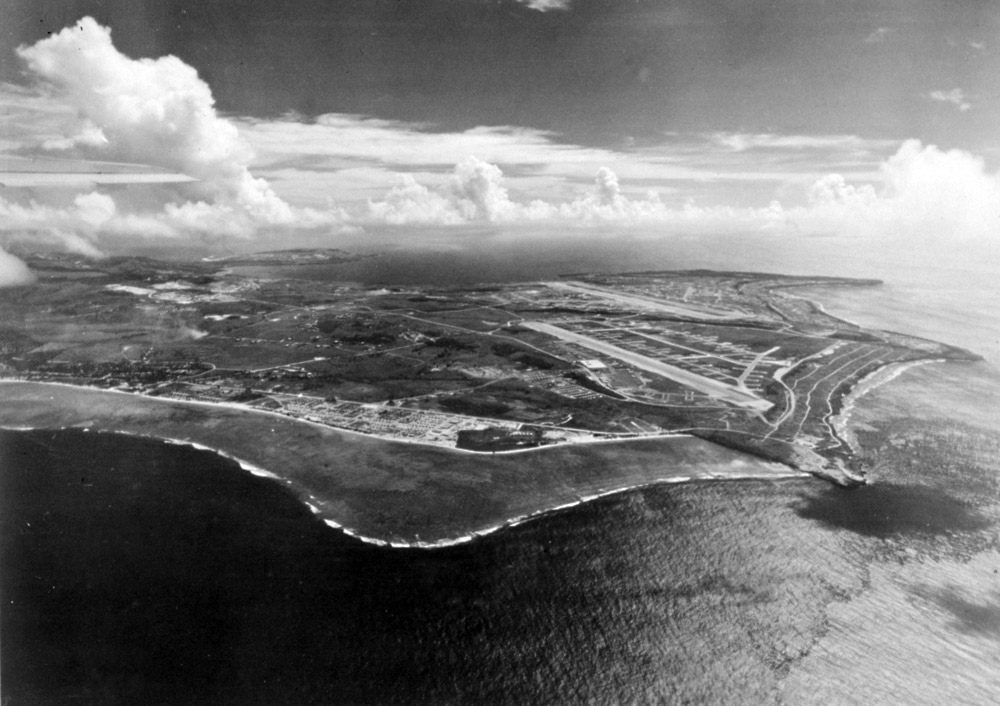
Isley Field Saipan © Bill Webster
We talked with veteran B-29 crew members about combat flying over Japan. They informed us that it was no picnic and that several Superfortresses had been shot down over Japan. And getting an airplane back to Saipan after the bombs were dropped was seldom a joy ride. Any number of problems, including bad weather and mechanical failures, could tum the return flight of a normal operating B-29 into a struggle. For a B-29 that was damaged by enemy fighters or antiaircraft fire, the prospect of nursing it over enemy territory and over many miles of ocean became a nightmare. In addition, lwo Jima, an enemy held island located approximately mid-way between Japan and Saipan, had to be avoided. Fuel was always a problem, even in the best of circumstances, with a reserve of about half an hour extra flight time. Therefore, gasoline in shot up tanks had to be transferred immediately to undamaged tanks. Compensating for a dead engine required great skill by the pilots and flight engineer. If the battle damage was great enough, the crew would have to bailout or make an emergency landing, known as ditching, in the ocean. Their survival usually depended how close they were to Saipan when they abandoned their airplane.
CAPTURE BY THE ENEMY MEANT HARSH IMPRISONMENT OR DEATH
Capture by the enemy meant harsh imprisonment or death see B-29 POWs – Kempei Tai Atrocities. However, we were told that the B-29s were remarkably sturdy airplanes and many Superfortresses that seemed destined to ditch somehow managed to limp bock to Saipan with one or two engines shut down, and with gaping holes in the wings or half its tail blown away. Once the damaged airplane reached the island of Saipan, it had priority for landing over other B-29s. Meanwhile, other returning airplanes had to cope with a sky full of airplanes, all running low on fuel. We were informed that one way to beat the crowded skies at the landing site was to try and get the jump on other participating airplanes and beat them back to the landing area. And so after the bomber formation broke up it was every man for himself, per an old cliché.
I asked a combat flight engineer what he did over the target. He replied that it was a busy time for him monitoring the engine instruments and that he didn’t have much time to think about enemy fighters or antiaircraft fire, especially if the engines or fuel tanks were hit.

B-29s return to Tinian © Percy Tucker
Tinian Island arrival
The next morning Rocky went to arrange for transportation to rejoin our squadron. He was startled when 73rd Bomb Wing staff personnel wanted to change our orders to become a replacement crew for that organization. Rocky immediately contacted 6th Bomb Group personnel and they told him that our orders wouldn’t be changed. Transportation was set up for our flight to Tinian via a C-47 transport airplane. We finally arrived at Tinian on the afternoon of 16 February where we rejoined the 24th Bomb Squadron, 6th Bomb Group, 313th Bomb Wing, 20th Air Force of the XXI Bomber Command. When we checked in at the 6th Bomb Group headquarters building, we received ration cards for obtaining fruit juices, coca cola, beer and cigarettes. We were also issued cards authorizing us to eat in any 6th Bomb Group mess hall. The mess halls were open twenty-four hours every day.

North Field, Tinian Island © Bill Webster
IT WAS ESTIMATED THAT THERE WERE 500 TO 1 000 ARMED JAPANESE SOLDIERS STILL ON THE ISLAND WHEN WE LANDED THERE IN FEBRUARY.
Tinian was a small, flat, coral island with some pine trees and many sugar cane fields. Of the fifteen islands in the Marianas chain, Tinian was the fourth largest. It was about four miles in width and eleven miles in length. Since it resembled Manhattan Island, all roads were given New York street names, such as Fifth Avenue and Broadway for the main island road. The climate was semitropical with a fairly constant breeze from the northeast. Soon after the island was taken from the Japanese in the summer of 1944, Navy Seabees began constructing roads and runways of coral for the 313th Bomb Wing’s Superfortresses to be stationed there. (see Tinian Island Capture and Construction) They worked around the clock constructing the runways, cutting down fields of sugar cane and bulldozing Japanese oil dumps, ammunition bunkers, revetments and defensive bunkers. They levelled the area, filling in low spots to a height of fifteen to twenty feet. One runway had been completed for operational use and three additional runways were under construction when the first 313th Bomb Wing B-29s arrived. Upon completion, North Field was considered to be the world’s largest airfield with four parallel 8,500 foot runways, associated taxiways, hardstands, fuel and bomb dumps, warehouses, shops and roads. Meanwhile, the Seabees cleared designated areas of sugar cane fields and set up tents for temporary staff operations and as sleeping quarters for arriving ground and aircrew personnel. They also started constructing permanent showers and latrines for Air Force personnel. It was estimated that there were 500 to 1000 armed Japanese soldiers still on the island when we landed there in February. They hid in the numerous deep caves located on the island. During indoctrination meetings, we were warned to stay away from the caves. We heard that several adventurous airmen and ground personnel, who went looking for souvenirs in these caves, disappeared.

Seabee construction on Tinian. Navy.mil
WE MOVED INTO A PYRAMIDAL TENT LOCATED IN THE SQUADRON OFFICER’S BIVOUAC AREA. THESE TENTS DIDN’T CONTAIN ANY WINDOWS OR FLOORS.
Shortly after we landed on Tinian, I and fellow officers picked up our duffel bags and foot lockers, which had preceded us, at the 24th Bomb Squadron equipment building and we moved into a pyramidal tent located in the squadron officer’s bivouac area. Our enlisted crew members were assigned to a similar tent in the enlisted personnel area. These tents didn’t contain any windows or floors. I was assigned to a cot near the entrance. Shortly after moving in, about ten o’clock one starlit night, as I was lying on my cot, I spotted a solitary figure furtively steal past the tent. I believe it was a Japanese soldier looking for food and water. After that, I slept with a loaded pistol under my pillow until we moved into our Quonset hut.

Tent row on Tinian © Marty Eichelman
Combat
Truk Island – February 18, 1945
After breakfast on 18 February, we were summoned to the 6th Bomb Group briefing building, a double Quonset hut, for a briefing on the next combat mission for the group, our first wartime mission. And it would be my first flight with Rocky’s crew! Nineteen combat flight crews from the 24th, 39th, and 40th Bomb Squadrons also attended the meeting. After roll call the 6th Bomb Group Commander, Colonel Kenneth H. Gibson, said a few general words about the mission. Then briefing personnel took over: Operations, Intelligence, Radar, Weather and Air-Sea Rescue. We were informed that we would drop general purpose bombs on the Moen Air Field of the bypassed enemy occupied island of Truk (6BG Mission 6). It would be a high altitude attack in formation. Mission information, such as time and order of takeoff, assembly area and location of each B-29 in the formation, ditching and crash landing procedures was presented. I was particularly interested in data regarding the total weight of the bombs, fuel on board, flight altitude to and from the target, and bombing altitude. Navigators received information regarding the courses to Truk and the return to Tinian. Bombardiers were provided with data on initial aiming point, bombing altitude and bomb drop point. The gunners were briefed on possible enemy fighter activity and cautions on firing of the guns. Radio operators were given radio frequencies for this flight.
During 1944, aircraft carrier based naval pilots had bombed and strafed Truk’s airfield and harbor facilities. As a result, Japanese forces stationed on the island were considered to be isolated and neutralized. The plan was to bypass the island and have the Army Air Forces bomb the island occasionally to keep the island neutralized and let the remaining enemy forces wither on the vine, so as to speak. Therefore, the bomb group’s mission to Truk was to accomplish several objectives. First, this relatively short mission was for training and to shake down the group’s flight tactics in a combat environment for new crews, like ours, prior to attacking Japan. Second, the raid was to keep enemy forces on the island neutralized. At the end of the briefing, the Chaplin said a prayer.

Mission Briefing
Pre-Flight and Take-off Procedures
Following the briefing, we returned to our tents to put on our flight suits and pick up our flight and survival equipment, such as flight helmets, oxygen masks, portable oxygen bottles, full canteens, and life preserver vests, commonly known as “Mae Wests”, which we donned. I also picked up my flight engineer bag containing tools, flashlight and flight information files. Then we boarded a military truck and rode to the equipment area to pick up our parachutes.

Boarding trucks for ride to flightline © Archie Miller. All Rights Reserved
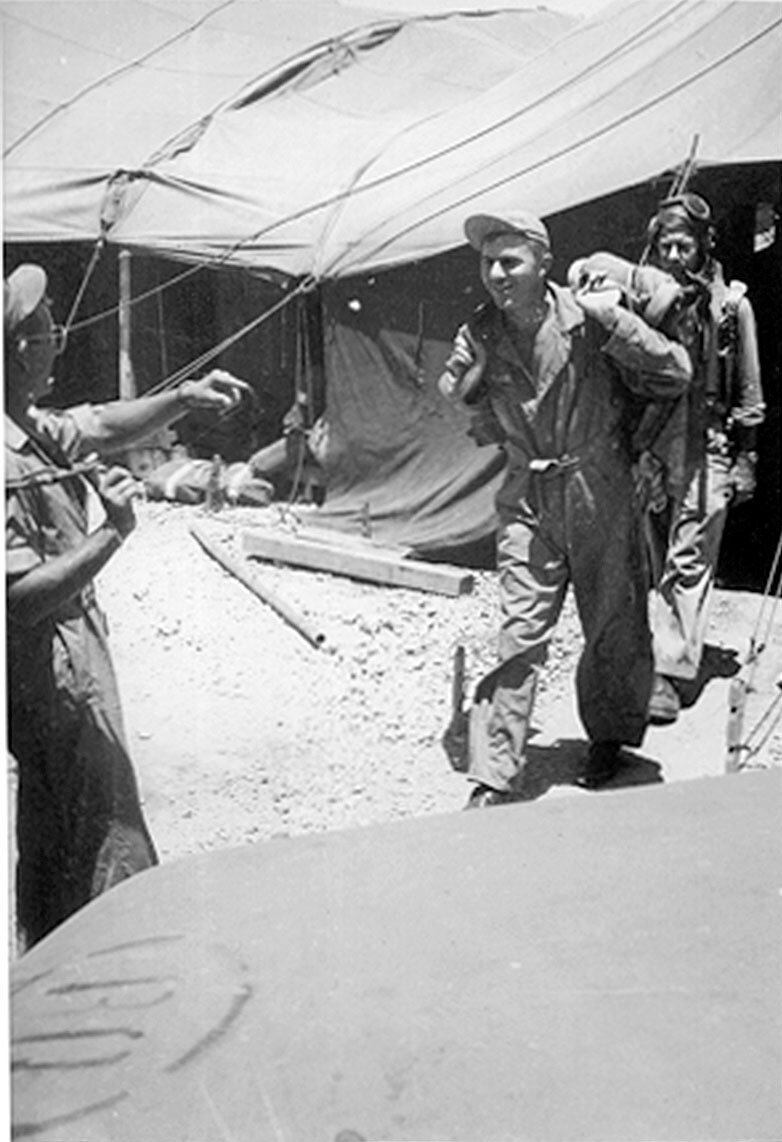
Flight outfit and equipment © Archie Miller
From there we were taken to the flight line at North Field. During the ride, there was much talking, joking and singing of risqué songs. The crew chief and his team, having preflighted and checked out the B-29 several hours earlier, awaited our arrival. The air was heavy with the smell of gasoline and hot engine oil as we lined up our flight and survival gear in front of the airplane. Then we went about our individual external checks of our assigned airplane; bombardier Denis lnkel, checking that the bomb safing wires had been removed; the gunners insuring that the guns were properly stowed; and Rocky and pilot, Jones Woodward, looking over the control surfaces and general condition of the airplane. I conducted my walk-around inspection also checking on the condition of the airplane. An important check was of the tires regarding wear and cuts which could result in a blowout during takeoff. Prior to boarding the airplane, we lined up at the left front of the airplane with our flight and survival equipment for inspection. Rocky inspected each crew member’s equipment and gave us final instructions. He stated that as this was our first combat mission, we should be on the alert and for the gunners to keep a sharp lookout for enemy fighters. Then we joined the ground crew as two men grabbed each propeller blade of an engine and walked it through, rotating it and the engine several revolutions. This action was required to clear the combustion chambers of the engines prior to engine start. Finally, we boarded the B-29 with our flight and survival gear and settled down at our individual stations. Denis, the last crew member to enter the forward crew compartment, closed the nose gear entrance hatch. Likewise, the last crew member entering the aft crew compartment via the ladder, pulled the ladder into the compartment, closed the entrance hatch and secured the ladder.
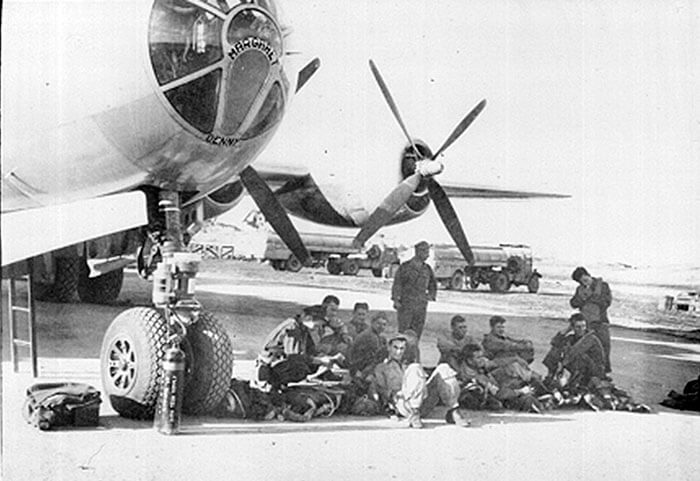
Crew inspection © Archie Miller
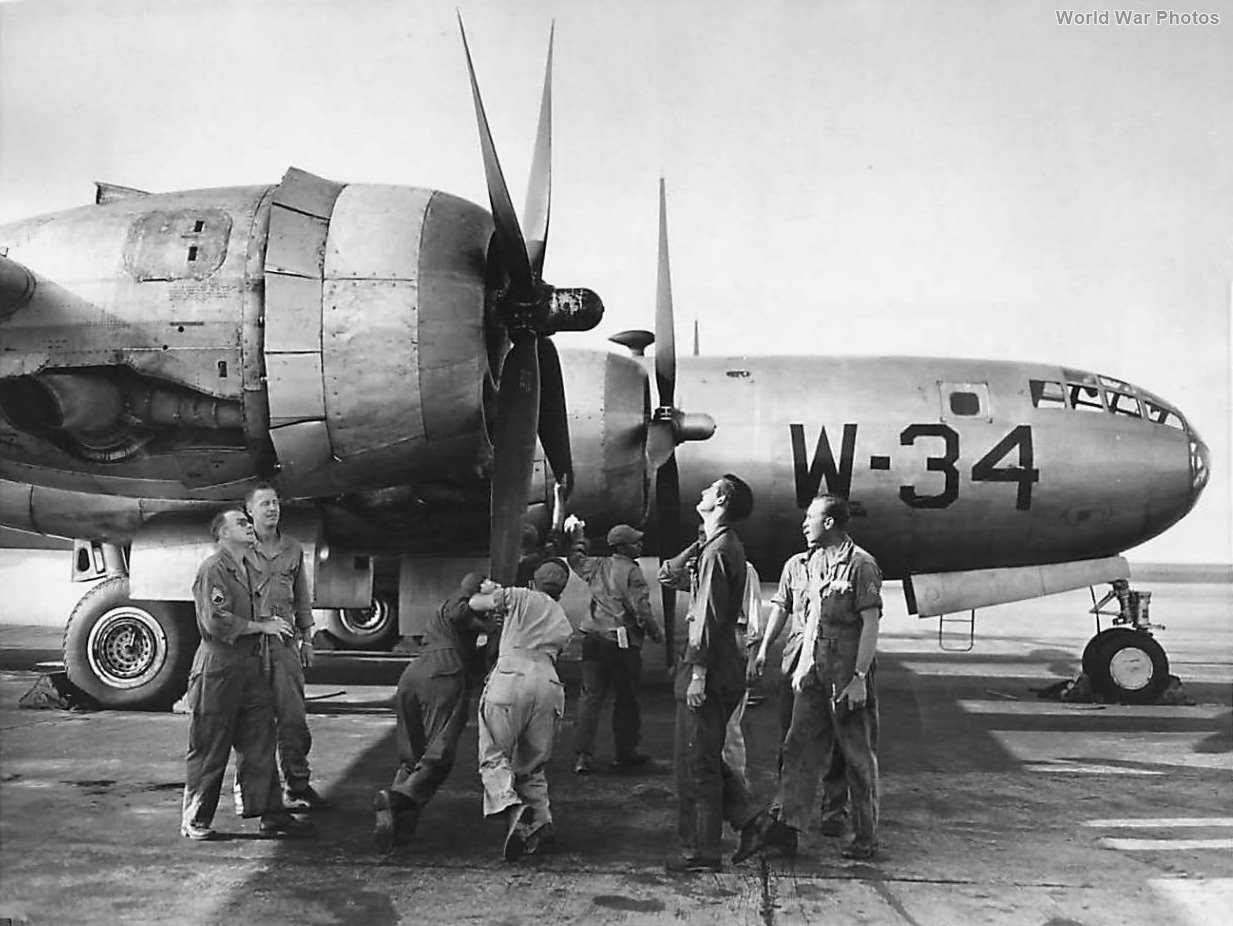
Rotating props © Gilbert Godin
After stowing the survival gear nearby, I checked that a flak mat, flak vest, flak helmet and one man life raft or dinghy were located at my station. Flak gear and dinghies were normally left at each crew member’s position in the airplane. Flak was a slang term for fragments resulting from antiaircraft projectile bursts.
Next, I strapped on my parachute over the Mae West, snapped on the dinghy, located in my seat, onto my parachute, fastened my lap belt and put on my throat microphone and headset. Crew members were required to have their headsets on and connected to the interphone system when at their duty stations. Meanwhile, the auxiliary power unit, called the “putt-putt”, because of its rhythmic stutter when running, was started by the tail gunner, Charles Jones, on his way to the tail compartment. The putt-putt, located in the aft unpressurized compartment, furnished power to the aircraft systems and power for starting the engines.

B-29 putt-putt engine © 6BG Association. All Rights Reserved.
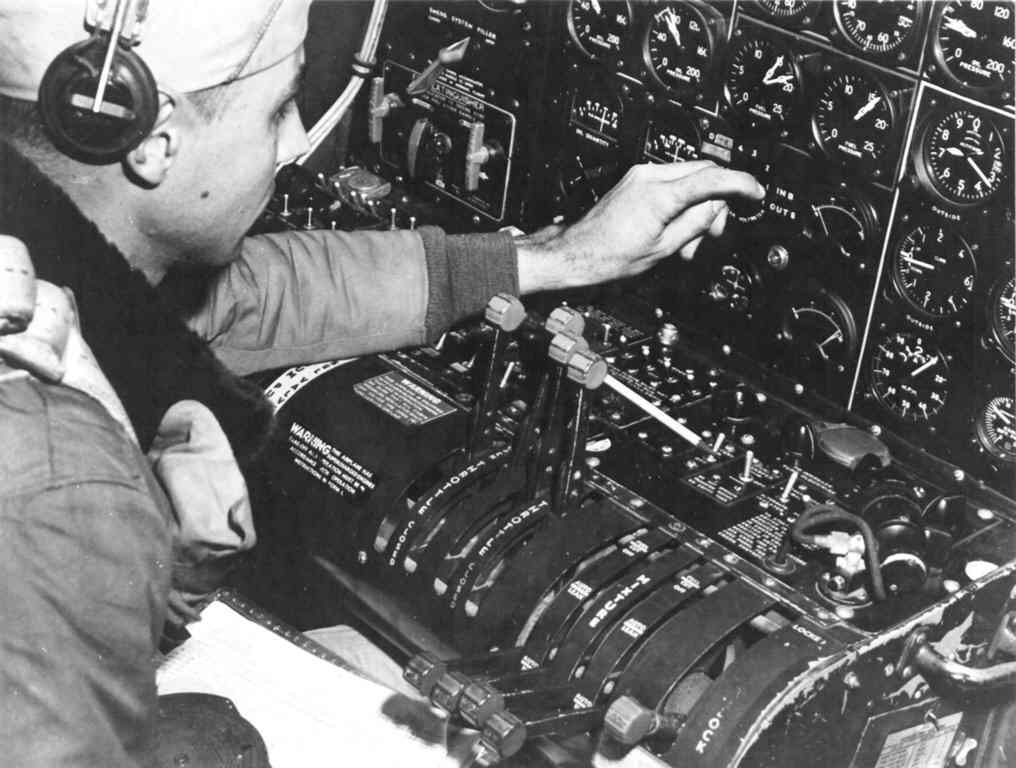
Flight engineer at controls
In accordance with the Before Starting Engines Checklist, I checked the oxygen system for proper operation and normal pressure. I placed the master and battery switches to the on position and checked that the putt-putt was on line. I checked that all panel lights and indicators were working. I opened the fuel shut-off valves, turned the fuel booster pumps on and checked that the fuel transfer switch was in the off position. Next, I checked that the mixture controls were set to the idle cut-off position and that the throttles were closed. I also checked engine, fuel and electrical gauges for proper indications and that other appropriate aircraft and electrical switches, such as engine cowl flaps and generators, were set to the proper positions for starting the engines. I opened the cabin pressure valve and I determined the amount of fuel on board via the fuel quantity gauges, which I logged in the flight engineer’s log, hereafter called the “Flight Log”.
UPON COMPLETION OF OUR CHECKS, EACH CREW MEMBER REPORTED IN TO ROCKY VIA INTERPHONE ON THE STATUS OF THEIR INSPECTION IN A PREARRANGED SEQUENCE
The pilots performed their required checks, including their oxygen systems, brake and nose gear steering pressures, operation of the flight controls (aileron, elevator and rudder), and proper positions of switches and status of flight indicators. Rocky also operated the parking brake lever, thereby engaging the brakes. Other crew members performed the required checks for their stations. Upon completion of our checks, each crew member reported in to Rocky via interphone on the status of their inspection in a prearranged sequence.
I NOTIFIED ROCKY THAT I HAD COMPLETED MY CHECKS, THAT THE ENGINES WERE OPERATING NORMALLY AND THAT I WAS READY TO TAXI
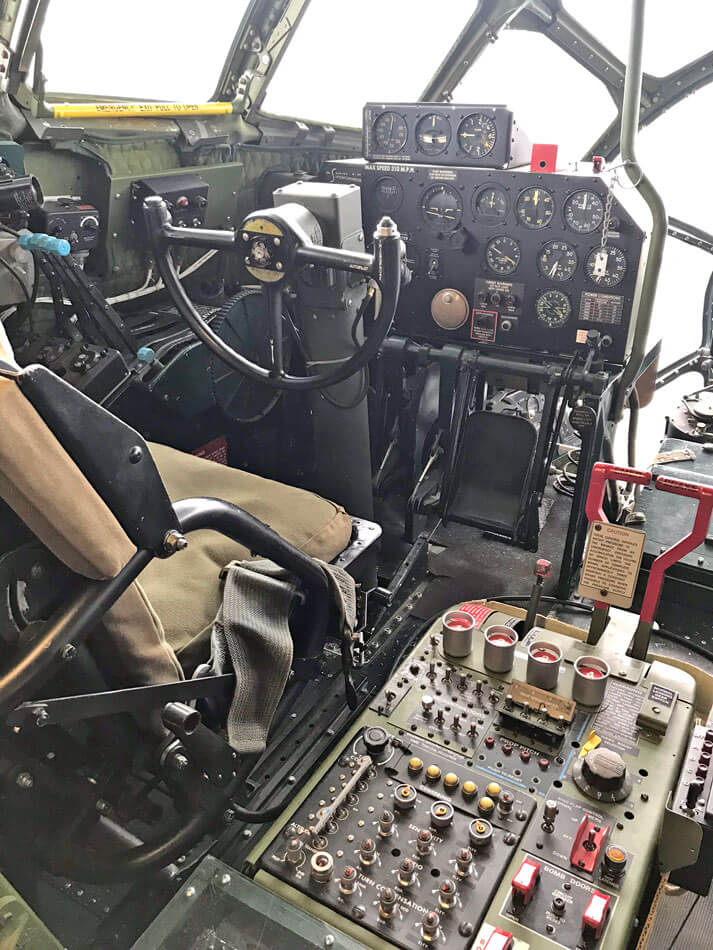
B-29 pilot controls © Kent Vincent
Upon receiving a signal from control tower personnel, Rocky told me to start the engines. Woody confirmed that a ground crew member was in position with a fire extinguisher at the front of the right wing. I turned the panel fire extinguisher switch to the number three engine position, cracked the engine throttle, moved the mixture control from idle cut-off to auto-rich and actuated the starter switch. After several revolutions, I flipped the magneto switch to the both position and the mighty engine wheezed, coughed, chugged a few times and started with a roar as the airplane began to vibrate and shake. I moved the throttle to the idle position and the engine settled down into a low and steady rumble. I scanned appropriate engine instruments, such as fuel flow and pressure, oil pressure and temperature, cylinder head temperature, and tachometer, noting that the engine was operating normally. I switched power from the putt-putt to the aircraft electrical system and started the remaining three engines. After all engines had been started and were idling, Rocky conducted the propeller and feathering motor checks. Then he advanced the number one throttle to obtain the prescribed revolutions per minute and I conducted the magneto checks. I verified that the magnetos were operating normally. The other engines also checked out okay. I notified Rocky that I had completed my checks, that the engines were operating normally and that I was ready to taxi.
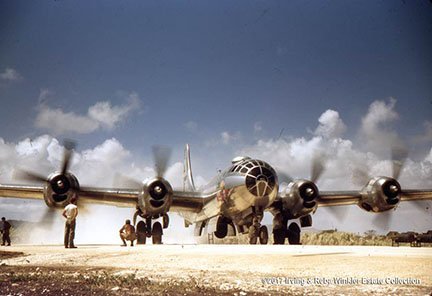
B-29 engine start © Irv Winkler
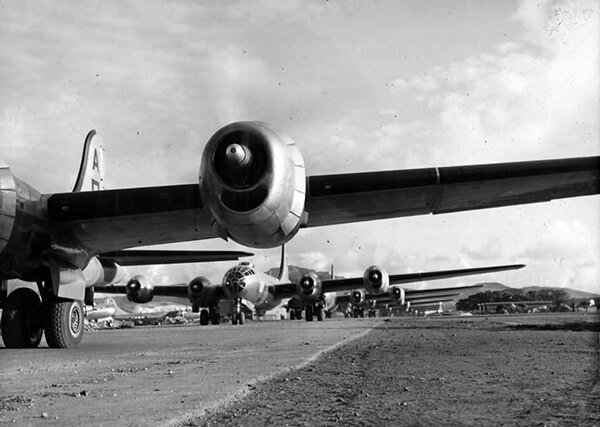
B-29s in line for take-off
WHEN ROCKY RECEIVED THE SIGNAL, HE DIRECTED THE GROUND CREW TO REMOVE THE WHEEL CHOCKS, RELEASED THE PARKING BRAKE LEVER AND ADVANCED THE THROTTLES
Meanwhile, Woody lowered the wing flops to the takeoff position as Denis closed the bomb bay doors. The wing flap and bomb bay door positions were verified by the gunners. We waited for the signal from the control tower indicating that it was our tum to join the B-29s that were taxiing to the runways for takeoff. When Rocky received the signal, he directed the ground crew to remove the wheel chocks, released the parking brake lever and advanced the throttles. As the B-29 started to lumber forward, he reduced power to keep the airplane moving at a slow rate as ground crew personnel directed him onto the taxiway where we joined the parade of bombers heading for the runways. We proceeded to the west end of the designated runway for takeoff to the east, where we joined preceding B-29s holding nose-to-tail waiting to takeoff.
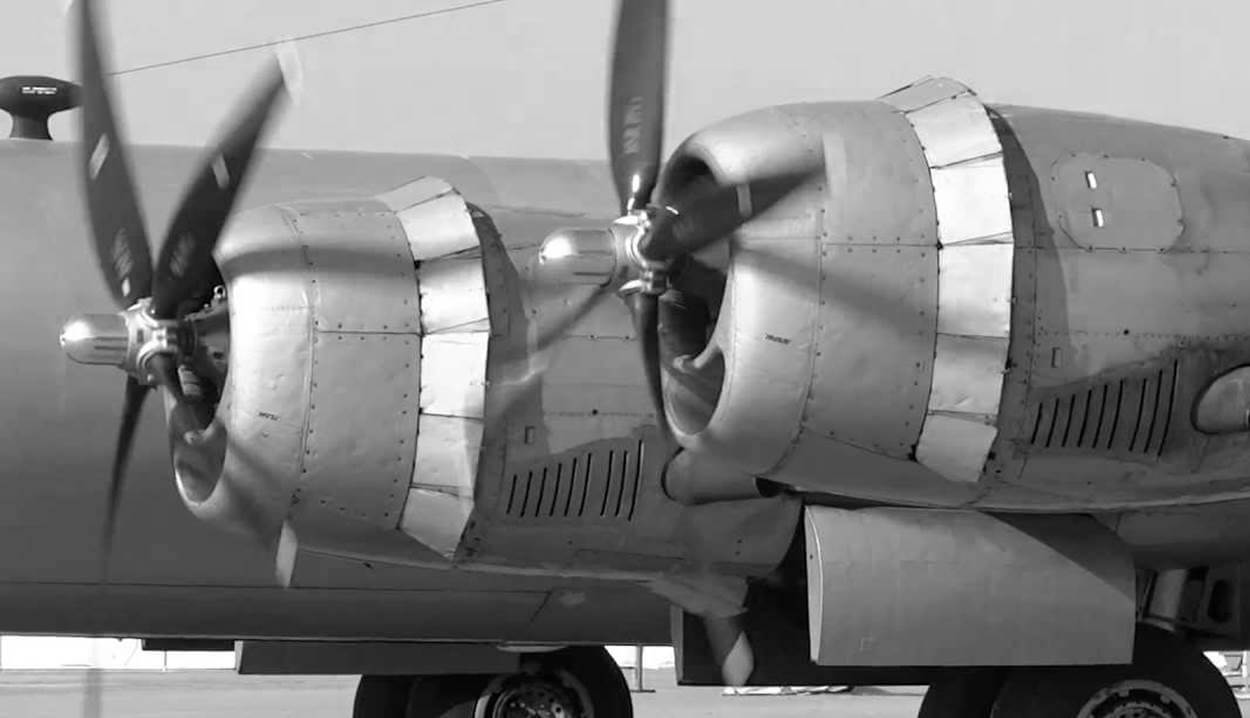
B-29 engine cowl flaps
There were potential problems for airplanes taking off to the west. The end of the runway was only a few feet higher than the surface beyond the runway. The flight path was over land for some distance prior to reaching the ocean and there was a cemetery located a short distance from the end of the runway. We were fortunate in that we never had to takeoff to the west. During my stay at Tinian, I only saw a few airplanes take off in that direction and I saw one B-29 plunge into the ocean after taking off to the west.
AS WE NEARED THE RUNWAY, I RECHECKED THAT THE MIXTURE CONTROLS WERE SET TO THE AUTO-RICH POSITION, THAT THE FUEL BOOSTER PUMPS WERE ON AND THAT THE COWL FLAPS WERE OPEN.
As we neared the runway, I rechecked that the mixture controls were set to the auto-rich position, that the fuel booster pumps were on and that the cowl flaps were open. Meanwhile, Rocky asked for another crew report as he told them to standby for takeoff. At the next signal, Rocky turned the B-29 onto the runway, using the outboard engines to steer the airplane and stopped the B-29 at the end of the runway. Takeoff of a Superfortress required the coordinated effort of the two pilots and the flight engineer to coax the huge airplane aloft. As Rocky advanced the four throttles to obtain full power while he and Woody stomped on the brakes, the mighty engines roared and the B-29 started jumping with the nose gear bouncing up and down, raring to go. I carefully checked the instruments for any sign of engine malfunctioning. When the engines were developing full power, the pilots released the brakes and the airplane began to move, slowly and ponderously at first and then accelerating until we were speeding down the coral runway.
MOST PILOTS OF OVER LOADED B-29S USED THIS BUFFER ZONE, BY LETTING THEIR AIRPLANES SETTLE TO WITHIN SEVERAL FEET OF THE [OCEAN] SURFACE AFTER TAKING OFF, THEREBY GAINING A FEW EXTRA FEET PER SECOND OF FLIGHT SPEED.
Rocky deftly guided the B-29 along the center of the runway as Woody called out the airspeed. This was my first check of the engines at full power and I constantly monitored the instruments for any indication of abnormal operation. All engines continued to operate normally. Soon we passed the decision point for safely aborting the takeoff roll and we were committed to taking off. When the airplane reached takeoff speed, Rocky pulled back on the control column, thereby applying up elevator, and the B-29 lifted off, several hundred feet from the end of the runway. Woody retracted the landing gear and slowly raised the flaps as the airspeed increased. We passed over the edge of the island which was located approximately one hundred feet above the ocean. Most pilots of over loaded B-29s used this buffer zone, by letting their airplanes settle to within several feet of the surface after taking off, thereby gaining a few extra feet per second of flight speed. I recorded the time of takeoff, duration of the take-off, fuel used and engine cylinder head temperatures in my flight log. I closed the cowl flaps and turned the fuel booster pumps off. I asked Charles to shut down the putt-putt and checked that the panel light was extinguished, indicating that it had been shut down as we transitioned into the climb phase.

B-29 take-off
Flight Assembly and Bomb Run Procedures
WHEN WE ARRIVED, ROCKY JOINED OTHER 24TH BOMB SQUADRON AIRPLANES AS THEY CIRCLED IN PLACE BEHIND THE FLIGHT LEADER’S B-29
After Rocky had levelled off at the briefed altitude and was heading for the assembly area, I moved the mixture controls to the auto-lean position. When we arrived, Rocky joined other 24th Bomb Squadron airplanes as they circled in place behind the flight leader’s B-29. Meanwhile, arriving 24th, 39th and 40th combat crews joined their respective bomb squadrons, which formed up into a group formation. For identification purposes, 313th Bomb Wing B-29s had a large black triangle painted on both sides of the rudder with a large black letter painted inside the triangle [later Circle R]. In addition, a yellow pirate bust, painted over a white disk from which a red and white streamer trailed, was located on the forward part of the fuselage. The black letter in the triangle identified group airplanes of the bomb wing. Black numbers painted on either side of the fuselage identified squadron airplanes.

B-29 formation assembly
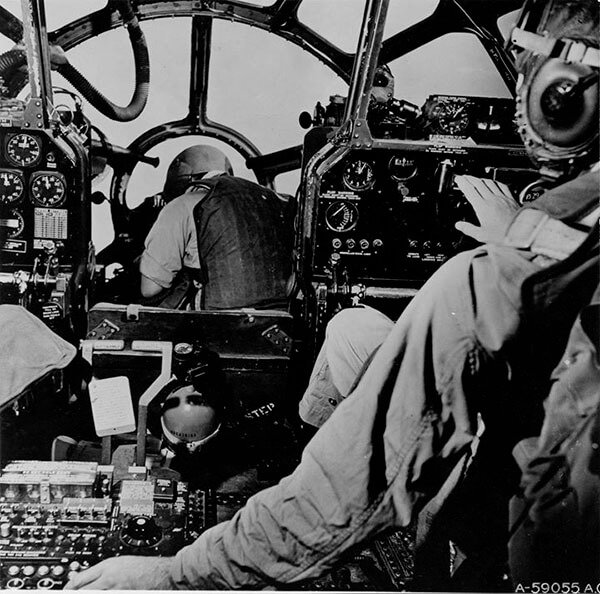
Combat ready B-29 bombardier
WHEN ALL B-29S WERE IN POSITION, THE 6TH BOMB GROUP FLIGHT COMMANDER GAVE THE ORDER TO CLIMB TO THE BRIEFED FLIGHT ALTITUDE
When all B-29s were in position, the 6th Bomb Group flight commander gave the order to climb to the briefed flight altitude. I monitored the engine instruments and periodically entered appropriate data, such as airspeed, altitude, cylinder head temperatures, engine revolutions per minute, mixture settings, fuel used and fuel flows in my flight log as we continued on our way to Truk. Sometime later, Rocky ordered the gunners to test fire their guns, after ensuring that there were no B-29s in the vicinity of their firing areas. Around noon we had a hot meal that had been heated up in ovens located in the crew compartments. After we had eaten, Rocky told the crew to don our flak equipment. I removed my parachute and headset, put on the heavy and cumbersome flak vest over my Mae West and strapped on my parachute. Next, I put on my leather flight helmet with the oxygen mask dangling from one side of the helmet. I left the mask hanging, readily available to slap on my face in the event we lost cabin pressure, and I attached the interphone cord to my helmet. Then I placed the heavy flak helmet over my flight helmet. And finally I pulled on my gloves.
WHEN WE NEARED THE TARGET AREA, AN AIRFIELD ON TRUK, DENIS TOOK CONTROL OF THE B-29, MAINTAINED A STEADY HEADING VIA THE NORDEN BOMBSIGHT, AND RELEASED OUR BOMBS WHEN THE LEAD BOMBARDIER RELEASED HIS BOMBS.
When we neared the target area, an airfield on Truk, Denis took control of the B-29, maintained a steady heading via the Norden bombsight, and released our bombs when the lead bombardier released his bombs. Soon after bombs away the CFC gunner, James Brooks, called “Fighters” over the interphone and I jumped when I heard the unexpected chatter of machine guns from the gun turret located adjacent to my station. The fighters turned out to be another formation of B-29s in the distance. Fortunately, there wasn’t any damage to accompanying B-29s due to the firing of the machine guns. Shortly thereafter, the formation dispersed upon command of the flight leader and each aircraft commander departed individually for Tinian. Rocky called Charles to make sure that the area aft of the airplane was clear prior to leaving the formation. He didn’t respond to Rocky’s call. Since the tail gunner’s compartment wasn’t readily accessible when pressurized during high altitude flight, Rocky immediately initiated an emergency descent, levelling off at an altitude where supplemental oxygen wasn’t needed. Meanwhile, he told Woody to notify the flight commander of the emergency. And he ordered the right gunner, Martin Eichelman, to check on Charles. When Charles heard the pounding on his compartment door, he opened it and Martin informed him that Rocky was trying to contact him. Charles discovered that the cord from his helmet had pulled loose from the interphone connection, thereby breaking contact with the rest of the crew. He plugged it in and contacted Rocky. Meanwhile, I removed my parachute, flak helmet, flight helmet, flak vest and re-donned my parachute, headset and relaxed a little bit.

B-29 Norden bombsite

Salvo bombs away © John Potenza
The manufacturer [Boeing] had equipped each B-29 with two ovens for providing hot meals for the crew during long flights. One oven was located in the forward crew compartment and the second was located in the aft crew compartment. The oven in the forward crew compartment was located over the nose gear wheel well. However, the nose gear wheel well was the primary bailout point for the forward compartment crew members. We discovered that in the event of an inflight emergency requiring bailout, the oven became an obstacle preventing rapid escape. Orders arrived from Air Force Headquarters, shortly thereafter directing the removal of ovens from all combat B- 29s. That was the first and only time that we carried the oven in the forward crew compartment during combat missions.
A friend of Rocky, hearing of the emergency followed our B-29 as we descended to a lower altitude. After it was discovered that there wasn’t an emergency, Rocky and his friend bet on who could get back to Tinian first. We dropped to within several hundred feet of the ocean and Rocky applied full throttle to get optimum power from the engines and obtain maximum air speed. We won that race!
Landing Procedure
I GAVE THE RESULTANT FIGURES TO WOODY FOR HIS DETERMINATION OF OUR LANDING SPEED. LANDING SPEEDS FOR VARIOUS WEIGHT AND CG CONFIGURATIONS WERE POSTED ON A PANEL AT HIS POSITION
When we were cleared to land, I went through the Before Landing Checklist. I calculated the landing weight and Center of Gravity (CG) for the current configuration of our B-29, which had changed due to the dropping of the bombs and the burning up of gasoline. I gave the resultant figures to Woody for his determination of our landing speed. Landing speeds for various weight and CG configurations were posted on a panel at his position. Next, I directed Charles to start the putt-putt while I moved the mixture controls to the auto-rich position, turned the fuel booster pumps on, opened the cowl flaps and set up other appropriate switches. As soon as the putt-putt had been started, I informed Rocky that I was ready to land.
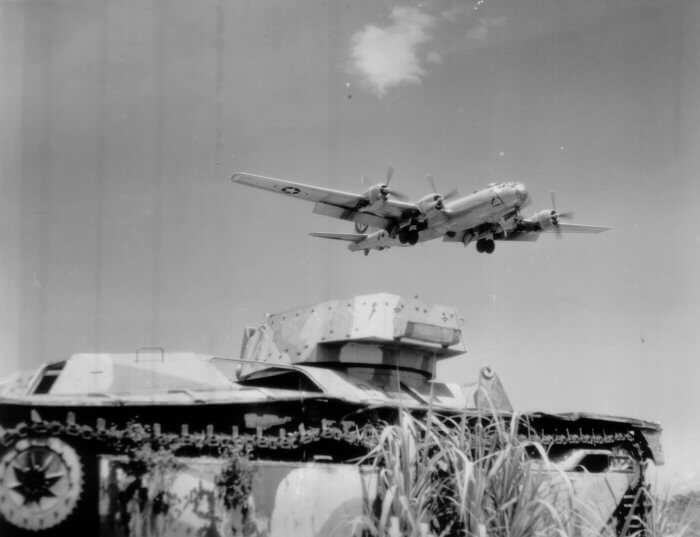
B-29 landing North Field runway D. Foreground memorial to Marines who captured Tinian © Daniel Wilhelm
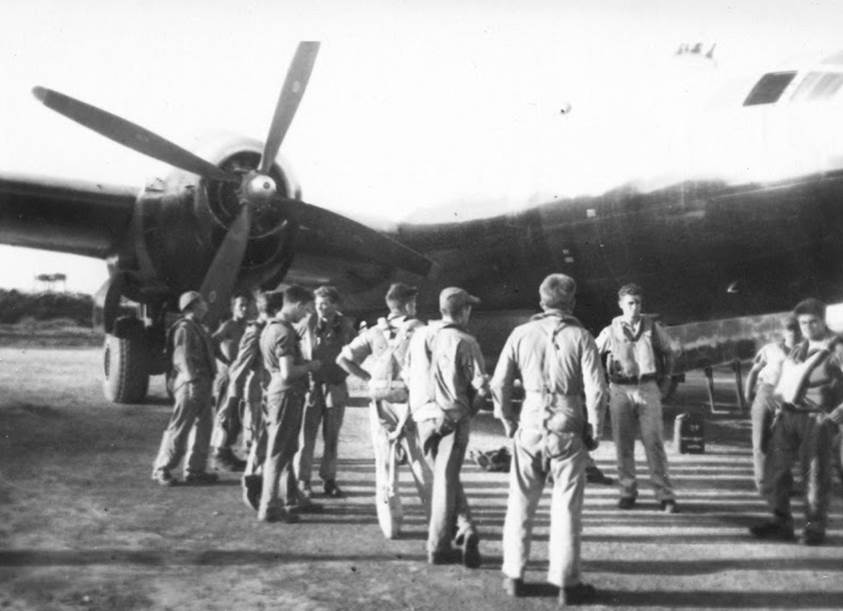
Crew meeting © John Potenza
When we reached the proper airspeed, Woody lowered the landing gear and wing flaps. The gunners verified that the main landing gear had lowered and was locked in position and that the flaps had extended properly. Woody ensured that the nose gear was in the down and locked position via a small inspection window at his station. Shortly thereafter, Rocky landed and Woody raised the flaps. Rocky taxied the airplane to the assigned parking spot in the 24th Bomb Squadron area. After the ground crew had placed chocks under the main wheels, Denis opened the bomb bay doors as I conducted the required magneto checks. I shut down the engines, turned off all appropriate switches and logged the time in my flight log. After deplaning, Rocky assembled the crew to discuss the problems we had encountered during our first combat flight. As a result of the interphone incident, Rocky established a routine for periodic reporting in by crew members during future flights.
EVERY MONTH WE FLEW MAINTENANCE CHECK FLIGHTS TO MONITOR AND BREAK IN REPAIRED AND REBUILT ENGINES BETWEEN COMBAT MISSIONS.
We flew training missions on the 20th, 25th and 26th of February in duration of two to four hours, to provide additional instructional radar identification techniques for the radar operator, Elio Cosale. These flights also provided us an opportunity to improve our inflight communication procedures and I became better acquainted with Rocky and the crew regarding inflight operations. And every month thereafter, we flew maintenance check flights to monitor and break in repaired and rebuilt engines between combat missions.
Military Life on Tinian
LEMAY INCREASED THE MAXIMUM HOURS OF COMBAT FLIGHT TO 120 HOURS PER MONTH AND ESTABLISHED 35 MISSIONS AS A TOUR OF DUTY.
It was during this time period that General Curtis E, recently assigned as commander of the XXI Bomber Command, increased the maximum hours of combat flight to 120 hours per month and established 35 missions as a tour of duty. This pleased Rocky since he was in a hurry to get back to the states and he volunteered our crew for every mission assigned to the 6th Bomb Group. I agreed with his action as I also wanted to complete our combat tour as soon as possible and return home. I’m sure the rest of the crew members felt the same way.
FELLOW CREW MEMBERS PLAYED PENNY ANTE POKER DURING MOST OF OUR FREE TIME WHILE LIVING IN TENTS
We settled down to military life on Tinian as we waited for our first combat strike against Japan. Fellow crew members played penny ante poker during most of our free time while living in tents. Some games were extreme, such as baseball with threes and sevens wild and fours receiving free cards. I didn’t play in these poker games very often since I wasn’t much of a poker player and I usually lost. At the end of the month we were paid in stateside paper currency. However, each bill contained the word “HAWAII”, printed on the reverse side.

Poker game/Playing Cards © Kenneth Spitco. All Rights Reserved
At first there were canvas bags that contained water which were located in the area for use by the military personnel. We were fortunate that by the time we arrived on Tinian, the area had improved. The Seabees had built shower stalls and trucks were used to haul water to the stalls. Sometime later, tanks were erected over the shower stalls and water was piped directly from wells to the shower tanks. The water used for showers was cold and invigorating. Empty oil drums were located throughout the bivouac area which were used to hand launder our clothes. Water was added to the empty drum and the dirty clothes were placed into the drum and finally soap was added. The clothes were moved within the drum using a stick and when clean, the clothes were rinsed and hung out to dry.
THE WINDMILL DROVE A PLUNGER WHICH BEAT UP AND DOWN ON THE SOAPY CLOTHES IN THE DRUM
Our laundry facilities improved somewhat when some enterprising individuals placed the drum on top of an old bomb rack holder and a crude windmill was placed on a stand beside the drum to take advantage of the wind. The windmill drove a plunger which beat up and down on the soapy clothes in the drum. Later, other innovative personnel replaced the windmills with gasoline driven putt-putt motors that had been removed from war weary and crashed B-29s.
Although a hot sun normally shone down on Tinian Island, there usually was a cooling breeze that blew from northeast to southwest across the island. The reason for the breeze was that there were no mountains to cut off the prevailing winds. The neighboring islands of Guam and Saipan had hilly terrain which cut off these winds and they lost their cooling effect.

Windmill driven washing machine © Paul Metro

Haircut on Tinian/6BG barber shop . ©Archie Miller. All Rights Reserved.
Iwo Jima Invasion
When we heard that the Marines had invaded lwo Jima during mid-February (see Strategic Importance of Iwo Jima ), we wished them luck. The island, located approximately 700 miles from Japan, had been a problem for our B-29 crews operating out of the Marianas. The crews had to fly a zigzag course around the island on the way to and from Japan to avoid enemy fighters and antiaircraft fire. As a result, bomb loads had to be decreased because of the additional gasoline that had to be carried to skirt the island. In addition, enemy bombers and fighters based on lwo Jima made sneak attacks against the airfield installations located on Saipan, destroying several B-29s and damaging many more, prior to our arrival. Enemy forces on lwo Jima also alerted military forces in Japan whenever our bombers were heading for the mainland.
WITH THE ISLAND IN ALLIED HANDS, IT WOULD PROVIDE EMERGENCY LANDING AREAS FOR BATTLE DAMAGED B-29S AND AIRPLANES LOW ON FUEL THAT WERE RETURNING FROM JAPAN
With the island in allied hands, it would provide emergency landing areas for battle damaged B-29s and airplanes low on fuel that were returning from Japan. It could also be used as a base for fighter escorts to protect B-29s flying over Japan and as an advanced base for the newly formed air-sea rescue units. However, we were informed that the Marines were having a hard time against the well dug in Japanese defenders.

Iwo Jima Island 1945
First B-29 Landing on Iwo Jima

9BG Dinah Might first B-29 to land on Iwo Jima, greeted by Marines March 4, 1945
THE B-29 SHUTTERED TO A HALT AT THE VERY EDGE OF THE RUNWAY. JAPANESE SOLDIERS OPENED MORTAR FIRE ON THE AIRFIELD AS CREW MEMBERS HURRIEDLY REPAIRED A BAD GAS VALVE
Although combat crews had been warned to stay away from lwo Jima, the first B-29, a combat crew from the 9th Bomb Group of the 313th Bomb Wing, landed there following a mission to Japan in early March. As the Superfortress was low on fuel, the aircraft commander could take several courses of action to save his crew. He could bail out the crew near the island, ditch the airplane in the ocean alongside the island or attempt a landing on the 4,000 foot strip on the major airfield held by the Marines. He chose to attempt a landing, setting the airplane down on the edge of the runway near stalling speed and immediately applying maximum braking power. The B-29 shuttered to a halt at the very edge of the runway. Japanese soldiers opened mortar fire on the airfield as crew members hurriedly repaired a bad gas valve, thereby freeing up the gasoline trapped in the wing fuel tank. There was enough fuel in the fuel tank for the return flight to their base on Tinian Island. As soon as the repairs had been made, the flight engineer started the engines and the aircraft commander taxied the airplane to the end of the airstrip for takeoff. The aircraft commander gunned the engines and took off, barely lifting off at the end of the airstrip amidst a hail of bullets fired at the B-29 by Japanese defenders and continued on his flight to Tinian.
On 24 February, Corporals James Brooks, Elio Cesale, Martin Eichelman and Stanley Mickiewicz were promoted to Staff Sergeant, the first promotions for our combat crew.
The Blitz
Shocking March 9 Briefing
During the afternoon of 9 March, thirty-two combat crews from the three squadrons gathered in the bomb group’s briefing building for briefings on our next mission, a bombing raid on the Japanese mainland. We sat on narrow wooden benches in the designated crew area and gossiped with fellow crew members. This was it, our first combat mission against Japan. And it would be our first long flight as a combat crew over a hostile ocean!
We were called to attention when Colonel Gibson and his briefing personnel, carrying maps and notes, entered and walked to the raised platforms in front of the room where they sat down. Colonel Gibson rose and formally opened the briefing. He stated that prior B-29 high altitude operations, conducted above 30,000 feet, had been virtually unsuccessful in inflicting major damage on Japanese war plants. In addition, many bombers were lost due to various factors, such as enemy fighters, antiaircraft fire, weather and mechanical troubles during these daylight raids. High ranking Air Force officials expressed concern of the poor bombing results produced by the raiding B-29s. Therefore, General LeMay decided to bomb Japanese installations using totally different techniques which hopefully would destroy those targets. Tokyo was designated as the first target using these techniques.

General Curtis LeMay (L)
THE BOMB RUNS WOULD BE MADE FROM LOW ALTITUDE [AT NIGHT] BY INDIVIDUAL AIRPLANES AND INCENDIARY BOMBS WOULD USED IN AN ATTEMPT TO DESTROY THE TARGET AREA
We were informed that it would be a maximum effort with all available B-29s, located on Guam, Saipan and Tinian, participating in the mission. Over 300 bombers were scheduled to fly in bomber streams to Japan for a night attack. The bomb runs would be made from low altitude by individual airplanes and incendiary bombs would used in an attempt to destroy the target area.
The 314th Bomb Wing, based on Guam, was located further from Japan than the 73rd Bomb Wing based on Saipan and the 313th Bomb Wing based on Tinian. Therefore, lead B-29s of the 314th Bomb Wing, known as pathfinders, would be the first airplanes to takeoff in late afternoon. They would be followed by the remainder of the 314th airplanes a short time later. B-29 crews located at Saipan and Tinian would start their takeoff about one hour later. There would be three separate bomber streams, one from Guam, a second from Saipan and a third from Tinian headed for Japan. A fifty second separation was to be established between individual airplanes in each bomber stream.
THE PATHFINDER CREWS WERE TO FLY OVER TOKYO ON CROSSING COURSES AND DROP THEIR INCENDIARY BOMBS AT INTERVALS OF 100 FEET TO FORM A BURNING X IN THE DESIGNATED TARGET AREA
The pathfinder crews were to fly over Tokyo on crossing courses and drop their incendiary bombs at intervals of 100 feet to form a burning X in the designated target area. Aircrews of the following forces were to drop their incendiary loads on designated targets within the marked area to start new fires. Bombing altitudes were established at 5,000 to 7,500 feet for the main forces, with the first crews arriving off the Japanese coast bombing at the lowest altitude. The next crews to arrive were directed to bomb at assigned altitudes which were increased to avoid smoke and heat from preceding bomb drops.
THE DISTANCE WAS ABOUT 1,500 MILES TO JAPAN OR APPROXIMATELY 3,000 MILES ROUND TRIP
It was quite a shock to me and other aircrew members, as we had been trained for high altitude bombing in formation as protection against enemy fighters and to lessen the effects of antiaircraft fire. We listened attentively as details of the impending raid were presented by briefing personnel. They provided information, such as the order of takeoff and scheduled times for takeoff, cruising altitudes and courses to Japan, cruising airspeeds, scheduled time of arrivals at the target, bombing altitudes and courses for the bomb run, predicted weather enroute and over the target, location of air-sea rescue units in the event of a forced ditching in the ocean, and other pertinent mission data. They stressed that it was important to fly at the briefed altitudes and airspeeds to ensure that the fifty second separation between airplanes was maintained. It was also important to bomb at the assigned altitude to get above the expected smoke and haze from previous bomb drops. The briefers stated that the distance was about 1,500 miles to Japan or approximately 3,000 miles round trip.
THE GUNS AND AMMUNITION HAD BEEN REMOVED FROM ALL PARTICIPATING SUPERFORTRESSES. WE WOULD BE DEFENSELESS AGAINST ENEMY FIGHTERS!
I couldn’t believe it when the briefers stated that the guns and ammunition had been removed from all participating Superfortresses, per General LeMay’s order. And so we were not only attacking Tokyo singly and at night from low altitude, we would also be defenseless against enemy fighters! Previously, combat crews that had flown missions over the Japanese mainland had relied on their machine guns to protect themselves against enemy fighters.
When several aircraft commanders asked for more information regarding the drastic switch in bombing procedures, Colonel Gibson informed us that because high ranking personnel were disappointed in the poor showing of the high altitude attacks on Japanese targets, General LeMay was prodded to get better results from future B-29 raids. Since General LeMay was also disappointed in the previous bombing results, he had decided to change bombing techniques. The primary reason for the poor bombing was due to several factors: bad weather which usually resulted in cloud cover over the target area below normal bombing altitudes, the extremely high winds located at bombing altitudes, winds that blew from different directions at lower altitudes through which the bombs had to fall on their way to the target, low tonnage of bombs carried to the target area due to the increased fuel load and resultant engine malfunctions due to increased power required for high altitude operation.
LOW ALTITUDE BOMBING WOULD REQUIRE LESS FUEL AND ALLOW A LARGER BOMB LOAD, ALMOST DOUBLE, THAT COULD BE CARRIED BY EACH B-29
So General LeMay decided to implement a different approach to bomb enemy targets. He planned this mission in an attempt to destroy the Japanese industrial capability to produce war material. Low altitude bombing would require less fuel and allow a larger bomb load, almost double, that could be carried by each B-29, with less stress and strain on the engines.
In addition, General LeMay felt that the night raid would surprise Japanese defenders and catch them napping. Enemy antiaircraft radar gun-ranging equipment was thought to be inefficient for night use. The substitution of searchlights for the radar controlled equipment to locate the bombers, and then determine the operating altitude would therefore reduce the effectiveness of antiaircraft weapons. In addition, it was estimated that the enemy’s night fighter capability was weak. Another reason for attacking the target at night time was to enable the combat crews to return in daylight and avoid night ditching of battle damaged airplanes. The reason given for removing the guns was that General LeMay thought nervous gunners would be shooting at each other more than at Japanese fighters.
THE INTENT WAS TO START FIRES IN THESE INFLAMMABLE HOUSING AREAS WHICH WOULD HOPEFULLY SPREAD AND DESTROY IMPORTANT WAR PRODUCTION PLANTS THAT WERE LOCATED WITHIN THE TARGET AREA
We were informed that much of the Japanese aircraft and related war production items had been dispersed around neighboring homes for piecemeal manufacture of parts to be assembled at adjacent production plants. Therefore, it appeared that the only way to destroy Japan’s war production capability was to fire bomb these buildings. Dropping newly developed and highly effective incendiary bombs, the intent was to start fires in these inflammable housing areas which would hopefully spread and destroy important war production plants that were located within the target area. We were also informed that if this fire raid was successful, three more important Japanese cities that contributed greatly to the war effort would be fire bombed by our B-29s in upcoming days.

Armorers fuse 500lb incendiary bombs that have been loaded into a 500th Bomb Group B-29 Superfortress. (National Archives)
Briefing personnel warned us to fly a dogleg around lwo Jima, thereby bypassing the island which was still under attack by the Marine Corps. They stated that in the event of battle damage or mechanical failure the pilots should attempt to reach Tinian or ditch near rescue units stationed along our flight path. At the end of the general briefing the bomb group chaplain prayed for the safe return of all participating airmen. After the general briefing broke up, crew members went to specialized briefings. I attended the briefing for flight engineers where we received additional data, such as the gasoline and bomb loads. Our bomb load of seven tons consisted of twenty-four canisters containing six-pound incendiary bombs. We were also given preplanned flight data regarding cruise control procedures, power settings, and related information.
WHEN I LEFT THE BRIEFING AREA, I WAS REALLY SCARED AND I FELT THAT THIS WAS GOING TO BE A ONE WAY FLIGHT TO JAPAN. MOST OF THE CREW WROTE FINAL LETTERS TO FAMILY AND FRIENDS WHICH WE GAVE TO FRIENDS TO HOLD FOR US.
When I left the briefing area, I was really scared and I felt that this was going to be a one way flight to Japan. Fellow crew members expressed similar concerns. We returned to our tents to get ready for our first mission against the Japanese mainland. Most of the crew, myself included, wrote final letters to family and friends which we gave to friends to hold for us. They were told to mail the letters in the event we didn’t return from this mission, which we thought was suicidal.
I DREADED THE POSSIBILITY OF BEING FORCED TO BAIL OUT OR DITCH IN THE OCEAN DUE TO BATTLE DAMAGE INFLICTED ON OUR B- 29
Even if we survived the flight over enemy territory, I dreaded the possibility of being forced to bail out or ditch in the ocean due to battle damage inflicted on our B- 29. And there was always the possibility of having to bailout or ditch due to mechanical failure during our long flight to and from Japan. There was one bright spot in my thoughts concerning our flight over the ocean. If we had to ditch because of mechanical problems or if we survived enemy fighters and antiaircraft fire during our attack and managed to reach the ocean and had to ditch our airplane, a rescue unit would probably be nearby to assist us.
Search and Rescue – Submarines and Dumbos
A search and rescue organization had been officially established in late 1944 as the Air-Sea Search and Rescue Organization to support B-29s operating out of Saipan. Search and rescue equipment included Navy submarines, destroyers, aircraft (Catalinas and Mariners) and Army B-17s. The airplanes called “Dumbos,” carried survival equipment, such as pneumatic life rafts, provisions, radios and emergency equipment, which could be dropped to downed airmen. However, they lacked the range and armament to patrol close to Japan where most of the battle damaged bombers went down.
During February, 1945, several B-29 Superfortresses, modified to carry droppable lifeboats and other rescue equipment and dubbed “Super Dumbo” B-29s, were added to the search and rescue organization. They had the range and armament to protect themselves while operating near the Japanese mainland. And they could drive off enemy ships and aircraft attempting to attack rescue vessels or helpless men in the water.
DESTROYERS AND SUBMARINES WERE POSTED AT INTERVALS ALONG THE ROUTE, AND LONG RANGE AIRCRAFT PATROLLED THE AREAS IN BETWEEN
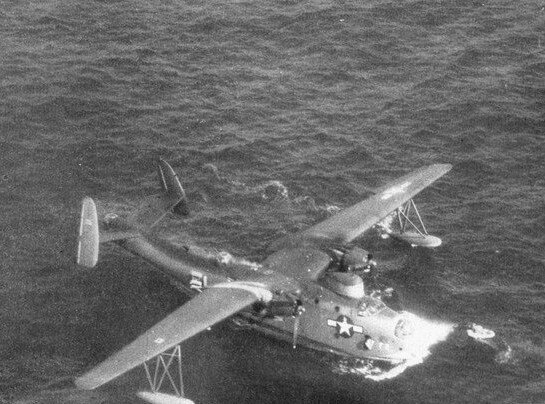
Martin PBM Mariner Dumbo rescues pilot
Prior to a B-29 mission to Japan, a line of search and rescue units was established along the flight path to Japan. Destroyers and submarines were posted at intervals along the route, and long range aircraft patrolled the areas in between. Several submarines were also directed to proceed to the coast of Japan where they remained on patrol throughout the mission. Combat crews participating in the raid were given the location and radio frequencies to contact these rescue units during mission briefings.
Firebombing of Tokyo – March 9
We had a meal at the mess hall, picked up some cans of fruit juice and peanut butter sandwiches for our long flight and returned to our Quarters where we prepared for our mission to Tokyo [6BG Mission 10]. I donned my flight suit, buckled on the pistol belt containing my first aid kit, holster, pistol, filled canteen and hunting knife. In addition, I carried an extra ammunition belt, loaded with tracer bullets, which I slung over my shoulder and waist. The purpose of the knife was to sever tangled parachute shroud lines in the event of bailout or tangled lines of a life raft during ditching. The pistol and tracers were to be used to contact allied search and rescue personnel in the event I ended up in the ocean. It was not my intention to fight the enemy, in the event I had to bailout over or ditch near the Japanese mainland. I put on my Mae West and shoved some candy bars in my pocket to munch on during the flight to Japan. Finally I picked up my flight and survival equipment, flight engineer bag and proceeded with fellow crew members to the squadron pickup area.
A military truck was waiting for us, which we boarded, and we went to the equipment building where we picked up our parachutes. From there we were transported over bumpy coral roads to the B-29 parking area in a convoy of trucks carrying fellow crew members. The mood was somber and there wasn’t much talking and joking about this mission as on our shakedown mission over Truk. We realized that we were making our first direct strike against Japan with a big change in bombing tactics. And it appeared to me that there was a high probability that we could be shot down by enemy fighters or antiaircraft guns.
WE PLACED OUR FLIGHT AND SURVIVAL GEAR AT THE FRONT OF THE AIRPLANE AND STARTED OUR INSPECTIONS

24th Mess Hall © Gilbert Godin. All Rights Reserved
We placed our flight and survival gear at the front of the airplane and started our inspections. I conducted my walk around tour noting that bomb canisters were attached to the bomb shackles. I examined the tires for tread wear and checked the general condition of the external surfaces of the B-29. I noted that the panels for the two seven-man life rafts were closed and tagged to indicate the presence of the rafts. One life raft compartment was located near the forward cabin for use by the pilots, bombardier, navigator, radio operator and flight engineer. The second compartment was located near the aft cabin for use by the four gunners and radar operator.
Upon completion of the external checks, I joined the crew at the nose of the B-29. Rocky conducted a final inspection of the crew and handled each member a bottle of no-doze pills. The group flight surgeon had issued the pills during the briefing to each aircraft commander. I never used the pills during our combat missions and I understand that most of our crew members didn’t use them

Pre-flight inspection © Percy Tucker

Jones (Woody) Woodward, pilot © Archie Miller
WE WORKED OUT A SCHEDULE WHEREBY SEVERAL DESIGNATED CREW MEMBERS WERE AWAKE IN EACH CREW COMPARTMENT WHILE THE REMAINDER OF THE CREW RESTED DURING THE FLIGHT
Instead, we worked out a schedule whereby several designated crew members were awake in each crew compartment while the remainder of the crew rested during the flight. For example, the navigator, Archie Miller, plotted the course to Japan while Denis rested. After the return flight to the Marianas was established, Denis took over the navigation duties while-Archie rested. Woody and I would doze for a short time while Rocky watched my instrument panel for any abnormalities. Then Rocky and the radio operator, David Evans, would rest while Woody and I resumed our duties. And so we alternated our rest routine as the return flight progressed, especially during the night hours. In the aft compartment, two gunners were always seated in the left and right blisters watching for other aircraft and observing any engine abnormalities, such as backfiring and oil leaks. For example, Charles usually slept on the way to the target and flew in one of the blister gunner’s seats on the return flight. Meanwhile, off duty crew members rested. When I went into my rest routine, I continued to listen for any change in the drone of the engines until I finally dropped off into a fitful sleep.
After the inspection, we assisted the ground crew in pulling the propellers through several revolutions and it was time to board the airplane. I proceeded to my station and went through the pre-starting engine checklist. The oxygen system checked out okay. I noted that engine, fuel and electrical instrument gauge readings were normal and I logged the amount of fuel in each wing tank in my flight log. Next, I noted that the putt-putt was running and on line and I set appropriate controls and switches to the proper position for starting the engines. I gave the status of my checks to Rocky during the crew reporting phase.

6BG crews in flight prep
As I waited for the signal to start engines, I again thought about the mission to Japan. This was it, our first long distance flight as a combat crew to bomb the enemy homeland! Suddenly it was time to start the engines. After starting the four engines, I conducted the magneto checks and all engines checked out okay. I informed Rocky that everything was normal and that I was ready to taxi.
Denis closed the bomb bay doors and Woody lowered the wing flaps. A short time later, Rocky received the signal to taxi to the runway. He released the brakes and advanced the throttles. When the B-29 started to lumber forward, he reduced power to keep the airplane moving at a slow rate as the crew chief directed him onto the taxiway where we joined the long line of B-29s heading for the runways. I monitored the engine instruments and as we neared the runway, I rechecked that the mixture controls were set to the auto-rich position, that the fuel booster pumps were on and that the engine cowl flaps were open. Rocky stopped the airplane at the end of the runway and he and Woody stomped on the brake pedals to hold the B-29 in place while waiting for tower personnel to fire a white flare, indicating a ten second interval until takeoff.
I THOUGHT ABOUT THE TAKEOFF, A FORTY TO FIFTY SECOND ROLL DOWN THE RUNWAY, ABOARD A COMBAT LOADED B-29 CARRYING 7,000 GALLONS OF FUEL AND A FULL LOAD OF INCENDIARY BOMBS, RESULTING IN A TAKEOFF WEIGHT OVER 65 TONS!
I thought about the takeoff, a forty to fifty second roll down the runway, aboard a combat loaded B-29 carrying 7,000 gallons of fuel and a full load of incendiary bombs, resulting in a takeoff weight over 65 tons! Takeoff of a normally loaded airplane of 60 tons was a time of anxiety for the crew and that of a heavily loaded B-29 was extremely dangerous because loss of power of an engine normally resulted in a crash with the ever presence of fire and loss of the crew. And after takeoff, engine malfunctions could result in the airplane crashing into the ocean.
6TH BOMB GROUP CLERGY BLESSED EACH PARTICIPATING AIRPLANE AS IT STARTED THE TAKEOFF ROLL
Although I didn’t observe the ritual, 6th Bomb Group clergy blessed each participating airplane as it started the takeoff roll for the mission to Tokyo. We certainly needed all the help we could get for this mission!
When the white flare was spotted, a ground crew member standing off to one side and in front of our airplane, raised his hand holding a flag, indicating that it was our turn for takeoff. Rocky immediately advanced the four throttles to obtain maximum power for takeoff while I checked that each engine was operating at full power and that all engine instruments continued to give normal indications.
A FEW SECONDS LATER A GREEN FLARE ARCHED INTO THE AIR AND AT THE SAME TIME THE GROUND CREW MEMBER DROPPED HIS UPRAISED HAND HOLDING THE FLAG. BOTH SIGNALS INDICATED THAT IT WAS TIME TO ROLL
We were ready for takeoff. A few seconds later a green flare arched into the air and at the same time the ground crew member dropped his upraised hand holding the flag. Both signals indicated that it was time to roll. With the four engines developing full power, the pilots released the brakes and the heavily laden airplane slowly started to move. We were on our way for our first combat mission against Japan! I anxiously watched the engine instruments for any indication of an abnormality. After a long takeoff roll, Rocky applied up elevator, the airplane left the runway and we were airborne. We had made a good takeoff. Woody retracted the landing gear and gradually retracted the flaps. I recorded pertinent information in my flight log. After leveling off at the flight altitude, Rocky banked the airplane to get on the departure course for lwo Jima and Japan. And soon after the briefed airspeed was established, I set up the first cruise control configuration according to the preplanned flight plan, making sure that we could maintain the airspeed at this power setting. Next, I moved the mixture controls from the auto-rich to the auto-lean position observing that the engines continued to operate normally. In this configuration, the engines produced sufficient power to maintain the airspeed and altitude with the least amount of fuel being consumed by them.
Meanwhile, Rocky set up the autopilot, nicknamed “George” as for “Let George do it.” With the altitude and heading set to the zero or neutral position, and the cruising altitude and heading stabilized, Rocky engaged the autopilot to the flight controls. Now the autopilot maintained the heading and altitude, relieving the pilots of manually flying the airplane, which was especially useful during long flights.
WE WERE FLYING ALONG IN THE BOMBER STREAM SEPARATED BY A FIFTY SECOND INTERVAL FROM THE B-29 IN FRONT OF US AND HOPEFULLY A FIFTY SECOND LEAD OVER THE B-29 BEHIND US
We were flying along in the bomber stream separated by a fifty second interval from the B-29 in front of us and hopefully a fifty second lead over the B-29 behind us. I periodically checked the fuel and oil quantity gauges and verified that the engines were operating okay. As the engines burned up gasoline, the weight of the airplane was reduced and the engine speed (power output) could be lowered while maintaining a constant airspeed. I continued to reduce the engine speed with attendant reduction in fuel consumption as we proceeded along the flight path.
THE AIRCRAFT MALFUNCTION REPORT WAS ANOTHER FORM THAT I WAS RESPONSIBLE FOR. IT WAS USED BY MAINTENANCE PERSONNEL TO CORRECT NOTED DISCREPANCIES PRIOR TO THE NEXT MISSION

B-29 in route to Japan © Percy Tucker
When we passed lwo Jima, off to the side of our airplane, Rocky turned the B-29 to the new heading for Japan using the trim knob on the autopilot. Soon after, we flew into some clouds which got thicker as we proceeded on our flight. And we encountered some turbulence. Several hours later we flew out of the weather. However, my attention was focused on the engine instruments as I entered pertinent data in my flight log every hour. Similar information was required for power setting changes during climbs and descents. The Aircraft Malfunction Report was another form that I was responsible for. It was used to list and describe engine malfunctions that occurred during the flight. This form was given to the crew chief at the conclusion of the flight and a copy was given to the 6th Bomb Group Flight Engineer during debriefing. It was used by maintenance personnel to correct noted discrepancies prior to the next mission.

B-29 navigator plotting position
Periodically I thought about our first mission to Japan and our radical change in bombing tactics, the potential effectiveness of enemy antiaircraft fire, and the possibility of enemy fighters attacking our defenseless B-29.
As the flight progressed, I compared actual fuel consumption figures with the planned fuel consumption estimates. I noted that the actual fuel used was close to the estimates that had been established for this flight.
Seated opposite me at his small fold-out table, navigator Archie Miller kept busy plotting our position and comparing the results against the preflight prepared navigation course. He kept us on course and about six hours after deporting Tinian, we approached the coast of Japan around midnight.
THE INTERVOLOMETER AUTOMATICALLY RELEASED A BOMB CLUSTER ALTERNATELY FROM THE FRONT AND REAR BOMB BAYS AT REGULAR INTERVALS TO MAINTAIN THE LONGITUDINAL BALANCE OF THE AIRPLANE DURING THE BOMB DROP
When I heard the pilots talking about a glow on the horizon, I looked over my right shoulder and I saw an orange glow through the pilot’s window. As we approached the coast of Japan, the orange glow increased in intensity and gradually evolved into a bright reddish color extending for miles in front and to the sides of our airplane. Rocky told us to put on our flak vests and helmets. Soon after, Rocky turned to the briefed heading for our bomb run at the designated bombing altitude of 6,300 feet and firewalled the throttles. Brief glimpses out the windows revealed a hellish scene of angry pulsating flames reaching for our airplane with blazing tracers zooming up from the ground and blinking white flares of bursting antiaircraft shells. Near the target, Denis took control of the airplane through the Norden bombsight while Rocky maintained a constant airspeed of 250 miles per hour. The bomb run normally took about ninety seconds, an eternity for the crew since the airplane had to fly on a straight and level attitude. And the airplane was most vulnerable to antiaircraft fire when it was locked on course during the bomb run since the ground defenses had an easier time to track the airplane. Nearing the release point, Denis actuated the bomb door switch which opened the fast acting bomb bay doors. At the release point, he activated the bomb release switch and a timing mechanism, called an intervolometer. The intervolometer automatically released a bomb cluster alternately from the front and rear bomb bays at regular intervals to maintain the longitudinal balance of the airplane during the bomb drop. Upon impact, each incendiary bomb started a fire.

B-29 View - May 25, 1945 Tokyo firebombing
WHEN WE ENTERED THE CLOUD, THE B-29 SHOT UPWARD AT A TERRIFYING SPEED FOR ABOUT A MILE
I breathed a sigh of relief when Lt. lnkel announced those eagerly awaited words “Bombs away”. He closed the bomb bay doors and returned control of the airplane to the pilots. Soon after the bombs were released, Rocky informed Woody that he was heading for the cloud cover on our right in an attempt to elude the heat and smoke from the hellish fires below. When we entered the cloud, the B-29 shot upward at a terrifying speed for about a mile. Just as abruptly, we stopped ascending. When the airplane stopped rising, I found myself heading for the cabin ceiling. Only my legs, pinned under the panel, restrained me since I hadn’t refastened my seat belt after I had donned my flak gear! All unrestrained items bounced around, including my flashlight, flight log, pencils and other loose equipment which fell to the floor. I smelled gasoline fumes, which worried me until I remembered that the fumes were a result of the gasoline sloshing about in the fuel tanks, which normally entered the cabin when unpressurized.

Violent smoke cloud over Tokyo firebombing
IT TURNED OUT THAT WHAT ROCKY THOUGHT WAS A CLOUD WAS ACTUALLY A VIOLENT, SMOKE-FILLED THERMAL THAT WAS CREATED BY THE INTENSE FIRES RAGING IN THE TOKYO AREA!
Woody, looking out Rocky’s window on the left side of the airplane, shouted “we lost our left wing”! There were several moments of terror until we realized that the B-29 was still intact and that we were flying with a low left wing and a high right wing. The airplane had rolled longitudinally during the rapid ascent. It turned out that what Rocky thought was a cloud was actually a violent, smoke-filled thermal that was created by the intense fires raging in the Tokyo area!
As soon as we recovered from the effects of the thermal and regained normal flight, Rocky turned the airplane to the heading for Tinian that was provided by Archie. When we left Japan and were flying over the ocean, we removed our heavy flak equipment. Rocky reduced power on the engines and established the cruising speed that I had determined using cruise control charts based on the airplane weight and altitude. The object was to return to base at an optimum airspeed and maximum range at minimum fuel consumption. Then Rocky engaged the autopilot.
And finally, crew members went into their prearranged rest routine. I was very tired as I laid back against the seat back with my headset on and closed my eyes. I continued to listen to the throb of the engines until I fell asleep a short time later. The flight progressed satisfactorily as the night slowly passed by. We skirted lwo Jima and early in the morning on 10 March we landed at North Field.

Side gunner relaxes mid-flight © Gilbert Godin
Although we were tired, we were happy that our first combat mission against Japan was over, that we had survived the mission and had returned to Tinian in good shape. We felt that we had finally struck a powerful blow against the enemy. After we had parked the airplane in the squadron area, I performed the magneto checks, shut down the engines and logged the time in the flight log. After unloading our flight gear, I chatted with the crew chief about the condition of the airplane and handed him the original Aircraft Malfunction Report that I had completed in duplicate during the flight. Then I boarded the military truck with the rest of the crew and we headed for the group briefing room.

Meeting with ground crew
The room was full of chattering crew members who had preceded us on the raid against Tokyo. We joined them and discussed our experiences over Japan. I heard many comments, such as “General LeMay was right about the Japanese night defenses.” “We caught the Jap defenses asleep”. ”We really plastered Tokyo on this raid.” Even though we had some problems, we managed to plant our bombs in the target area and “we are finally in business”. The chatter continued and each crew member received a shot of whiskey as we waited for our turn at debriefing.
When we met with the debriefer he asked if we had encountered any enemy fighters, searchlights and antiaircraft fire. He also asked for information regarding our bombing time and altitude, airspeed, visibility over the target area, and our impressions of the fire storm in the target area. When Rocky told him of our encounter with the thermal after releasing the bombs, we were surprised to learn that many combat crews had similar experiences. Then we broke up for further interrogations according to crew specialties. I handed the duplicate copy of the Aircraft Malfunction Report to the 6th Bomb Group Flight Engineer for appropriate follow up action.
SEVERAL B-29S FROM OTHER UNITS WENT INTO FATAL DIVES AND CRASHED INTO THE TARGET AREA AFTER ENCOUNTERING THE UNEXPECTED THERMALS
Later, we heard that all participating 6th Bomb Group B-29s had survived the mission. However, several B-29s from other units went into fatal dives and crashed into the target area after encountering the unexpected thermals. Apparently the pilots lost control trying to recover from the effects of those wild updrafts. And some B-29s were downed by antiaircraft fire. Of the 279 Superfortresses that attacked Tokyo, forty-two were damaged by antiaircraft fire and fourteen were lost due to various causes.
WE ENJOYED THE MEAL, IN SPITE OF THE FACT THAT IT CONSISTED OF DEHYDRATED MILK, DEHYDRATED EGGS, DEHYDRATED POTATOES AND SPAM
After debriefing, we proceeded to the equipment building and unloaded our parachutes. We left our flight and survival gear in our huts and headed for the mess hall for a hearty meal. We enjoyed the meal, in spite of the fact that it consisted of dehydrated milk, dehydrated eggs, dehydrated potatoes and spam. Then it was back to our tent for rest and relaxation as we were very tired. We also retrieved our doomsday letters, thankful that we had survived our first major combat mission, a low level attack against Tokyo.
Firebombing of Nagoya – March 11
WE WERE INFORMED THAT SINCE THE TOKYO FIRE RAID WAS A SUCCESS, THERE WOULD BE THREE MORE MAXIMUM EFFORT FIRE RAIDS AGAINST MAJOR JAPANESE CITIES
We loafed and took it easy for one day and then on 11 March, we attended another briefing. Thirty-two combat crews were present. We were informed that since the Tokyo fire raid was a success, there would be three more maximum effort fire raids against major Japanese cities. The next target selected for fire bombing was the port city of Nagoya (6BG Mission 11).
WE FELT BETTER WHEN WE WERE TOLD THAT SOME MACHINE GUNS WERE TO BE REINSTALLED ON OUR AIRPLANES PER GENERAL LEMAY’S ORDER
Again all operational B-29s stationed in the Marianas would take part in the raid. Details of the mission were presented with takeoff scheduled for late afternoon. The crews were again instructed to bypass lwo Jima as the battle for the island was still in progress. We felt better when we were told that some machine guns were to be reinstalled on our airplanes per General LeMay’s order. He suspected that the Japanese had recovered from the night incendiary attack against Tokyo and would send up more night fighters.
After the briefing, we picked up our flight and survival gear and proceeded to the flight line. Shortly after my walk around checks, Rocky lined up the crew for final inspection. We then assisted the ground crew in pulling the propellers through several revolutions and boarded the B-29. I performed my preflight checks, started the engines and conducted the magneto checks. The engines checked out okay and when the signal was received, Rocky took over throttle control and taxied to the active runway. Shortly thereafter, we received the signal to takeoff and once more we proceeded on our takeoff run. I noted that all engine indications were normal as we reached the decision point and Rocky continued the takeoff roll. He transitioned the B-29 into the climb phase and soon thereafter turned to the departure heading. After we were on course at the briefed altitude and airspeed, I set up the first cruise control configuration while Rocky engaged the autopilot. We flew along in the bomber stream, maintaining our altitude and airspeed.

6BG flight line © John Potenza
After we passed by lwo Jima, Rocky turned the airplane to the preplanned course for the coast of Japan. As we flew on into the evening hours, we were treated to a spectacular sunset. A huge orange sun slowly sank into the ocean while the surrounding clouds assumed a colorful hue. I continued to monitor the engine instruments and log pertinent data in the flight log. Comparison of actual fuel flow figures with estimated fuel consumption figures indicated that our fuel consumption was normal, as we continued on our flight to Japan.
I COULD SEE A LARGE NUMBER OF SEARCHLIGHT BEAMS AROUND THE PORT CITY OF NAGOYA, FRANTICALLY CRISSCROSSING THE NIGHT SKY AS THEY SEARCHED FOR OUR B- 29S

Anti-aircraft searchlights March 1945
Around midnight we approached the enemy coastline at 7,300 feet, the briefed altitude. When I looked out the forward windows, I could see a large number of searchlight beams around the port city of Nagoya, frantically crisscrossing the night sky as they searched for our B- 29s. I also noted that the fire within the target area wasn’t as intense as the Tokyo fire. Denis, sitting in the bombardier’s position, jokingly said, “Look at all the searchlights, lets drop our bombs on the dock area and get out of here,” or something similar. Rocky replied “we came all the way from Tinian to bomb Nagoya and that’s what we are going to do”. We proceeded to the target area, outlined by the pathfinder’s incendiary bombs.
DENIS TOOK CONTROL OF THE B-29 AND OPENED THE BOMB BAY DOORS. HE ACTUATED THE BOMB RELEASE SWITCH AND THE INTERVOLOMETER AUTOMATICALLY RELEASED THE BOMB CLUSTERS
Approaching Nagoya, we flew into the glare off several searchlight beams located near the waterfront. Suddenly several searchlight beams illuminated our B-29. They locked onto us and stayed with us, as if glued to the airplane, throughout the bombing run. I steeled myself as I waited for flak to strike the airplane. Denis took control of the B-29 and opened the bomb bay doors. He actuated the bomb release switch and the intervolometer automatically released the bomb clusters. This time the intervolometer was set to provide bomb impact points further apart than those at Tokyo.
Although there was some antiaircraft fire around the fringes of the city, we didn’t get hit by any flak. And thank goodness, we didn’t encounter any enemy night fighters. As soon as the bombs were released, Denis closed the bomb doors and returned control of the airplane to the pilots. Rocky immediately made a steep left turn to escape the glare of the searchlights, headed for the coast and turned on the heading for Tinian. As we departed the enemy coastline, the gunners continued to watch for enemy fighters. When we were beyond the estimated range of enemy fighters, we settled down for the long flight home.
Our return flight was uneventful as we flew along during the night hours towards Tinian. The night faded as the dawn slowly arrived and we were greeted by a huge sun rising from the ocean. The clouds were lit up with brilliant colors as the sun rose into the sky. The sunrises and sunsets that I observed during the flights over the Pacific Ocean were the most spectacular ones that I had ever seen. I also saw the Southern Cross during my stay in the Marianas. We landed at Tinian, tired and dirty, and after debriefing, we returned to our area for a hot meal and to our tent for much needed rest. Later we wrote letters and loafed.
We heard that 285 Superfortresses had taken part in the Nagoya raid. Participating combat crew members reported very light fighter opposition. One bomber was lost and twenty-four damaged by antiaircraft fire.
Firebombing of Osaka – March 12
IT WAS THE SECOND LARGEST JAPANESE CITY, WHICH WAS PACKED WITH SHIPYARDS, FACTORIES MAKING MACHINE TOOLS AND ELECTRICAL EQUIPMENT PLANTS
On the 13th of March, we attended a briefing for combat mission number four. Twenty-nine combat crews from the 6th Bomb Group also attended. We were informed that this was to be another maximum effort fire raid, against the city of Osaka (6BG Mission 12). It was the second largest Japanese city, which was packed with shipyards, factories making machine tools and electrical equipment plants. And there was an Army arsenal located there. Osaka was considered to be an important target.
That afternoon we picked up our flight and survival gear and proceeded to the flight line. I completed my external checks, lined up for final inspection and boarded the airplane. After engine startup, I conducted the engine checks, which were normal. Rocky taxied to the runway and commenced the takeoff upon receiving the signal to do so. I monitored the engine instruments which indicated that the engines were performing normally. Shortly thereafter we climbed to the departure altitude and I set up my first cruise control configuration. Once more we were in a bomber stream headed towards lwo Jima and Japan.

Landfall location identified by radar image of coast and map
Several hours later, we passed abeam of lwo Jima and turned towards the Japanese mainland. I monitored the engine instruments and logged pertinent data in my flight log at specified intervals. The hours slowly passed by and about midnight we neared the coast of Japan at an altitude of 5,100 feet. Elio Casale identified the approaching coastal area on his radar set and Archie gave the pilots the direction to the target city. Rocky turned the airplane to the course which would take us to Osaka. We soon discovered that the target area was covered by clouds. However, we could see the glare of the fires that had been started by preceding bombs and Denis took control of the B-29 and dropped the bombs into the target area. We didn’t see any enemy fighters or encounter any flak during our flight over Japan.
We landed later that morning and proceeded to the debriefing building. We heard that a 40th Bomb Squadron B-29, participating in the Osaka raid, had crashed during takeoff. Fortunately, the entire crew had escaped from the burning airplane.
THEIR AIRPLANE HAPPENED TO BE DIRECTLY ABOVE THE ARSENAL WHEN IT BLEW UP WITH A TREMENDOUS BLAST. THE B-29 WAS HURLED UPWARD ABOUT 5,000 FEET, FLIPPED UPSIDE DOWN, WENT INTO A SLOW ROLL, AND PLUMMETED TOWARDS THE GROUND.
Altogether 274 Superfortresses had bombed Osaka. Although participating crews reported light enemy air opposition, two B-29s were lost and thirteen were damaged during the raid. One crew had a harrowing experience when the military arsenal was hit. Their airplane happened to be directly above the arsenal when it blew up with a tremendous blast. The B-29 was hurled upward about 5,000 feet, flipped upside down, went into a slow roll, and plummeted towards the ground. The pilot finally regained control several thousand feet above the ground. They were mighty happy to have survived their harrowing experience!
PICTURES, TAKEN AFTER THE RAID BY RECONNAISSANCE AIRPLANES, INDICATED THAT THE DOCKS SUSTAINED HEAVY DAMAGE. IN ADDITION, THE KAWASAKI SUBMARINE SHIPYARDS, AN AIRCRAFT PLANT, A LOCOMOTIVE WORKS AND THE ARSENAL WERE DESTROYED.
We had several days off and we rested, caught up on our correspondence, laundered our clothing and performed other sundry tasks.
Firebombing of Kobe – March 16
On 16 March, we received information on an incendiary raid against Kobe (6BG Mission 13), the sixth largest city in Japan. The port city was a major naval and rail transportation center. Again all combat ready B-29s located in the Marianas would participate. The usual ·information concerning the mission was presented to the thirty-three combat crews assembled at the briefing room.
In late afternoon, following a normal engine start and checkout, we taxied to the runway and took off. We climbed to the briefed altitude and departed on a heading which would take us abeam of lwo Jima. After clearing the lwo Jima area, Rocky set course for the coast of Japan. Twilight soon arrived, followed by a dark night. Our flight was normal as we flew along in the bomber stream toward the target area.
Approaching Kobe around midnight at our assigned altitude of 7,300 feet, Denis took over control of the B-29 and dropped the bombs into the target area which was already on fire. Shortly thereafter, the gunners reported several enemy night fighters in the area. Fortunately, they didn’t attack our aircraft as we departed for Tinian, arriving at our base early in the morning.
OF THE 306 SUPERFORTRESSES THAT HAD ATTACKED KOBE, THREE WERE LOST AND DAMAGED BOMBERS INCLUDED TWO FROM THE 6TH BOMB GROUP
At the debriefing, we were informed that a follow-up incendiary raid was scheduled for Nagoya, since the previous fire raid apparently hadn’t been as effective as the Tokyo incendiary attack. Rocky immediately volunteered our crew for this mission. However, staff personnel informed Rocky that our crew would not participate and that another crew would fly our airplane on this mission. Later, I heard that five 6th Bomb Group airplanes had landed at lwo Jima during the return flight to refuel since they were low on fuel. They arrived back at Tinian several hours after we had landed. Of the 306 Superfortresses that had attacked Kobe, three were lost and damaged bombers included two from the 6th Bomb Group.
Some Much Needed R&R
THE STAGE AND PROJECTION BOOTH WERE ENCLOSED BUT THE WOODEN SEATS WERE OPEN TO THE WEATHER. WE ALWAYS TOOK OUR RAINCOATS SINCE IT RAINED HEAVILY AND FREQUENTLY DURING THE EVENING HOURS.
After the five consecutive incendiary raids against Japan had been completed, it was time for the ground personnel to repair worn and damaged engines and perform maintenance on ailing aircraft systems. The 6th Bomb Group stood down and as a result we had several days off to rest and relax. During the evenings we went to the newly constructed outdoor theater, the Starlite, to see old class B movies. The theater was located near the 6th Bomb Group encampment in an area overlooking the western side of the Pacific Ocean. The stage and projection booth were enclosed but the wooden seats were open to the weather. We always took our raincoats since it rained heavily and frequently during the evening hours. We also played softball and other games, and wondered around the squadron area visiting with friends and fellow crew members. We heard that Cpl. Charles Jones had been promoted to Staff Sergeant with an effective date of 14 March.

Starlite Theater
To boost morale, strike photos, of the incendiary bombing raids and subsequent bombing missions which were obtained by reconnaissance B-29s, were posted on 6th Bomb Group bulletin boards. The photos presented evidence of the effectiveness of our latest bombing efforts against Japan.
Precision Bombing Mitsubishi Engine Plant – March 24
The time rapidly passed by and on 24 March, our crew joined seventeen 6th Bomb Group combat crews for our next mission, another maximum effort of Marianas based B-29s. It was a night attack with general purpose bombs against the Mitsubishi Engine Plant (6BG Mission 15) and other military targets located in Nagoya that had escaped earlier fire bombings. The attack would be made by B-29 crews bombing individually from low altitude. Our crew was instructed to drop our bombs at an altitude of 7,200 feet.
After the briefing, we picked up our flight and survival gear and proceeded to the flight line. The B-29 checked out okay and once more we proceeded on our way during late afternoon. We joined the bomber stream headed for the Japanese mainland, bypassing lwo Jima enroute.
223 SUPERFORTRESSES HAD BOMBED NAGOYA AND A TOTAL OF FIVE B-29S HAD BEEN LOST

Armorers with bombs ready to load © Archie Miller>
Nearing the Japanese coast around midnight, Archie established the course to Nagoya as we climbed to our assigned bombing altitude. Soon afterwards, Charles called Rocky on the interphone. He stated that he had checked the tail guns, that they were inoperative and he couldn’t fix them. Rocky told him to be watchful for enemy night fighters approaching our airplane from that direction. He also contacted the other gunners and told them to keep an extra sharp lookout for enemy fighters. That announcement made my heart jump! Superfortresses had been over enemy territory several times at night during the past two weeks and I felt that the enemy pilots had time to prepare better night attack tactics. It seemed like we were a long time on our solitary bomb approach until Denis released the bombs. I felt somewhat better, when Denis finally announced “Bombs away”. Fortunately, we didn’t encounter any enemy fighters during our flight over Japan. And although we encountered some antiaircraft fire during the bomb run, our aircraft didn’t receive any known flak damage. Every one remained alert and the gunners watched for enemy fighters as we departed the enemy coast. When we were beyond the range of enemy fighters, we settled down for our return flight, arriving at our home base during the early morning hours. At debriefing, we were informed that eighteen 6th Bomb Group B-29s had bombed the target and that three bombers had been damaged over Japan. In all, 223 Superfortresses had bombed Nagoya and a total of five B-29s had been lost.
That evening we heard a lot of yelling and shooting in our area. When we checked into the cause for all the commotion, we were informed that word had just been received that Germany had surrendered. However, our elation was soon cut short when we were informed that the announcement of the surrender was a mistake.
Mail, Church and Flowers
Mail call was eagerly awaited each day by military personnel. A package that mother mailed to me in early February, finally arrived in late March. The package was beaten up and when I opened it, I found several airplane magazines and a jumbled mess. Mother had packed candy and cookies into a cardboard box and placed the magazines on top. The candy had melted, the cookies had crumbled and they were all mixed up in a tangled mess. I removed the magazines and threw the package with the mangled goodies in the trash can. I received additional packages from mother, and sad to say, they all arrived in the same deplorable condition.
THE SERVICES, WHICH WERE HELD IN THE 6TH BOMB GROUP BRIEFING BUILDING, WERE WELL ATTENDED WITH INADEQUATE SEATING FACILITIES TO ACCOMMODATE THE MANY ATTENDEES. A CARD TABLE SERVED AS THE ALTAR

39th Squadron Mail Room © John Potenza. All Rights Reserved.

Flowers bordering Mess Hall © John Potenza
Protestant and Catholic religious services were held on Sunday mornings; the Catholic service at nine thirty and the Protestant services at ten o’clock. The services, which were held in the 6th Bomb Group briefing building, were well attended with inadequate seating facilities to accommodate the many attendees. In addition, Catholic field services were held prior to flights involving most of the bomb group combat crews, such as the fire raids against Japan. A card table served as the altar and the priest carried the sacraments with him. Crew members served as altar boys or assistants. Many of the participating catholic and protestant crew members attended these services.
Some enterprising individuals had brought flower seeds along with them and had planted them around the squadron and group buildings and walkways. Soon marigolds, zinnias, morning glories and other colorful flowers blossomed and together with interspersed local tropical plants, dressed up the squadron and group areas.
Mining Missions – Operation Starvation
We were summoned to the 6th Group briefing room on 27 March, where we joined twenty-nine combat crews. Another surprise awaited us when we learned that we were going to plant mines in waters around Japan. We were informed that Admiral Nimitz of the United States Navy asked Air Force officials to schedule some B-29s to plant mines in Japanese waters. The intent was to keep remnants of the Japanese fleet, anchored in home waters, from interfering with the upcoming invasion of Okinawa which was scheduled to begin on 1 April. The mines were to be planted in the Shimonoseki Straits (6BG Mission 16) located between Kyushu and Honshu.
GENERAL LEMAY RESPONDED TO THE NAVY REQUEST BY ASSIGNING THE ENTIRE 313TH WING THE RESPONSIBILITY FOR THIS AND SUBSEQUENT MINING OPERATIONS
The purpose of the mining was threefold: to strangle enemy sea communications, to block any attempt by the Japanese to reinforce their troops stationed on Okinawa, and to keep the enemy fleet bottled up. General LeMay responded to the Navy request by assigning the entire 313th Wing the responsibility for this and subsequent mining operations.

Shimonoseki Straits
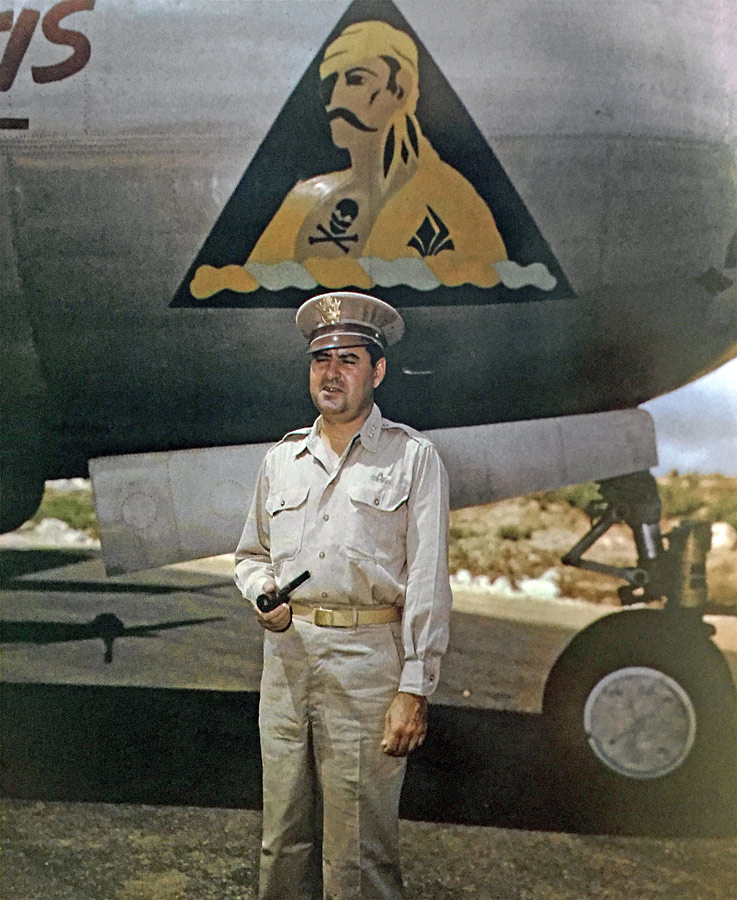
Major General Curtis LeMay in front of "Trigger Mortis." ©Martin E. Eichelman. All Rights Reserved.
THE SUPERFORTRESSES WERE IDEALLY SUITED FOR THIS TASK
The Superfortresses were ideally suited for this task. They carried radar equipment which could be used to pinpoint drop zones during nighttime. The crews could also plant mines under adverse weather conditions reaching remote areas where only B-29s could operate. Dropping the mines at night reduced the effectiveness of Japanese fighters and antiaircraft weapons. In addition, the night drop reduced the chances that the Japanese could locate the mines.
Navy personnel, experts in the handling and placement of underwater explosives, were present. They briefed us on the tactics for dropping a variety of mines. The majority of the mines were designed to be dropped below 10,000 feet. Each mine was equipped with a six-foot diameter parachute to slow the rate of descent, thereby reducing impact with the water. The parachute was automatically released upon entry into the water, allowing the mine to sink to the sea bottom.

Mine dropped by parachute
EACH CREW WAS ASSIGNED TO A SPECIFIC LOCATION IN THE SHIMONOSEKI STRAITS DROP ZONE
To ensure that the mines were dropped into the designated area, the B-29 had to be at the exact designated location which was to be verified by radar. In addition, the airplane had to be at the correct altitude and airspeed. The drop required coordination of the pilot, bombardier, navigator and radar operator. Therefore, the bombardier was to release the mines upon command from the navigator with input from the radar operator and pilot. Navy briefers stressed the importance of accurately dropping the mines into selected areas. If any of the above conditions weren’t met during the mining run, the mines were not to be released. Each crew was assigned to a specific location in the Shimonoseki Straits drop zone to ensure proper coverage and to reduce overlapping of the mines.
THE MINES WERE MARVELS OF INGENUITY. THERE WERE ACOUSTIC, MAGNETIC AND PRESSURE MINES WHICH COULD BE PRESET TO DETER MINE SWEEPING AND TO EXPLODE WHEN THE DAMAGE WOULD BE THE GREATEST TO THE SHIPS PASSING OVERHEAD.
The mines were marvels of ingenuity. There were acoustic, magnetic and pressure mines which could be preset to deter mine sweeping and to explode when the damage would be the greatest to the ships passing overhead. Some of the mines were set to explode when the noise of the ship’s propellers activated the fuse and detonated the mine. Other mines were armed and detonated by the magnetic field of the ship’s steel structure. Another type of mine was armed by a ship counting mechanism. Each vessel passing over the mine activated a counter. After a predetermined number of ships had passed over the mine, the arming operation was completed and the mine was detonated by the next vessel passing over it.

9th BG B-29 mine drop

Navy mines readied for B-29 deployment
Mining Shimonoseki Straits – March 27
Takeoff was scheduled for late afternoon as we were to plant the mines after midnight. We would proceed in a bomber stream to Japan as we had done during the fire raids. Each crew was assigned a takeoff position and takeoff time to provide a time delay between participating airplanes so that only a single B-29 would be in the designated drop zone, to prevent interference or collision with other B-29s scheduled for planting mines. Although the enemy had finally been defeated on lwo Jima several days earlier, we were warned to stay clear of the island, except in an emergency. Apparently naval gunners had itchy fingers regarding any airplanes flying over their ships. After the general briefing, crew members attended specialized briefings. I and fellow flight engineers received information regarding the fuel load, number and weight of the mines loaded onto our respective airplanes, and altitudes and airspeeds associated with the mission. Our B-29 was scheduled to carry 1,000-pound mines which we were to drop from an altitude of 6,000 feel.
We had a snack before we proceeded to the flight line, where I performed my walk around inspection of our assigned bomber. I counted a total of twelve mines located in the forward and rear bomb bays. The engines checked out okay and soon we were careening along the runway and took off on our seventh combat mission. We departed on course for Japan with a dogleg around the island of lwo Jima.
As we progressed on our flight to Japan, I thought how strange it was that after our first shakedown mission to Truk, we had yet to fly a high altitude, formation mission over Japan, which we had been trained for.
THE MINES DROPPED AUTOMATICALLY IN TRAIL AT PRESET INTERVALS
The hours slowly passed by as we flew along in the bomber steam at the briefed airspeed and hopefully maintaining our separation time from the B-29 in front of us. Shortly after midnight we approached the coast of Japan and Rocky turned to the heading for our mine drop. Radar operator Elio Casale verified our location as we climbed to the briefed altitude and established the proper airspeed. Elio watched his radar scope, comparing our actual position with reconnaissance photographs that had been provided by Navy personnel during the briefing. He gave corrections to Rocky as we proceeded towards the drop zone. As the B-29 approached the drop area, bombardier Denis lnkel took control of the airplane and opened the bomb bay doors. Rocky verified that we were at the correct altitude and airspeed. At the drop area, verified by Elio, Denis operated the release mechanism when directed to do so by navigator Archie Miller. The mines dropped automatically in trail at preset intervals. Meanwhile, Archie logged pertinent data, such as time of drop, altitude, airspeed, heading and drop coordinates for Navy personnel.
Rocky immediately turned the B-29 to the heading for the Marianas after the mines had been released. Again, we hadn’t encountered any enemy fighters, searchlights or antiaircraft fire. I settled down when we were beyond the range of enemy fighters. We landed at Tinian during the early morning hours on the 28th.
TWO B-29S FROM THE 40TH BOMB SQUADRON HAD FAILED TO RETURN FROM THE MINING MISSION. TWELVE SEARCH SORTIES, FLOWN BY 6TH BOMB GROUP AIRMEN, FAILED TO FIND ANY TRACE OF THE MISSING CREWS.
During the debriefing, we were informed that two B-29s from the 40th Bomb Squadron had failed to return from the mining mission. Twelve search sorties, flown by 6th Bomb Group airmen, failed to find any trace of the missing crews. Altogether, ninety-two B-29s of the 313th Bomb Wing had planted mines during this mission and three bombers, including the two from the 40th, were lost. [40th crew of 2nd Lt William C Grounds / Peacemaker recovered from POW camp at end of war. See B-29 POWs – Kempei Tai Atrocities
While waiting for our next mission assignment, we travelled to nearby beaches on the western side of the island for swimming and relaxation. None of us ventured near the numerous caves overlooking the beaches as we heeded the warnings about the potential danger of exploring these caves where Japanese soldiers could be hiding. Meanwhile, a military laundry was established for the enlisted men while a civilian laundry relieved the officers of the tedious task of washing clothes by hand.

Tinian beach 1945 © Bill Webste
THE DISTINGUISHED FLYING CROSS TO THE PILOTS AND AIR MEDALS FOR THE REST OF THE CREW MEMBERS
During the morning of 29 March, our crew joined other combat crews at an outdoor meeting at the 6th Bomb Group Headquarters area. Combat crew members who had flown on four fire raid missions against Japan were presented medals, the Distinguished Flying Cross to the pilots and Air Medals for the rest of the crew members. Maintenance personnel, supporting the maximum efforts by keeping the B-29s in operational shape, received Bronze medals. The citation accompanying my Air Medal stated:
AFTER THE PRESENTATIONS, CREW MEMBERS GATHERED TO DISCUSS THE PREFERENTIAL TREATMENT OF THE PILOTS VERSUS OTHER PARTICIPATING AIRMEN
And so I received my first award during World War II. After the presentations, crew members gathered to discuss the preferential treatment of the pilots versus other participating airmen. I heard many sarcastic remarks, including “why don’t we put all pilots on the B-29s and let them fly the next mission” and “I guess we know who the reaI heroes are.”

Award Ceremony Brig. General J.H. Davies © Bill Webster. All Rights Reserved
Mining Kure Harbor – March 30
The next day we joined several combat crews at the briefing room for a nighttime mining effort. Our crew was scheduled to drop six mines, each weighing 2,000 pounds, into the lnland Sea south of the Kure Naval Station (6BG Mission 17). After the briefing, we travelled to the flight line and our assigned B-29. Engine start and checkout were normal and shortly thereafter we headed for the Japanese mainland.
THE PILOTS CALLED OUR ATTENTION TO THE APPEARANCE OF HALOS THAT OUTLINED THE TIPS OF THE SPINNING PROPELLERS…ST. ELMO’S FIRE
As we progressed along the flight path into the evening hours, we encountered billowing clouds and soon we were flying in the “soup”, completely engulfed by the clouds. The pilots called our attention to the appearance of halos that outlined the tips of the spinning propellers. What an awesome and terrifying sight! Although I had heard about it, this was my first encounter with St. Elmo’s fire, a harmless phenomenon. As we flew towards Japan, the cloud cover gradually decreased and when we reached the Japanese mainland, the clouds had disappeared. Rocky turned the airplane to the heading for our mining run and we gradually climbed to the briefed altitude for dropping the mines. Elio verified our location via his radar scope and nearing the drop zone, Denis took command of the airplane. Moments before the release of the mines was to commence, Rocky informed the crew that he was aborting the run as the B-29 had settled below the altitude required for dropping the mines. As we were approaching the release point, a searchlight near the drop zone flicked on, bracketing our airplane and illuminating the inside of the cabin. It was very disconcerting and I waited for flak to strike the airplane.
When Rocky regained control of the airplane, he immediately turned the airplane away from the drop zone. The searchlight flicked off and we were flying in darkness once more. We returned to the initial point and recommenced our mining run at the correct altitude and airspeed. As we approached the release point, the searchlight again came on and locked onto our B- 29. And once again I expected flak to strike the airplane. Ello verified the release point and Denis dropped the mines upon Archie’s signal. When the mines had been dropped, Rocky took command and turned the B-29 away from the drop area. As we left the target area, the searchlight flicked off and again we were flying in darkness. I was relieved as we didn’t receive any flak nor did we encounter any enemy fighters during the mine runs.
OUR MINING EFFORTS WERE PAYING OFF. JAPANESE SHIPPING THROUGH THE SHIMONOSEKI STRAITS HAD BEEN CUT BY SEVENTY-FIVE PERCENT
We departed the Japanese coastline and when we had flown beyond the range of enemy fighters, I relaxed and settled down into my rest routine. Another brilliant dawn greeted us as a large sun rose from the ocean and began its climb into the morning sky, a sterling sight, as we continued on our return flight. Of eighty-five airplanes that had dropped mines during this mission, one was lost. Later we heard that our mining efforts were paying off. Japanese shipping through the Shimonoseki Straits had been cut by seventy-five percent, as depicted in photos taken by reconnaissance B-29s. Meanwhile, with the island of Iwo Jima secured, work was rushed to reinforce and extend the runways of the airfields to accommodate more B-29s in distress that were returning from missions against the Japanese Empire.

Japanese cargo ship sunk by mine © Iner Nielson. All Rights Reserved
WE HEARD THAT ARMY AND MARINE FORCES HAD INVADED THE ISLAND OF OKINAWA ON APRIL 1, SUPPORTED BY THE LARGEST NAVAL OPERATION OF THE PACIFIC CAMPAIGN
We heard that Army and Marine forces had invaded the island of Okinawa on April 1, supported by the largest naval operation of the Pacific campaign. Between missions, I wrote many letters to mother, relatives and friends. All outgoing letters were reviewed by squadron officers for military information prior to mailing. I learned later that some of my letters ended up with holes as a result of the review. I suspect that a lot of the material was unnecessarily removed by overzealous reviewers.
B-29 Nose Art Policy
IT WAS DURING THIS TIME PERIOD THAT AIR FORCE HEADQUARTERS ISSUED ORDERS DIRECTING ALL COMBAT CREWS TO REMOVE PAINTINGS OF NUDE WOMEN FROM THE NOSES OF THE B-29S.
It was during this time period that Air Force Headquarters issued orders directing all combat crews to remove paintings of nude women from the noses of the B-29s (see B-29 Nose Art). High ranking Air Force officials considered the B-29s to be above ordinary combat airplanes, and it was not to be placed in the common class by paintings of nude women. The 6th Bomb Group airplanes didn’t carry any paintings of women [all pirate nose art] and so the order didn’t affect our organization. We heard that the affected crew members draped the nude paintings with appropriately placed coverings rather than remove their favorite paintings from their airplanes. Evidently this action was approved by higher headquarters as we didn’t receive any more orders regarding the removal of the paintings from the B-29s.
Our First High Altitude Formation Mission
WE WOULD DROP 500-POUND GENERAL PURPOSE BOMBS FROM AN ALTITUDE OF 17,000 FEET IN ANOTHER ATTEMPT TO DESTROY THE PLANT
During the evening hours on 6 April, thirty combat crews assembled at the briefing room. We were informed that our bomb group was to join other B-29 bomb groups of the 313th and 314th Bomb Wings in a massive daylight raid against Japan. In all, ninety-eight combat crews of the 313th Bomb Wing were to participate in the raid. This would be our first daylight formation mission since our combat training flight to Truk. The target was the Mitsubishi Aircraft Plant at Nagoya (6BG Mission 20) which was the major producer of engines for Japanese fighters. Several prior B-29 attacks had only resulted in minor damage to the huge aircraft plant. For this mission, we would drop 500-pound general purpose bombs from an altitude of 17,000 feet in another attempt to destroy the plant. Since the raid was to be at high altitude in formation, a bomb bay fuel tank filled with gasoline, was to be loaded into the forward bomb bay of each participating airplane. The B-29 crews were to proceed individually to the assembly point, arriving off the coast of Japan during early morning. Here they were to assemble and form up into group formations, prior to departing for the initial point. A prominent landmark, such as Mount Fujiama on this flight, was selected as the initial point where the formation would turn to the briefed heading for the flight to the target.

500 lb GP bombs © Archie Miller
We picked up our heavy, cold weather clothing and flight gear and proceeded to the flight line. During my external inspection, I noted that the forward bomb bay contained an external fuel tank, which could be dropped during flight in the case of an emergency, and that general purpose bombs were loaded into the rear bay. After engine start and checkout, we joined the line of B-29s heading for the runway.
I PERIODICALLY TRANSFERRED GASOLINE FROM THE BOMB BAY TANK INTO THE WING TANKS DURING THE EARLY PHASES OF THE FLIGHT
Following a normal takeoff several hours after midnight, we joined the bomber stream headed for Japan. With lwo Jima secured, we no longer had to zigzag around the island, although we stayed clear of it as the Navy tended to shoot at any airplanes passing over their ships anchored off the island, especially at night time. Abeam of lwo Jima we turned to the heading for the assembly point off the coast of Japan. After I had set up the first cruise control configuration, I checked the fuel transfer system to ensure that it was operating normally. Thereafter, I periodically transferred gasoline from the bomb bay tank into the wing tanks during the early phases of the flight. The intent was to empty the tank at low altitude prior to joining the formation off the Japanese coast. I continued to watch the instruments and enter pertinent data into my flight log.

B-29 bomb bay tank

6BG B-29s in route to Japan © Percy Tucker
We approached the assembly area, about 150 miles from Japan, during the early morning hours. Rocky told the crew to prepare for high altitude flight. I donned my flak vest, throat microphone, flight helmet with the oxygen mask attached, flak helmet, parachute and gloves. Again I let the oxygen mask dangle from my helmet as it was readily available in the event of an emergency.
Rocky ensured that we were at the briefed altitude when we neared the assembly area. Assembly usually took place at an altitude between 1,500 and 3,000 feet. The 313th Bomb Wing had changed its B-29 identification markings since our flight to Truk. The airplanes were now identified by a large black circle painted on both sides of the rudder. A large block letter, “R” for 6th Bomb Group airplanes, was painted inside the circle to identify airplanes of the various groups. The top of the rudder and the center portions of the engine cowlings were painted red to further identify the group’s airplanes. The triangle with the pirate’s bust was retained and squadron numbers were placed underneath the triangle.
AS WE APPROACHED THE TARGET AREA, WE ENCOUNTERED HEAVY CLOUDS AND DISCOVERED THAT THE CITY WAS COMPLETELY COVERED
We joined 24th Bomb Squadron B-29s that had preceded us, as Rocky gently eased the airplane into our briefed slot in the formation of circling airplanes in the assembly area. Other B-29s continued to join their respective squadrons and the squadrons formed up into flight groups. Finally, at the designated time the formation leader turned to the heading for the initial point and initiated a climb. Upon reaching the initial point, the bombers turned onto the preplanned heading for the target. We were at the briefed bombing altitude when we crossed the enemy coast line. Upon reaching the initial point, the formation turned for the bombing run over Nagoya. As we approached the target area, we encountered heavy clouds and discovered that the city was completely covered. The formation made a circle, returning to the initial point for another flight over the target. However, the city was still obscured by the overcast. After circling for a while over the cloud covered target area, the flight commander finally ordered the pilots to leave the formation and bomb secondary targets, which had been assigned during the briefing to cover this contingency. We left the formation and proceeded to Matusko, our secondary target. As this target area was clear of clouds, Denis dropped our bombs visually and we headed for Tinian. I was thankful that we hadn’t encountered any enemy fighters or flak during our flight over Japan. Apparently the cloud cover that we encountered over Nagoya had also grounded the fighters.

Cloud cover view from gunner blister © Marty Eichelman
WE LEARNED THAT ONE OF OUR SQUADRON B-29S HAD CRASHED INTO THE OCEAN SHORTLY AFTER TAKING OFF, KILLING THE AIRCRAFT COMMANDER AND FIVE CREW MEMBERS
Rocky set up the autopilot to hold a gradual descent from high altitude as I reestablished the cruise configuration to conserve fuel on our return flight to Tinian. I removed my flak helmet, flight helmet and flak vest and put on my parachute and headset as I prepared for our return flight. The time slowly passed by and several hours later we approached our home base. We landed, parked the B-29 and I shut down the engines. Thus ended our first daylight high altitude formation flight against Japan. At debriefing, we learned that one of our squadron B-29s had crashed into the ocean shortly after taking off, killing the aircraft commander and five crew members. Fortunately, the remainder of the crew had been rescued. During my stay at Tinian, several combat loaded B-29s crashed during takeoff and several crashed into the ocean after taking off when the engines malfunctioned and takeoff speed couldn’t be reached or maintained. About half the crew members on board survived these accidents. Of 153 bombers participating on this mission, two were listed as being lost.
From Tents to Quonset Huts
Seabee units were erecting prefabricated buildings, called Quonset Huts, in our bivouac area. They were constructed of corrugated metal and wooden floors, which was a vast improvement over our rudimentary tents with dirt floors. Metal sheets were bolted to arched metal ribs and the completed structure could withstand hurricane force winds. The Seabees also installed electric lights in the Quonset huts.
It was a red letter day when we finally moved our belongings into Quonset Huts. I and fellow officers were assigned to Quonset Huts in officer country and enlisted crew members were relocated to the enlisted personnel area, with three combat crews assigned to each building. The aircraft commanders flipped coins to determine the location of their crews. Rocky lost and our crew moved to the center of the Quonset hut.

Enlisted Men Barracks © John Potenza. All Rights Reserved

Quonset Hut Interior © John Potenza
A LIQUOR CLUB HAD RECENTLY BEEN ESTABLISHED FOR OFFICERS STATIONED ON TINIAN
A liquor club had recently been established for officers stationed on Tinian. I joined the Army Garrison Force Fund and purchased a fifth of whiskey each month, the allotted amount. I didn’t drink the liquor and stored it in my foot locker as I planned to use it for souvenir trading with the Seabees.
We heard that the first echelon of P-51 Mustang and P-61 Black Widow night fighters had arrived on lwo Jima during the latter days of March. Their mission was to provide air cover for the Marines. In addition, P-51 fighter pilots strafed and bombed enemy held gorges during the continuing battle for lwo Jima. I was on a mission when the first United Service Organization (USO) show, featuring Charles Butterfield, movie star, and supporting actors in the stage production of ‘Three is a Family,” was presented at the Starlite Theater.
Super Dumbo Mission
On 11 April, we were informed that the next target was the Hodagaya Chemical Industries plant located in the city of Koriyama (6BG Mission 23). Combat crews of the 313th Bomb Wing would attack in formation at high altitude during daytime with general purpose bombs. Rocky was notified that our crew would be part of the search and rescue team during this mission and that we would fly a Super Dumbo B-29. We were briefed on the procedures we were to follow in the event a bomber went down in our assigned area.
THE SURVIVAL EQUIPMENT WAS LOADED INTO THE REAR BOMB BAY. THE FRONT BOMB BAY CONTAINED A FUEL TANK FILLED WITH EXTRA GASOLINE TO ALLOW US TO FLY AHEAD OF THE MAIN BOMBER FORCE AND TO REMAIN ON STATION UNTIL THE LAST RAIDING B-29 HAD CLEARED OUR AREA
During my walk around inspection of the airplane, I checked that the survival equipment was loaded into the rear bomb bay. I also checked that the front bomb bay contained a fuel tank filled with extra gasoline to allow us to fly ahead of the main bomber force and to remain on station until the last raiding B-29 had cleared our area. Engine start up and checkout were normal and after midnight we proceeded on our takeoff ahead of the main bomber force.
WE CIRCLED NEAR THE SUBMARINE AT A CONSTANT ALTITUDE AND AIRSPEED. DAVID MONITORED THE BRIEFED RADIO FREQUENCIES TO BE USED BY B-29 CREWS IN DISTRESS
Upon arriving at our designated area off the coast of Japan, radio operator David Evans contacted personnel of the submarine that we were to rendezvous with. Rocky set up our flight path as briefed and we circled near the submarine at a constant altitude and airspeed. David monitored the briefed radio frequencies to be used by B-29 crews in distress. We remained on station until we received notice that the last returning bomber had passed through our area. Fortunately, we didn’t have any B-29s ditch in the ocean near us. David contacted personnel on the submarine and informed them that we were returning to Tinian. We landed later that afternoon and went to debriefing. We were informed that no B-29s were lost of the sixty-six airplanes participating in the mission.
We heard the sad news that President Roosevelt had died on 12 April. He had been our president for many years, having been elected four times to serve in the White House. Meanwhile, Vice President Harry Truman assumed the duties as president of the United States of America.
About this time period, the 58th Bomb Wing moved personnel and airplanes onto Tinian. The bomb wing had been based at Indian airfields and had flown combat missions against Japan from Chinese airfields prior to the arrival of B-29s at Saipan and Tinian. Their B-29s, located at North Field, shared our runways until their designated airfield, West Field, was completed.
Firebombing of Kawasaki – April 15
Our next briefing, on 15 April, was attended by twenty-four combat crews. The target was Kawasaki (6BG Mission 25), a suburb south of Tokyo. It was to be a night mission with incendiary bombs. The 313th and 314th Bomb Wing combat crews would fly in bomber streams to Japan with the first arrivals bombing at the lowest altitude. Later arriving combat crews would bomb at higher altitudes to remain above the expected smoke and heat of preceding bomb drops. Our crew was assigned a bombing altitude of 7,400 feet for this mission.
We proceeded to the flight line in the afternoon and I performed my external checks, noting that incendiary bombs were loaded in both bomb bays. The engines checked out okay and shortly after takeoff we joined the bomber stream headed for the Japanese mainland. We approached the target area around midnight, where preceding B-29 crews had started many fires. Fortunately, we didn’t encounter any flak or enemy fighter attacks during our flight over enemy territory and our return flight to Tinian was uneventful.
OF THE 194 SUPERFORTRESSES PARTICIPATING IN THE RAID, TWELVE WERE LOST DUE TO ANTIAIRCRAFT FIRE AND FIGHTERS. FOUR ENEMY FIGHTERS WERE REPORTED TO HAVE BEEN SHOT DOWN
At debriefing, we learned that we were indeed very fortunate. Several B-29s were greeted by a heavy barrage of antiaircraft fire from automatic weapons and rockets. Many of the participating gunners were kept busy as four enemy fighters were reported to have been shot down. Several combat crews also reported that enemy fighters followed them approximately 250 miles from the Japanese coast during their return flight. And air-to-air rocket attacks were reported by other B-29 crews. Of the 194 Superfortresses participating in the raid, twelve were lost due to antiaircraft fire and fighters.
USO Show – Dennis Day and Jackie Cooper
The next day we met with other 6th Bomb Group personnel at the Starlite Theater for presentation of medals. I and other combat crew members who had flown eleven combat missions against Japan were presented the Oak Leaf Cluster to the Air Medal. That night, I attended a USO show of Claude Thornhill’s Navy show starring singer Dennis Day and movie star Jackie Cooper on the drums, which I enjoyed very much.
Some of my fellow crew members made moonlight requisition raids and I was given several pieces of plywood. I built a closet in which I kept my uniforms and flying clothes. And while scrounging one day, I found a functioning panel light in a wrecked B-29. I made it into an overhead light which I placed at the head of my cot. The closet and light made my stay on Tinian a little more bearable.

USO Show starring Jackie Cooper

Crew-made furniture from wood crate scraps © George Gresko
Bombing Kamikaze Air Fields – April 20
When we were summoned to the briefing room on 20 April, for information concerning our next mission, we were in for another surprise. We were told that enemy Kamikaze aircraft, carrying high explosives in which the pilots were sealed in their cockpits to prevent their escape, were harassing the invasion forces at Okinawa. Their airplanes carried only enough fuel to reach their objective. The purpose of these suicide airplanes was to sink the American fleet and disrupt landing operations. Navy pilots shot down many of these attacking aircraft. However, a number managed to escape and dive into ships and shore installations.
THE MAIN PURPOSE OF THESE BOMBERS TACTICAL ATTACKS WAS TO KNOCK OUT PERMANENT INSTALLATIONS ON ENEMY AIRFIELDS FROM WHICH THE SUICIDE AIRPLANES WERE OPERATING

Kamikaze fighter planes Kanoya Airfield May 1945

USS Bunker Hill Hit By Two Kamikazes May 1945
The primary targets were destroyers, stationed in forward positions as a screening force. Many ships were hit and damaged and a number were sunk. Several suicide pilots, eluding Navy fighters and antiaircraft fire, dove into larger ships, causing major damage. As a result of these attacks, Navy officials asked the XXI Air Force Bomber Command for support by having B-29s bomb enemy airfields located on the Kyushu and Shikoku Islands (6BG Mission 28). The main purpose of these bombers tactical attacks was to knock out permanent installations on enemy airfields from which the suicide airplanes were operating. A secondary objective was to destroy as many enemy airplanes as possible that were parked on the airfields. General LeMay ordered the combat crews of the Marianas based B-29s to bomb these enemy airfields. Therefore, for this mission, we were to join other 73rd, 313th and 314th Bomb Wing Superfortresses for formation attacks against the East Kanoya Airfield during early morning. Our bomb load would consist of fourteen 1,000- pound demolition bombs.
After receiving pertinent Information regarding the mission, we had a late evening meal and departed for the flight line. During my external checks, I noted that bombs were loaded in the rear bomb boy and that a fuel tank was uploaded in the forward bomb bay. Engines start up and check out was normal and a little before midnight we were on our way to Japan. Shortly after departing Tinian, I ensured that the fuel transfer system was working normally.
WHEN WE ARRIVED AT THE ASSEMBLY POINT ROCKY TRIED TO LOCATE THE 6TH BOMB GROUP FORMATION. HE FAILED TO FIND IT AND SO WE JOINED UP WITH 314TH BOMB WING AIRPLANES FROM GUAM.
I kept busy entering pertinent data in my flight log, transferring gasoline from the bomb bay fuel tank and monitoring the engine instruments. When we arrived at the assembly point Rocky tried to locate the 6th Bomb Group formation. However, he failed to find it and so we joined up with 314th Bomb Wing airplanes from Guam. We continued to orbit as other B-29s joined the formation. Finally, the formation turned to the briefed heading for the enemy airfield and we went into a climb mode. Although several enemy fighters attacked our airplanes during the bomb run, we weren’t hit by the fighters. We also experienced moderate antiaircraft fire during the bombing run. .

314th Bomb Wing B-29s
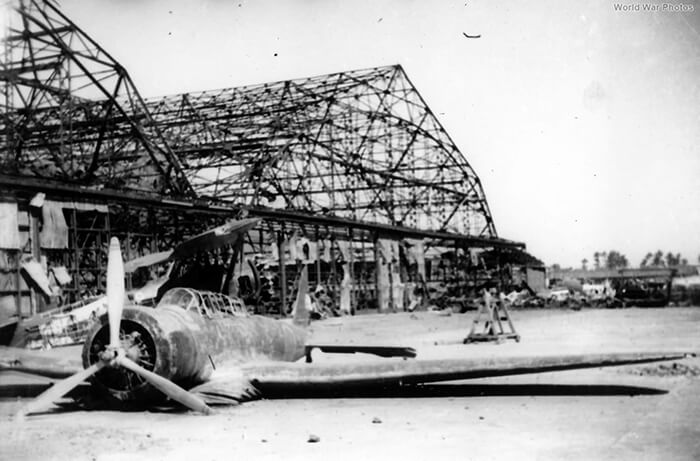
Kanoya Airfield After B-29 Attack 1945
After the bombs were dropped, the formation broke up and each B-29 crew proceeded alone or in small groups to the Marianas. After deplaning we discovered a flak hole in our wing. This was the first damage we had sustained during eleven combat flights over Japan! And although a total of 217 bombers had participated in the attack, none were lost.
100 Flak / Bullet Holes – Bombing Hitachi Aircraft Factory – April 23
During the afternoon of 23 April, ten combat crews, ours included, were informed about our next mission. The target was the Hitachi Aircraft Factory located near Tokyo (6BG Mission 30). We would join bomb groups flying from Guam, Saipan and Tinian for another massive attack with general purpose bombs. The attack was to be conducted during daylight, at high altitude and in formation. After receiving the usual information regarding the mission, we headed for the flight line.
The airplane checked out okay and we took off for Japan around midnight. We neared the coast during the early morning hours and Rocky joined our squadron of circling B-29s. A short time later, the formation climbed to the bombing altitude, passed over the coast and headed for the initial point, Mount Fujiyama, commonly known as Mount Fuji. At an altitude of 12,389 feet, Mount Fuji was the highest point in Japan. As we flew along, I glanced out the pilot’s window and noticed that the distant mountain was covered with snow. As the formation approached Mount Fuji, Woody called our attention to a strange sight to the front and left of our airplane. When I peered out the forward window, I spotted several enemy fighters performing loops and aerobatics in formation. lt apparently was an attempt to distract the attention of our crews as we flew over the Japanese mainland. They were outside the range of our guns and so we could only watch their antics. Rocky immediately warned the gunners to be on the alert and watch for other enemy fighters that might try to sneak in and attack the formation.

Mt. Fuji initial point © Bill Webster. All Rights Reserved

Japanese Zeros diving on B-29 formation
CHARLES, THE TAIL GUNNER, REPORTED THAT MANY ENEMY FIGHTERS WERE BORING IN TO ATTACK OUR B-29S
Shortly thereafter, Charles, the tail gunner, reported that many enemy fighters were boring in to attack our B-29s. I unbuckled my seat belt, partially stood up and looked out my small window to see if I could spot the fighters. Soon thereafter, I spotted a fighter diving on our formation. I held my breath as the fighter flew towards us and I waited for his bullets to strike our airplane. He continued his dive and passed through the space between our right wing and the left wing of the adjacent B-29 without hitting either airplane. If he had intended to ram our bombers, there wasn’t much any one could have done about it. We apparently didn’t receive any serious damage from his guns. It was a narrow escape! I thought that no one else had noticed the enemy fighter dive through our formation as I hadn’t heard anyone call out the fighter attack.
WE ENCOUNTERED EXTREMELY HEAVY ANTIAIRCRAFT FIRE WHICH DAMAGED OUR NUMBER THREE ENGINE
That was enough for me and I immediately settled back in my seat and monitored the engine instruments. I left tracking of the attacking fighters to other crew members and the gunners. Meanwhile, the occasional chatter of machine guns filled the air as our gunners shot at the pursing enemy fighters. When we reached Mount Fuji, the formation turned towards the target as the enemy fighters pressed home their attacks. After we had completed our turn, we encountered extremely heavy antiaircraft fire which damaged our number three engine.

Exploding flak in path of B-29 © Gilbert Godin All Rights Reserved
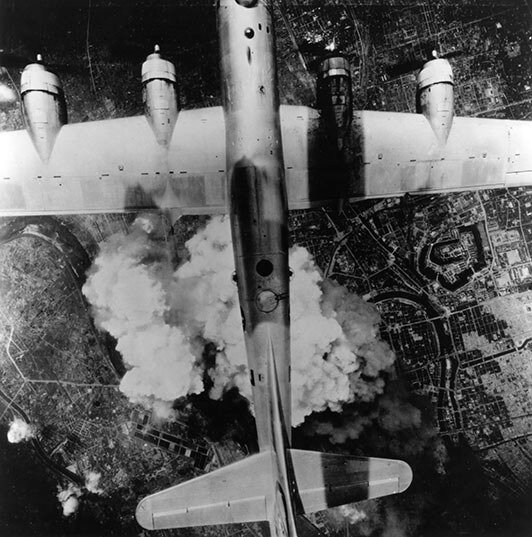
No. 3 engine oil leak
MARTIN CALLED TO TELL ME THAT THERE WAS HUGE AMOUNT OF OIL DRIPPING FROM THE RIGHT WING
I noticed the sudden drop in oil pressure and gunner Martin called to tell me that there was huge amount of oil dripping from the right wing. I immediately notified Rocky of the loss of the engine as I moved the mixture control to idle cut-off, retarded the throttle, closed the fuel shut-off valve and turned off the ignition switch. Woody hit the number three propeller feathering switch and the engine ceased to operate as the propeller blades went to the streamline position, thereby reducing drag on the airplane. Rocky increased power on the three operating engines in order to maintain our position in the formation, as I closed the cowl flaps to further reduce drag. It was important that we stay in position amid the protection of the formation’s massed guns. We knew that enemy fighter pilots immediately pounced on any crippled B-29 that dropped out of formation. I monitored the remaining engine instruments for any sign of malfunctioning. The flight commander immediately turned to a heading for the coast after the bombs had been dropped. I was thankful that the remaining engines continued to operate normally.
The enemy fighters ended their attacks and the flight commander gave the order to break up the flight. Rocky immediately dropped out of the formation and set up a gradual descent. Meanwhile, I determined the best airspeed from my three engine configuration chart based upon the current aircraft gross weight and altitude. Rocky reduced power on the operating engines until the proper airspeed was established. Although the three engines had to operate at a higher power setting with resultant increase in fuel consumption than for the four engine configuration, I determined that we had sufficient fuel to make Tinian. However, the remaining engines had to continue to operate normally.
I COUNTED OVER 100 HOLES CAUSED BY FLAK AND ENEMY FIGHTERS
There was no thought of resting as I continuously monitored my engine instruments during our return flight. I logged fuel flow data and carefully compared these figures with the estimated fuel consumption calculations. Several hours later, we landed at our field with an adequate fuel reserve, slightly above the minimum requirement. After we had parked the B-29 and deplaned, we looked over the airplane and discovered many bullet holes in the engine cowlings, wings and fuselage. In addition to the damage in the number three engine area, I counted over 100 holes caused by flak and enemy fighters. One flak fragment dented the fuselage at the radio operator’s station. If it had penetrated the fuselage skin, we were certain that it would have struck David Evans. And so ended mission number twelve against Japan, which was a very close call for our crew.
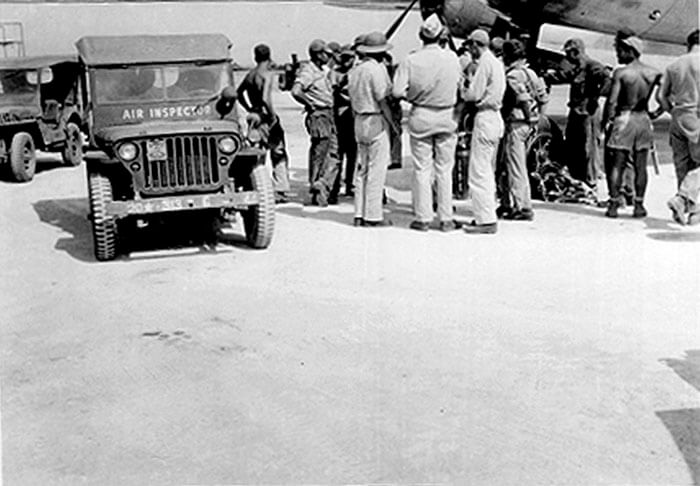
Damage inspection after mission © Archie Miller
NINETEEN ENEMY FIGHTERS WERE SIGHTED DURING OUR FLIGHT OVER JAPAN WITH SIX ENEMY FIGHTERS ATTACKING OUR FORMATION
During debriefing, participating crew members reported that nineteen enemy fighters were sighted during our flight over Japan with six enemy fighters attacking our formation. Other B-29 formations were also subjected to fierce fighter attacks and intense antiaircraft fire. In all there were thirty-nine fighters observed by combat crews and twenty-seven fighters were reported as attacking our Superfortresses. Of the 101 B-29s participating in the attack, five were lost and many more were damaged. Enemy pilots were very aggressive during this raid!
We enjoyed several days off and spent most evenings at the movies. It was during this time period that Rocky showed up with a jeep. Rocky never did disclose how he obtained the vehicle, which he kept during the remainder of our stay at Tinian. Our crew members enjoyed having a set of wheels. One morning I joined Rocky and several fellow crew members for a visit with friends of the 462nd Bomb Squadron that I had trained with at Harvard Air Field in Nebraska. When we arrived at their bivouac area, we were informed that most of the crews hadn’t returned from their latest daytime mission against on aircraft factory located at Tachikawa, Japan. They were several hours overdue and morale of the squadron personnel was very low. It was also depressing for us as we returned to our area. Later, we heard that the formation used higher than normal power settings during the mission, which resulted in an inadequate fuel reserve for the return to Tinian for many Superfortresses. As a result, most of the B-29 crews had to land at lwo Jima and refuel on their return flight.

Crew with Jeep © Archie Miller>

Rocky Dawson (seated) and crew sightseeing
During our time off, we took several jeep trips as we toured the island and went to various beaches on the east side of Tinian.
35 Bullet Holes from Fighter Attack
After several days off, we attended a briefing at the group briefing room on 29 April. Combat crews from the three squadrons were also present. The target was the Army Air Arsenal located at Tochikawa, Japan (6BG Mission 34). It was to be an early morning, high altitude attack in formation with B-29s from the 73rd and 313th Bomb Wings. We were informed that each B-29 would carry eighteen 500-pound general purpose bombs. At the flight line I conducted my now familiar external checks, noting that the bombs had been loaded in the aft bomb bay and a droppable fuel tank was secured in the forward bomb bay. Following crew inspection, I cranked up the engines and shortly after midnight we commenced our takeoff roll and headed for Japan.
The engines continued to operate normally as the hours slowly passed by and I continued to transfer gasoline from the bomb bay external tank to the wing tanks. The flight to Japan turned out to be fairly routine. As dawn was breaking Rocky headed for the rendezvous area, where we joined up with circling B-29s of the 6th Bomb Group that were already assembled in a loose formation.
THE CABIN WAS FILLED WITH THE NOISE OF CHATTERING MACHINE GUNS AS THE GUNNERS FIRED AT THE ATTACKING ENEMY FIGHTERS. THREE OF OUR GUN TURRETS BECAME INOPERATIVE AND I SUDDENLY FELT THAT OUR B-29 WAS DEFENSELESS

B-29s assemble - Photo provided by Captain Jerry Mason, USN.
When we departed the assembly area, the formation tightened up for mutual protection from expected enemy fighters. Shortly after we had levelled off at our bombing altitude, enemy fighters appeared and immediately attacked our B-29s. Again the cabin was filled with the noise of chattering machine guns as the gunners fired at the attacking enemy fighters. Gunners on our crew claimed one fighter as probably shot down after the fighter, trailing smoke, dived away following an attack on our airplane. During the battle with the enemy fighters, three of our gun turrets became inoperative and I suddenly felt that our B-29 was defenseless as the fighters continued their attacks. What a spot to be in! I prayed that our engines would continue to operate normally allowing us to fly with the formation, within the protective envelope of the massed guns of the accompanying bombers.
Our flight turned to the heading for the target and as soon as the bombs had been released, we turned for the coast. Much to my relief, enemy fighters left our formation and the flight leader released the participating bombers. The return flight was routine and many wearying hours later we landed at our home field.
I WALKED AROUND THE B-29 AND NOTED THAT THERE WERE THIRTY-FIVE BULLET HOLES IN THE AIRPLANE
After deplaning, I walked around the B-29 and noted that there were thirty-five bullet holes in the airplane. Later, we heard that sixty-nine Superfortresses had participated in the mission without the loss of a single bomber, although many airplanes sustained damage.
WE RECEIVED A TREAT AT THE MESS HALL THE NEXT DAY WHEN WE WENT TO EAT OUR EVENING MEAL. AND WHAT A TREAT IT WAS WITH FRESH MILK, VEGETABLES AND MEAT.
We received a treat at the mess hall the next day when we went to eat our evening meal. And what a treat it was with fresh milk, vegetables and meat. It certainly tasted good! Arrangements had previously been made to have Navy personnel deliver fresh food to our mess halls at the end of each month. Living conditions were improving on Tinian! While I waited for the next mission I loafed, wrote letters, went to the movies and visited nearby beaches.
Close call – Wake Turbulence
On the morning of 3 May, we joined thirty-two combat crews for a briefing on a 313th Bomb Wing mining effort to restock and replace mines that had detonated or been swept away by mine sweeping vessels. The mine field, located east of the Shimonoseki Straits, was the target (6BG Mission 35). We received information concerning the flight and mining operations. We would carry mines, each weighing 2,000 pounds, during this mission. Since our position was near the end of the bomber stream, we returned to the mess hall for chow prior to departing for the flight line later that afternoon.
ROCKY MANHANDLED THE CONTROLS TO MAINTAIN CONTROL AND KEEP THE AIRPLANE FROM PLUNGING INTO THE OCEAN
During my external check, I noted that there were mines loaded into each bomb bay. The engines checked out okay and we taxied to the runway for takeoff. Once again we went thundering along the runway and soon we were airborne. At approximately 100 feet of altitude, I was jolted when our heavily loaded B-29 began to violently pitch and roll. Rocky manhandled the controls to maintain control and keep the airplane from plunging into the unfriendly ocean. My stomach muscles tightened in response to the crisis and time seemed to stand still until Rocky finally regained control and we transitioned into the climb mode. I had just experienced my first encounter with wake turbulence!
We had been ordered to takeoff too soon after the B-29 preceding us and the turbulence caused by its takeoff didn’t have enough time to dissipate before we entered that area. It was a very close call for our crew and I hoped that we wouldn’t encounter any more wake turbulence during our remaining missions! We continued climbing and Rocky levelled off at the departure altitude heading for Japan. The hours passed by and we again witnessed a beautiful and brilliant sunset. I glanced out the window periodically as I watched the huge golden orb slowly sink into the ocean.
We continued on our flight during the night hours and approaching the Japanese coast around midnight, Rocky turned to the heading for the initial point at the release altitude. The mines were dropped in the designated target area and Rocky, taking over control of the B-29, turned to the heading for Tinian. Fortunately, we had accomplished our mission without encountering any enemy fighters or antiaircraft fire. After landing at North Field early on the 4th, we parked the airplane and went to debriefing. We heard that none of the eighty-eight B-29s that had dropped mines during this mission were lost. We enjoyed a hot meal at the mess hall and returned to our Quonset huts for rest.
Mining the Bingo Sea – May 5
After a day off, we joined twenty-four combat crews for information on another mining mission. This time the target area was two mine fields located in the Bingo Sea, with the drop area located just north of Shikoku Island (6BG Mission 36) [near Hiroshima]. Again we had an opportunity to approach enemy waters, drop our twelve 1,000-pound mines and depart without encountering any enemy opposition. We were also informed that we would encounter bad weather between lwo Jima and the coast of Japan. After boarding the B-29 in late afternoon, I completed my before engine start checks and waited for the signal to start engines.
WE ENCOUNTERED RAIN, SNOW, SLEET, TURBULENT WINDS AND GUT WRENCHING UPDRAFTS AND DOWNDRAFTS
Meanwhile, Rocky was informed by control tower personnel that a preceding B-29 crew had aborted shortly after taking off. The bombardier had jettisoned his mines when an engine malfunctioned and fortunately, the lightened bomber continued to fly okay. Rocky was directed to take his place and I immediately cranked up the engines. They checked out okay and we took off soon thereafter. As we headed for Japan, I set up the cruise configuration while Rocky engaged the autopilot. The flight progressed as planned until shortly after dark when we flew into the predicted bad weather. Rocky immediately disengaged the autopilot as he and Woody manually controlled the violently pitching airplane. We encountered rain, snow, sleet, turbulent winds and gut wrenching updrafts and downdrafts. The B-29 shook, shuddered and bounced around as we were severely buffeted and shaken up by the deplorable weather. And the rain came down in torrents.
HE STATED THAT WE WERE TEMPORARILY LOST AND FOR ME TO PROVIDE AN IMMEDIATE ESTIMATE OF THE FUEL ON BOARD
We finally flew out of the miserable weather as we approached the Japanese coastline. The airplane was at the correct heading, airspeed and altitude as Denis dropped our mines by radar into the designated drop area. Although we experienced some scattered antiaircraft fire, it appeared that we didn’t receive any hits. We turned for Tinian as Rocky and I set up our configuration for the return flight. Crew members, myself included, settled into our rest routine after we had passed beyond the point where enemy fighters could operate. Archie gave the pilots the heading for Tinian and turned the navigation chores over to Denis. He then moved to the bombardier’s position to rest. I noticed that the weather was still calm as I settled into my rest mode. Sometime later, I was suddenly awakened by Rocky amidst a thunderstorm and I saw lightning flashing around our airplane. He stated that we were temporarily lost and for me to provide an immediate estimate of the fuel on board. Half awake, I rapidly scanned the fuel gauges and gave him a ball park figure, about three and one-half hours flying time. Meanwhile, Archie established our location and determined that we were about four hours from Tinian.
FOUR B-29S WERE LOST OF THE EIGHTY-EIGHT PARTICIPATING BOMBERS. BY THE END OF APRIL, EIGHTEEN ENEMY SHIPS HAD BEEN SUNK
At this time I was fully awake and I carefully rechecked my fuel indicators. When I recalculated the fuel remaining, I discovered that my hurried estimate was in error. We actually had over five hours of fuel reserve! Shortly thereafter we flew out of the miserable weather. I couldn’t go back to sleep as I monitored the engine instruments and dwindling fuel supply. However, the remainder of the flight was anticlimactic and several hours later we landed at our base with an adequate fuel reserve. An external inspection verified that our B-29 hadn’t been hit by any flak. And so ended another danger filled mission! In all, four B-29s were lost of the eighty-eight participating bombers. Apparently our mining efforts were paying off as it was reported that by the end of April, eighteen enemy ships had been sunk. This equated to 39,917 tons sunk or permanently disabled.
I enjoyed resting and relaxing after our last turbulent mission, wrote letters and attended movies, which were primarily second class pictures. I went swimming and lolled around the beaches, soaking up the sunshine with fellow crew members. We visited with friends in other squadrons and travelled around the island in the jeep.

Cards Quonset – Eichelman
Victory over Germany Celebration
THE CHANCE OF BEING ACCIDENTALLY HIT BY STRAY BULLETS APPEARED TO BE GREATER THAN THOSE WE FACED DURING COMBAT FLYING
News of the allied victory over Germany was greeted by much shouting and the shooting of a great many weapons into the air. The chance of being accidentally hit by stray bullets appeared to be greater than those we faced during combat flying. With so many weapons being fired, I took refuge in the Quonset hut which appeared to be the safest place for me. There was also a lot of liquor consumed during this period. Fellow officers in my Quonset hut finished their whiskey in short order. They knew that I had still my supply and asked me to sell the whiskey to them at the price I had paid for it. I could have sold the liquor to the Seabees for a larger amount of money. However, I sold the whiskey to fellow officers since I didn’t want to cause any hard feelings.
Bombing Kamikaze Fields at Usa – May 9
THE TOWN HAD BEEN NAMED USA AS THE JAPANESE HAD PREVIOUSLY USED IT TO EXPORT CHEAP JEWELRY TO THE UNITED STATES STAMPED “MADE IN USA”
The time quickly passed by and on 9 May, we joined several combat crews for information concerning our next mission. The target was an airfield located at the town of Usa on northern Kyushu lsland (6BG Mission 38). The town had been named Usa as the Japanese had previously used it to export cheap jewelry to the United States stamped “Made in USA”. This attack was to be in support of the landing operations at Okinawa. Japanese kamikaze airplanes were still raising havoc with the American fleet and Navy officials again asked for Air Force assistance through bombing of the fields from which the suicide airplanes were operating.
SOME BOMB FUSES WERE SET TO EXPLODE UPON HITTING THE GROUND WHILE OTHER FUSES HAD TIME DELAYS TO SLOW DOWN ENEMY RECOVERY OPERATIONS
This was to be a 313th Bomb Wing show and we were to drop the bombs while flying in formation during day time. Our bomb load consisted of ten 1,000-pound general purpose bombs. Some bomb fuses were set to explode upon hitting the ground while other fuses had time delays to slow down enemy recovery operations.
At the flight line, I started the engines which checked out okay. After our prior encounter with wake turbulence, I was really tense as we careened down the runway and took off after midnight. However, the takeoff and climb out were normal and I relaxed. After a routine flight, we arrived at the assembly area about dawn and Rocky formed up with a small group of circling 6th Bomb Group B-29s. Due to bad weather in the assembly area, only fifteen combat crews were able to join our formation. Shortly thereafter the leader informed the pilots that it was time to depart and the formation climbed to the bombing altitude and headed for the initial point.

6BG B-29s in formation © John Potenza
WHEN WE REACHED THE INITIAL POINT, WE WERE POUNCED UPON BY TWELVE TO FIFTEEN TWIN ENGINE ENEMY FIGHTERS
When we reached the initial point, we were pounced upon by twelve to fifteen twin engine enemy fighters. The enemy pilots aggressively attacked our B-29s with machine gun and cannon fire and our gunners fired at the enemy fighters attacking in our area. Although the enemy pilots continued to attack our airplanes throughout the bomb run and during the outbound flight to the coast, it appeared that our B-29 escaped undamaged. The enemy pilots finally disengaged when we departed the coast of Japan.
TWO OF OUR B-29S SUSTAINED DAMAGE WHILE PARTICIPATING GUNNERS SHOT DOWN THREE ENEMY FIGHTERS
After the formation broke up, Rocky started a slow descent as we headed for Tinian. Late that afternoon, we set down at North Field and parked the airplane. Upon deplaning, I verified that our airplane hadn’t been hit by bullets from enemy fighters. At debriefing, we heard that two of our B-29s sustained damage while participating gunners shot down three enemy fighters. However, none of the fifty participating bombers of the bomb wing were lost. We heard that crews from our group, who had failed to join our formation, bombed targets of opportunity.
I heard an odd story about a B-29 crew that was returning to their base on Guam, following a mission over Japan. The crew had contacted the Guam control center when they were approximately fifty miles from the island. Soon thereafter the ground controllers lost contact with the incoming Superfortress and the airplane failed to show up at Guam. Although a search was initiated a short time later, neither the downed airplane or crew members were found. It was quite a mystery which was finally cleared up when another B-29, under similar circumstances, landed at Guam with bent propellers. The aircraft commander stated that upon approaching the island of Guam, he descended to within several feet over the ocean. As he was cruising along at this low altitude, the propellers suddenly hit the top of a huge wave. He immediately pulled back on the control column and proceeded to Guam at a higher altitude and made a safe landing. Upon deplaning he found that the propellers had been bent backwards due to contact with the wave.
It was concluded that the missing airplane had hit the crest of a large wave during the low approach to land and that the propellers pulled the B-29 into the ocean so fast that the crew never had a chance to escape. And so the mysterious disappearance of the B-29 and its crew was finally solved.
It was a red letter day when I was promoted to 1st. Lieutenant on 14 May. Archie Miller, Denis lnkel, and Jones Woodward were also promoted to 1st Lieutenants on this date.
Nagoya Firebombing – May 16
We had a week off and then on 16 May, we joined thirty-two combat crews for our next mission with all three bomb squadrons participating. The target, Nagoya, was scheduled to be hit at predawn hours by incendiary bombs (6BG Mission 41). This would be another massive attack with B-29s from the 58th, 73rd, 313th and 314th Bomb Wings bombing the target area individually.
A BOMBER PRECEDING US HAD CRASHED DURING TAKEOFF. TOTAL OF 457 SUPERFORTRESSES HAD BOMBED THE CITY AND THREE AIRPLANES HAD BEEN LOST DURING THIS MISSION
Later that evening at the flight line, as we waited to start the engines, we were informed that a bomber preceding us had crashed during takeoff. Fortunately, the entire crew managed to jump from their wrecked airplane. It ended up off to one the side of the runway and the remaining crews were able to takeoff at their scheduled times. It was late at night when we took off and headed for Japan, arriving off the Japanese coast in the morning. When we approached the city of Nagoya, we noticed that it was partially covered by clouds. Denis dropped the bombs by radar into the target area, which was already on fire, and we headed for Tinian. Again we didn’t encounter any enemy fighters or flak during our time over Japan. A total of 457 Superfortresses had bombed the city and three airplanes had been lost during this mission.
WE HEARD THAT PHOTOS, TAKEN AFTER THE RAID BY RECONNAISSANCE B-29S INDICATED THAT NAGOYA COULD BE CROSSED OFF THE LIST OF WORTHWHILE TARGETS FOR INCENDIARY ATTACKS
We heard that photos, taken after the raid by reconnaissance B-29s indicated that Nagoya could be crossed off the list of worthwhile targets for incendiary attacks. Only a few industrial targets within the target area, that escaped the incendiary raid, would require precision attacks with general purpose bombs to complete the destruction. Stanley Mackiewicz became ill and was taken to the hospital. He was diagnosed as having acute appendicitis and underwent an operation to have his appendix removed. During this time period, our crew received another Oak Leaf Cluster to the Air Medal for combat flights that we had completed from 24 March through 24 April.

Nagoya following May firebombing - National Archives
Horrifying Flirt with Ditching Our B-29
Two days later, on 18 May, we attended a briefing with thirty other combat crews for a daylight raid against the Tachikawa Army Air Arsenal, located about twenty miles from Tokyo (6BG Mission 42). Combat crews from the four bomb wings would join the attack. An enlisted man joined our crew at the briefing as he had been assigned to fly with us as our left gunner, replacing Stanley Mackiewicz.
After arriving at the flight line around midnight, I checked that a droppable fuel tank had been loaded into the front bomb bay and general purpose bombs into the aft bomb bay. Engine start up and checkout were normal and we took off about midnight. We approached the assembly area during the early morning hours and joined the circling airplanes that had preceded us. Shortly thereafter, as the formation was climbing on a heading for the initial point, we encountered an unexpected bank of clouds at 12,000 feet.
AS WE BROKE AWAY FROM THE FORMATION, OUR NUMBER THREE ENGINE LOST POWER
We climbed to 19,000 feet, our bombing altitude, and still the clouds towered above us. The flight commander ordered the pilots to continue to climb in an attempt to get above the cloud cover. At 23,000 feet, we finally cleared the top of the clouds. However, the target area was socked in. The flight commander contacted the pilots and told them to bomb their secondary targets. As we broke away from the formation, our number three engine lost power. I informed Rocky of the problem as I moved the mixture control to the cutoff position, retarded the throttle, closed the fuel shut-off valve and cowl flaps and turned off the ignition switch. He instructed Woody to feather the number three engine propeller. Woody hit the feathering button to streamline the propeller blades and stop the engine from rotating. However, the blades didn’t move and the engine continued to rotate.

B29s over cloud bank © Percy Tucker
B-29 ENGINES HAD A HISTORY OF CATCHING FIRE WHENEVER THE SUPPLY OF OIL WAS LOST. A SUSTAINED ENGINE FIRE USUALLY RESULTED IN BURNING UP THE ENGINE MOUNTS, SETTING THE WING SPAR ON FIRE……RESULTING IN A CATASTROPHIC LOSS OF THE WING
Apparently the cylinder to which the feathering motor was attached had blown off, taking the motor with it. The engine and propeller continued to rotate at low speed. Although the wind milling propeller caused a slight drag, it wasn’t a serious problem unless the engine lost its oil supply. B-29 engines contained many magnesium components and they had a history of catching fire whenever the supply of oil was lost. Tests had demonstrated that a sustained engine fire usually resulted in burning up the engine mounts and then setting the wing spar on fire. In this event, the wing spar normally burned through resulting in a catastrophic loss of the wing. If the crew didn’t escape prior to collapse of the wing, they usually became trapped in the doomed airplane.
As long as the wind milling engine had a sufficient supply of oil, there wasn’t much danger, except that the extra drag increased fuel usage. In the event excessive fuel was consumed by the remaining engines, we could land and refuel at lwo Jima enroute to our home base on Tinian.
THE CFC GUNNER REPORTED THAT A LARGE STREAM OF OIL WAS FLOWING OFF THE AFT EDGE OF THE RIGHT WING.
Rocky increased power on the three operating engines as we continued on the heading for our secondary target. Since this target was also covered by clouds the bombs were dropped using radar. Rocky immediately banked the B-29 toward the Marianas. He set up a gradual descent at the minimum airspeed that I had obtained from my three engine configuration chart. The intent was to reduce strain on the three operating engines and to conserve fuel for our return flight. James Brooks, the CFC gunner sitting in for Stanley Meickiewicz, reported that a large stream of oil was flowing off the aft edge of the right wing. I asked him to keep an eye on the leak and to keep me informed about it.

Bombardier view of cloud cover
Rocky told David Evans to set up the radio frequency for the lwo Jima ground control communication system in case we encountered an emergency as a result of the wind milling engine. I kept a close watch on the number three engine instruments as we departed the enemy coast heading for the Marianas. As we progressed on our return flight, James Brooks periodically reported that oil continued to drip off the trailing edge of the right wing at approximately the same rate. Comparing current fuel consumption figures with preplanned estimates, I determined that we had sufficient fuel, including an adequate reserve, to reach Tinian.
THE AIRPLANE SUDDENLY BEGAN TO SHAKE VIOLENTLY AND STARTED INTO A RAPID DESCEND. AND THE NUMBER THREE ENGINE FIRE WARNING LIGHT FLASHED ON, INDICATING A FIRE IN THE ENGINE COMPARTMENT
Approximately 100 to 150 miles from Iwo Jima, the airplane suddenly began to shake violently and started into a rapid descend. And the number three engine fire warning light flashed on, indicating a fire in the engine compartment. Apparently the engine oil had leaked out and the revolving parts had seized, thereby generating friction which ignited the magnesium components. I immediately opened the cowl flaps, turned the fire extinguisher selector to the number three engine and pulled the handle, thereby activating the fire extinguisher to direct a stream of foam into the engine nacelle. I breathed a sigh of relief when the fire warning light, went out indicating that the fire had been extinguished. I informed Rocky of the engine fire and the action I had taken to put out the fire.
I REALIZED THAT IF THE FIRE STARTED AGAIN, I COULDN’T DO ANYTHING ABOUT IT SINCE I HAD USED UP THE TWO FIRE EXTINGUISHER BOTTLES
However, the fire warning light came on again several minutes later and I turned the switch of the backup fire extinguisher bottle to the malfunctioning engine and pulled the handle. In a short time the fire warning light went out. I realized that if the fire started again, I couldn’t do anything about it since I had used up the two fire extinguisher bottles. I kept a very close watch on the number three fire warning light!
ROCKY ORDERED DAVID EVANS TO CONTACT IWO JIMA GROUND PERSONNEL AND REQUEST THAT THEY RELAY THE INFORMATION TO 6TH BOMB GROUP HEADQUARTERS OF HIS PLAN TO DITCH THE AIRPLANE

Ditched B-29
As soon as the airplane started to descend, Rocky applied full power to the three operating engines which slowed the descent somewhat, but we were still descending at an alarming rate and the airplane continued its violent shaking. Rocky ordered David Evans to contact Iwo Jima ground personnel and request that they relay the information to 6th Bomb Group Headquarters of his plan to ditch the airplane.
Ditching was considered to be the preferred procedure for abandoning a damaged B-29, even though some ditchings resulted in the death of one or more crew members. It was considered the best method for survival purposes in that escaping crew members would be in the same general vicinity, aboard the two large life rafts, for rescue purposes.
In preparation for ditching, Rocky ordered Denis lnkel to drop the bomb bay fuel tank. When Denis actuated the emergency release system, the fuel tank fell from the airplane. Unfortunately, it hit a bomb bay door as it fell out of the bomb bay and as a result, the door couldn’t be closed. Now we were in a real predicament!
WITH THE DAMAGED BOMB BAY DOOR, THE ODDS OF THE B-29 BREAKING UP ON CONTACT WITH THE OCEAN WERE INCREASED
With the damaged bomb bay door, the odds of the B-29 breaking up on contact with the ocean were increased. Even if it didn’t breakup, the airplane would probably sink soon after striking the water, thereby lessening our chances of escape.

Bomb bay doors stuck open © John Potenza
WITH THE RAPIDLY DESCENDING AIRPLANE SHAKING SO VIOLENTLY THAT MOST OF THE FLIGHT INSTRUMENTS BECAME INOPERATIVE, ROCKY ORDERED THE CREW TO STANDBY FOR BAILOUT
And so with the rapidly descending airplane shaking so violently that most of the flight instruments became inoperative, Rocky ordered the crew to standby for bailout. One bailout location for the forward crew members was through the nose gear wheel well. The aft cabin crew members used the rear bomb bay for bailing out, whereas the radar operator used the rear entrance door. When in the tail compartment, the tail gunner bailed out through his escape hatch.
Rocky ordered the nose gear to be released, which could be lowered independently of the main gear. I removed my headset and put on my helmet in preparation for bailing out. I placed the headset on my clipboard which was located on my knees, put my glasses in the top pocket of my flight suit and zipped it up to keep from losing them during the descent. Meanwhile, Denis and Archie removed the nose gear cover from the open wheel well.
WHEN THE COVER WAS REMOVED, IT CREATED A SUCTION WHICH SUCKED ARCHIE’S NAVIGATION MAPS OUT THE OPEN HOLE
When the cover was removed, it created a suction which sucked Archie’s navigation maps out the open hole. When I leaned over to look out the open wheel well, located near my station, my headset slid off the clipboard and dropped into the opening. I watched the headset as it slowly dropped from the airplane and fell towards the ocean. I watched it until it disappeared from my view. At that instant, I decided I wouldn’t bail out, but instead I would attempt to land the B-29 onto the ocean after everyone else had bailed out!
I WAS RELUCTANT TO JUMP WHEN I REALIZED THAT OUR CREW WOULD BE STRUNG OUT ALONG THE FLIGHT PATH FOR MANY MILES [IN OPEN OCEAN] AND THE CHANCE OF ME LINKING UP WITH ANYONE WAS VERY REMOTE
I was reluctant to jump when I realized that our crew would be strung out along the flight path for many miles and the chance of me linking up with anyone was very remote. I would be all alone in that vast unfriendly ocean with only my Mae West to support me in the water. If I could ditch the airplane and get into a life raft, my chances of survival and rescue were much greater. Later, Rocky told me that he also intended to remain with the crippled airplane in an attempt to ditch it, after the crew had bailed out.
HE STATED THAT THE RATE OF DESCENT WAS SLOWING AND THAT IF THE DESCENT COULD BE HALTED, WE HAD A GOOD SHOT AT MAKING IWO JIMA
My thoughts were interrupted when Rocky called us over the interphone and informed us that we probably wouldn’t have to bailout after all. He stated that the rate of descent was slowing and that if the descent could be halted, we had a good shot at making Iwo Jima. I glanced at my altimeter and I noted that the rate of descent was indeed decreasing. Soon after, the B-29 mushed along at an altitude of approximately 3,000 feet. We were flying at airspeed well below the established stalling speed and the airplane should have stalled out at this low airspeed. I considered it a miracle that we were maintaining altitude and flying at this airspeed!
I prayed that we could stay airborne long enough to reach Iwo Jima and safety. Rocky told Woody to raise the nose gear and reestablish contact with Iwo Jima ground control personnel, and to ask them to get a fix on our airplane so we could obtain a heading to the island. Archie had lost his navigation maps and although we were heading in the general direction of the island, he didn’t know our exact location or heading.
AS WOODY HUMMED INTO THE MICROPHONE, IWO JIMA CONTROL PERSONNEL OBTAINED A POSITION FIX ON OUR AIRPLANE AND PROVIDED A HEADING TO THE ISLAND
When Woody contacted the ground personnel at Iwo Jima, he was surprised that they asked him to sing or hum into his microphone. He became upset and replied “We’re in an extreme emergency, barely able to maintain our altitude with our instruments out of commission, not sure of our location, and our airplane shaking so violently that it might break up at any moment and you ask me to sing?” or similar words as he later told us about the incident. As Woody hummed into the microphone, Iwo Jima control personnel obtained a position fix on our airplane and provided a heading to the island. Apparently Woody’s words were breaking up due to the violent shaking of the B-29 and they couldn’t establish a positive fix.
I continued to monitor the instruments of the operating engines for any sign of malfunctioning while I prayed that they would continue to operate satisfactorily at full power. According to the fuel quantity gauges, there was sufficient fuel to make lwo Jima. Although I wasn’t worried about the airplane shaking apart since it was well built with a sturdy airframe, the violent shaking was very distressing!
AFTER AN ETERNITY OF SWEATING OUT THE IMPOSSIBLE FLIGHT, WE SPOTTED IWO JIMA
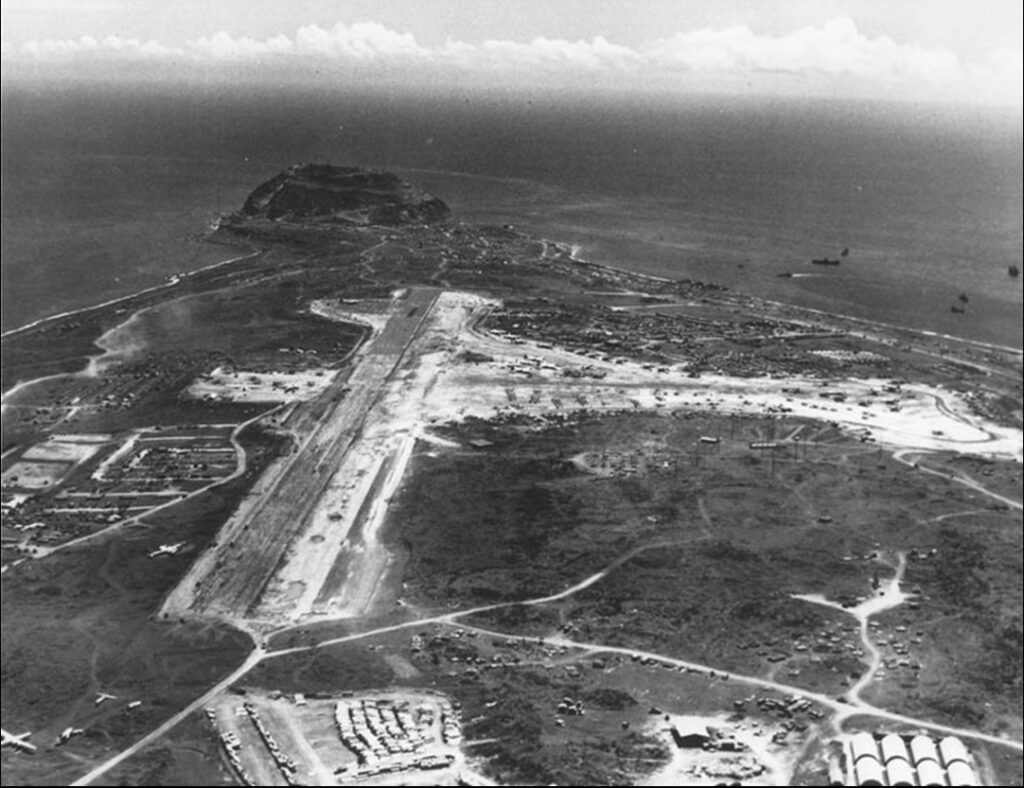
Iwo Jima Airstrip 1945
After an eternity of sweating out the impossible flight, we spotted lwo Jima. What a wonderful feeling of relief when I realized that we had made it to the island! Rocky requested a straight in approach for landing which was Okayed by ground personnel. I hurriedly completed my prelanding checks as Woody extended the landing gear and wing flaps. Rocky made a high speed landing to keep the B-29 from stalling out. After the airplane was parked among other war weary and battle damaged Superfortresses, I shut down the engines and we hurriedly deplaned. I was thankful that I had been assigned to this crew with a top notch pilot!
When we deplaned, the substitute gunner knelt down and kissed the ground. He told me that when he returned to Tinian, he would request grounding. He stated that he didn’t want to fly any more combat missions. Later, I heard that the gunner had a streak of bad luck prior to flying with us. On an earlier combat mission, his bomber had crashed into the ocean soon after taking off. He survived the crash but many of his crew mates had been killed. The potential disastrous incident involving our B-29 was the last straw, per an old saying, for the substitute gunner. He was convinced that bad luck was dogging him and that his number was always tense whenever he was flying combat missions.
After unloading our flight, survival and professional equipment, we buttoned up the airplane and departed for the flight operations area in a military truck. Since it was late in the afternoon, we were informed that we would get a patched up B-29 for our return to Tinian the next morning. We were given a ride to the mess tent for a meal and then onto to the bivouac area located some distance from the flight line.
WE WERE ASSIGNED TO BATTERED TENTS THAT HAD TEARS, RIPS AND HOLES IN THEM
We were assigned to battered tents that had tears, rips and holes in them, officers to one tent and enlisted members to a nearby one. And it appeared that none of the other tents had any occupants. When we inquired about the empty tents, the driver stated that previously a large number of Japanese soldiers had left their caves near the end of the battle for the island, and made a banzai attack against our troops. They attacked late at night and swept through several Army outfits and a Fighter unit, slashing tents, killing and wounding sleeping soldiers and airmen, and attacking everyone that got in their way. The attack continued into the hospital area where the attack was finally stopped.
WE LAID DOWN ON OUR COTS FULLY CLOTHED AND I PLACED MY LOADED PISTOL UNDER MY PILLOW
What a place to spend the night! We laid down on our cots fully clothed and I placed my loaded pistol under my pillow. I tried to sleep but instead, I dozed fitfully throughout the night and I was glad when dawn finally arrived. Later, I heard that several fellow officers also slept with their loaded pistols nearby. Fortunately, none of our crew members strayed around the tent area. A military truck transported us to the mess hall for breakfast and then onto the flight line. Here we were assigned a weary looking, patched up B-29 for our return flight to Tinian. Although we were assured that the airplane was flight worthy, the pilots and I carefully examined the exterior surfaces for any damage indicating an unsafe airplane. The airplane appeared to be okay and we accepted it for our return.
I started the engines and performed the magneto checks. They checked out okay and shortly thereafter we taxied to the active runway. During the takeoff roll, I closely watched the engine instruments for any signs of malfunctioning. They continued to operate normally at full power. We were mighty happy to leave the desolate island of lwo Jima as we headed for our home base. We landed around noon and checked in for a belated debriefing. Combat mission number nineteen, our roughest one to date, had been completed. I fervently hoped that our remaining missions would be much better.
ROCKY WAS SUMMONED TO GROUP HEADQUARTERS WHERE HE WAS GIVEN A REPRIMAND
Later that day, Rocky was summoned to group headquarters where he was given a reprimand. It seems that word of our ditching had been received by group personnel. They had contacted the search and rescue unit headquarters and informed them of Rocky’s intention to ditch the B-29. However, word of Rocky’s decision to fly to lwo Jima instead of ditching wasn’t received by group personnel. When Rocky informed them of the events that followed with our safe landing at lwo Jima, they were satisfied with his explanation.
272 B-29S HAD PARTICIPATED IN THE ATTACK AND FOUR BOMBERS HAD BEEN LOST. FORTUNATELY WE DIDN’T BECOME THE FIFTH VICTIM OF THIS ATTACK!
We heard that a B-29 taking part in the Tachikawa Army Arsenal raid had crashed into the ocean twenty minutes after taking off from North Field. Although the aircraft commander and four crew members were missing, the remaining crew members had been rescued. Altogether, 272 B-29s had participated in the attack and four bombers had been lost. Fortunately we didn’t become the fifth victim of this attack!
The next day I went to the flight surgeon’s office to see about intermittent stomach pains that I had been experiencing. The flight surgeon asked me how many combat missions I had flown. When I told him that I had just completed nineteen, he told me the problem was connected with those missions. He gave me charcoal pills to take to relieve the gas pains.
We were happy to rest and take it easy after our action packed escapade.
Finishing Japan
Firebombing Tokyo – May 23
On 22 May, we flew on a short maintenance test flight of our newly assigned B-29 as our regular B-29 had been left at lwo Jima. We missed the next two maximum effort night time incendiary raids against Tokyo, where the bomber command suffered heavy Iosses on the 23rd and 25th of May [see Firebombing of Tokyo – May 23. The First of Two B-29 Roughest Missions ].
OF THE 520 B-29S PARTICIPATING IN THE ATTACK, SEVENTEEN WERE LOST AND SIXTY-NINE WERE DAMAGED
Lt. J.B. Boynton’s crew, sharing our Quonset hut, participated in the May 23rd night attack (6BG Mission 43) along with thirty-one 6th Bomb Group combat crews. The next day, we heard that two 24th Bomb Squadron B-29s failed to return. Lt. Boynton [see They Shot Down Our Blind Date ] and Lt. Synder were the aircraft commanders of the missing airplanes. Rocky immediately volunteered to join in the search for the missing crews. Staff personnel turned him down, stating that search and rescue units were already searching for the downed airmen. Later, we learned that the attacking bombers had met heavy enemy opposition. In addition to the two downed bombers, nine of our group airplanes were damaged, several airmen were wounded and six members of a badly damaged airplane bailed out over the Empire. Fortunately, the remaining crew members although wounded, managed to fly the B-29 to lwo Jima [see Unfortunate Bail Out]. In all, of the 520 B-29s participating in the attack, seventeen were lost and sixty-nine were damaged, many so badly that they had to land at lwo Jima, enroute to the Marianas.
Firebombing Tokyo – May 25
The second night time mission to Tokyo, undertaken on 25 May, was led by 6th Bomb Group combat crews (6BG Mission 44). They were the first to arrive after the pathfinders had marked the target area. They encountered heavy and persistent flak, air-to-air and ground-to-air rocket attacks and night fighter attacks. They also encountered suicide fighters with the enemy pilots attempting to ram the B-29s, in an effort to down the big bombers. As a result, the 6th Bomb Group lost one B-29 over Tokyo, had two crews ditch enroute to lwo Jima and one crew ditch near lwo Jima. Fortunately, the crews that ditched were rescued [see Firebombing of Tokyo May 25, 1945. Finishing Tokyo]. Another crew of a badly shot up airplane, bailed out over lwo Jima and the aircraft commander ditched the bomber alongside the island [see Iwo Jima: The Marines Did It For the B-29s]. In addition, fourteen bomb group B-29s were damaged.
OF THE 464 B-29S THAT TOOK PART IN THE MISSION, TWENTY-SIX WERE LOST, EIGHTY-NINE WERE DAMAGED AND MANY CREW MEMBERS WERE INJURED
A new weapon was reported by several crews, “Balls of Fire,” which came up from the ground, levelled off and approached their airplanes travelling at approximately the same speed as their B-29s, spewing sparks from the aft end. They stated that from a distance the balls of fire looked like tracers and at 1,000 yards they looked like volley balls. Even though the pilots increased speed to slowly leave the objects behind, the Balls of Fire pursued their Superfortresses for about 200 miles out to sea. Because of these high speed chases with attendant high fuel usage, the crews were forced to land at lwo Jima and refuel before returning to their bases in the Marianas. Of the 464 B-29s that took part in the mission, twenty-six were lost, eighty-nine were damaged and many crew members were injured.
P-51 Escort
As a result of the heavy losses inflicted during the 23 and 25 May missions against Tokyo, General LeMay requested that lwo Jima based P-51 fighters accompany the B-29s on the upcoming daylight formation attack against the heavily defended city of Yokohama. The P-51 fighters had started escorting selected B-29 daylight formation flights over Japan during April. However, the fighters lacked navigation equipment required for the long flight to the Empire. Therefore, arrangements had been mode to have the fighter pilots rendezvous with designated B-29s at a predetermined altitude over the small volcanic Kita Island, located about forty miles north of lwo Jima. These B-29s escorted the fighters across the 600 miles of ocean to the coast of Japan. Upon reaching the coast, the P-51 pilots accompanied the bomber formations and engaged enemy fighters.
After the bombing run, the P-51 pilots dropped down to tree top level and shot up enemy facilities, such as small factories, trains, airfields and shipping on their return to the rendezvous area to link up with the navigational B-29s. Then the fighter pilots followed the bombers back to lwo Jima.

Kita Jima Island rendezvous point

Iwo Jima P-51s
Bombing Yokohama – May 29
THE P-51 PILOTS SHOT DOWN TWENTY-SIX ENEMY FIGHTERS, DAMAGED NINE AND CLAIMED TWELVE AS DESTROYED FOR A LOSS OF THREE P-51S DURING THE ENSUING AERIAL BATTLE
On May 29, about seventy-five P-51s accompanied 454 B-29s during a daylight incendiary attack against Yokahoma (6BG Mission 45). Approximately 150 enemy fighters tried to attack the bombers. The P-51 pilots shot down twenty-six enemy fighters, damaged nine and claimed twelve as destroyed for a loss of three P-51s during the ensuing aerial battle. However, seven B-29s were lost; three to antiaircraft fire, one through ramming by an enemy fighter and three to unknown causes.
27 P-51s Collide In Weather Front
TWENTY-SEVEN AIRPLANES [P-51S] COLLIDED AND PLUNGED INTO THE OCEAN WHILE ATTEMPTING TO PENETRATE THE FRONT
We heard that the P-51 pilots had a rough time enroute to the rendezvous point, on 1 June, to join in a B-29 raid against Osaka (6BG Mission 46). Approximately 150 fighter pilots encountered an unexpected weather front with clouds extending above 30,000 feet. The majority of the pilots returned to lwo Jima. However, twenty-seven airplanes collided and plunged into the ocean while attempting to penetrate the front. Only three downed pilots, subsequently located by search units, were plucked from the ocean and rescued. It was a terrible loss for the fighter outfit. Twelve pilots managed to penetrate the front and establish contact with the navigational B-29s. They escorted 458 Superfortresses flying to Osaka. Ten B-29s were lost during this mission.

P-51 entering clouds © George Gresko
Arrival of Top Secret 509th Composite Group
THEY DIDN’T VOLUNTEER ANY INFORMATION ABOUT THEIR OUTFIT NOR ANSWER ANY OF MY QUESTIONS
And on 1 June, a new B-29 outfit, the 509th Composite Group, formerly based at Wendover Army Air Field located near Salt Lake City, Utah, moved to Tinian with fifteen aircraft, flight crews and supporting personnel. Although the airplanes were located near our parking area, their area was isolated. And they didn’t fly with any other bomb groups. Instead they flew relatively tame missions to targets like Truk. They also flew a few solo missions to Japan. I went to see several flight engineers of the 509th group that I knew. They didn’t volunteer any information about their outfit nor answer any of my questions. Although I thought their behavior was strange, I believed that the Air Force was building up additional B-29 forces for final attacks against the Empire.

509th hardstand area © Paul Metro
Firebombing Kobe – June 5
After several weeks off we joined twenty-eight combat crews on 5 June, for information on our next mission. Sgt. Mario DiFerdinando, recently assigned to our crew as the left gunner, also attended the briefing. He was one of several survivors of a prior B-29 crash. During the briefing, we were informed that we would join B-29 crews from the four bomb wings in a massive daylight strike against Kobe, with incendiary bombs (6BG Mission 47). Because of expected bad weather enroute to Japan, P-51 fighters wouldn’t join our B-29s during this mission.
WE FLEW INTO HEAVY RAIN, HIGH WINDS AND SEVERE UP AND DOWN DRAFTS
We had a late meal at the mess hall and around midnight we boarded a truck for the flight line. Engine start and checkout were normal and we took off and headed for Japan. A short time after leaving Tinian, we flew into the predicted bad weather. Rocky called our attention to the propellers which were again outlined by halos of white light. This time I was more fascinated than frightened with the St. Elmo’s fire phenomenon. Rocky turned off the autopilot and he and Woody took over control of the airplane. Soon thereafter we flew into heavy rain, high winds and severe up and down drafts. We continued to be severely buffeted by the foul weather for several hours. Nearing the coast of Japan, we left the bad weather behind.
THE THREE SQUADRONS FORMED UP INTO A GROUP FORMATION AND TOGETHER WITH THE OTHER THREE GROUPS FORMED UP INTO A WING FORMATION

Stg. Mario DiFerdinando © Martin Eichelman

B-29 Bombing of Kobe Industrial Area. National Archives
Shortly after the break of dawn, we arrived at the assembly area and Rocky banked our B-29 to join the circling airplanes of the 24th Bomb Squadron as he deftly maneuvered the big bird into position. Arriving airplanes continued to join their respective squadrons. The three squadrons formed up into a group formation and together with the other three groups formed up into a wing formation. Other B-29 crews formed up similarly into their respective wing formations. Then we began our climb as the formations departed in trail for the initial point. Because the target area was covered by clouds at an altitude of 20,000 feet, the formations was forced to fly at a lower altitude to remain under the clouds for visual bombing.
I HEARD THE SOUND OF SPORADIC MACHINE GUN FIRE AS OUR GUNNERS FIRED BACK AT THE ATTACKING ENEMY FIGHTERS
The clear weather also brought out enemy fighters and our formation was attacked soon after turning towards the target. Again I heard the sound of sporadic machine gun fire as our gunners fired back at the attacking enemy fighters. There was also a moderate amount of flak which increased in intensity as we approached the target area. The formation turned for the coast as soon as the bombs had been released. As we neared the coast, the fighters that had attacked our formation throughout the bomb run, left to attack following B-29 formations approaching the target area. A short time later, the flight commander ordered the pilots to break up the formation.
Rocky set up a shallow descent, heading for the Marianas, as I set up the cruise control configuration. I periodically crosschecked the instruments and entered pertinent data in the flight log. Soon after leaving the coast we reencountered bad weather and again we were buffeted by high winds and turbulence. Rocky and Woody battled the elements as we were rattled about by the up and down drafts.
And we flew into rain, which was very heavy at times. It was impossible to relax!
Although the weather was rotten, I didn’t pay much attention to it as my attention was focused on the engine instruments as I watched for any sign of malfunctioning. They continued to operate normally as the hours slowly passed by and we finally flew out of the miserable weather. After we landed, I checked the airplane for damage and I discovered five jagged holes, apparently caused by flak.
NINE OF 473 RAIDING SUPERFORTRESSES HAD BEEN SHOT DOWN, ANOTHER WENT DOWN AFTER BEING RAMMED BY AN ENEMY FIGHTER, 176 BOMBERS HAD BEEN DAMAGED, [ONE] BOMBER HAD OVER 400 FLAK AND BULLET HOLES

B-29 riddled with flak and bullet holes
We heard that flak and enemy fighters really hammered other bombers participating in the raid. In all, nine of 473 raiding Superfortresses had been shot down, another went down after being rammed by an enemy fighter and one was lost to unknown causes. In addition, 176 bombers had been damaged, many so badly that they had to land at lwo Jima during the return flight. One battle damaged bomber crashed into the ocean attempting to land at lwo Jima. Another bomber that landed on the island had over 400 flak and bullet holes. It was another rough mission and we were fortunate in that we only received slight damage over Japan.
FIFTY PERCENT OF THE CITY WHICH INCLUDED FACTORIES, TRANSPORTATION FACILITIES, BUSINESSES AND HOMES WERE DESTROYED
Photos, taken by reconnaissance airplanes after the bombing, indicated that fifty percent of the city which included factories, transportation facilities, businesses and homes were destroyed. Even though we took a pounding, our bombing had improved and another Japanese city was eliminated from the target list.
Firebombing Osaka – June 7
On 7 June, we attended a briefing with other combat crews for an incendiary raid against Osaka (6BG Mission 48). The bomb drop was to be accomplished during daylight by B-29 combat crews from the four bomb wings. We were informed that we would encounter bad weather enroute to Japan as a result of a typhoon that was skirting Japan.
We departed for Japan after midnight on our twenty-first mission. Shortly after we joined the bomber stream we flew into the predicted bad weather. Again we encountered St. Elmo’s fire that formed spectacular halos around the propellers.
ROCKY DISENGAGED THE AUTOPILOT AND HE AND WOODY MANUALLY FLEW THE BIG BOMBER AS WE WERE SUBJECTED TO VIOLENT UP AND DOWN DRAFTS WITH MUCH TOSSING AND BOUNCING AROUND
Rocky disengaged the autopilot and he and Woody manually flew the big bomber as we were subjected to violent up and down drafts with much tossing and bouncing around. Several hours later we flew out of the abominal weather.
THE FORMATION WAS JUMPED BY ENEMY FIGHTERS
I monitored the engine instruments and logged pertinent data in the flight log as we flew towards the assembly point off the coast of Japan. Early in the morning we joined up with our group airplanes that were already circling in the assembly area. As we approached the initial point at our bombing altitude, the formation was jumped by enemy fighters. Our gunners fired at the attacking fighters as they approached our bomber. The enemy pilots continued to aggressively attack the formation as we turned to the heading for Osaka.
THE LEFT GUNNER REPORTED A HUGE QUANTITY OF OIL DRIPPING OFF THE WING. THE ENEMY PILOT HAD SHOT UP THE ENGINE DURING HIS ATTACK!
Soon afterward, an enemy pilot singled out our B-29 and made a firing pass at our airplane. Following the attack, I noticed that the number four engine was losing power and that the number four engine fire warning light had come on. The left gunner, Mario DiFerdinando, also reported a huge quantity of oil dripping off the wing. The enemy pilot had shot up the engine during his attack!
I notified Rocky that we had lost the number four engine as I moved the mixture control to the cutoff position, retarded the throttle, closed the fuel shut-off valve and cowl flaps and turned off the ignition switch. He instructed Woody to feather the number four propeller as he increased power on the remaining three engines to maintain our position in the formation. The propeller gradually slowed down and stopped turning as the propeller blades transitioned to the streamlined position.
I TURNED THE FIRE EXTINGUISHER SELECTOR TO THE NUMBER FOUR ENGINE POSITION AND PULLED THE FIRE EXTINGUISHER HANDLE
Next, I turned the fire extinguisher selector to the number four engine position and pulled the fire extinguisher handle. A short time later, the fire warning light went out indicating that the foam had put out the fire.
Since there was a cloud cover over the target, the lead bombardier dropped his bombs by radar and Denis released our bombs at the same time. The flight commander turned for the coast as soon as the bombs had been released. Enemy fighter attacks continued until we reached the coast where the fighters left us. As soon as the order to break up the formation came, Rocky peeled off and headed for the Marianas. He established a gradual descent and set up the optimum airspeed that I had obtained from the three engine configuration chart.
We again encountered bad weather a short time after leaving the coast of Japan. Although the weather was rotten, my attention was on the operating engines as I watched the instruments for any sign of malfunctions. I also kept a close watch on the dwindling fuel supply. The hours slowly passed by and finally we flew out of the miserable weather. Soon afterwards, we approached Tinian and with one inoperative engine, Rocky made an excellent landing.
After engine shutdown, I checked the fuel reserve which was about 400 gallons, enough for approximately an additional hour of flight time. Although we met the minimum fuel requirements, it was the lowest reserve that we had experienced. I also noticed that there was a lot of oil around the number four engine nacelle and the wing aft of the engine, after I had deplaned.
Manned Baka Bombs
DESPITE THEIR GREAT SPEED, THE BAKAS WEREN’T VERY EFFECTIVE AS ONLY ONE KNOWN SUPERFORTRESS WAS LOST TO THESE ROCKET-POWERED BOMBS
During the debriefing session, I heard that the Japanese had introduced a new weapon in an attempt to down our B-29s. Several crew members reported that a small, man controlled, rocket-propelled bomb containing wings, had been observed attacking their airplanes. The manned bomb/airplane, was designated “Baka” by our airmen, the Japanese word for fool. They were carried by enemy bombers and released against our formations. Crew members estimated that the Bakas reached speeds up to 600 miles per hour, approaching the speed of sound, as they streaked for the B- 29s. However, despite their great speed, the Bakas weren’t very effective as only one known Superfortress was lost to these rocket-powered bombs. Later on, I discovered that the Baka was a small airplane with a sixteen to twenty foot wingspan, which was powered by three powerful rockets. A ton of explosives was located in the nose of the fuselage. The rockets operated for about forty seconds with the Baka reaching speeds of 400 to 600 miles per hour, depending upon the angle of attack. It had a range of thirty-five to forty miles. .
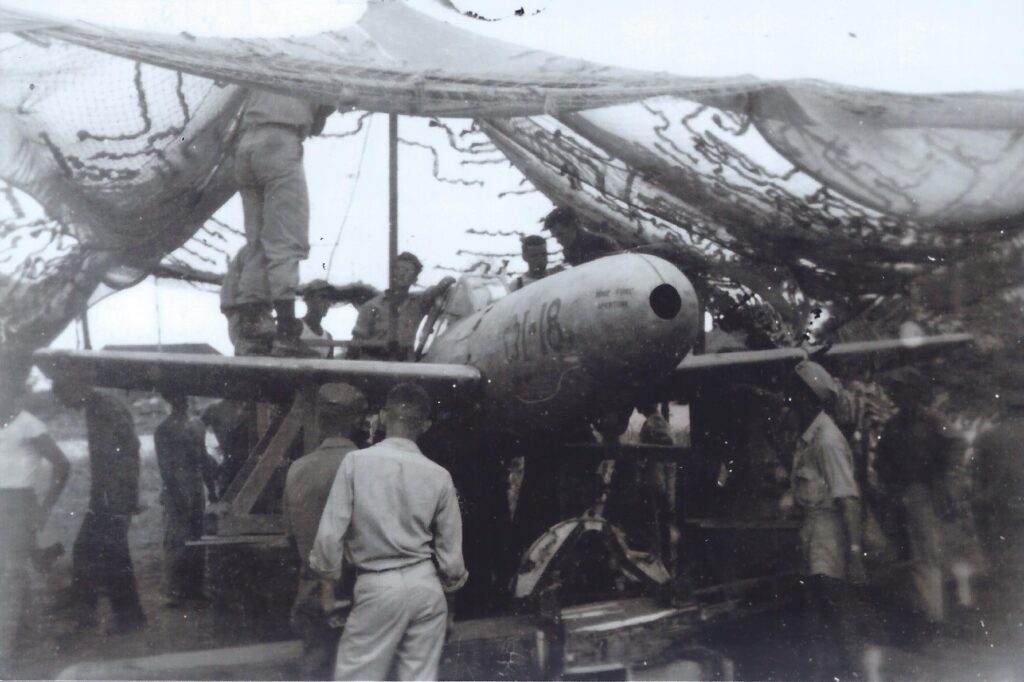
Balls of Fire – Yokosua MXY7 Ohka “Baka” seen after war © George Gresko. All Rights Reserved.
AS THE BAKA HAD NO LANDING GEAR, IT CARRIED ITS PILOT TO CERTAIN DEATH
Apparently it was difficult to steer the rocket-propelled bombs as they weren’t very effective against our bombers. And as the Baka had no landing gear, it carried its pilot to certain death.
A total of forty-eight enemy fighters attacked our formations of 409 bombers and eleven B-29s were lost to enemy fighters and flak during this mission.
4000 lb. Bombs – Kawasaki Aircraft Factory – June 8
THE AIR FORCE WAS SERIOUS ABOUT KNOCKING OUT THIS FACTORY SINCE OUR BOMB LOADS CONSISTED OF THREE 4,000-POUND GENERAL PURPOSE BOMBS
0ur missions were coming at a rapid pace with little time for rest and relaxation. During late afternoon on 8 June, we joined twenty-four combat crews at the briefing room regarding a raid against the Kawasaki Aircraft Factory at Akashi, Japan (6BG Mission 49). We would join up with other 6th Bomb Group airplanes off the enemy coast early the next morning. It appeared that the Air Force was serious about knocking out this factory since our bomb loads consisted of three 4,000-pound general purpose bombs. We were also informed that lwo Jima based P-51 fighters would escort the B-29s across the target area during this mission.
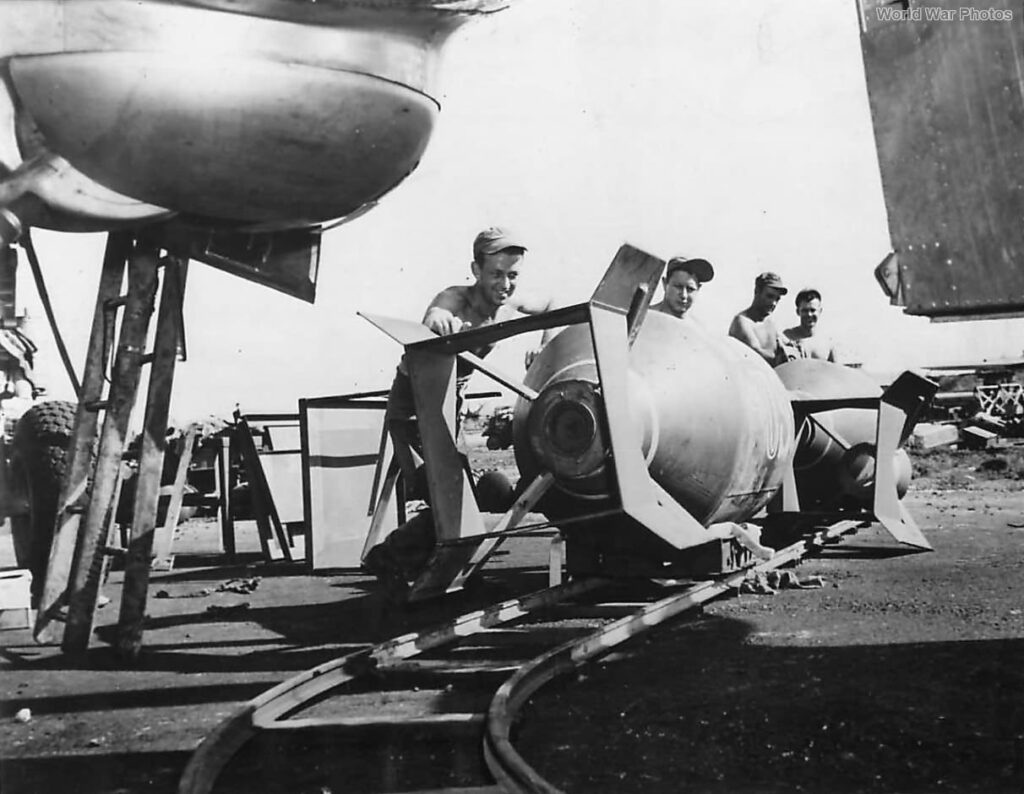
The crew loads 4000-pound bombs into B-29 Bombay
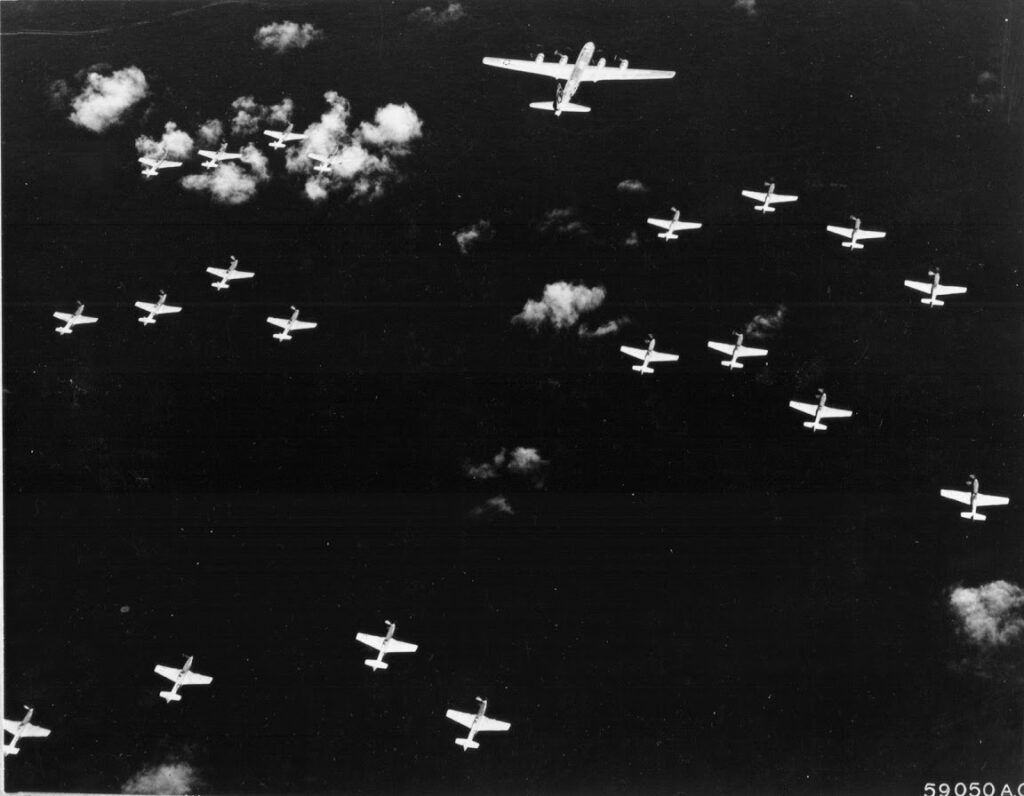
313th Bomb Wing B-29 escorting unidentified 7th Fighter Command P-51 mustangs from Iwo Jima to Japan
I FELT THE AIRPLANE SHUDDER FROM THE EXPLOSION OF THOSE BIG BOMBS
We took off shortly after midnight and arrived at the assembly area a little after dawn. We joined the 6th Bomb Group flight of twenty-three airplanes, one airplane having aborted the mission. As there was much cloudiness, the bombs were dropped into the target area, which was identified by radar. Even though we bombed at an altitude of 17,000 feet, I felt the airplane shudder from the explosion of those big bombs and I thought that we had finally eliminated the aircraft factory. I was thankful that we didn’t encounter any enemy fighters or any flak. Apparently the cloud cover also discouraged the enemy defenses. The formation turned for the coast and shortly after breaking away from the formation three P-51 fighters appeared and joined up with our B-29. Apparently the fighter pilots had missed the navigational B-29s and decided to tag along with our bomber for the return trip to their home base. They were a pretty sight as they flew along in formation with us. We escorted them to lwo Jima where they peeled off to land at their airfield and we proceeded on to Tinian.
AGAIN WE HAD BEEN THWARTED BY BAD WEATHER OVER THE TARGET AREA!
We heard that our bombing results were poor and that the aircraft factory was still in operation. Again we had been thwarted by bad weather over the target area! The only good thing about this mission was that no B-29s were lost.
The field exchange service was improving and there were many more luxury items for sale. In addition, Red Cross personnel opened a refreshment booth at the rear of the briefing building, where the women served cool refreshments to crew members following debriefing interrogations. Medics continued to dispense drinks of harder character, provided by the government.
Sixth Bomb Group personnel assembled at the Starlite Theater on the morning of 11 June, for presentation of medals. Our crew received the Oak Leaf Cluster to the Air Medal for successfully completing twenty-one missions.
Another Engine Loss
On 14 June, we learned that our next target was the Japanese city of Amagasaki (6BG Mission 50), west of Osaka. It was to be another massive high altitude formation attack scheduled for an early morning drop by Superfortresses from the four bomb wings. We departed Tinian around midnight and arrived in the assembly area early the next morning. After forming up with other 6th Bomb Group airplanes, we departed for the initial point at an altitude of 21,000 feet. However, when the formation turned to the heading for the target area, a cloud cover appeared which obscured the city. Therefore, the bombs were dropped into the target area which was identified by radar.
The only good thing about the cloud coverage was that very few Japanese fighters arose to harass us. Soon after the bombs had been released, Stanley, the right gunner, reported oil dripping from the trailing edge of the wing. I scanned the engine instruments and discovered that we were losing power on the number two engine. I informed Rocky of the power loss and initiated my now familiar in flight shut down procedures for the inoperative engine: Mixture control to idle cut-off, throttle to closed position, fuel shut-off valve closed, cowl flaps closed and ignition switch off. The propeller went to the streamline position when Woody hit the feathering switch and the engine stopped rotating. I jumped when I heard a loud hissing noise that appeared to be next to me, a short time later. The navigator, Archie, announced that the forward cabin fire extinguisher had accidently discharged. He and David Evans succeeded in stopping the flow of foam and I returned my attention to the engine instruments.
B29s over cloud bank © Percy Tucker
After Rocky left the formation, I set up the three engine cruise control configuration and gave Rocky the optimum airspeed for our return flight. Several hours later, Mario, the left gunner, informed me that an oil leak had developed aft of the inboard engine. My review of the number three engine instruments indicated that the engine was operating normally. I asked him to keep a close watch on it and report any change in the flow of oil. There was no thought of resting as I continued to closely monitor the instruments of the three operating engines, during our return flight. Fortunately, they continued to operate normally at the higher power settings. Later that afternoon, we arrived at Tinian and Rocky made a good three engine landing. So ended another action packed combat mission, number twenty-three.
ENEMY FIGHTERS, FLYING ABOVE THEIR FORMATION, DROPPED PHOSPHOROUS BOMBS ONTO THEIR B-29S
Combat crews of another formation reported several air-to-air bombings. Enemy fighters, flying above their formation, dropped phosphorous bombs onto their B-29s. Fortunately the aerial bombs were ineffective as only three B-29s suffered minor damage. Of 469 B-29s participating in this mission, several were damaged and two were lost due to enemy action.
Reconnaissance photos again indicated poor bombing results. It was very frustrating to fly all the way to Japan over hostile waters and then encounter adverse weather over the target area which negated our bombing efforts!
Reassigned to 504th
WE WERE INFORMED THAT SEVERAL 24TH AND 39TH BOMB SQUADRON COMBAT CREWS, OURS INCLUDED, HAD BEEN TRANSFERRED TO THE 504TH BOMB GROUP
Shortly after this mission, we were informed that several 24th and 39th Bomb Squadron combat crews, ours included, had been transferred to the 504th Bomb Group. Our crew was assigned to the 421st Bomb Squadron, effective 18 June. Many years later, I learned that prior to the overseas movement of the 504th Bomb Groups to Tinian, one of its squadrons had been transferred to the 509th Composite Group located at Wendover Army Air Field.
WE WERE ALLOWED TO REMAIN IN OUR QUONSET HUTS IN THE 24TH BOMB SQUADRON BIVOUAC AREA
And so we were one of the combat crews reassigned to help bring the 504th Bomb Group up to strength. Rocky immediately volunteered our crew for every mission assigned to the bomb group. Although we had been transferred to another bomb group, we were allowed to remain in our Quonset huts in the 24th Bomb Squadron bivouac area.

Our crew transferred to the 504th June 1945 © Marty Eichelman
Firebombing Fukuoka – Our First 504th Assignment
On 19 June, we attended a briefing with twenty-eight combat crews of the 504th Bomb Group. A night time incendiary raid against the Japanese city of Fukuoka was our next objective (6BG Mission 53). Bombing would be accomplished by individual B-29 crews of the 73rd and 313th Bomb Wings. We took off in late afternoon and headed for the Japanese mainland in a bomber stream. After several hours of night flying, we arrived off the coast of Japan about midnight. Archie gave the pilots the heading to the target and Denis dropped the bombs into the target area from an altitude of 17,000 feet. Again we didn’t encounter any enemy opposition.
It was several hours after we left the Japanese coast when dawn arrived. We were greeted by a grey, washed out world with a heavy cloud layer above us and a dismal looking ocean below. Archie called us over the interphone and told us to look out the left side of the airplane. I peered out the small window and in the distance I saw several parachutes descending towards the ocean. It was a startling sight as I looked around for sight of an aircraft. The sky was empty, except for the billowing parachutes.
Rocky reported the parachute incident during the debriefing session. We were informed that all combat crews and aircraft, participating in this mission, had either landed or been accounted for. In addition, there weren’t any reports of enemy airplanes encountering our returning B-29s. It could have been an enemy reconnaissance airplane that had developed mechanical trouble or run out of fuel and the crew had bailed out. If they were Japanese airmen, I’m sure they perished since our search and rescue units didn’t go looking for them.

Circle E incendiaries on ground – Eichelman
A total of 221 Superfortresses bombed the primary target area at Fukuoka without the loss of any bombers.
Kawasaki Aircraft Factory: 4000 lb. Bombs – June 21
During the afternoon of 21 June, we joined twenty-nine 313th Bomb Wing combat crews at the briefing room. Again the target was the Kawasaki Aircraft Factory (6BG Mission 54) located at Akashi. It was to be another daylight bombing effort by our bomb wing B-29s carrying general purpose bombs. Since we were to take off late that night, we loafed for several hours, had an evening meal and then departed for the flight line. Engine start and checkout were normal and we took off after midnight.
I HEARD THE STACCATO SOUND OF MACHINE GUN FIRE AS CREW MEMBERS SHOT BACK AT THE APPROACHING ENEMY FIGHTERS
We arrived at the assembly area shortly after dawn, where we joined the circling formation of 504th Bomb Group aircraft, identified by the circled letter “E” on the rudder. The small formation climbed to 10,300 feet and headed for the initial point. Shortly after departing the initial point, enemy fighters appeared and two fighters attacked our formation damaging several B-29s as we headed for the target. Once again I heard the staccato sound of machine gun fire as crew members shot back at the approaching enemy fighters. Our three 4,000-pound bombs were released when the lead bombardier dropped his bombs and we headed on our solo flight to Tinian. After deplaning, I noticed a bullet hole in the B-29 wing.

504th Bomb Group in flight
OUR HIGH ALTITUDE BOMBING EFFORT DIDN’T APPEAR TO BE VERY EFFECTIVE
Later on, we heard that our bombing accuracy wasn’t too good as little of the target had been destroyed. Our high altitude bombing effort didn’t appear to be very effective. And although only a small number, twenty-five, of Superfortresses participated in this raid, none were lost.
Firebombing Moji – June 28
After a week off, we attended a briefing with twenty-nine other combat crews on 28 June. This was to be an incendiary raid, a night time attack against Moji (6BG Mission 56), located on the southern shore of the Shimonoseki Straits, again by 313th Bomb Wing B-29s. The airplane checked out okay and we took off in late afternoon. When we arrived in the target area around midnight, we discovered that the city was obscured by clouds. Denis dropped the bombs by radar at our briefed altitude of 10,200 feet and we headed back for the Marianas. I was pleased that we didn’t encounter any enemy airplanes or flak over Japan. Early the next morning we landed at our base, thereby completing our twenty-sixth mission. Ninety-four B-29s had participated in this mission and all returned safely.
Firebombing Ube – July 1
THE FLIGHT TO JAPAN WAS ROUTINE, LONG AND TIRING
On 1 July, we were informed that our next target was the city of Ube (6BG Mission 57), located fifteen miles east of the Shimonoseki Straits on the island of Honshu. Thirty-nine combat crews were also present at the briefing. It was to be a 313th Bomb Wing incendiary raid with each B-29 crew bombing individually around midnight. The airplane checked out okay and we departed the island later that afternoon. The flight to Japan was routine, long and tiring. When we arrived off the coast of Honshu at an altitude of 10,300 feet, we could see that the city was already on fire as we headed for the target area. As soon as the bombs were dropped, we set course for Tinian, arriving at the base in early morning. Apparently the enemy defenses were weakening as we didn’t encounter any enemy fighters or flak. At debriefing, we heard that two B-29s from our former 6th Bomb Group, experienced loss of power shortly after taking off from the island. Fortunately, the crews managed to jettison their bombs and land okay. However, of the 100 B-29s participating in the raid against Ube, none were lost.
Opening of 6th Bomb Group Officer and Enlisted Men’s Clubs
MANY NURSES ATTENDED THE AFFAIR
I attended the party celebrating the opening of the 6th Bomb Group Officer’s Club in early July, with the bomb group band providing music for dancing. Many nurses, having recently arrived for duty at the new Tinian hospital, attended the affair. The nurses had recently been stationed on our island in preparation for expected casualties as a result of the planned invasion of Japan latter that fall. The Enlisted Men’s Club was also formally opened with the help of the Red Cross women.

6BG Officer’s Club © Jack Koser. All Rights Reserved

6BG Officer’s Club opening night dinner© Roscoe Booth

6th BG Officers Club Opening night dinner July 3, 1945 on Tinian. Photo: ©Roscoe G. Booth

Nurses attend 6BG Officer’s Club opening © Roscoe Booth
Firebombing Himeji – July3
AGAIN WE DIDN’T ENCOUNTER ANY ENEMY FIGHTERS OR FLAK. AND NONE OF THE 106 B-29S BOMBING HIMEJI WERE LOST
We were informed that Himeji (6BG Mission 58), located on the northern shore of the Inland Sea of Japan, was our next target when we attended a briefing on the morning of 3 July. It was to be another 313th Bomb Wing incendiary raid with the combat crews bombing the target individually. As the airplane turned toward Himeji about midnight, we noted that the city was already on fire. Denis released the bombs in the target area from an altitude of 10,200 feet and we headed for our home base. Again we didn’t encounter any enemy fighters or flak. And none of the 106 B-29s bombing Himeji were lost. Post mission photo reconnaissance pictures indicated that the B-29s had destroyed the target area and another enemy city could be eliminated from the list of priority targets.
Starlite Theater – Dick Jergensen
IT WAS AN ENTERTAINING SHOW
A short time later the Dick Jergensen show performed at the Starlite Theater. Accompanying Dick Jergensen was his band and several actors. We went early to get a seat since many service personnel also planned to attend. The band played songs of the day while the actors performed in many timely skits. It was an entertaining show which I thoroughly enjoyed since the talent of some previous performers had been of secondary caliber, to say the least.
Meanwhile, the weather had turned a little warmer and we spent more time at the beaches, swimming and sun tanning. We visited friends among the various squadrons and frequently went to the Officer’s Club for refreshments. During the evenings we attended movies at the Starlite Theater.

Crews relaxing at Enlisted Men’s Club © Gilbert Godin
A weakened Japan – July 1945
On 9 July, we were briefed on our next mission, a 313th Bomb Wing incendiary raid against Wakayama, Japan. Takeoff was scheduled for late afternoon and we had a meal prior to our departure for the flight line. The airplane checked out okay and soon we were headed for the Japanese mainland, arriving at the enemy coast around midnight. After releasing our bombs from an altitude of 10,700 feet, we headed for Tinian. We didn’t encounter any enemy fighters or flak during our flight over Japan. And fortunately, of the 108 Superfortresses participating in the raid, none were lost.
After several days off, it was back to work on 12 July, as we prepared to join other 313th Bomb Wing Superfortresses for a night time incendiary raid on Tsurga, Japan (6BG Mission 66). We took off in late afternoon and after our cruising airspeed had been established, I set up my first cruise control configuration and moved the fuel mixture controls, one by one, to the auto lean position.
However, when in the auto-lean position, the number two engine began to backfire. I immediately moved the fuel mixture control back to the auto-rich position. This resulted in a higher fuel flow to that engine. I kept a close watch on the fuel supply and the number two engine instruments as we flew towards Japan. Tsurga was already on fire when we arrived around midnight. Our bombs were released at an altitude of 12,000 feet. Again we didn’t encounter any enemy action.
Shortly after leaving the enemy coast, a check of the fuel supply indicated that although we had consumed more fuel than what had been predicted, we would reach Tinian okay. The engines continued to operate normally and I was relieved when we landed with an adequate fuel reserve. Once again none of the ninety-one B-29s involved in the raid were lost.
ENEMY AIR AND GROUND DEFENSES APPEARED TO BE DEFINITELY WEAKENING AS AGAIN WE DIDN’T ENCOUNTER ANY OPPOSITION. AND NO B-29S WERE LOST OF THE NINETY-ONE THAT HAD PARTICIPATED IN THE ATTACK
A week later we proceeded, on 19 July, in a wing bomber stream for a night incendiary attack against Chosi. After an uneventful flight to Japan, we dropped the bombs as scheduled about midnight into the target area, from an altitude of 12,200 feet. Enemy air and ground defenses appeared to be definitely weakening as again we didn’t encounter any opposition. And no B-29s were lost of the ninety-one that had participated in the attack.
B-29 Mines Sink Ships Faster than Navy Submarines
THE MINES PLANTED BY THE 313TH BOMB WING SUPERFORTRESSES WERE APPARENTLY SINKING ENEMY VESSELS FASTER THAN THE NAVY’S SUBMARINES
We heard that Navy officials were highly pleased with our mining efforts. During April, eighteen Japanese ships had been sunk. In May, the count rose to eighty-five vessels sunk for a total of 213,000 tons sunk or out of action. During June, twenty-three more vessels, totaling 163,000 tons, were sunk. The mines planted by the 313th Bomb Wing Superfortresses were apparently sinking enemy vessels faster than the Navy’s submarines. Another effect of the mining was that Japanese ports were paralyzed for five to ten days at a time while mine sweeping efforts were undertaken.
On 21 July, we and other air crew and ground personnel were summoned to the Starlite Theater for the presentation of medals. Our crew received the Pacific Campaign Star and another Oak Leaf Cluster to the Air Medal.
Our Longest Combat Mission
We attended a briefing on 25 July, for a mining mission. We would carry seven mines, each weighing 2,000 pounds, which were to be planted in the waters off Seishin, near Korea, about 200 miles from Russia. This was to be the longest combat mission to date for the 313th Bomb Wing B-29s, a flight of about 4,150 miles round trip. We were instructed to land at lwo Jima to refuel, either enroute to the target or on the way back. Preflight planning indicated that most crews wouldn’t be able to meet minimum fuel reserve requirements without refueling.
THE AMERICAN BANNERS CONTAINED A MESSAGE IN CHINESE STATING THAT WE WERE AMERICAN FLYERS AND THAT MONEY WOULD BE PAID TO OUR BENEFACTORS FOR OUR SAFE RETURN TO CHINESE COMPATRIOTS

6BG B-29s refuel at Iwo Jima July 1945
Each crew member was given a special waterproof packet to carry along on the flight. The packet contained two silk cloths, or banners, one with the American Flag imprinted on it and the second one imprinted with the Chinese Flag. Both banners contained numbers that were assigned to the individual which were registered in Chungking, China. The number on my American banner was 59038 and the number on my Chinese banner was W23041. The American banners contained a message in Chinese stating that we were American flyers and that money would be paid to our benefactors for our safe return to Chinese compatriots. The message was also printed in the Annanise, Chinese Loa, French, Korean, and Japanese languages. The Chinese banner had a similar message printed in the Chinese language. These banners were called, respectively, “American Blood chits” and “Chinese Blood chits” among our airmen.

American Blood chit © Archie Miller
THE PURPOSE OF THE MONEY WAS TO PAY BENEFACTORS FOR THE SAFE RETURN OF DOWNED AIRMEN TO FRIENDLY FORCES IN CHINA
In addition, each packet contained 1,000 dollars of Chinese currency. The purpose of the money was to pay benefactors for the safe return of downed airmen to friendly forces in China. I placed the packet in a zippered pocket of my flying suit for safe keeping.
After taking off later that afternoon, we headed for lwo Jima and landed there several hours later, Rocky having decided to refuel on the way to the target. The crew deplaned at the refueling area and I supervised the placement of the refueling truck to prevent damage to the airplane. It was very hot on the island and I noticed that the refueling personnel were covered with perspiration. And they were grimy from the volcanic ashes which covered the island. When the equipment was in place I returned to my station and monitored the gauges as fuel was added to the wing tanks. As I waited for the refueling operation to be completed, I thought of how different our previous stopover had been, which had been under extremely trying conditions.
I HANDED THEM MY FOOD SNACKS AND SOFT DRINKS WHICH WAS THE LEAST I COULD DO FOR THEM. THEY CERTAINLY NEEDED SOME CHEERING UP FOR BEING STATIONED ON SUCH A FORSAKEN ISLAND!
When all tanks were full, I deplaned and watched the ground crew remove the refueling hoses. I handed them my food snacks and soft drinks which was the least I could do for them. They certainly needed some cheering up for being stationed on such a forsaken island! Other crew members also gave the refueling personnel snacks and soft drinks. Ground personnel asked our gunners if they could inspect the aft crew compartments as this was their first opportunity to see the interior of a B-29 Superfortress. After the tour of the B-29, they invited our crew members to see the inside of several tanks parked near the refueling area.
Soon after the refueling truck had been removed from the parking area, we took off and headed for the Japanese mainland. We climbed to 6,000 feet prior to overflying the Japanese mainland during the early night hours. Several hours later we arrived at our assigned drop zone and planted the mines. We didn’t encounter any enemy fighters, searchlights or flak during the flight to the drop zone. However, as we were flying over Japan on our return, the tail gunner, Charles, called Rocky and reported that it appeared that we were being stalked by an enemy fighter. Rocky told the crew to make sure that only needed crew station work lights were on and set to the dimmest position possible for accomplishing our flight tasks. He also told Charles to keep an eye on the fighter as we climbed and dived and changed our heading several times in an effort to lose the fighter. Charles reported that the fighter was still following us in spite of these maneuvers.
After several minutes of evasive action, we were all relieved when Archie informed the crew that it was the planet Venus that had been sighted by the tail gunner. It was a trying time for our crew as we expected the enemy fighter to detect our airplane and attack us at any moment!
WE DIDN’T FEEL QUITE SO FOOLISH WHEN WE HEARD DURING DEBRIEFING THAT SEVERAL OTHER COMBAT CREWS HAD ALSO MISTAKEN VENUS FOR AN ENEMY FIGHTER
The rest of the flight, although tiring, was rather anticlimactic and we landed at North Field early in the morning. We didn’t feel quite so foolish when we heard during debriefing that several other combat crews had also mistaken Venus for an enemy fighter. Fortunately, all our B-29s successfully completed the long mission.
That evening we attended the USO show, entitled “Ship Ahoy” which I enjoyed very much. I wrote letters, went swimming, sun bathed and loafed as we waited for our next mission assignment.
Our First Abort
Two days later, on 27 July, twenty-four crews of the 313th Bomb Wing attended a briefing for our next mission, the planting of mines in the Shimonoseki Straits. Later that evening, after a normal engine start and checkout, we taxied to the runway and initiated our takeoff.
WHEN WE APPROACHED THE END OF THE RUNWAY AND WERE COMMITTED TO LIFT OFF, I NOTICED THAT THE NUMBER TWO ENGINE OIL TEMPERATURE WAS RAPIDLY INCREASING ABOVE THE NORMAL READING
When we approached the end of the runway and were committed to lift off, I noticed that the number two engine oil temperature was rapidly increasing above the normal reading. As we lifted off the runway, the oil temperature indicator reached the top of the gauge, indicating a problem with the engine or the instrument. I immediately notified Rocky of the abnormal reading and asked right gunner Martin Eichelman to keep a close watch on the number two engine exhaust area for any evidence of excessive oil leakage or fire.
Rocky told Woody to notify control tower personnel that we were declaring an emergency and to ask for instructions for clearing the flight area. I continued to monitor the number two engine instruments, closely watching the fire warning indicator. We continued to climb and Rocky turned away from the normal flight path as directed and circled in the area reserved for B-29s experiencing difficulties during takeoff and climb out. After we had reached a safe airspeed, Rocky reduced power on the number two engine. I noted that the oil temperature indicator was still off scale. Since there were no other indications of an engine malfunction, Rocky added power to the engine. I thought that the oil temperature gauge was at fault. However, if the oil temperature gauge was inoperative, I wouldn’t be able to monitor the engine for potential problems during the flight to Japan and the return to Tinian.
ROCKY DECIDED TO ABORT THE MISSION. THIS WAS OUR FIRST ABORT AFTER FLYING THIRTY-TWO COMBAT MISSIONS!
Rocky decided to abort the mission and told Woody to notify ground control personnel of his decision. I was glad that he made the decision to land instead of continuing on the mission. Denis lnkel jettisoned the mines in the safe configuration into the designated drop area near the island. We continued to circle in the area until the last airplane had departed on the mission. After landing, electrical specialists immediately started their checks on the oil gauge and circuitry while maintenance personnel checked the engine. The engine checked out okay. However, a malfunction was found in the oil temperature electrical line to the engine. I was thankful that the engine hadn’t malfunctioned. For if the engine had failed, the ending might have been tragic. This was our first abort after flying thirty-two combat missions! Rocky immediately volunteered our crew for the next mission.

No. 2 Engine inspection
It was a time for resting up as we loafed, visited with friends and went to the beaches where we swam and enjoyed the sun for several days. During the evenings we went to the movies.
The Longest Mission of the War – July 29
We attended a briefing with other 505th Bomb Group combo crews for another mining effort on 29 July. This would be another long flight, with the drop zone located near the Korean Port of Rashin, about 100 miles from Vladivostok, Russia. Again our bomb load consisted of seven 2,000-pound mines. We took off and headed for lwo Jima shortly after noon, where we landed and topped off our tanks with fuel. Shortly thereafter we departed the island and headed for Japan and Korean waters. We crossed the Japanese mainland during the night hours and proceeded to the drop zone where the mines were dropped and turned towards Japan on our return flight to Tinian.
WE HAD BEEN AIRBORNE FOR EIGHTEEN HOURS AND FORTY-FIVE MINUTES… THE LONGEST MISSION, FLOWN BY OUR 313TH BOMB WING B-29S, WHICH WAS FLOWN BY ANY AIRCRAFT DURING WORLD WAR II
While we were flying over Japan, Martin, the right gunner, called the pilots and informed them that there was an enemy fighter below us, approaching from our right which would pass underneath our airplane. I looked out my window and spotted the fighter with its cockpit and recognition lights turned on. My stomach muscles tightened up when I sew the enemy fighter passing so close to our B-29, especially when I could see the enemy pilot in his greenhouse. Fortunately, the enemy pilot didn’t spot our blacked out airplane and we continued on course for the Marianas. After parking the airplane, I closed out my flight log noting that we had been airborne for eighteen hours and forty-five minutes. Later, we heard that this was the longest mission, flown by our 313th Bomb Wing B-29s, which was flown by any aircraft during World War II. (See also The Longest Non-Stop Combat Bombing Mission of WWII)
The next briefing was held on 1 August, for another 313th Bomb Wing effort, a mine drop near Hamadi, Japan. After a late afternoon and night flight to Japan, we planted our mines, seven 2,000 pounders, from an altitude of 8,000 feet and headed for our home base on Tinian. The enemy defenses were definitely weakening as again we didn’t see any enemy fighters or encounter any antiaircraft fire and there were no losses of the thirty-seven participating B-29s.
Several days after our last mission, we were summoned to the theater area for the presentation of medals. Our crew received the Distinguished Flying Cross for an earlier combat mission. The citation accompanying the medal stated:
As we waited for our final mission, we loafed and went to the beaches where we swam and enjoyed the sun. During the evenings we went to the movies.
Super Dumbo for Atomic Bombing of Hiroshima
WE WOULD FLY A SUPER DUMBO B-29 ON THIS MISSION. THE BRIEFERS DIDN’T GIVE US ANY ADDITIONAL DETAILS
On 5 August, our crew was summoned to a specialized briefing. We were informed that we would be part of the search and rescue team and that we would fly a Super Dumbo B-29 on this mission. Our assignment was to fly near the coast of Japan and rendezvous with a submarine. Information on the takeoff time, cruising and orbiting altitudes, estimated time of arrival at the rendezvous area and coordinates for linking up with the submarine was provided. The departure time for our return flight to Tinian was omitted as we were told to circle on station for a minimum of two hours. The briefers didn’t give us any additional details.
At the end of the briefing, the 504th Bomb Group chaplain presented each crew member a Round Trip Ticket. On my card was printed the following “This ticket is issued to 1st. Lt. Lawrence W. Stewart, 504th Bomb Group, as a guarantee for the safe completion of his 35th mission over the Japanese mainland and entitles him to a safe journey.” I thanked him for the card and fervently hoped that it was an omen of a successful final mission.
I CHECKED THAT THE SURVIVAL GEAR WAS UP LOADED INTO THE BOMB BAYS OF THE B- 29
Late that night we headed for the flight line and I checked that the survival gear was up loaded into the bomb bays of the B- 29. I noted that we had slightly over 7,400 gallons of gasoline on board. At two thirty-five in the morning on 6 August, we took off and proceeded to the coast of Japan. We arrived there at nine o’clock and David Evans contacted the submarine. Rocky set up a flight pattern at an altitude of 5,000 feet as briefed. We continued to orbit in the designated area until eleven o’clock when our fuel supply was getting low. We hadn’t received any information about the raiding B- 29s. Rocky told David to inform submarine personnel that we were departing for Tinian. Later that afternoon, we landed at North Field having logged fourteen hours and twenty-five minutes, our shortest mission to the Japanese Islands. Mission thirty-five had been successfully completed!
WE WERE INFORMED THAT A LONE B-29 FROM THE 509TH COMPOSITE GROUP HAD DESTROYED A JAPANESE CITY WITH A SINGLE BOMB
At debriefing, we were informed that a lone B-29 from the 509th Composite Group had destroyed a Japanese city with a single bomb. We thought that the debriefers were trying to be funny, since it seemed to be an impossible feat.
WE HAD PARTICIPATED IN THIS HISTORIC MISSION BY FLYING AS PART OF THE SEARCH AND RESCUE TEAM
However, the next day the destruction of Hiroshima by an atomic bomb was officially confirmed. The B-29, known as the Enola Gay, had delivered the first atomic bomb against Japan. And we had participated in this historic mission by flying as part of the search and rescue team.
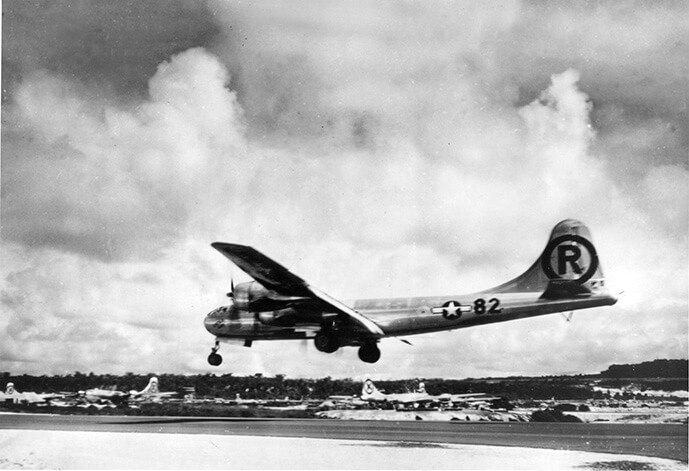
Enola Gay returns from Hiroshima atomic bombing
Completed Tour of Duty
Looking Back
Our combat missions against Japan had been completed and we waited for orders that would return us to the states. Our crew had participated in many types of missions: high altitude formation drops against Japanese targets during daytime, alone in low level incendiary attacks at night, formation bombing of Kamikaze airfields, mining operations, and search and rescue operations including the first atomic strike at Hiroshima.
MY BIGGEST FEAR DURING EACH COMBAT FLIGHT WAS OF AN ENGINE FAILURE OR BATTLE DAMAGE THAT WOULD FORCE US TO ABANDON OUR AIRCRAFT
Our shortest mission was seven hours and twenty minutes to Truk and our longest mission was eighteen hours and forty-five minutes to Rashin, North Korea. Most of our missions were approximately thirteen to fifteen hours long. We had some rough missions, came close to bailing out during one flight and we were momentarily unsure of our location during two missions. I felt that I had performed as a competent and able flight engineer during our combat missions. And we always arrived at our final destination with an adequate fuel reserve. I sweated out the takeoffs of our heavy and overloaded B-29s, and I dreaded the ever potential threat of enemy fighters and flak while flying over and around the Japanese mainland. However, my biggest fear during each combat flight was of an engine failure or battle damage that would force us to abandon our aircraft. I felt that Rocky’s crew and I had been on excellent flight crew, even though we hadn’t trained or flown together until we flew as a combat crew out of Tinian Island.
ALL CREW MEMBERS PERFORMED THEIR TASKS IN A PROFESSIONAL MANNER AND WERE INSTRUMENTAL IN THE SUCCESSFUL COMPLETION OF OUR TOUR OF DUTY
I was fortunate in that I was assigned to his crew. Rocky was a top notch pilot and his crew members were experts in their assigned positions. I didn’t worry about getting lost as both Archie Miller and Denis lnkel demonstrated their professionalism during our combat missions to Japan and our return to the Marianas. All crew members performed their tasks in a professional manner and were instrumental in the successful completion of our tour of duty. And, except for one potentially disastrous flight when we made an emergency landing at lwo Jima, we returned to Tinian upon completion of each mission.
I LOGGED 5,115 COMBAT HOURS FLYING FROM TINIAN ISLAND
Because we were one of the last 6th Bomb Group combat crews to arrive at Tinian, we started our combat flying several weeks later than other 6th Bomb Group combat crews. Yet our crew was one of twenty combat crews assigned to the 6th and 504th Bomb Groups completing thirty-five missions, a tour of duty in the Marianas Islands, prior to the end of the war. We completed our missions in a little over five months and I logged 5,115 combat hours flying from Tinian Island. Rocky’s volunteering to fly every mission paid off as we were one of the first crews picked to return stateside.
However, without the long and tiring efforts of ground support personnel who serviced, maintained and repaired the mighty Superfortresses, we wouldn’t have been able to complete our thirty-five missions in such a short time span. The ground crews and crew chiefs performed an outstanding job in readying the airplanes in time for our missions. This was especially true during the March fire raids when the airplanes were prepared for flight almost overnight after each mission. We completed thirty-two missions without once aborting the flight. And when we aborted the next mission, after taking off, it wasn’t due to an engine malfunction. It was due to an abnormality in an oil temperature recording line!
Upon completion of our tour of duty, we loafed and enjoyed life while we waited for our return to the states. Meanwhile, B-29 combat sorties against Japan continued. On 9 August, a second atomic bomb was released over Nagasaki and hostilities against Japan officially ended on the 15th of August. Soon afterwards we heard the good news that Lt. Boyington and his crew were okay. Their B-29 had been hit and severely damaged by flak during their combat mission over Tokyo, forcing the crew to bail out near Tokyo. They were picked up by Japanese soldiers and placed in an army prison camp until their release at the end of the war [see They Shot Down Our Blind Date Over Tokyo].
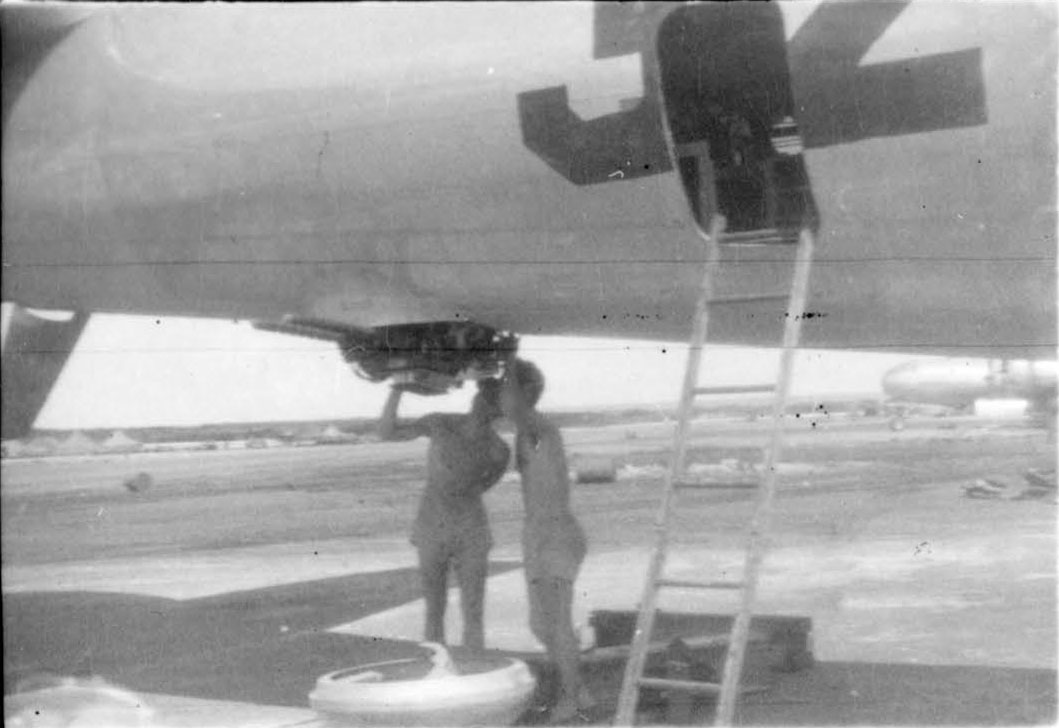
Ground crew © Marty Eichelman
Our Return to the States
THE PILOTS WERE FLOWN HOME WHILE THE REST OF US HAD TO TRAVEL BY SHIP
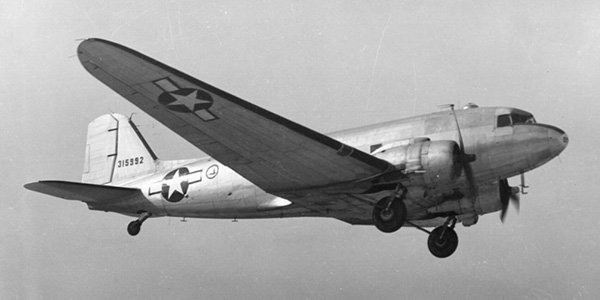
C-47
I received orders on the 15th of August [1945], releasing me from the 313th Bomb Wing and reassigning me to the Rest and Recreational Center APO 953, located at Saipan, for rotation to the continental area of the United States. I packed my belongings in my B-4 Bag and foot locker. I turned in the foot locker at the 421st Bomb Squadron equipment building for shipment to my home in the Soo. When I turned in my flight and survival equipment, I was told to keep my sun glasses and several items of flight gear that had been issued to me at Kearney, Nebraska since they were overage items for the squadron. And finally, I checked out from the bomb squadron. Later that day, I joined other military personnel at the flight line with my B-4 Bag and boarded a C-47 transport airplane for the short flight to Saipan. We were trucked from the air field to the embarkation area where we waited for transport to the States via naval vessels. It was interesting, to say the least, that the pilots were flown home while the rest of us had to travel by ship. Because many military personnel had preceded me to the embarkation area, I had to wait for my turn for a ride stateside. I was assigned to a barracks room which I shared with a junior officer and we were assigned menial tasks, such as removing nails from scrapped lumber, while waiting for our return to the States. Several days after my arrival at the embarkation area, an Army Air Force inspection team showed up and demanded to see my luggage. They confiscated all the flight items given to me, including the sunglasses. When I protested this action, they said to show them a bill of sale for the items. I didn’t have a sales slip or bill of sale and so they took the items. Later, I heard that the confiscated items were either destroyed or dumped into the ocean. What a waste!
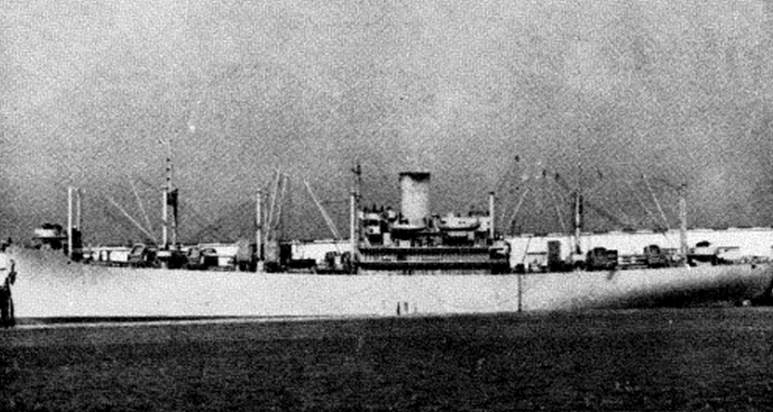
Sea Star troop transport ship
Finally, on the 30th of August, I boarded a Liberty ship bound for San Francisco along with five other Air Force officers. Prior to arriving at Saipan, the ship had been hit by a typhoon, knocking out one of the twin engines. As a result we travelled at half speed and spent three weeks at sea on our way to the States. I enjoyed watching the antics of the “Flying Fish” as they leaped out the water and raced alongside and ahead of the ship. I had heard about the flying fish and now I was seeing them in action. Several days out of Saipan, the crew turned on the ship’s exterior lights during the night hours for the first time since the Pearl Harbor attack. It was quite a sight to see all the lights turned on! While chipping paint from ship structures with the crew, I experienced pain in my groin. Years later, I found out that I had injured my back during the paint removal process.
We arrived at San Francisco on 22 September and were transported to the Camp Beale Reception Center Number 14, located on Angel Island. Debriefing followed and we were checked for infectious diseases. Meanwhile, as I was detained at the camp for several days awaiting orders, I was issued a ration card for obtaining tobacco and I received a certificate with which to purchase one pair of shoes. I was informed that these items were in short supply in the States. When my orders finally arrived, I was granted a delay, enroute to the AAF Redistribution Station at San Antonio, Texas for final processing and separation.
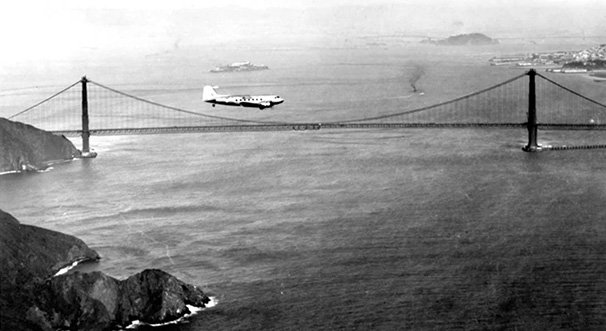
San Francisco 1945
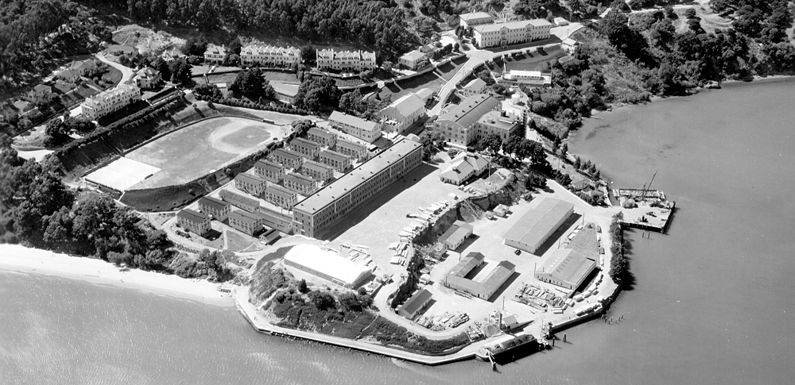
Angel Island reception camp 1945
On 28 September, I left the camp and travelled by train to St. Paul and by Greyhound bus to St. Cloud. When I arrived at St. Cloud, I took a cab to the home of Aunt Erma and Uncle Frank. They weren’t home, so I entered their house and immediately stripped and took a bath, my first real bath since I left the United States, as the military only furnished shower stalls for washing up. I was relaxing in the front room when Aunt Erma and Uncle Frank arrived home. They didn’t know that I was coming and it was quite a surprise for them. I stayed with them for several weeks and then I reported to an Army post at St. Paul for my separation physical as directed by the military. An Army dentist pulled my wisdom teeth even though the gum of one tooth was infected. Upon completion of my physical, I took a passenger train for the Soo where I arrived in early November. Shortly after I arrived, I went to see the local dentist to treat my infected gums and after several treatments he knocked out the infection.
Mother informed that she had purchased a small cabin on Reynolds Lake near Kalamazoo and was planning on moving there before the end of the year. I enjoyed travelling around the Soo, going to the local night spots and visiting with my family and friends while I waited for orders.
They finally arrived, directing me to report to Kelly Army Air Base located near San Antonio on 14 November, 1945. I was allotted seven dollars a day for travel expenses and I decided to drive my car since it was an opportunity to see the countryside enroute to my discharge station. I went to the local Montgomery Ward store to purchase new tires for my car. However, when I asked for the tires, the salesman wouldn’t sell them to me. I was told that they were rationed items and only certain individuals could purchase them. I asked to see the store manager and after I showed him my travel orders, he Okayed the sale.
THE HIGHWAYS WERE VIRTUALLY DESERTED DUE TO THE SHORTAGE OF TIRES FOR CIVILIAN USE
Early on the 11th of November, I departed by automobile for San Antonio. My trip was enjoyable as the highways were virtually deserted due to the shortage of tires for civilian use. I travelled all day, only stopping for gas and late each night I checked into a hotel for rest. On my last night, prior to reaching San Antonio, I checked into a hotel where I was entertained by a host of large cockroaches. I left the overhead light on to discourage them from crawling around my room and real early the next morning I checked out of that hotel!
I WAS DIRECTED TO FLY IN A C-47 AIRPLANE AND LOG OBSERVER TIME PRIOR TO MY DISCHARGE, IN ORDER TO RECEIVE MY FLIGHT PAY FOR THOSE THREE MONTHS
I arrived at San Antonio and checked into a hotel in the downtown area on 13 November. The next day I drove to nearby Kelly Field for processing. I was informed that the separation procedure would take at least a week. As I was still on flying status and hadn’t flown since I left the Marianas, I was directed to fly in a C-47 airplane and log observer time prior to my discharge, in order to receive my flight pay for those three months, which I did.
While going through the separation process, I ran into Jim Thornton, my former roommate at Yale University. Jim suggested that we drive to Denver during the weekend so that he could visit a girlfriend. We departed very early Saturday morning in my Mercury and arrived at Denver later that night. Jim’s girlfriend invited a friend to join us and we travelled around the city visiting local bars and I had a good time. It was after midnight when we headed back for San Antonio. It was a very long and tiring ride and I immediately tumbled into bed later that afternoon.
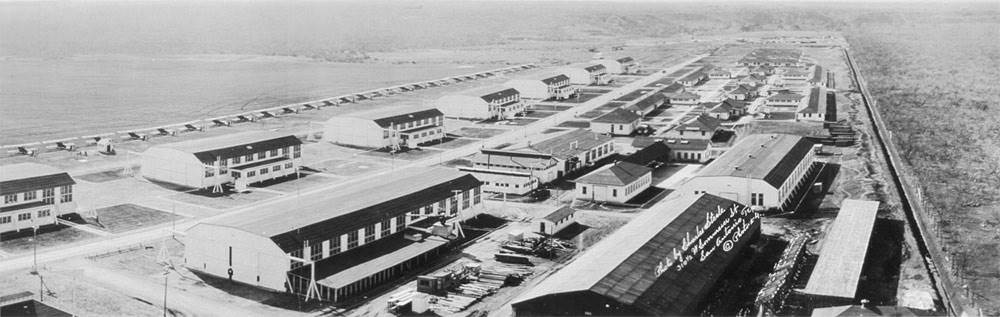
Kelly Field, San Antonio 1941
During the evenings we drove around the city to see the sights. One night I was stopped by a local policeman. He said that I had been speeding and asked to see my driver’s license. Noting that we were in uniform, he let me go with a warning ticket, stating that he didn’t want to catch me speeding again or the next time he would give me a speeding ticket. I believed him and I obeyed all local traffic rules during my stay in the San Antonio area.
I SIGNED UP FOR THE ARMY AIR CORPS RESERVE
During the separation process, I was asked if I wished to stay in the Army Air Corps or be discharged. When I asked if they would send me back to finish college, I was told that they had no intention of sending me to school. So I opted for a discharge. At my final physical, the examining doctor determined that I was in tip top shape. Shortly thereafter I was discharged from the active component of the Army Air Corps. However, before I departed, I signed up for the Army Air Corps Reserve.
After Discharge
Early the next morning after my discharge, I packed up and headed North towards lower Michigan, alone, since I hadn’t heard of anyone wanting a ride in the direction. It felt good to be out of the military and only my own again. I enjoyed the return trip and several days later I pulled into the driveway of our new home at Reynolds Lake. I rejoined mother, grandmother, Corinne and Van. Van was a school at the Kalamazoo high school and he and Corinne had gotten married while I was in the military. And I met Leslee, their young daughter. Being with the family during the holiday season at Reynolds Lake was a great event! I received notice during February that I had been accepted into the Officer’s Reserve Corps, Army of the United States with an effective date of 14 January 1946.
I HAD THREE BANANA SPLITS BEFORE I SATISFIED MY CRAVING FOR ICE CREAM
I enjoyed the country life and one day Corinne and I went to a restaurant in Paw Paw, a small town about five miles from Reynolds Lake. I was pleasantly surprised to discover that the restaurant served real ice cream. I had three banana splits before I satisfied my craving for ice cream. It was the first ice cream that I had eaten in a long time and I really enjoyed it!
That spring I helped mother expand the basement and repair the cabin and when she decided to raise chickens and sell eggs, I helped in the building of a chicken coop. Meanwhile, I receive notice from the United States Army that I had been promoted to permanent 1st Lieutenant in the Air Force Reserve Forces with an effective date of 11 May, 1946.
I visited with Aunt Della and Uncle Pat at their country home located several miles from Reynolds Lake. Pat, having served in the Army prior to and during WWII, had also been discharged from the Army, at his request. He rented the country home and had purchased an old truck to start a hauling business. Shortly thereafter he sold out and reenlisted in the Army Air Corps. Eventually, he was assigned to Chanute Field, an Air Force Training base, as an instructor.
I DECIDED TO RETURN TO COLLEGE IN JUNE
I decided to return to college in June and resume my educational pursuits and shortly thereafter I headed North for Houghton in my trusty automobile. I enrolled for the summer term and established residence at the newly built college dormitory. After I had settled in, I called Jeanette for a date and from then on we paired up as we travelled around Houghton and surrounding areas. Mother and Corinne visited me in the fall and met Jeanette, her stepmother and father. Mother and Jeanette’s father enjoyed each other’s company very much.
Prior to graduation in June, representatives from several manufacturing companies interviewed graduating students as potential employees. After several interviews, I accepted job with the Allis-Chalmers Engineering Company located in West Allis, a suburb of Milwaukee, Wisconsin.
When I had landed my job with Allis-Chalmers, I asked Jeanette to spend a weekend with me at Reynolds Lake. That Saturday night while we were alone in a darkened living room, in somewhat of a romantic setting, I proposed marriage and Jeanette accepted. We set our wedding date for the following January.
Epilogue
I WAS RECALLED TO ACTIVE DUTY BY THE STRATEGIC AIR COMMAND, OR “SAC” OF THE UNITED STATES AIR FORCE AS A FLIGHT ENGINEER ON THE MIGHTY B-36 BOMBER IN THE FALL OF 1951
I continued to work at Allis-Chalmers until I was recalled to active duty by the Strategic Air Command, or “SAC” of the United States Air Force as a flight engineer on the mighty B-36 bomber in the fall of 1951. After completing the B-36 Refresher Course at Chanute AFB, Illinois, I was assigned to a combat crew at Walker AFB, New Mexico. The combat crew was later upgraded to Lead status, one of the highest combat crew designations in SAC. I was promoted to Captain in the Air Force Reserve Force and during my last year in SAC, I earned a temporary “spot” promotion to Major. I was also designated as an instructor flight engineer on an evaluation crew. When the B-36s were deactivated at Walker AFB, I lost my spot promotion. And after my discharge from active duty during the summer of 1963, I joined the civilian work force as a Nuclear Safety Engineer at Kirtland AFB, Albuquerque, New Mexico. I also rejoined the Air Force Reserve Forces and was promoted twice. Several years later I retired from the United States Air Force in the grade of Lieutenant Colonel, thereby completing my military career.
Lawrence Stewart 1922 - 2013
Bio: Born in Minnesota, Stewart joined the Army Air Corps at the outbreak of WWII and became a B-29 flight engineer with the 6th Bomb Group. He was stationed on Tinian Island, Pacific Theater, in 1945 where he completed 35 combat missions over Japan. He retired from the USAF Reserves in 1963.


