Kent Vincent
6th Bomb Group Association
© Kent Vincent 2026
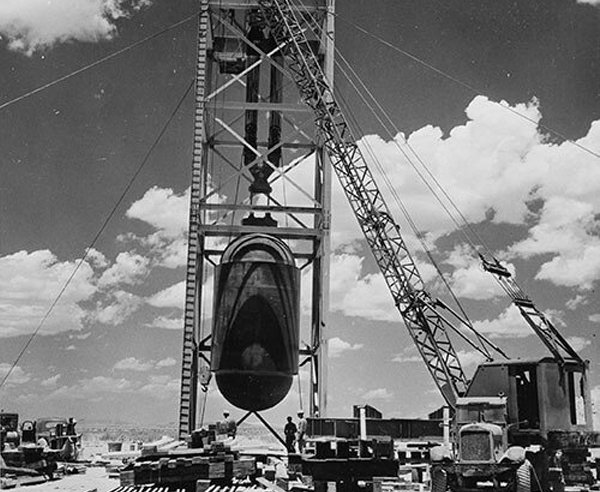
Since the end of WWII, historians have fiercely debated the necessity of the atomic bomb in forcing Japan’s surrender. Opponents point to evidence that Japan would have surrendered without the atomic bomb. Its economy and military were already defeated by a crippling naval blockade that starved the Empire of critical fuel, food and materials and the massive months-long B-29 bombing campaign that destroyed its cities and industries. Proponents argue that Japan’s fanatic military had no intention of surrendering, that the atomic bomb gave Hirohito a face-saving out for an early end to the war, saving millions of American, ally and Japanese lives from an ultimate ally land invasion of the Japanese homeland.

Nagasaki atomic bomb blast
Official U.S. records obtained during the war and from Japanese officials directly following the war support both arguments. The following two articles present the respective records:
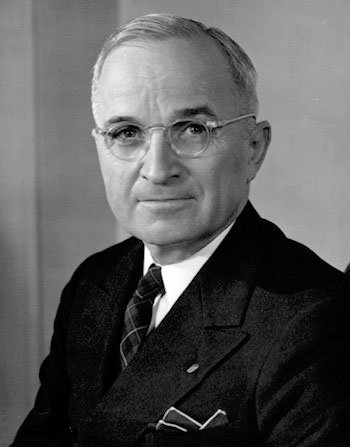
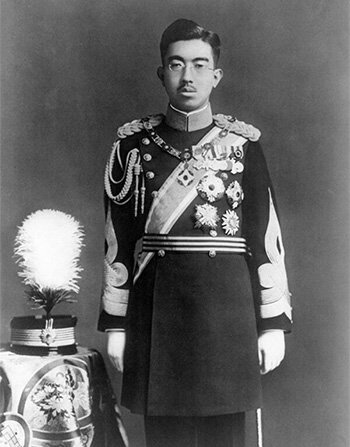
Were the Atomic Bombs Necessary (Japanese Counter)
Official post-war interrogation statements by Hirohito’s former Prime Minister Fumimaro Konoe and close Hirohito advisor Lord Privy Seal Koichi Kido stating Japan’s undisclosed decision to surrender two months prior to the Hiroshima and Nagasaki atomic bombing, its difficulty on agreement of terms and believed timing of eventual surrender.
IMPERIAL JAPAN HAD BEEN DEFEATED MILITARILY AND WAS VIRTUALLY DEFENSELESS
By July 1945, Imperial Japan had been defeated militarily and was virtually defenseless. Oil transports into Japan were completely cut off. U.S. submarines and B-29-dropped mines had destroyed most of its merchant fleet severing Japan from oil and raw material imports to which its military was fully dependent. Its few remaining warships were grounded for lack of fuel. Massive, sustained conventional and incendiary B-29 bomb attacks over the prior six months had fatally crippled Japan’s war machine, military industry and economy. Incendiary raids destroyed 66 cities, burning on aggregate 40% of the built-up areas to the ground. 51% of the capital city of Tokyo was leveled. 30% of urban houses in Japan were destroyed, leaving nearly 9 million homeless. Most Japanese were subsisting on sub-starvation diets.
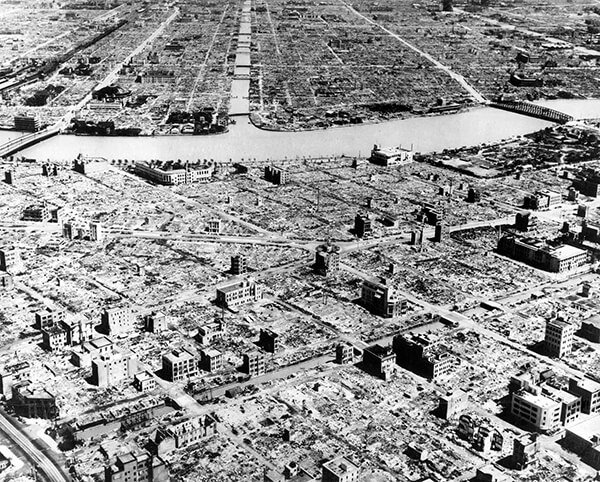
Tokyo after firebombing
On July 26, 1945, the US, UK and China jointly issued an ultimatum demanding Japan’s unconditional surrender (Potsdam Declaration) warning of “prompt and utter destruction” if Japan refused. Japan ignored the ultimatum.
SURRENDER WAS THE ULTIMATE DISHONOR TO THE EMPEROR
To Japan, surrender was the ultimate dishonor to the Emperor, its living deity and head of state. The Empire was governed by religious militarism, military nationalism and absolute obedience to Emperor Hirohito. In the lead up to the Pacific War, the Japanese people were indoctrinated with the military ethos of “fight to the death”, demanding suicide over surrender as the ultimate expression of loyalty, honor and duty to the Emperor. This led to unprecedented battlefield behavior. The U.S. military noted that no Japanese unit had ever surrendered in battle. Japan’s widespread kamikaze suicide attacks lead American leaders to believe the Japanese military preferred total annihilation to surrender. And as the war turned catastrophic, Japan’s military leadership increasingly treated the Japanese population as disposable as it stubbornly continued defense of the home islands and the imperial system in the face of overwhelming defeat.
TRUMAN ELECTED TO USE HIS NEW ATOMIC WEAPON TO SAVE MANY LIVES ON BOTH SIDES
Without Japanese surrender, the U.S. faced a prolonged air war and protracted amphibius land assault of the Japanese homeland (Operation Downfall) predicted to take at least one year and millions of American, ally and Japanese lives. President Truman elected instead to use his new atomic weapon to force Japan’s hand, end the war quickly and save many lives on both sides. On August 6th and August 9th, 1945, B-29s operating from Tinian Island (Marianas) dropped the world’s first atomic bombs on Hiroshima and Nagasaki, respectively, with horrific devastation. One hundred thousand people were killed (some estimates higher), 6 square miles or over 50 percent of the built-up areas of the two cities were destroyed.

Ground zero destruction Hiroshima
JAPAN HAD INTERNALLY DECIDED TO SURRENDER TWO MONTHS PRIOR TO THE ATOMIC BOMBING
Unknown to Truman and the allies at the time, Japan had internally decided to surrender in early June, two months prior to the atomic bombing. Official U.S. post-war interrogation of Japanese military and government officials (summarized in the 1946 US Strategic Bombing Survey) revealed that Japan’s six-member Supreme War Council voted to surrender but couldn’t agree on terms. Three members were prepared to accept unconditional surrender as demanded by the Allies, while three “hardline “military members favored surrender only on condition of retention of the Emperor as head of government. The hardliners believed the otherwise pending Ally invasion of Japan would inflict so many American casualties that the U.S. would relax its demand for unconditional surrender in negotiating peace. Already Japan had begun arming its entire functional civilian population (28 million people) with primitive weapons and guerilla tactics to fight off American invaders. It planned massive suicide tactics to destroy Allied invasion fleets, including thousands of kamikaze motorboats, aircraft, midget submarines, human torpedoes, suicide frogmen and human landmines.
HORRIFIC NATURE OF THE NEW WEAPON PROVIDED HIROHITO A NEEDED FACE-SAVING JUSTIFICATION FOR UNCONDITIONAL SURRENDER
Directly following the atomic bombings, War Council member Prime Minister Suzuki took the unprecedented step of referring the deadlocked surrender matter to Emperor Hirohito. The horrific nature of the new weapon and the belief the U.S. would drop many more provided Hirohito a needed face-saving justification for unconditional surrender, which he announced August 15, 1945 and had officially signed September 2, 1945.
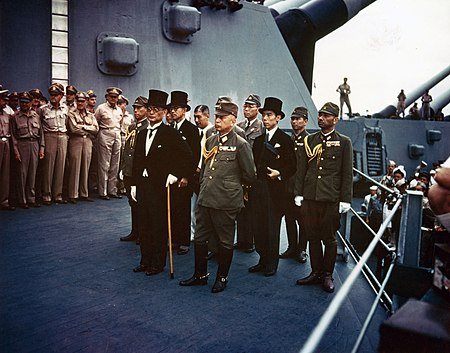
Official Japanese surrender Sept. 2, 1945 aboard USS Missouri
“I PERSONALLY THINK THAT THE WAR WOULD HAVE ENDED PRIOR TO 1 NOVEMBER”
Former Prime Minister Fumimaro Konoe stated under interrogation (USSBS) “the thing that brought about the determination to make peace was the prolonged bombing by the B-29s.” Koichi Kido, Japan’s Lord Privy Seal and close advisor to Emperor Hirohito stated “our decision to seek a way out of this war was made in early June before any atomic bomb had been dropped and Russia had not yet entered the war. It was already our decision…I personally think that the war would have ended prior to 1 November as every effort was being exhausted to terminate the war.” Coincidentally, the ally land invasion of Japan was scheduled to begin November 1.
Whether Japan would have, in fact, surrendered, moreover unconditionally, prior to the land invasion without the dropping of the atomic bombs on Hiroshima and Nagasaki can only be speculated. Likewise with the terms of peace that would follow the planned Allied land invasion. Would, as the War Council hardliners believed, imperial rule have remained intact? What is certain is Japan surrendered unconditionally per the terms of the Potsdam Declaration immediately following the dropping of the atomic bombs making the land invasion unnecessary. Through the terms of surrender and post-war occupation, Japan lost the conquests of its Empire, its sovereignty was returned to its four main home islands and its government was converted to a democracy. Japan consequently became a nation of peace and post-war ally.

Japanese Empire June 1942 - National WW2 Museum. Click to enlarge
ASIA PACIFIC WAR CONSERVATIVELY ESTIMATED TO HAVE KILLED 25 MILLION PEOPLE
Often missed in the atomic bomb debate is the impact early surrender had on civilian casualties in the greater Asia Pacific theater (Asia Pacific War), principally in China and Southeast Asia. At the time the atomic bombs were dropped in August 1945, the war with Japan across mainland Asia was still raging. The on-going casualty rate in the occupied territories of the Asia-Pacific theater was estimated at 100,000 to 250,000 civilian deaths per month due to starvation and combat at that time. The early surrender set in motion the wind down of hostilities throughout the Asia Pacific, repatriation of captured territories and an end to the broader Asia Pacific War. The Asia Pacific War between 1937 and Japan’s defeat in 1945 was already one of the costliest conflicts in human history, conservatively estimated to have killed 25 million people. About 12 million of these were Chinese and about 75% of the total was non-combatant deaths. Within these numbers, the Pacific War between the U.S. and Japan (1941-1945) cost an estimated 93,000 American lives (additional 208,000 wounded) and more than 2 million Japanese lives.
Kent Vincent
Bio: Kent Vincent is the son of 6BG B-29 Aircraft Commander Edgar L Vincent, Tinian 1945. He is the 6th Bomb Group Association Director of Web Education and Editor of 6thbombgroup.com.

PACIFIC WAR – OVERVIEW
Brief overview of the Pacific War 1941-1945 >
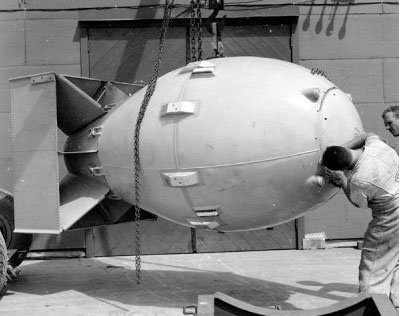
THE ATOMIC BOMBING OF HIROSHIMA AND NAGASAKI
Justification and mission details > >

EFFECTS OF THE ATOMIC BOMBS
Human and Physical Toll on Hiroshima and Nagasaki >