
In 1941, Japan brutally attacked the United States at Pearl Harbor assessing American military weakness from isolationism in bringing it to war. America’s great national policy lessons from the Pacific War reflect the importance of superior military deterrents, global intelligence, industrial capacity, technology supremacy and global alliances to prevent and win wars.
“The best way to win a war is to prevent it from occurring.”
SUPERIOR MILITARY DETERRENTS
Military superiority underpins national security, deters foreign aggression and shapes global power dynamics.
Just two years before Pearl Harbor, the U.S Army ranked 17th in the world. The U.S. had let its guard down, was struggling through the Great Depression and remained pacifist and isolationist following WWI. Roosevelt’s military investment and 1940 draft proved insufficient and too late. Japan had built a superior military, battle-hardened through Asian campaigns of expansion and hungry for conquest. The U.S. Navy’s formidable Pacific Fleet at Pearl Harbor represented its primary obstacle for Pacific domination. The Japanese viewed the U.S. as soft and lacking willingness to enter a protracted war. They had general disdain for the U.S. military, supreme confidence in their imperial code of battle ethics and viewed the momentary lack of U.S. preparedness as an opportunity to attack U.S., British and Dutch Pacific territories, hoping initial overwhelming victories would cause the U.S. to sue for peace. Over the course of the war, the U.S. developed a military of overwhelming force. The U.S. emerged WWII as the world’s military and industrial superpower with a demonstrated willingness to protect its interests, major deterrents to would-be aggressors. No U.S. territory has since been the subject of foreign aggression.
The Japanese would never have attacked Pearl Harbor had they not correctly assessed the weakness of our defenses in the Pacific and had they not incorrectly assessed the fighting determination of the United States when attacked.
Read U.S. Strategic Bombing Survey (1946) – Strength as a Force for Peace >
TECHNOLOGY ADVANTAGE
Maintaining technological superiority allows armed forces to deter adversaries and maximize military effectiveness
The Pacific War was won in large measure to the willingness of the United States to invest in the invention of game changing technologies: radar, sonar and notably the B29 long range bomber and atomic bomb. This, in turn, was the result of our historic commitment to higher learning (including our military academies), our openness for new ideas and willingness to work with like-minded people from other countries, such as Albert Einstein. Technology advantage dramatically shortened the war and ultimately saved lives over the otherwise planned allied land invasion of Japan. Maintaining a technology advantage requires a well-educated population and resistance to the efforts of some to replace education with ideology.
ACCURATE, TIMELY INTELLIGENCE ESSENTIAL
Timely global intelligence on worldwide events, adversary capability, movement, intent, competing technologies and national threats is essential to war, protecting national interests and security
The successful surprise bombing of Pearl Harbor was a failure of U.S. intelligence to understand the capabilities, movement and intention of the Japanese military. U.S. code breakers were vital to the defeat of both Germany and Japan, making turning point victories like the Battle of Midway possible. The war taught the importance of centralized coordination of intelligence across all military branches and critical government departments, proper analysis of intelligence data, the importance of code-breaking and far-reaching professional human intelligence during peacetime as well as war.
SUPERIOR MANUFACTURING CAPACITY
Superior domestic mass production capacity and expertise is the arsenal backbone of military superiority as it provides the weapons, timely replaces weapons spent in combat and sustains long-term logistical readiness. Its strength is an essential part of miliary deterrence.
Perhaps more than any other factor, WWII was won through the superior industrial might, production capacity and expertise of the U.S., the largest in the world at that time. Following the attack on Pearl Harbor, American commercial manufacturing industries were quickly retooled, transformed and mobilized to the war effort. American industry provided almost two-thirds of all the Allied military equipment produced during the war: 297,000 aircraft, 193,000 artillery pieces, 86,000 tanks, two million army trucks…over four years, more war materials than the Axis powers combined. Most importantly, U.S. military production paced armament consumption. For every ship, plane, tank…lost, ammunition or munition expended American supply lines had one to replace it. This allowed the U.S. and its allies to maintain strength and win the war of attrition against both Germany and Japan. The incredible logistic accomplishment to transport this industrial might to far-flung theaters of war on two sides of the globe was also a critical factor in winning WWII.
When domestic manufacturing gives way to foreign competition or transfer, the domestic industrial base and engineering skills required to ramp up or mass produce armament erodes endangering the ability of the country to meet its military needs during crisis.
The Home Front was Critical to Winning WWII | Building the B-29: Race For Mass Production WWII
ENERGY AND RAW MATERIALS INDEPENDENCE
In 1940, the United States produced two of every three gallons of fuel made in the world. It was oil independent. With Japan’s total dependence on foreign oil and U.S. disruption of import supply lines, Japan’s reserves began to run dry in 1943, significantly disabling its military effort. The Axis powers, as a whole, were heavily dependent on import of war materials (oil, metals, and minerals), readily cut off by Allied forces. A nation’s security is heavily dependent on its domestic sources of the materials of war.
FIT, QUALIFIED MILITARY AGE POPULATION
A fit military-age population is vital for national security, determining a nation’s ability to defend itself, maintain active forces and sustain emergency mobilization.
Following the surprise attack on Pearl Harbor, 16 million American men and women were quickly mobilized, trained and deployed, most significantly to ground combat in Europe and the Pacific. Having a fit, qualified military age population was essential to the war effort, the ability to fight on multiple fronts and easily replace losses. A youth population significantly disqualified due to health, weight, poor education or fitness severely weakens military recruiting, sustained emergency mobilization and long-term strategic readiness.
ALLY COOPERATION, COORDINATION, LEADERSHIP
Maintaining cohesive allied forces is essential for defeating global threats that no single country can beat alone and for creating a collective war deterrent to preserve world peace
WWII demonstrated the importance of strategic cooperation among Nations. The Allies (U.S., Great Britain, France, the Soviets, China, Australia…) coordinated their militaries, intelligence, industries and commands to defeat the Axis Powers, preventing global totalitarian dominance and reshaping the modern international order. This included coordinating the different branches of the military. Great leaders emerged (Nimitz, Spruance, Halsey, LeMay, King, Eisenhower, Patton, MacArthur, Franklin D. Roosevelt, Winston Churchill) providing strategic vision, objectives and wisdom necessary for the fight and win. The three main Axis states (Germany, Italy and Japan) each fought their own wars for regional dominance and shared little with the other Axis powers during the course of the war. The Japanese lacked effective leadership, committed major strategic blunders, had poor coordination between its armed forces and unnecessarily subjected its population to horrific annihilation to keep the Emperor in power. Prior to WWII, the United States favored policies of isolationism and had no permanent or peacetime military allies.
U.S. Strategic Bombing Survey – Integration of our Military Establishments
NATIONAL UNITY
National unity supporting a war is critical to consolidate resources, morale and political will into a cohesive effort
No democracy can long sustain a war or present a credible deterrent without the united support of its people and government. The attack on Pearl Harbor galvanized the US population and Congress more than any war since, inspiring people to pull together for a common cause, to sacrifice and re-train for the war effort.
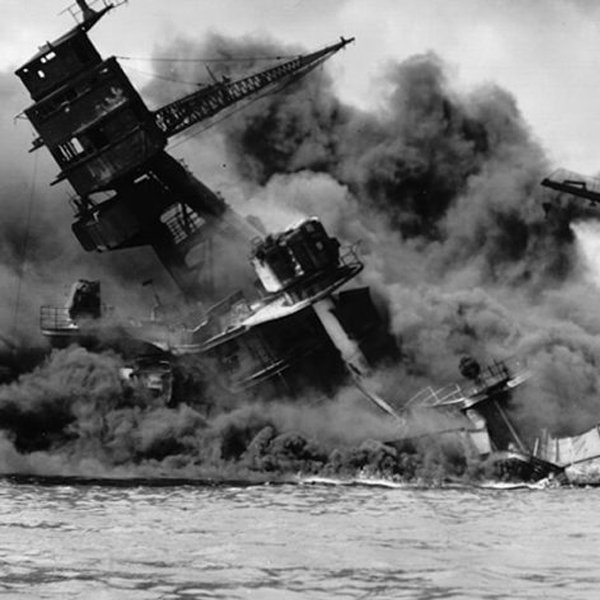
PACIFIC WAR – OVERVIEW
Why U.S. was vulnerable to attack. Strengths that won the war >
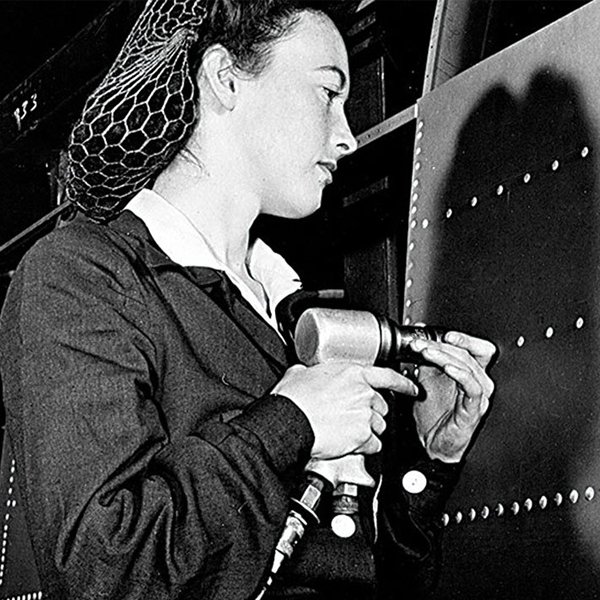
THE HOME FRONT WAS CRITICAL TO WINNING WWII
U.S. was military arsenal of the world >


