Lawrence Stewart
B-29 Flight Engineer
6BG, Tinian 1945
First publication July 2024
© 2024 6th Bomb Group Association. All Rights Reserved.
Editor’s Note: This article is an excerpt from then 1st Lt. Lawrence Stewart’s first-person memoirs: Combat in the Pacific Theater – A B-29 Flight Engineer’s Experiences During World War II. Pictures, titles and highlights have been added to compliment the author’s writing.
A search and rescue organization had been officially established in late 1944 as the Air-Sea Search and Rescue Organization to support B-29s operating out of Saipan. Search and rescue equipment included Navy submarines, destroyers, aircraft (Catalinas and Mariners) and Army B-17s. The airplanes called “Dumbos,” carried survival equipment, such as pneumatic life rafts, provisions, radios and emergency equipment, which could be dropped to downed airmen. However, they lacked the range and armament to patrol close to Japan where most of the battle damaged bombers went down.
During February, 1945, several B-29 Superfortresses, modified to carry droppable lifeboats and other rescue equipment and dubbed “Super Dumbo” B-29s, were added to the search and rescue organization. They had the range and armament to protect themselves while operating near the Japanese mainland. And they could drive off enemy ships and aircraft attempting to attack rescue vessels or helpless men in the water.
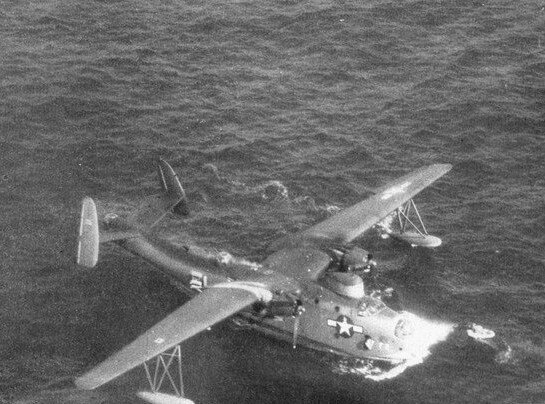
Martin PBM Mariner Dumbo rescues pilot
DESTROYERS AND SUBMARINES WERE POSTED AT INTERVALS ALONG THE ROUTE, AND LONG RANGE AIRCRAFT PATROLLED THE AREAS IN BETWEEN
Prior to a B-29 mission to Japan, a line of search and rescue units was established along the flight path to Japan. Destroyers and submarines were posted at intervals along the route, and long range aircraft patrolled the areas in between. Several submarines were also directed to proceed to the coast of Japan where they remained on patrol throughout the mission. Combat crews participating in the raid were given the location and radio frequencies to contact these rescue units during mission briefings.
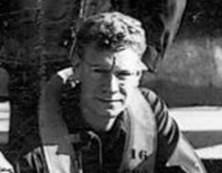
Lawrence Stewart 1922 - 2013
Bio: Born in Minnesota, Stewart joined the Army Air Corps at the outbreak of WWII and became a B-29 flight engineer with the 6th Bomb Group. He was stationed on Tinian Island, Pacific Theater, in 1945 where he completed 35 combat missions over Japan. He retired from the USAF Reserves in 1963.