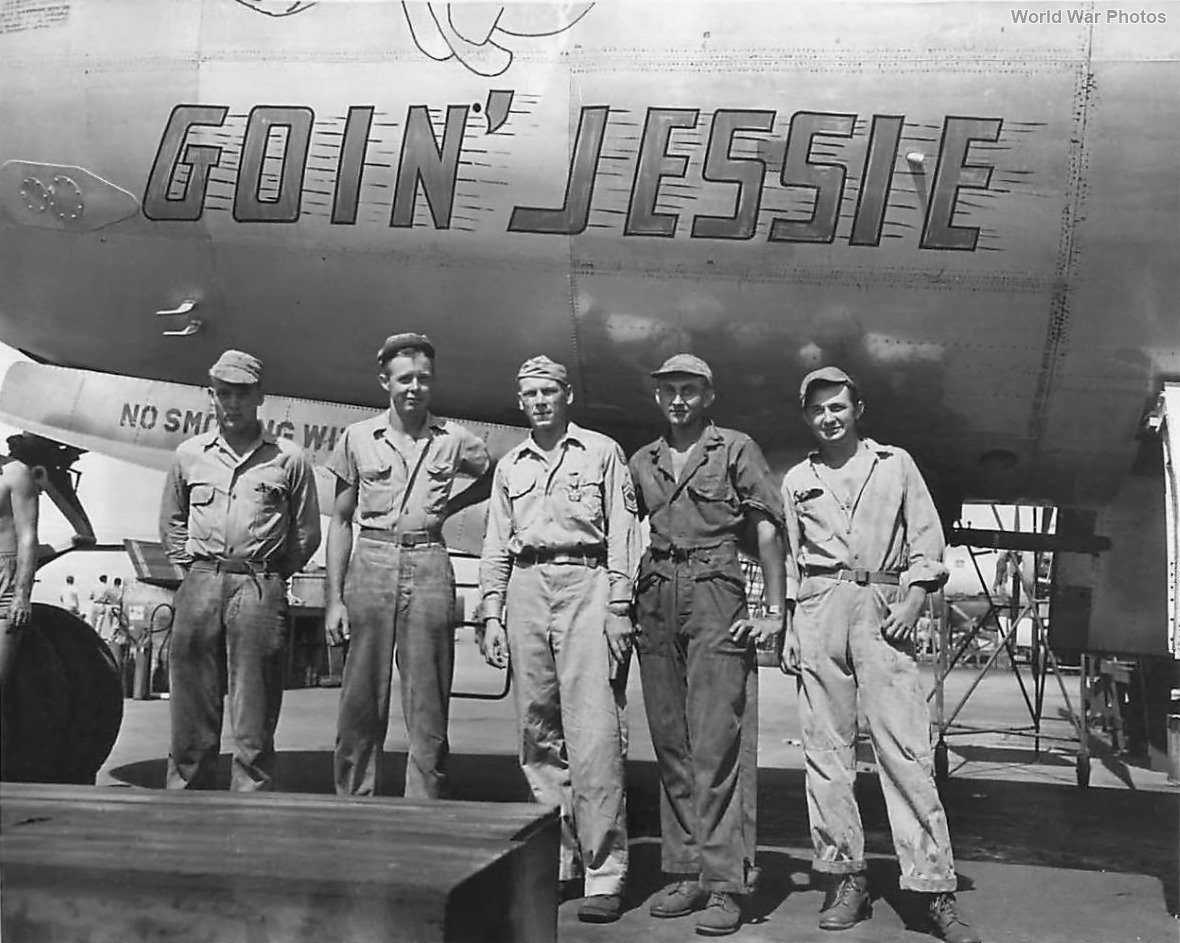
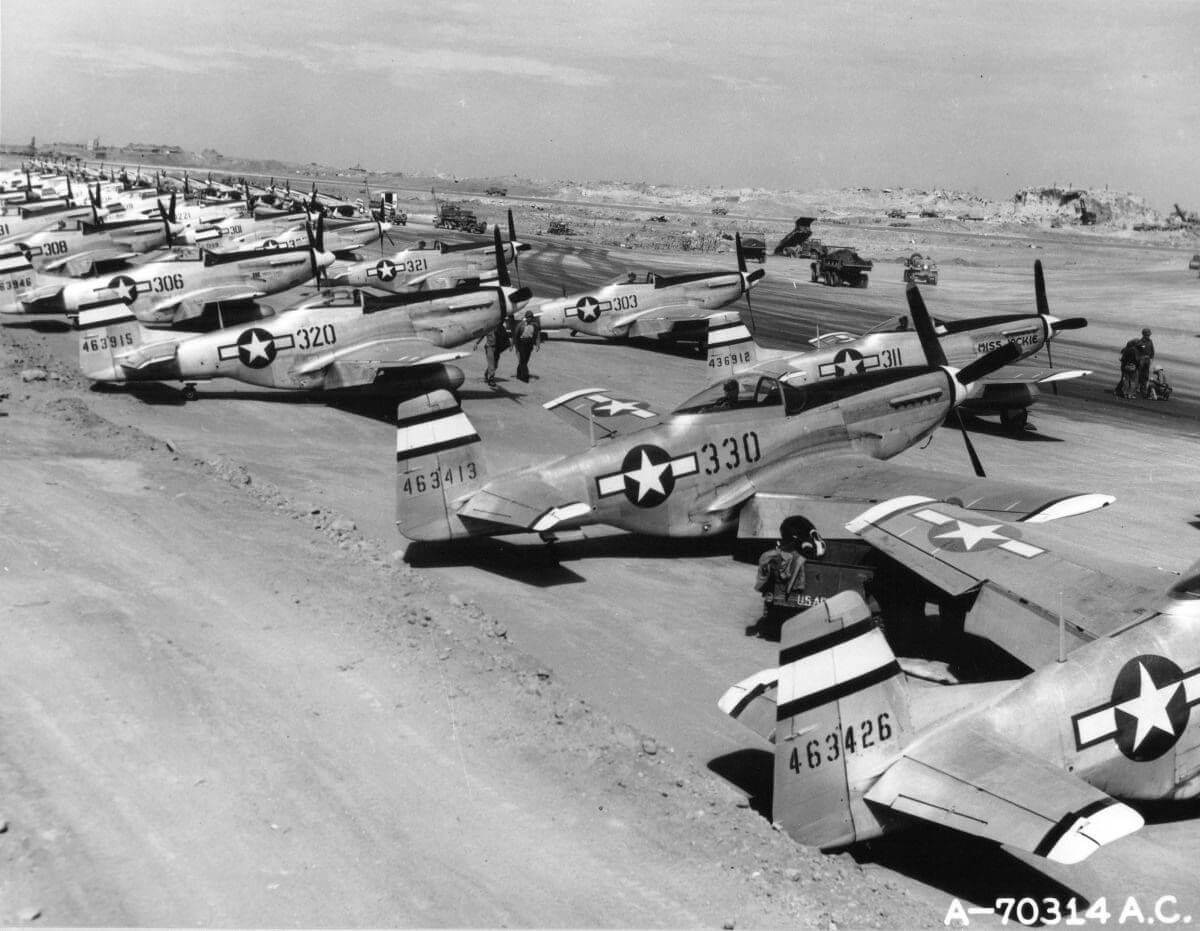
Donald W. Kearney
B-29 Navigator
Tinian Island 1945
Original diary copyright © 1988 Donald W. Kearney. All rights reserved
Additional content copyright © 2022 6th Bomb Group Assoc. All rights reserved
Editor’s Note: This article is an excerpt from the author’s memoir The Crew of the Reamatroid. Title, highlights and pictures added to compliment the author’s writing.
Show of Force
SEPT. 2 HAD BEEN DESIGNATED V-J DAY. IT SEEMED THAT ALL OF THE AIRCRAFT NORTH OF HENDERSON FIELD WERE GOING TO FLY OVER TOKYO BAY AS A “DISPLAY OF POWER” BEFORE, DURING, AND AFTER THE FORMAL SURRENDER CEREMONY.
The first announcement had been that the ceremony would take place on the battleship Iowa because the Navy called its most powerful battleships “the Iowa class.” However, a sister ship, Missouri, was chosen instead in deference to the President. I resented the fact that Iowa sort of got cheated out of its place in history.
We flew to our rendezvous point north of Tokyo, where we were to meet the other planes of our squadron, but we were a half-hour early, so we dropped down to the deck and embarked on our own sightseeing excursion.
We flew along the water’s edge at an altitude of no more than 50 feet. Jap fishermen were deploying large nets. Some of them let go forthwith and scurried for cover. Others, although they stopped work, just stood and gawked at us as we roared overhead. Truthfully, we only wanted to look – we weren’t really trying to scare them. And it was a good thing because many of them didn’t scare worth a damn.
Then we turned inland, climbing to a higher altitude – maybe 90 feet – to clear the tree tops. At intervals, there were clearings where several homes were clustered together. I don’t know what kind of rural area we were over, but the houses were nothing more than huts with thatched roofs. When we popped into sight, chickens scattered in all directions. People came running out into the open and stared. They also seemed more curious than scared; their cousins in Tokyo must not have told them what one little incendiary would do on a grass roof. (It probably would fall through and land in a bucket of water.)
We were sort of disappointed – it seemed that the only ones properly respectful of the throbbing power of our four engines were the chickens. Those Japs would be sorry – when they found out that their hens laid only infertile eggs for several days.
WE WERE TO LEAD ONE OF THE FORMATIONS AT A LOW LEVEL OVER THE AMERICAN ARMADA IN TOKYO BAY.
At the assigned time, we found our squadron, just one of many rendezvousing in the vicinity. We were to lead one of the formations at a low level over the American armada in Tokyo Bay. Going south toward Tokyo, there was some low scud (clouds), so the formation had to drop to an even lower level. Suddenly, near the northern edge of Tokyo, the pilots spotted a very tall radio tower sticking up dead ahead. The abrupt action to avoid it ended all orderliness in that formation. We went over the warships looking like a platoon of Keystone Kops. If the Japanese officials on Missouri had looked up, they might have had second thoughts: “Let’s don’t sign yet; there’s still hope.”
EXCEPT FOR A FEW BRICK CHIMNEYS AND MASONRY BUILDINGS, IT LOOKED LIKE ONE VAST STRETCH OF CINDERS.
We had gone over the eastern part of Tokyo much lower than we had been three days earlier. It reminded me of the western movies where the Indians left the settlers’ cabins in ashes, with only the stone chimneys standing among the smoldering ruins. This was a much-magnified version. Except for a few brick chimneys and masonry buildings, it looked like one vast stretch of cinders. In a few places, a building with a steel framework had burned, leaving only the metal, often twisted and looking like some gigantic animal cage.
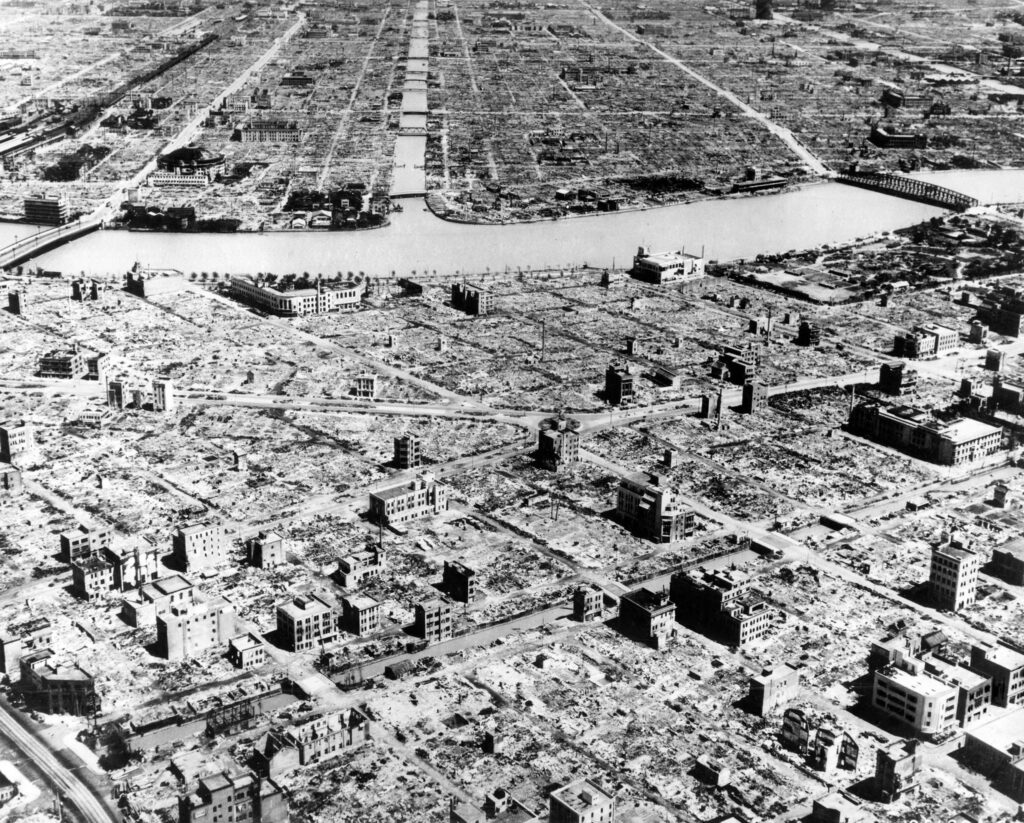
Tokyo devastation © Bill Webster. All Rights Reserved
In those western movies, the Indians who set the fires were the bad guys. Maybe we needed to rethink that.
GOING OVER THE BAY, WE THOUGHT WE COULD IDENTIFY THE BATTLESHIPS IOWA AND MISSOURI. AMERICAN FLAGS, SOME OVERSIZED, WERE PROMINENT.
Going over the bay, we thought we could identify the battleships Iowa and Missouri – Missouri was the one with a deck full of extra corncob pipes. Landing craft, barges, or transports – we really wouldn’t know the difference – were churning up the bay – even during the formal surrender ceremony. American flags, some oversized, were prominent. They all seemed to be headed toward the same pier, which, one would presume, was the pier nearest to the Geisha house district – nothing slowwitted about those GIs, gobs, and Gyrines; they had heard that to the victor belonged the spoils. Or goils. Same thing.
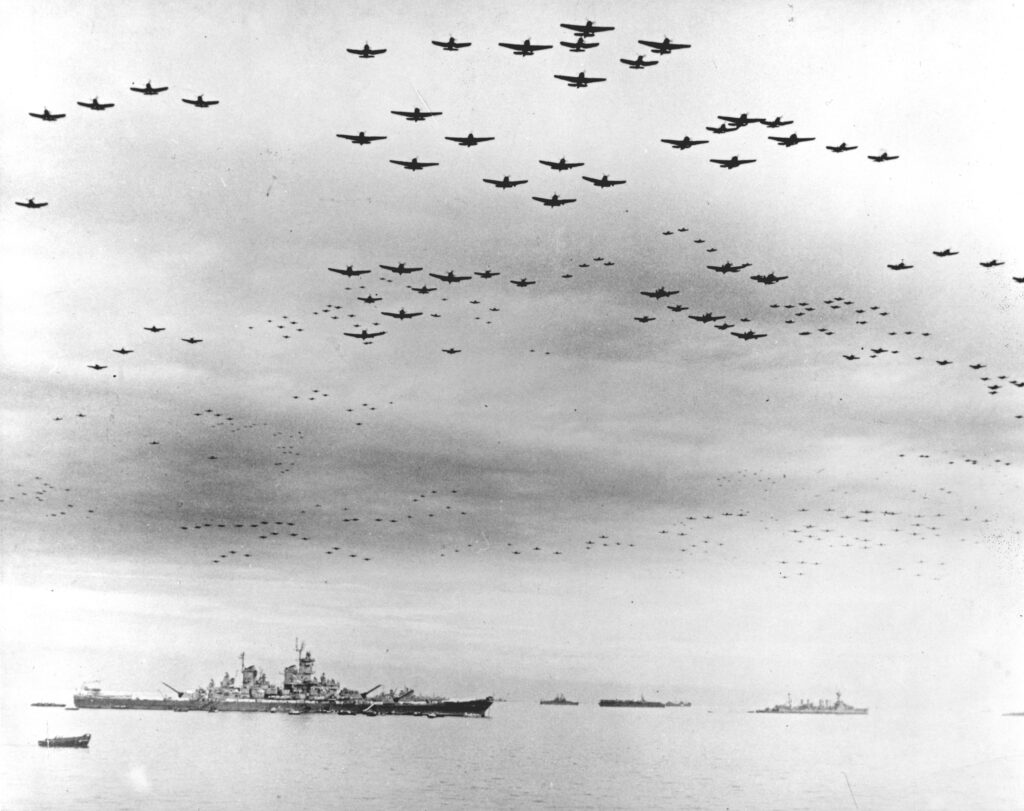
American Show of Force at Japanese Surrender
The view from the air perhaps gave perspective ground observers didn’t have. For example, just inland from the Yokohama docks was an oil storage tank farm. All of the big circular tanks were sitting there, seemingly intact. But we could see from the air that they were all gutted inside – only the shell of each tank standing.
Editor’s Note: The “show of force” involved roughly 1000 total aircraft, including 462 B-29 bombers that concluded the flyover.

Donald Kearney
Bio: Author Donald W. Kearney (1925-1991) was raised in Ida Grove, IA. During WWII, he trained as a B-29 Navigator and served with the 6th Bomb Group, 20th Army Air Force stationed on Tinian Island in the Pacific. He flew some 20 long-range combat missions over Japan starting at age 19. Kearney retired in West Virginia and has served as Captain in the U.S. Air Force.

PACIFIC WAR – OVERVIEW
Brief overview of the Pacific War 1941-1945 >

DECISIVE IMPORTANCE OF B-29 TO WINNING PACIFIC WAR
The game-change bomber that ended the war >