Firebombing of Tokyo – May 25, 1945
“Finishing Tokyo”
“Finishing Tokyo”
Donald W. Kearney
B-29 Navigator
6th Bomb Group
Tinian Island 1945
Original diary copyright © Donald W. Kearney. All Rights Reserved
Additional content copyright © 2022 6th Bomb Group Assoc. All Rights Reserved
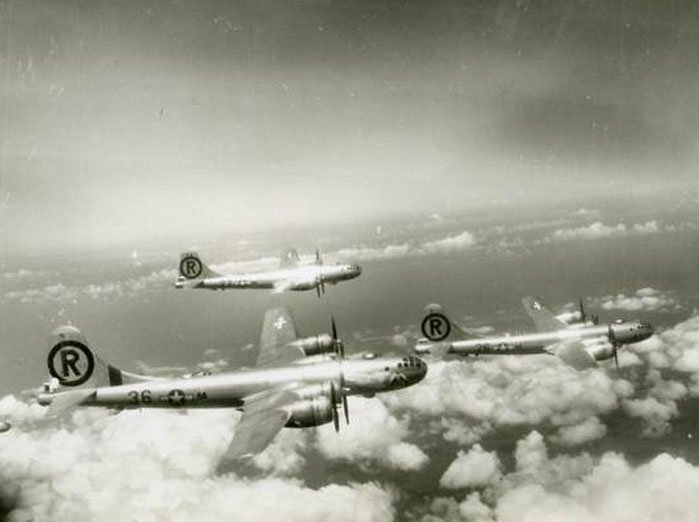
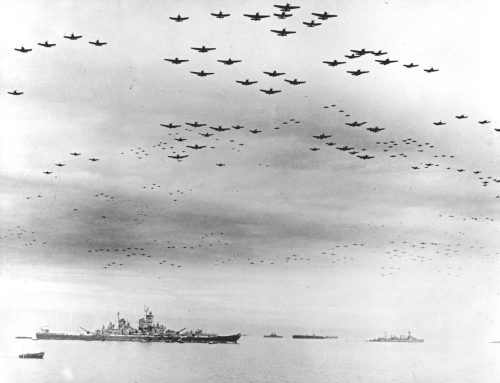
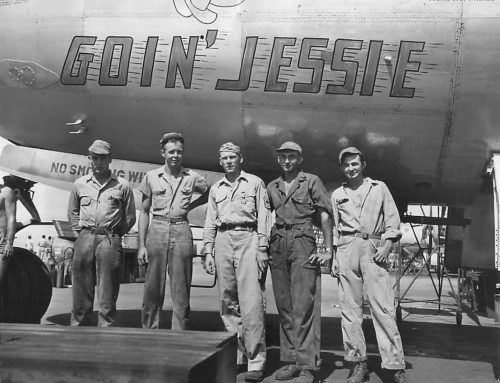
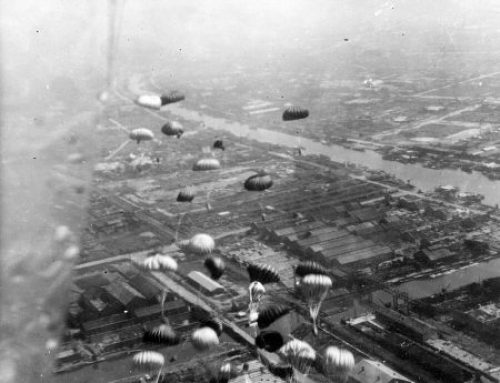
Editor’s Note: Firebombing of Tokyo – March 25 is a sub-chapter excerpt from then 2nd Lt Donald W. Kearney’s first-person diary of the war: Crew of the Reamatroid. This exceptional narrative takes you into the cockpit to experience the crew dialog, comradery, perils and horrors of what was the 20th Air Force’s most costly raid and the one that “finished Tokyo”. Pictures have been added to compliment the author’s writing.
Firebombing of Tokyo – May 25
THE MPI (MEAN POINT OF IMPACT) ASSIGNED TO THE SIXTH WAS THE MOST PERILOUS IN THE BOMBER COMMAND – ABOUT 1,700 YARDS FROM THE IMPERIAL PALACE AND BETWEEN IT AND THE DOCKS. THERE WAS NO PLACE THE JAPS WOULD DEFEND MORE TENACIOUSLY THAN THAT.
The mission plan for that night was almost a carbon copy of the one two nights earlier [6BG Mission 44 ]. Saved some ground-pounder having to make up a whole new field operations order, I supposed – cynically. Each plane was being loaded with 32 500-pound M-17 incendiaries. We were to approach the target in almost exactly the same way as last time, but the aiming points were a little different. The MPI (mean point of impact) assigned to the Sixth was the most perilous in the Bomber Command – about 1,700 yards from the Imperial Palace and between it and the docks. There was no place the Japs would defend more tenaciously than that. We were to bomb by radar from 9,900 feet – almost the same altitude as last time. Jap guns would be all set – no adjustments necessary.
Early in the day, though, we were told that the Reamatroid might not be repaired in time. There was that wounded engine to take care of, besides the radar to fix and a few holes to patch up.
I couldn’t help but hope that the plane wouldn’t be ready. It was the first time I had felt that way. Throughout the day – we took particular interest in the maintenance status board. Right up until briefing time we thought we weren’t going.
At noon, as we were leaving the mess hall, Russ stopped at Colonel Osborn’s table and with more than a little impertinence, said something like, “Ha-ha, you can’t send us up there again tonight – our plane is not ready.”·
Taunting the C.O. was not really a brilliant move. When briefing time came around, we were told we were going to fly 31V.
I DON’T MIND ADMITTING THAT I WAS SCARED – PLENTY.

Loading cluster bombs © Irv Winkler. All Rights Reserved
Briefing was at 1430. We didn’t get a chance to eat afterwards, but we didn’t feel much like it anyway. I don’t mind admitting that I was scared – plenty.
We got off the ground at 1732. Take-off went fine. Then we found that the inverter for the Loran set was out. Trouble, always trouble. The radar didn’t work on beacon but seemed to function properly for the purposes for which we needed it. Other than that, the plane seemed all right. I’m not sure I could say the same for the crew.
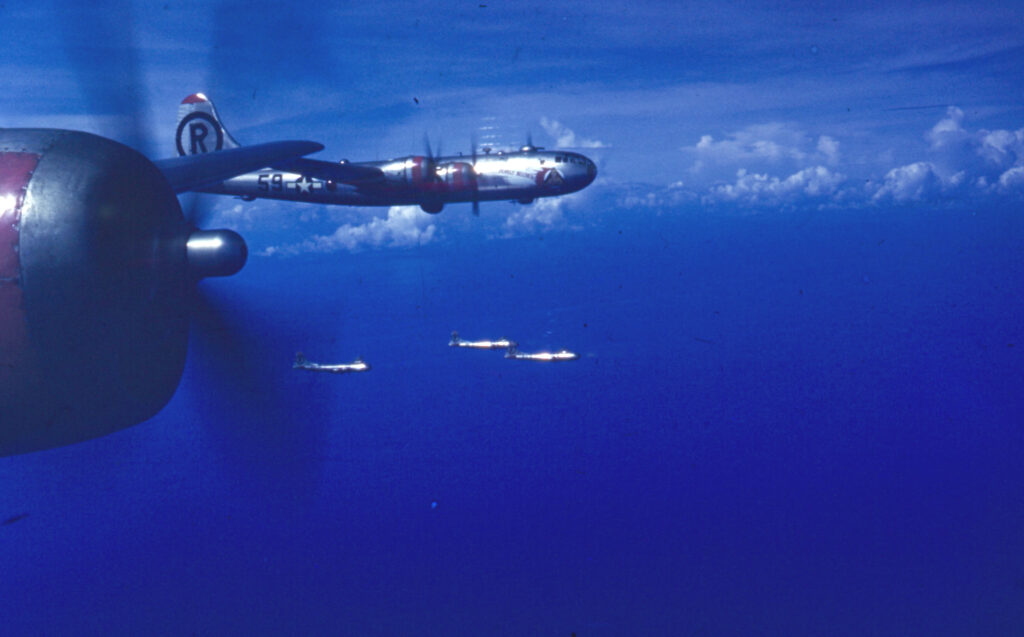
Mission Tokyo © Percy Tucker. All Rights Reserved
Darkness came a short time after departure. We went by Iwo, seen on radar, and hit some rough weather just north of it – a portent of trouble for anyone who needed Iwo on the way back.
Going on up to the Empire, we passed close to several Japanese islands – about half-intentionally because that provided a good check on our course. We flew within visual distance – but, carefully, not within shooting distance – of Hachijo Jima. You wouldn’t have known that this was the same crew that wouldn’t fly over uninhabited Mejit. A few months of combat changes people.
Shortly before our landfall, we heard Birddog 1 (a destroyer) talk to 4V705 (a Superdumbo) about lights. We hoped it wasn’t searchlights they were talking about or we were in deep trouble – if a ship at sea could see them. They probably were trying to determine if there was a plane in the water.
We reached Honshu at Cape Omaesaki at 2355. It was the same path we had followed the night before last. We turned up past the east side of Fuji again. Our schedule had us going in about three hours earlier this time – about midnight instead of 3 a.m. At this hour, there still was moonlight, and Fuji was easily visible out the window, a giant snow-capped cone poking its top up higher than we were. I’m sure Russ felt better about that mountain this time – being able to see it himself.
Out front Charlie saw a bright red light falling earthward. At first he thought it was a ball-of-fire, but then he decided that it must have been a B-29 going down. Already! We weren’t even to the I.P. yet.
SOMETHING LIKE A DOZEN SEARCHLIGHTS PICKED US UP AND THE GUNNERS ON THE GROUND BEGAN PELTING US WITH FLAK.
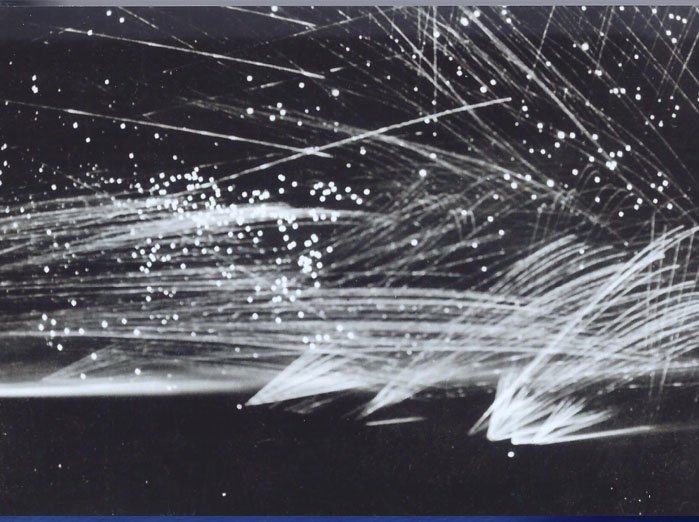
We made our radar-controlled turn on Hachioji at 0016. As we rolled out of the turn, we ran into our first opposition – still 15 to 20 miles west of Tokyo and 25 miles from our drop point. A B-29 out to our left had 20 lights on it and was catching hell – still way out at the I.P.! Within a minute we also were in the thick of it. Something like a dozen searchlights picked us up and the gunners on the ground began pelting us with flak. With such a long time yet to go! My God, was there any chance?
I checked the heading after the turn and then looked out the window. Just as I peered out there was a big white flash below, visible despite the brilliance of the lights. It was a muzzle blast down on the ground, but it didn’t look to be more than 100 yards away. I pulled back awfully fast and tried to keep my attention on the radar scope, but for some reason I didn’t pull my flak curtain higher as I usually did.
“FLAK AHEAD, LEVEL.” “FLAK ABOVE.” “FLAK BELOW.” EVERYWHERE WE TURNED THERE IT WAS. WE JUST COULDN’T GET AWAY FROM IT – NOR OUT OF THE LIGHTS.
Our bombing procedure called for a release based on forward slant range (on the radar), so it wasn’t so important to hold the course, speed, and altitude until we got closer; and, under the circumstances, we certainly didn’t feel like doing so. I don’t know as it made much difference though. A voice over the intercom would report, “Flak at 9 o’clock low and 7 o’clock level.” So, we would turn abruptly to the right and pull up, and immediately hear, “Flak, 1 o’clock high and 3 o’clock level.” Right where we were headed. Quick, turn the other way. Then, “Flak ahead, level.” “Flak above.” “Flak below.” Everywhere we turned there it was. We just couldn’t get away from it – nor out of the lights.
“. . . storm’d at with shot and shell, . . .” You might have thought Tennyson was up there with us.
FROM THEN ON, WE NEVER HAD FEWER THAN 10 TO 15 LIGHTS ON US AT ANY TIME. SHELLS KEPT EXPLODING ALL AROUND US.
From then on, we never had fewer than 10 to 15 lights on us at any time. Shells kept exploding all around us. We could see the bursts and could see smoke curl back past us swiftly. We zig-zagged onward.
Gleacher was throwing “rope” out from his tail position. But he soon reported that it wasn’t working real well – a few of the lights would follow the rope back a couple of seconds but immediately swing back to us. The Japs somehow had learned not to be much misled by it. However, Russ’s instructions were terse: “Keep throwing it out anyway.” Any help, however small, was welcome.
This was worse than night before last: There were more lights, and we were certainly under fire longer – hours it seemed. Flak rattled all around us. Efforts to describe in words what it felt like, and sounded like, to fly through that fusillade are hopeless, but someone later remarked that “it sounded like hail on a tin roof.” Hail – or maybe hell; either one fit.
The river we were to use for our slant-range aiming point wasn’t showing up very well on the scope, but I could see the indentation that represented the river’s mouth, so I imagined a line north from it and aimed for that. I watched on the radar scope as the bomb-release pip crept toward the imaginary drop point. It hardly seemed to move. I kept telling the radar over and over: “Come on, get out there; get to the river. Move faster!” But the radar wasn’t listening to me.
I was sure that it took an hour for each minute to go by. My mind was screaming, “Drop the damned things and let’s get the hell out of here.” But it wasn’t time yet. I was quite conscious that, through force of more will power than I knew I had, I was painfully suppressing the natural urge to yell “Now . . .now!”
Ever so slowly we drew closer to the release point. Because of the evasive action, we weren’t quite on the right heading, and I kept requesting corrections this way and that – always fearful that I would turn us right into some flak.
This plane had electrical doors, so I had to alert Charlie to open them earlier than usual, gauging the time by making mental calculations while watching the image move on the scope.
Finally the time came and I called out, “Drop ’em.” Looking at the next sweep of the beam on the scope, I thought maybe I had been a couple of seconds early. As it turned out, though, that may have been just about perfect, because Charlie hit the release switch, and nothing happened!
Charlie on the intercom: “Are those bombs going?”
“No, they aren’t!” That from one of the guys in the back looking in the bomb bays.
Oh, Good Lord, what now? But it took about three milliseconds to hit the salvo switch. I think three guys hit it simultaneously.
“Bombs away.” I was never so glad to hear those words. I glanced at my watch and noted 1221 on my log, not actually conscious of what I wrote – obviously, because I should have written 0021.
This time, instead of heading straight east, we were to angle to the left. I gave Russ the heading, but I don’t know if he was paying much attention to me; we were continually angling this way or that anyway. My seat belt kept me from being bounced all around inside of the plane. Even so, I was hanging on with both hands.
WE WERE STILL CATCHING HELL AND CONTINUED TO DO SO ON AND ON AND ON.
We were still catching hell and continued to do so on and on and on. And on and on. No end. Lights and lights and more lights. And the flak was still banging all around: high, low, and level, in front, and behind, to the left, and to the right – and some in between. It sounded just like corn popping in an old-fashioned noisy popper. I would have sworn that we got two dozen holes right under me somewhere. One shell went off with a particularly loud bang and rattled right under the left wing – my side of the plane. The wing should have been in shreds, but, when I got the courage to look out the window, it was still there. The rivets were still holding. Rosie had done a good job.
Finally, way up at Three-Fingered Lake northeast of Tokyo we saw our last searchlights – three out to our left. We reached the coast north of Choshi at 0035, but continued going east for several minutes before turning southeast. Even off the coast, the gunners reported several times that they saw something that could be a ball-of-fire, but usual not close to us – luckily. In fact, the sightings may have been planes on fire; we couldn’t tell from a distance. At 0050, what might been a ball-of-fire was spotted real close to us. That gave us a start, but whatever it was broke apart and fell to earth.
THE TALK ON VHF DURING A BIG RAID WAS LIKE A WORLD UNTO ITSELF – A FRANTIC, PATHETIC, TERRIBLE WORLD.
When we thought we were away safely, the gunners started telling about the holes in the back of the plane, but I turned from intercom to VHF to see if I could hear anything important, especially any message from someone in our Squadron or Group. The talk on VHF during a big raid was like a world unto itself – a frantic, pathetic, terrible world.
At 0054, Blackjack 51 was calling a boxkite. Blackjack 53 joined in the call. They had seen a B-29 explode at “95 Halter Post 30.” I checked quickly and found the location given was about 35 miles westsouthwest of where we were at that moment. That was probably too far for us to see anything – and we didn’t. Blackjack 13 and 33 called to see if they could help. They couldn’t, not now.
“MAYDAY, MAYDAY!”
“Mayday, Mayday!” At 0100 a plane was in trouble in the target area and was desperately trying to get away from there. He was low and three lights were trying to pick him up, much as had happened to Andy. Presently, he said he thought he could make it.
At 0103 I heard a fragment of a message: “. . .just bailed out.” Boxkite 413, a sub, called Boxkite 3, the Superdumbo above it, to see if he had seen a flare.
Shortly thereafter someone reported a “Dreamboat 65 Colonel Hooper 85.” “Dreamboat” was the code word for a B-29 that was down. “Colonel Hooper” was another location code, but we hadn’t been told about it, so I didn’t know where that was. The caller contacted a Boxkite, but told him he didn’t think it was worthwhile even to go look for survivors.
YOU COULDN’T LISTEN TO THE CALLS FOR HELP WITHOUT REALIZING THAT, PROBABLY MORE THAN ONCE, YOU WERE HEARING THE LAST WORDS SPOKEN ON THIS EARTH BY SOMEONE.
You couldn’t listen to the calls for help without realizing that, probably more than once, you were hearing the last words spoken on this earth by someone. Some of the pleas one heard were as pathetically brave, and about as futile, as Haile Selassie at Geneva.
Later we heard a position report of 31-35, 141-00, which was ahead of us and a bit to the right, but we didn’t know what was wrong and never saw anything near that location.
About then Jeff picked up a message from Clay in which he said he had the props on both inboard engines feathered and was heading for Iwo with two injured men on board.
It was now about 0130. Was it really only an hour and a half since we first came over Honshu on the way in? It seemed like a lifetime. Any life one had prior to the last couple of hours seemed trivial – the dim, distant, and insignificant past.
I finally turned from VHF back to intercom and got the information from the gunners about the holes in the rear compartment.
A PIECE OF FLAK HAD SLICED THROUGH ALLGOR’S BLISTER, MISSED HIS HEAD BY A FEW INCHES, AND SHATTERED HIS OXYGEN REGULATOR.
One large metal chunk had pierced the bottom of the plane and hit the flak curtain under Bleacher. It gave him quite some jolt, lifting him several inches into the air – to the accompaniment of the noise of metal ripping apart. After a moment, he decided that the harp music he heard was premature. But I guess he had to feel around the seat of his pants to find out if he was missing any of his parts – and then look over his shoulder to see if the tail section was still a part of the plane. He found out that he was still attached to the rest of us, but he wasn’t sure how well because the door to his tail compartment had been blown loose. Thank goodness we had not been pressurized when that happened.
THERE WERE SIZEABLE HOLES IN THE LEFT FLAP AND WING.
There were sizeable holes in the left flap and wing. Also a hole in the left side of the rear bomb bay. A big fragment had come through the side of the plane by the lower aft turret and gone out a little higher up. I went back to take a look.
IT WAS THE SECOND PLANE IN THREE DAYS THAT HAD BEEN TURNED INTO A SIEVE WHILE WE WERE INSIDE.
Again we were lucky enough not to have any injuries from the fragments that penetrated the plane. And fortunate indeed that we had not taken any direct hit. But still, the plane, when – or if – it got us home, was going to have to go stand in the line where large-size Band-Aids were dispensed. It was the second plane in three days that had been turned into a sieve while we were inside.
Fear had a way of making ones mouth dry. On some missions, we sipped from our canteens frequently. The quantity of water used was a gauge of one’s anxiety. This time, as soon as we were back over the ocean, Russ began asking around to see if anyone had any water he could “borrow” because he had run out already – even though he had brought an extra canteen along for this mission!
When we got our flak suits off, we became aware that our clothing was damp. The excessive perspiring had gone unnoticed at the time – except by Jeff. He had been in the tunnel with his head in the astrodome. That he broke out in a sweat wasn’t surprising – the frightening view he had would have activated the sweat glands of Tutankhamen the mummy. Jeff said later that he was well aware that a river of perspiration was running from his neck and shoulders down his back to his trousers. That’s what he said. What better way to explain ones pants being wet? No wonder two canteens of water wouldn’t replace the body fluid one lost over the target.
The pilots soon discovered that No. 2 was leaking oil. Iwo reported a terrific traffic jam and, again, bad weather for landing. After a little figuring and some consulting between Doland and me, we felt confident we could make it to Tinian. Russ asked us what we thought, pondered our solemn advice, and then flipped a coin and made a decision. We steered clear of Iwo. About an hour before getting back, Russ had to feather No. 2 because of lack of oil.
We landed at 0735 (May 26).
Getting out and looking the plane over, we found several flak holes besides those we already knew about: There was one in No. 2, which was why we lost the oil. There was one in No. 3, one in the vertical stabilizer, and one in the horizontal stabilizer. The large piece that had hit under Gleacher’s seat had gone smack through the tail skid, which was a heavy metal brace, and then through the floor of his compartment. Gleacher almost ended up sitting on it, like a hen incubating an egg. He brought it with him when he crawled out of the plane. It was the nose ring of a shell, part of the fuse. It was disk-shaped and looked suspiciously like the drain from a sink. Last time we had said they threw everything but the kitchen sink at us; this time, apparently, they threw it too.
Colonel Gibson came around in his jeep to see if everything was okay. The answer, of course, was “Hell no”; how could everything be all right when we had just survived the most frenetic, frantic, and traumatic experience of our lives? But he wasn’t asking about wounds to our psyche, so we told him, yeh, we were unscratched.
HE SAID THAT THAT FINISHED TOKYO.
He said that that finished Tokyo. I kept quiet, only because I wasn’t in the habit of sounding off to a colonel – I, left that to Russ. But under my breath I mumbled, “That damned well better finish Tokyo, because, if it doesn’t, someone else can finish it as far as I’m concerned.”
At interrogation and chow everyone was talking instead of listening (except maybe Heuer, who talked about as frequently as Harpo Marx). But finally someone paid enough attention to learn that Fox and Cooney hadn’t returned, and that the last that had been heard from Clay, he was circling Iwo, which was socked in! The weather at Iwo was worse even than two days earlier.
When we walked out of the mess hall, we saw Andy. He came up to us with a big grin on his face. “Boy, am I glad to see you,” he said. He truly seemed as relieved to see us as we were to be there. And, you knew, in 18 combat missions, I think that was the first time anyone had ever said that to us upon our return. It was kind of nice to have someone admit that he cared.
Already there was a rumor that another mission was due right away – to Yokohama. Man, they believe in running the rough ones all at once. It was looked at as the third raid in this “maximum effort” series, Tokyo and Yokohama being contiguous. They were also next to each other.
Well, maybe we’ll miss this one.
OUR SOURCES SAID THAT 20 OR 21 PLANES WERE LOST OVER THE TARGET, 25 ALTOGETHER. APPROXIMATELY 550 PLANES TOOK PART.
Walking back to the Quonset, we saw Cooney ride up. He was all right – just late getting back. Later, Fox still hadn’t been heard from and was listed as missing in action. Clay’s crew all bailed out over Iwo. As of that time, seven of them had been picked up – all okay. Our sources said that 20 or 21 planes were lost over the target, 25 altogether. The 58th Wing alone lost 14! Again, approximately 550 planes took part.
Ralph, who didn’t go on the bombing mission, left early the next morning, along with about 20 others from our Wing, on a search mission. When he got back late that night, he said that as far as he knew none of the search planes found anyone. Visibility was very poor. They saw a raft and circled it for two hours, but saw no people. The 58th Wing was searching closest to the Empire and ran into fire from Jap fighters and picket boats. Any B-29 crewmen who had ended up in the water near Honshu probably had already been picked up by the Japs.
It wasn’t a part of the same search endeavor, but the Navy had found a guy in a one-man life raft up by Maug in the northern Marianas. He was so weak he couldn’t talk so they didn’t know yet what outfit he was from nor how long he had been drifting. I wondered if, maybe, he was a navigator who had applied the correction for variation in reverse.
When our minds could once again focus on ordinary life – if there was such a thing – we noted that there still was not much mail coming through. We thought that indicated that a lot of transportation was being used for something else, which, we presumed, meant that another major naval or amphibious operation was imminent. Returning from the first of those two Tokyo missions, we had seen two convoys heading northwest. They weren’t big – not Invasion flotillas by themselves – but one included about 30 landing ships.
We heard that Andy’s experience was made front-page news back in the States, without using his name, however. He was going to make a recording describing what happened to him for the Army Hour. I was somewhat surprised that he agreed to do that. He might do the recording in Hawaii because he was being sent there to spend 10 days at a so-called rest camp. We hoped it did give him a chance to rebuild his spirit because he really was depressed.
THE RUMOR WAS THAT WE MIGHT BE PUT OFF INDEFINITELY, WITH THE NUMBER OF MISSIONS REQUIRED FOR ROTATION BEING INCREASED EACH TIME CREWS APPROACHED IT. GENERAL LEMAY SUPPOSEDLY HAD ASKED WASHINGTON FOR 900 NEW CREWS AND WAS TURNED DOWN.
We always had time to speculate about the prospects for being rotated back to the States. Right then the chances seemed more remote than ever. We heard that the 73rd Wing’s quota of missions had been raised to 35. (See Sky Giants, p 176, 177, 180, 188-189). Some crews over in the 58th Wing, having started in China while we were still in Nebraska, were already over 30, and there was no indication that they were going anywhere, except north by northwest. The future looked dismal for us with our 18 missions! The rumor was that we might be put off indefinitely, with the number of missions required for rotation being increased each time crews approached it. Not a hopeful or pleasant prognostication. General LeMay supposedly had asked Washington for 900 new crews and was turned down. As we heard it, Washington told him “T.S.” – although I doubt that those were Washington’s exact words. Still and all, we were told that just the other day a crew from the 73rd Wing had been sent home after 31 missions; however, we heard that they had ditched, so their departure was not precedence.
In any event, we had a short respite to look forward to. Each crew in turn was to get a “three-day pass.” Ours was to start June 3 or 4. Terrific. What does one do with a three-day pass when the nearest city is 1,400 miles away – and mostly-burned to the ground anyway? It would have been nice to be stationed at one of those places where the native girls were drinking rum and Coca-Cola . . . working for the “Yawnkee dolla’.” Well, I was hoping to get to go to Guam.

Donald Kearney
Bio: Author Donald W. Kearney (1925-1991) was raised in Ida Grove, IA. During WWII, he trained as a B-29 Navigator and served with the 6th Bomb Group, 20th Army Air Force stationed on Tinian Island in the Pacific. He flew some 20 long-range combat missions over Japan starting at age 19. Kearney retired in West Virginia and has served as Captain in the U.S. Air Force.
MORE TO READ
Read B-29 Navigator Donald W Kearney’s Firebombing of Tokyo articles below for a first-person, in-cockpit narrative of these harrowing missions. Also read an excerpt from Sgt. Creek’s military memoirs Short Stories of World War II.

Firebombing of Tokyo – March 9, 1945
Most Devastating Bombing Raid in History
Firebombing of Tokyo – May 23, 1945
First of Two Roughest B-29 Missions

Firebombing of Tokyo – May 25, 1945
Finishing Tokyo