The 20th Air Force
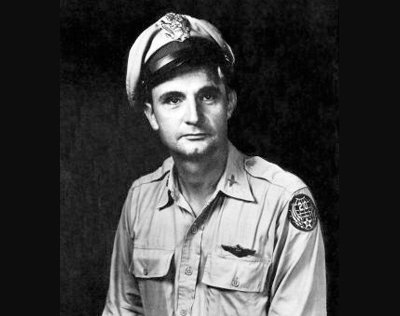
Brigadier General Henry C. Huglin
9th Bomb Group, Group Commander, Tinian 1945
Original publication 9th Bomb Group Association 1995
Additional content © 6th Bomb Group Assoc. 2026
Editor’s Note: This article is an excerpt from author General Henry C Huglin’s document History of Air Warfare – From Kitty Hawk to Hiroshima. Title, pictures, highlights and links added to compliment author’s writing.
B-29 COMMAND STRUCTURE
IN 1944 THE 20TH AIR FORCE WAS THE TOP OF THE COMMAND STRUCTURE FOR ALL B-29 UNITS. ITS HEADQUARTERS WAS IN THE PENTAGON
In 1944 the 20th Air Force was set up as the top of the command structure for all B-29 units. Its headquarters was in the Pentagon in Washington. General H.H. Arnold, Commander of the Army Air Forces, was designated by the Joint Chiefs of Staff as the 20th’s commander. No units were to be placed under the command of the two theater commanders in the Pacific area: Admiral Nimitz and General MacArthur, nor the East Asian area commander General Stilwell, all of whom wanted control of the B-29s. But, in an emergency, those commanders could appeal to the Joint Chiefs of Staff for diversion of the B-29s for help for their forces.
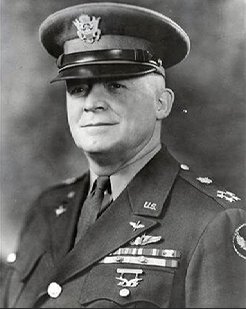
Major General Henry Hap Arnold
Under the 20th Air Force there were originally two bomber commands, the XX in India and China with but one wing, the 58th, and the XXI in the Marianas which started with one wing, in November 1944, and expanded rapidly to these five wings, in order of their deployment: the 73rd on Isley Field, Saipan, November-December 1944; the 313th on North Field, Tinian in January-February 1945; the 314th on North Field, Guam, February-March 1945; the 58th, redeployed from India-China in April-May to West Field, Tinian; and the 315th on West Field, Guam in May-June, 1945. (The XX Bomber Command Headquarters was inactivated when the 58th Wing moved to Tinian.)

North Field on Tinian Island in the Marianas – launching point for the atomic bomb drops on Hiroshima and Nagasaki, Japan. ©Bill Webster. All Rights Reserved.
Each wing had 4 bombardment groups of 3 squadrons except the 313th Wing which had five groups [6th, 9th, 504th, 505th, 509th], including the 509th which joined the wing in June. In addition, there were support units of many kinds: engineering, communications, photo, medical, etc.
The Tables of Organization and Equipment were designed for 30 B-29s per group with corresponding air and ground crews. But the groups were soon overloaded by 50% to 45 or more airplanes without a fully corresponding increase in air and ground crews and support personnel. Only dedicated long hours of work, high morale, increasingly fine supply of spare parts and munitions, along with nearly ideal weather conditions on Tinian, enabled us effectively to maintain and operate all the aircraft assigned. This challenge for top performance was magnificently met by all the men in the group.
TRAINING OF GROUPS AND DEPLOYMENT TO COMBAT ZONES
The first B-29 units, those of the 58th Wing’s four groups, were formed in 1943 and trained at airfields in Kansas. When their training—handicapped with great shortages of equipment, serious aircraft engine problems, and persistent time pressure—was barely completed in early 1944, they were deployed to their main bases in India and forward bases in China.
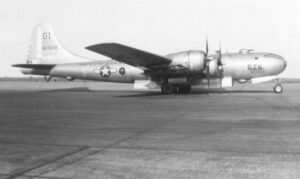
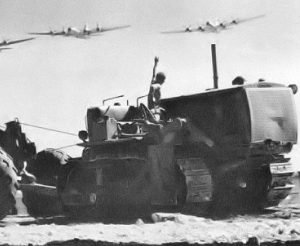
TINIAN ISLAND CAPTURE & CONSTRUCTION
The second wing, the 73rd, trained in Kansas, following the departure of the 58th Wing and about 2 months before we, who were in the 313th Wing, started our training in Nebraska. While the 73rd and we were in training, Marine and Army forces, backed by the Navy, invaded and took the Marianas Islands from the Japanese occupiers. Then the Seabees and Army Engineers began speedily building airfields and other facilities. The two follow-on wings, the 314th and 315th, trained on Kansas and Nebraska airfields, respectively.
President Franklin Roosevelt was a strong believer in the use of air power. He pressed for the development of the B-29s on a top priority basis and insisted that they be deployed to India and China in the spring of 1944. His insistence was based primarily on geopolitical factors, including bolstering the morale of the Chinese government which was being sorely pressed by the expanding Japanese campaign of conquest in that country. Further, this deployment was a means of usefully employing the B-29s until the bases in the Marianas were ready.
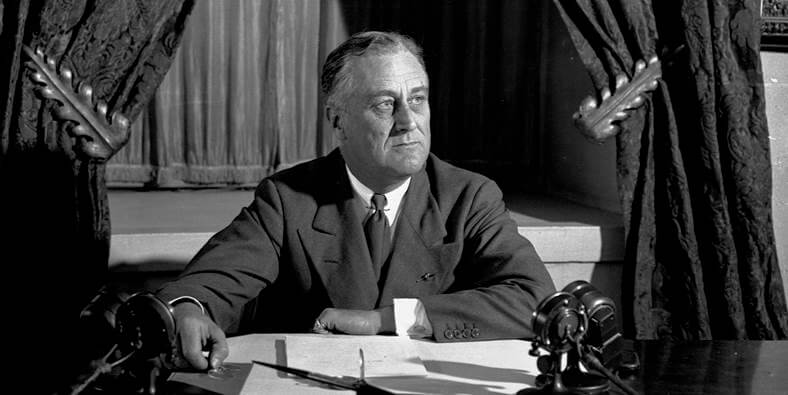
President Franklin Roosevelt
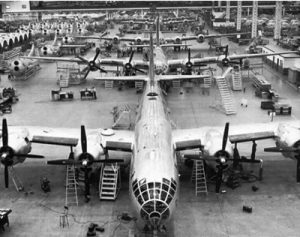
The B-29 pioneers in the 58th Wing were plagued with handicaps and difficulties. The air base facilities available to them were limited. They had many supply shortages. They had to ferry all of their fuel and munitions 1200 miles over “the hump,” the high Himalayan mountains between India and China. They continued to have serious problems with the B-29 engines overheating and failing. And, at first, they were short on training.
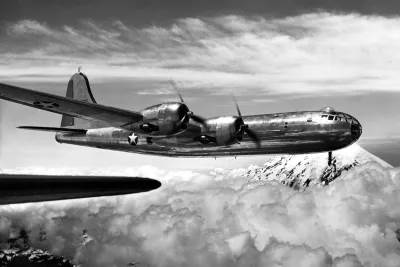
B-29 Flight Over Himalayas to China
Although from the advance bases in China the 58th Wing’s B-29s could barely reach western Japan, from those bases and the ones in India they could reach many Japanese targets in Manchuria, Formosa (Taiwan), and in occupied areas of China, Indochina, and Malaysia, in particular, Singapore. In raids on Singapore, the B-29s sank the only floating capital-ship dry dock outside Japan, and destroyed the largest land-based dry dock as well. From China they bombed the steel mill at Mukden, Manchuria, and supported McArthur’s Philippine invasion in late 1944 by destroying a major Japanese air depot on Formosa, severely limiting the number of Japanese aircraft that could reach the Philippines. Further, they destroyed the Japanese small arms ordnance depot at Rangoon, Burma, which helped eliminate the effectiveness of the Japanese army in that country.
So, the 58th Wing, despite the handicaps and difficulties, carried out a number of useful missions. Further, their experiences contributed to the needed on-going modifications of the B-29 airframe, engines, equipment, and operational tactics. Still, considering the effort and resources involved, the results were limited and often disappointing. Some critics began claiming that the B-29 couldn’t perform the strategic bombing mission for which it was designed.
RESULTS OF THE EARLY MONTHS OF OPERATIONS FROM THE MARIANAS WERE DISAPPOINTING
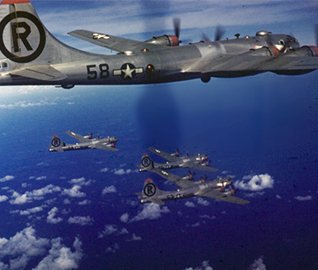
Even the results of the early months of operations from the Marianas, November 1944 to March 1945, were disappointing. The Soviets refused to pass to our meteorologists reports of the weather over Siberia, which reports would have been of great help in improving forecasting of the follow-on weather over Japan. Hence, our forecasters had only weather reconnaissance planes’ reports of current weather on which to guess what the weather would be during our missions 24 or so hours later. Further, we ran into unexpected high-altitude winter winds over Japan (the first discovery of the jet stream). So, our high-altitude operations were more often than not handicapped with layers of clouds and/or high winds that prevented accurate, visual bombing. Therefore, the results were disappointing and worrisome.
MAJOR GENERAL CURTIS E. LEMAY ADDED A MARKEDLY EFFECTIVE TACTIC OF NIGHT LOW-LEVEL INCENDIARY RAIDS
In March 1945, the whole picture began speedily changing for the better. Major General Curtis E. LeMay, the XXI Bomber Command commander, added a markedly effective additional tactic of night low-level incendiary raids; and he also significantly lowered the altitude of daylight missions to avoid the jet stream and the higher layers of obscuring clouds. Further, the nagging bugs in the aircraft engines had by then been worked out. Also, the capture of the island of Iwo Jima with its emergency airfield greatly helped our operations. And the on-going buildup of the force to over 1000 B-29s steadily increased the command’s clout. All of these developments added up to achieving what General Spaatz in August called “the best organized and most technologically and tactically proficient military organization that the world has seen to date.”

General Curtis LeMay (L)

COMMAND SUPERSTRUCTURE SET UP
In July 1945, two months after the surrender of Germany, the strategic air forces in the Pacific were reorganized.
Until then the B-29 command in the Marianas, as earlier mentioned, had been the XXI Bomber Command under Major General LeMay, with the headquarters on Guam and the five wings based on Saipan, Tinian, and Guam.
20TH AIR FORCE HEADQUARTERS WAS RELOCATED FROM THE PENTAGON IN WASHINGTON TO GUAM
On July 15, 1945, the 20th Air Force Headquarters was relocated from the Pentagon in Washington to Guam and replaced the XXI Bomber Command. Lt. General Nathan Twining, who had been the commander of the 15th Air Force in Italy, arrived to be the commander of the 20th. Concurrently, the Headquarters of the 8th Air Force, which had been the strategic air force operating out of Britain against Nazi Germany, was reconstituted on Okinawa with Lt. General Jimmy Doolittle as the commander and the B-29 units being trained for the 8th Air Force were starting to be deployed there. Over the two air forces was set up the Headquarters, U.S. Strategic Air Forces (USSTAF) also on Guam with General Carl Spaatz, who had been the overall commander of U.S. strategic air forces in Europe, as the commander. Major General LeMay became General Spaatz’ chief of staff. (In 1947 when the separate U.S. Air Force was split off from the Army, General Spaatz became the first Chief of Staff. General Twining and General LeMay were later Chiefs of Staff, too.)
REORGANIZATION WAS DONE IN PREPARATION FOR THE LAND INVASIONS OF JAPAN
This reorganization was all being done in preparation for the enhanced bombing operations planned to be conducted before and during the land invasions of Japan scheduled for November 1945 on southern Kyushu and for March 1946 on Honshu, southwest of Tokyo. (A million U.S. Army ground forces and many Air Force groups in Europe were under orders to redeploy to Okinawa and the Philippines for these invasions to supplement the U.S. forces already there.)
By November there would have been few, if any, really strategic bombing targets left. Bombing intensity had already reached a monthly level of 42,700 tons in July. The planning figure was to achieve a monthly tonnage of 115,000, as the frequency of missions of the 20th Air Force continued to increase and the 8th Air Force on Okinawa achieved full strength. The B-29s would likely have been used mainly in close pattern bombing in interdiction support of the ground forces, which would have been devastating for the Japanese forces.
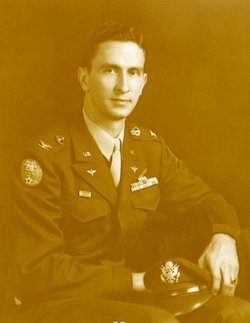
Brigadier General Henry C Huglin
Bio: Iowa native Henry C. Huglin (1915-2005) graduated from West Point in 1938. He received his pilot’s wings at Kelly Field, TX in 1939 where he became an advanced flight instructor then Commanding Officer within the Air Training Command of the Air Corps. In 1944 he served as Deputy Group Commander of the 9th Bomb Group in McCook NE, deploying in Feb. 1945 to Tinian Island, Marianas with the 20th AF conducting the strategic B-29 air campaign against Japan. Then a lieutenant colonel, Huglin became Group Commander of the 9th in March 1945. Following WWII, Huglin served as Chief of the Operations Branch in the U.S. Strategic Air Force Headquarters on Guam, the Far East Air Forces in the Philippines, Chief of Staff of the 308th Bomb Wing in Korea and Commanding Officer of Nagoya AB, Japan. In 1948, Colonel Huglin served as Deputy Secretary in the Office of the Secretary of the Air Force under W. Stuart Symington at the Pentagon then in 1950 as the NATO Project Officer. Between 1953-1959 he held various staff positions at NATO’s Supreme Headquarters Allied Powers Europe (SHAPE). He graduated from the National War College in 1957 and was promoted to Brigadier General in 1959. In 1963, General Huglin served as assistant Chief of Staff, North American Air Defense Command, Colorado Springs, CO before retiring in 1964.

PACIFIC WAR – OVERVIEW
Brief overview of the Pacific War 1941-1945 >

THE B-29 BOMBER
Tour and specs of the most advanced bomber of WW2 >