
Lawrence Stewart
B-29 Flight Engineer
6BG, Tinian 1945
First publication July 2024
Original memoir copyright © 2024 Lawrence Steward. All Rights Reserved
Additional content copyright © 2024 6th Bomb Group Assoc. All Rights Reserved
Editor’s Note: Flight Procedures is an excerpt from then 1st Lt. Lawrence Stewart’s first-person memoirs: Combat in the Pacific Theater – A B-29 Flight Engineer’s Experiences During World War II. Pictures, titles and highlights have been added to compliment the author’s writing.
Briefing
We were summoned to the 6th Bomb Group briefing building, a double Quonset hut, for a briefing on [each] combat mission for the group. Crews from the 24th, 39th, and 40th Bomb Squadrons attended the meeting. After roll call the 6th Bomb Group Commander, Colonel Kenneth H. Gibson, said a few general words about the mission. Then briefing personnel took over: Operations, Intelligence, Radar, Weather and Air-Sea Rescue. Mission information, such as [target, bomb type,] time and order of takeoff, assembly area and location of each B-29 in the formation, ditching and crash landing procedures was presented. I was particularly interested in data regarding the total weight of the bombs, fuel on board, flight altitude to and from the target, and bombing altitude. Navigators received information regarding the courses to [target] and the return to Tinian. Bombardiers were provided with data on initial aiming point, bombing altitude and bomb drop point. The gunners were briefed on possible enemy fighter activity and cautions on firing of the guns. Radio operators were given radio frequencies for this flight.

Mission Briefing
Pre-Flight and Take-off Procedures
Following the briefing, we returned to our tents to put on our flight suits and pick up our flight and survival equipment, such as flight helmets, oxygen masks, portable oxygen bottles, full canteens, and life preserver vests, commonly known as “Mae Wests”, which we donned. I also picked up my flight engineer bag containing tools, flashlight and flight information files. Then we boarded a military truck and rode to the equipment area to pick up our parachutes.

Boarding trucks for ride to flightline © Archie Miller. All Rights Reserved
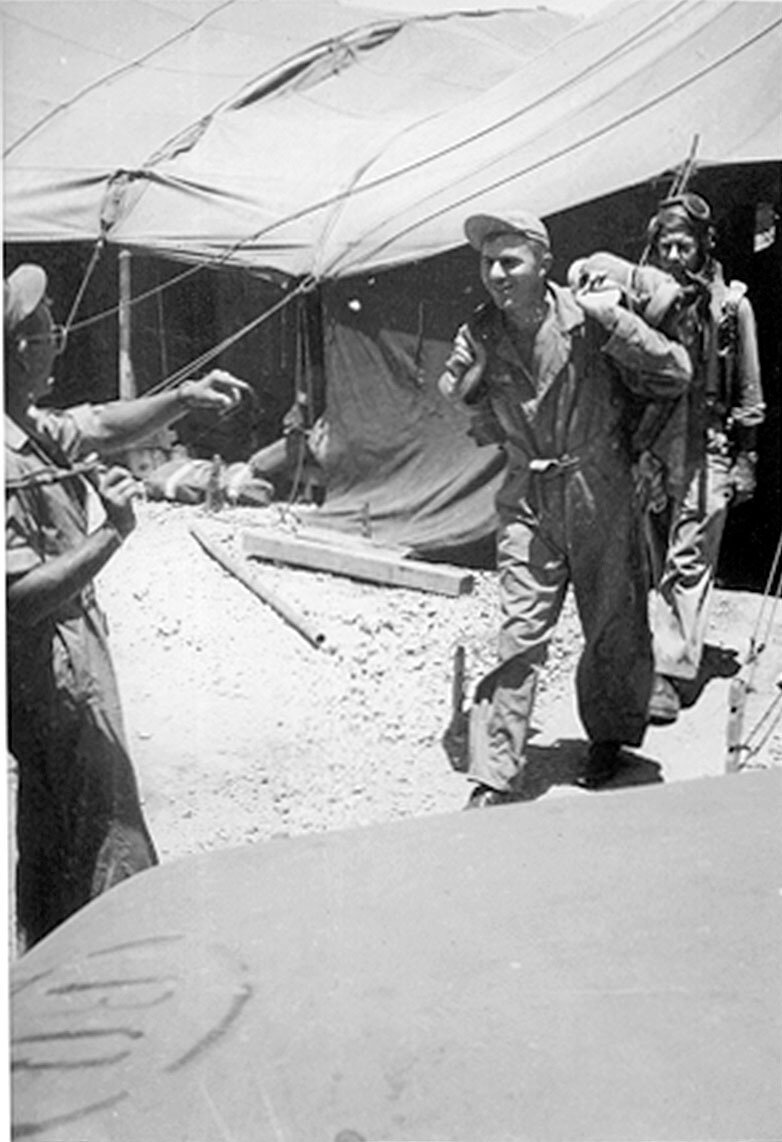
Flight outfit and equipment © Archie Miller
From there we were taken to the flight line at North Field. During the ride, there was much talking, joking and singing of risqué songs. The crew chief and his team, having preflighted and checked out the B-29 several hours earlier, awaited our arrival. The air was heavy with the smell of gasoline and hot engine oil as we lined up our flight and survival gear in front of the airplane. Then we went about our individual external checks of our assigned airplane; bombardier Denis lnkel, checking that the bomb safing wires had been removed; the gunners insuring that the guns were properly stowed; and Rocky [Aircraft Commander] and pilot, Jones Woodward, looking over the control surfaces and general condition of the airplane. I conducted my walk-around inspection also checking on the condition of the airplane. An important check was of the tires regarding wear and cuts which could result in a blowout during takeoff. Prior to boarding the airplane, we lined up at the left front of the airplane with our flight and survival equipment for inspection. Rocky inspected each crew member’s equipment and gave us final instructions. Then we joined the ground crew as two men grabbed each propeller blade of an engine and walked it through, rotating it and the engine several revolutions. This action was required to clear the combustion chambers of the engines prior to engine start. Finally, we boarded the B-29 with our flight and survival gear and settled down at our individual stations. Denis, the last crew member to enter the forward crew compartment, closed the nose gear entrance hatch. Likewise, the last crew member entering the aft crew compartment via the ladder, pulled the ladder into the compartment, closed the entrance hatch and secured the ladder.
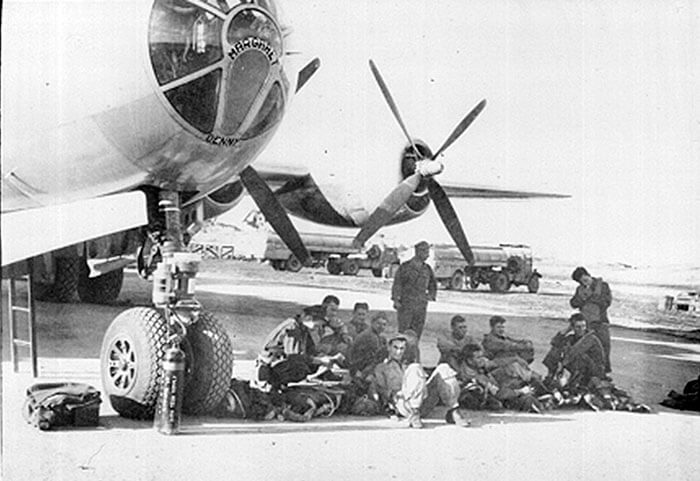
Crew inspection © Archie Miller
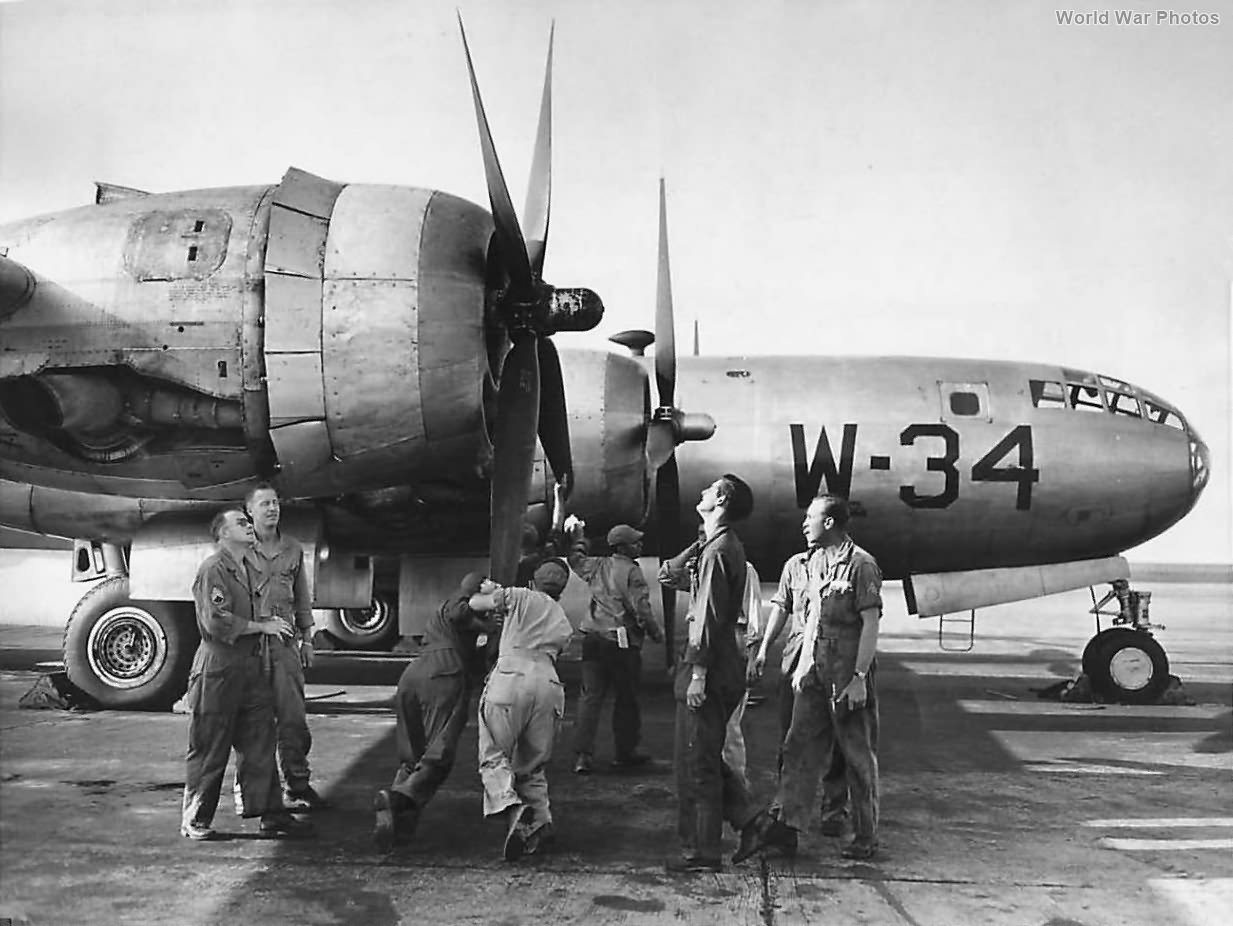
Rotating props © Gilbert Godin
After stowing the survival gear nearby, I checked that a flak mat, flak vest, flak helmet and one man life raft or dinghy were located at my station. Flak gear and dinghies were normally left at each crew member’s position in the airplane. Flak was a slang term for fragments resulting from antiaircraft projectile bursts.
Next, I strapped on my parachute over the Mae West, snapped on the dinghy, located in my seat, onto my parachute, fastened my lap belt and put on my throat microphone and headset. Crew members were required to have their headsets on and connected to the interphone system when at their duty stations. Meanwhile, the auxiliary power unit, called the “putt-putt”, because of its rhythmic stutter when running, was started by the tail gunner, Charles Jones, on his way to the tail compartment. The putt-putt, located in the aft unpressurized compartment, furnished power to the aircraft systems and power for starting the engines.

B-29 putt-putt engine © 6BG Association. All Rights Reserved.
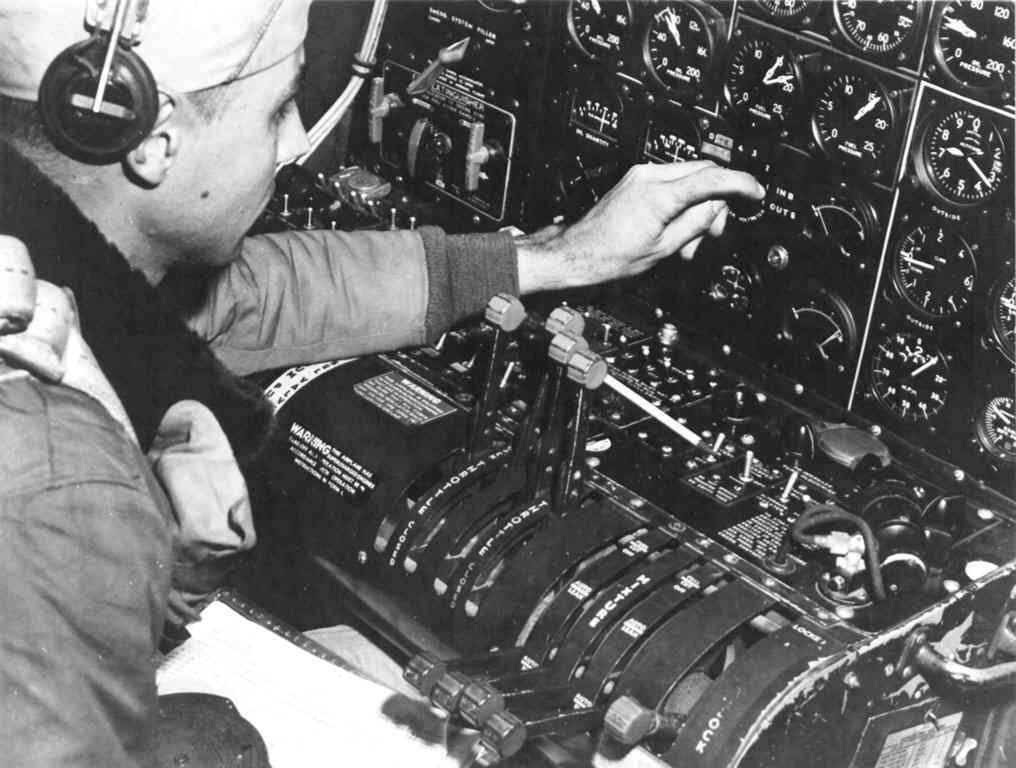
Flight engineer at controls
In accordance with the Before Starting Engines Checklist, I checked the oxygen system for proper operation and normal pressure. I placed the master and battery switches to the on position and checked that the putt-putt was on line. I checked that all panel lights and indicators were working. I opened the fuel shut-off valves, turned the fuel booster pumps on and checked that the fuel transfer switch was in the off position. Next, I checked that the mixture controls were set to the idle cut-off position and that the throttles were closed. I also checked engine, fuel and electrical gauges for proper indications and that other appropriate aircraft and electrical switches, such as engine cowl flaps and generators, were set to the proper positions for starting the engines. I opened the cabin pressure valve and I determined the amount of fuel on board via the fuel quantity gauges, which I logged in the flight engineer’s log, hereafter called the “Flight Log”.
UPON COMPLETION OF OUR CHECKS, EACH CREW MEMBER REPORTED IN TO ROCKY VIA INTERPHONE ON THE STATUS OF THEIR INSPECTION IN A PREARRANGED SEQUENCE
The pilots performed their required checks, including their oxygen systems, brake and nose gear steering pressures, operation of the flight controls (aileron, elevator and rudder), and proper positions of switches and status of flight indicators. Rocky also operated the parking brake lever, thereby engaging the brakes. Other crew members performed the required checks for their stations. Upon completion of our checks, each crew member reported in to Rocky via interphone on the status of their inspection in a prearranged sequence.
I NOTIFIED ROCKY THAT I HAD COMPLETED MY CHECKS, THAT THE ENGINES WERE OPERATING NORMALLY AND THAT I WAS READY TO TAXI
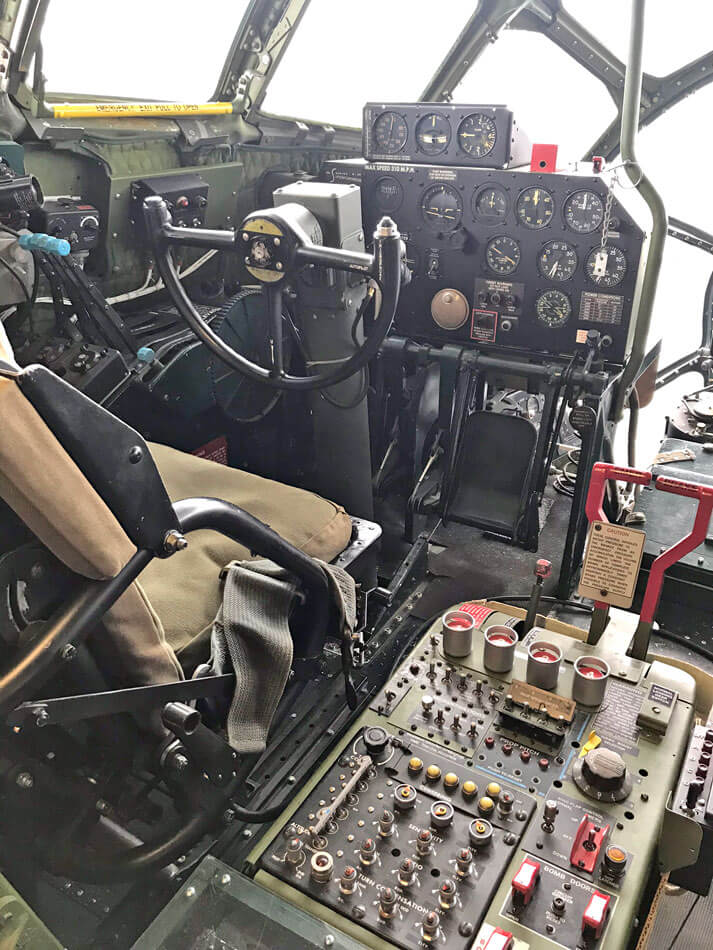
B-29 pilot controls © Kent Vincent
Upon receiving a signal from control tower personnel, Rocky told me to start the engines. Woody confirmed that a ground crew member was in position with a fire extinguisher at the front of the right wing. I turned the panel fire extinguisher switch to the number three engine position, cracked the engine throttle, moved the mixture control from idle cut-off to auto-rich and actuated the starter switch. After several revolutions, I flipped the magneto switch to the both position and the mighty engine wheezed, coughed, chugged a few times and started with a roar as the airplane began to vibrate and shake. I moved the throttle to the idle position and the engine settled down into a low and steady rumble. I scanned appropriate engine instruments, such as fuel flow and pressure, oil pressure and temperature, cylinder head temperature, and tachometer, noting that the engine was operating normally. I switched power from the putt-putt to the aircraft electrical system and started the remaining three engines. After all engines had been started and were idling, Rocky conducted the propeller and feathering motor checks. Then he advanced the number one throttle to obtain the prescribed revolutions per minute and I conducted the magneto checks. I verified that the magnetos were operating normally. The other engines also checked out okay. I notified Rocky that I had completed my checks, that the engines were operating normally and that I was ready to taxi.
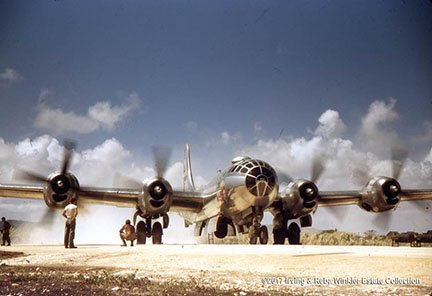
B-29 engine start © Irv Winkler
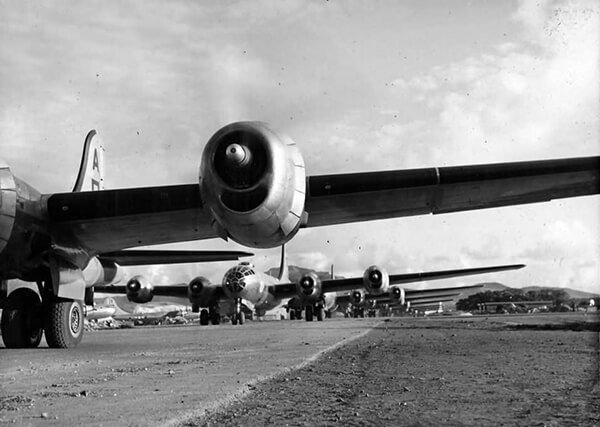
B-29s in line for take-off
WHEN ROCKY RECEIVED THE SIGNAL, HE DIRECTED THE GROUND CREW TO REMOVE THE WHEEL CHOCKS, RELEASED THE PARKING BRAKE LEVER AND ADVANCED THE THROTTLES
Meanwhile, Woody lowered the wing flops to the takeoff position as Denis closed the bomb bay doors. The wing flap and bomb bay door positions were verified by the gunners. We waited for the signal from the control tower indicating that it was our turn to join the B-29s that were taxiing to the runways for takeoff. When Rocky received the signal, he directed the ground crew to remove the wheel chocks, released the parking brake lever and advanced the throttles. As the B-29 started to lumber forward, he reduced power to keep the airplane moving at a slow rate as ground crew personnel directed him onto the taxiway where we joined the parade of bombers heading for the runways. We proceeded to the west end of the designated runway for takeoff to the east, where we joined preceding B-29s holding nose-to-tail waiting to takeoff.
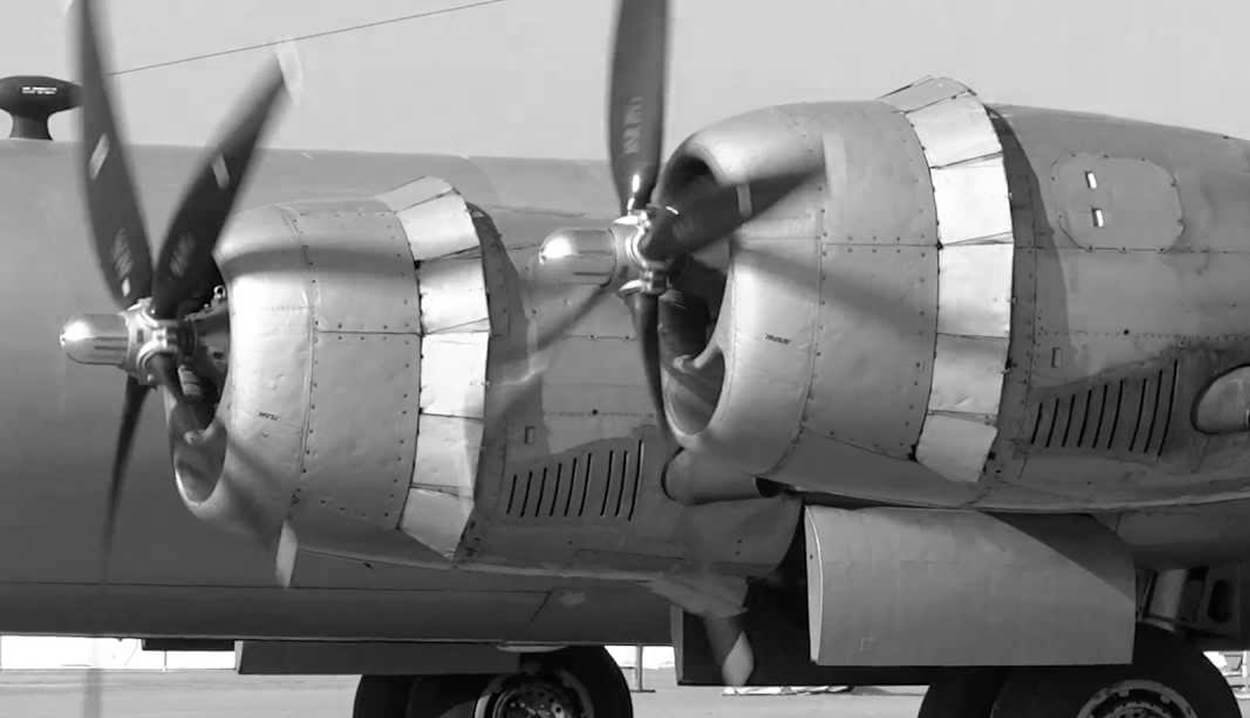
B-29 engine cowl flaps
There were potential problems for airplanes taking off to the west. The end of the runway was only a few feet higher than the surface beyond the runway. The flight path was over land for some distance prior to reaching the ocean and there was a cemetery located a short distance from the end of the runway. We were fortunate in that we never had to takeoff to the west. During my stay at Tinian, I only saw a few airplanes take off in that direction and I saw one B-29 plunge into the ocean after taking off to the west.
AS WE NEARED THE RUNWAY, I RECHECKED THAT THE MIXTURE CONTROLS WERE SET TO THE AUTO-RICH POSITION, THAT THE FUEL BOOSTER PUMPS WERE ON AND THAT THE COWL FLAPS WERE OPEN.
As we neared the runway, I rechecked that the mixture controls were set to the auto-rich position, that the fuel booster pumps were on and that the cowl flaps were open. Meanwhile, Rocky asked for another crew report as he told them to standby for takeoff. At the next signal, Rocky turned the B-29 onto the runway, using the outboard engines to steer the airplane and stopped the B-29 at the end of the runway. Takeoff of a Superfortress required the coordinated effort of the two pilots and the flight engineer to coax the huge airplane aloft. As Rocky advanced the four throttles to obtain full power while he and Woody stomped on the brakes, the mighty engines roared and the B-29 started jumping with the nose gear bouncing up and down, raring to go. I carefully checked the instruments for any sign of engine malfunctioning. When the engines were developing full power, the pilots released the brakes and the airplane began to move, slowly and ponderously at first and then accelerating until we were speeding down the coral runway.
MOST PILOTS OF OVER LOADED B-29S USED THIS BUFFER ZONE, BY LETTING THEIR AIRPLANES SETTLE TO WITHIN SEVERAL FEET OF THE [OCEAN] SURFACE AFTER TAKING OFF, THEREBY GAINING A FEW EXTRA FEET PER SECOND OF FLIGHT SPEED.
Rocky deftly guided the B-29 along the center of the runway as Woody called out the airspeed. This was my first check of the engines at full power and I constantly monitored the instruments for any indication of abnormal operation. All engines continued to operate normally. Soon we passed the decision point for safely aborting the takeoff roll and we were committed to taking off. When the airplane reached takeoff speed, Rocky pulled back on the control column, thereby applying up elevator, and the B-29 lifted off, several hundred feet from the end of the runway. Woody retracted the landing gear and slowly raised the flaps as the airspeed increased. We passed over the edge of the island which was located approximately one hundred feet above the ocean. Most pilots of over loaded B-29s used this buffer zone, by letting their airplanes settle to within several feet of the surface after taking off, thereby gaining a few extra feet per second of flight speed. I recorded the time of takeoff, duration of the take-off, fuel used and engine cylinder head temperatures in my flight log. I closed the cowl flaps and turned the fuel booster pumps off. I asked Charles to shut down the putt-putt and checked that the panel light was extinguished, indicating that it had been shut down as we transitioned into the climb phase.

B-29 take-off
Flight Assembly and Bomb Run Procedures
WHEN WE ARRIVED, ROCKY JOINED OTHER 24TH BOMB SQUADRON AIRPLANES AS THEY CIRCLED IN PLACE BEHIND THE FLIGHT LEADER’S B-29
After Rocky had leveled off at the briefed altitude and was heading for the assembly area, I moved the mixture controls to the auto-lean position. When we arrived, Rocky joined other 24th Bomb Squadron airplanes as they circled in place behind the flight leader’s B-29. Meanwhile, arriving 24th, 39th and 40th combat crews joined their respective bomb squadrons, which formed up into a group formation. For identification purposes, 313th Bomb Wing B-29s had a large black triangle painted on both sides of the rudder with a large black letter painted inside the triangle [later Circle R]. In addition, a yellow pirate bust, painted over a white disk from which a red and white streamer trailed, was located on the forward part of the fuselage. The black letter in the triangle identified group airplanes of the bomb wing. Black numbers painted on either side of the fuselage identified squadron airplanes.

B-29 formation assembly
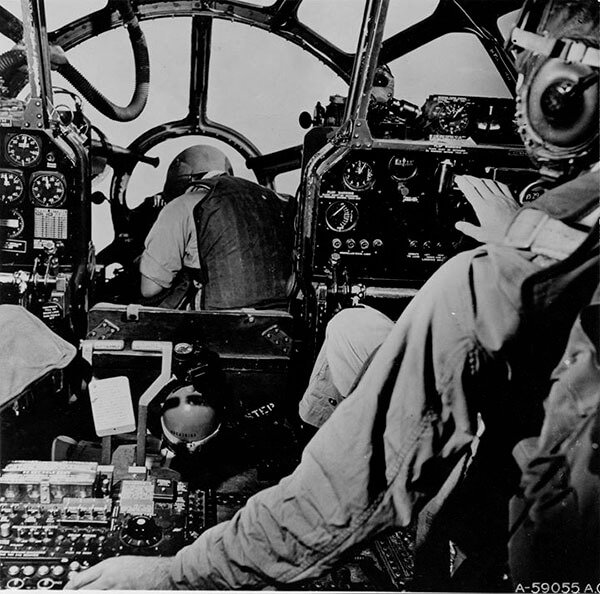
Combat ready B-29 bombardier
WHEN ALL B-29S WERE IN POSITION, THE 6TH BOMB GROUP FLIGHT COMMANDER GAVE THE ORDER TO CLIMB TO THE BRIEFED FLIGHT ALTITUDE
When all B-29s were in position, the 6th Bomb Group flight commander gave the order to climb to the briefed flight altitude. I monitored the engine instruments and periodically entered appropriate data, such as airspeed, altitude, cylinder head temperatures, engine revolutions per minute, mixture settings, fuel used and fuel flows in my flight log. Sometime later, Rocky ordered the gunners to test fire their guns, after ensuring that there were no B-29s in the vicinity of their firing areas. We had a hot meal that had been heated up in ovens located in the crew compartments. After we had eaten, Rocky told the crew to don our flak equipment. I removed my parachute and headset, put on the heavy and cumbersome flak vest over my Mae West and strapped on my parachute. Next, I put on my leather flight helmet with the oxygen mask dangling from one side of the helmet. I left the mask hanging, readily available to slap on my face in the event we lost cabin pressure, and I attached the interphone cord to my helmet. Then I placed the heavy flak helmet over my flight helmet. And finally I pulled on my gloves.
WHEN WE NEARED THE TARGET AREA, DENIS TOOK CONTROL OF THE B-29, MAINTAINED A STEADY HEADING VIA THE NORDEN BOMBSIGHT, AND RELEASED OUR BOMBS WHEN THE LEAD BOMBARDIER RELEASED HIS BOMBS.
When we neared the target area, Denis took control of the B-29, maintained a steady heading via the Norden bombsight, and released our bombs when the lead bombardier released his bombs. Shortly thereafter, the formation dispersed upon command of the flight leader and each aircraft commander departed individually for Tinian. Rocky called Charles to make sure that the area aft of the airplane was clear prior to leaving the formation. Meanwhile, I removed my parachute, flak helmet, flight helmet, flak vest and re-donned my parachute, headset and relaxed a little bit.

B-29 Norden bombsite

Salvo bombs away © John Potenza
Landing Procedure
I GAVE THE RESULTANT FIGURES TO WOODY FOR HIS DETERMINATION OF OUR LANDING SPEED. LANDING SPEEDS FOR VARIOUS WEIGHT AND CG CONFIGURATIONS WERE POSTED ON A PANEL AT HIS POSITION
When we were cleared to land, I went through the Before Landing Checklist. I calculated the landing weight and Center of Gravity (CG) for the current configuration of our B-29, which had changed due to the dropping of the bombs and the burning up of gasoline. I gave the resultant figures to Woody for his determination of our landing speed. Landing speeds for various weight and CG configurations were posted on a panel at his position. Next, I directed Charles to start the putt-putt while I moved the mixture controls to the auto-rich position, turned the fuel booster pumps on, opened the cowl flaps and set up other appropriate switches. As soon as the putt-putt had been started, I informed Rocky that I was ready to land.
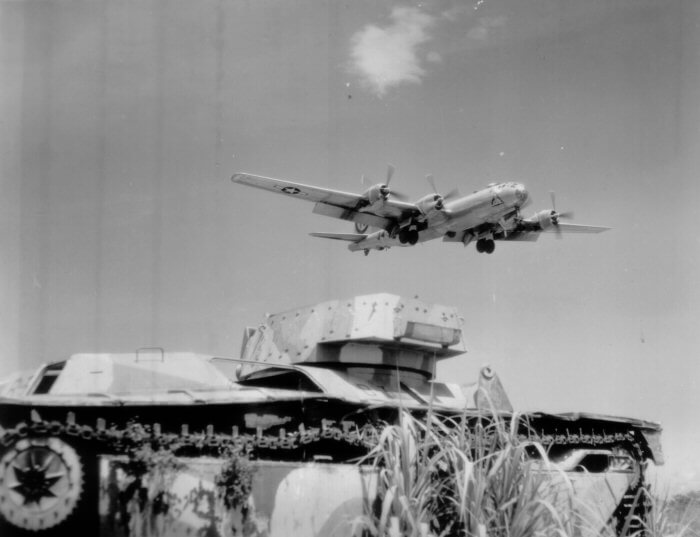
B-29 landing North Field runway D. Foreground memorial to Marines who captured Tinian © Daniel Wilhelm
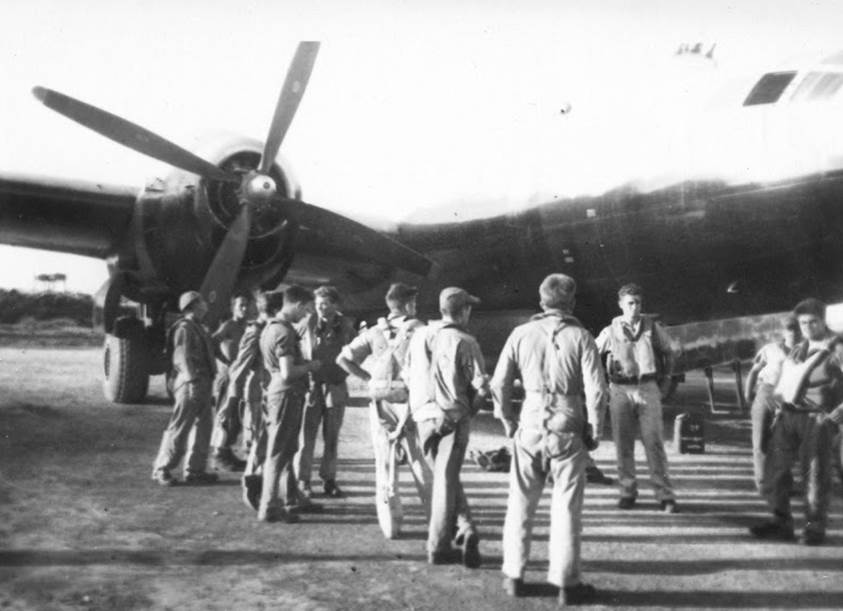
Crew meeting © John Potenza
When we reached the proper airspeed, Woody lowered the landing gear and wing flaps. The gunners verified that the main landing gear had lowered and was locked in position and that the flaps had extended properly. Woody ensured that the nose gear was in the down and locked position via a small inspection window at his station. Shortly thereafter, Rocky landed and Woody raised the flaps. Rocky taxied the airplane to the assigned parking spot in the 24th Bomb Squadron area. After the ground crew had placed chocks under the main wheels, Denis opened the bomb bay doors as I conducted the required magneto checks. I shut down the engines, turned off all appropriate switches and logged the time in my flight log. After deplaning, Rocky assembled the crew to discuss the problems we had encountered during our flight.

PACIFIC WAR – OVERVIEW
Brief overview of the Pacific War 1941-1945 >

THE B-29 BOMBER
Tour and specs of the most advanced bomber of WW2 >

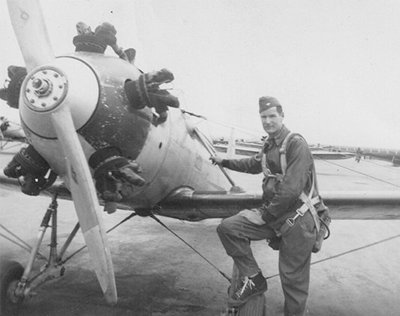
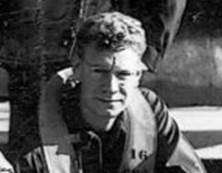
Lawrence Stewart 1922 - 2013
Bio: Born in Minnesota, Stewart joined the Army Air Corps at the outbreak of WWII and became a B-29 flight engineer with the 6th Bomb Group. He was stationed on Tinian Island, Pacific Theater, in 1945 where he completed 35 combat missions over Japan. He retired from the USAF Reserves in 1963.


