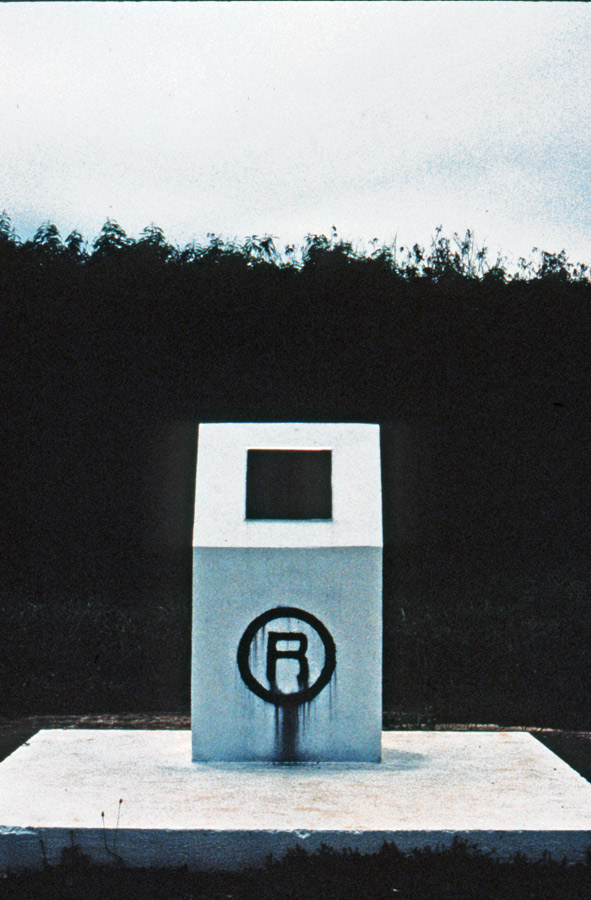
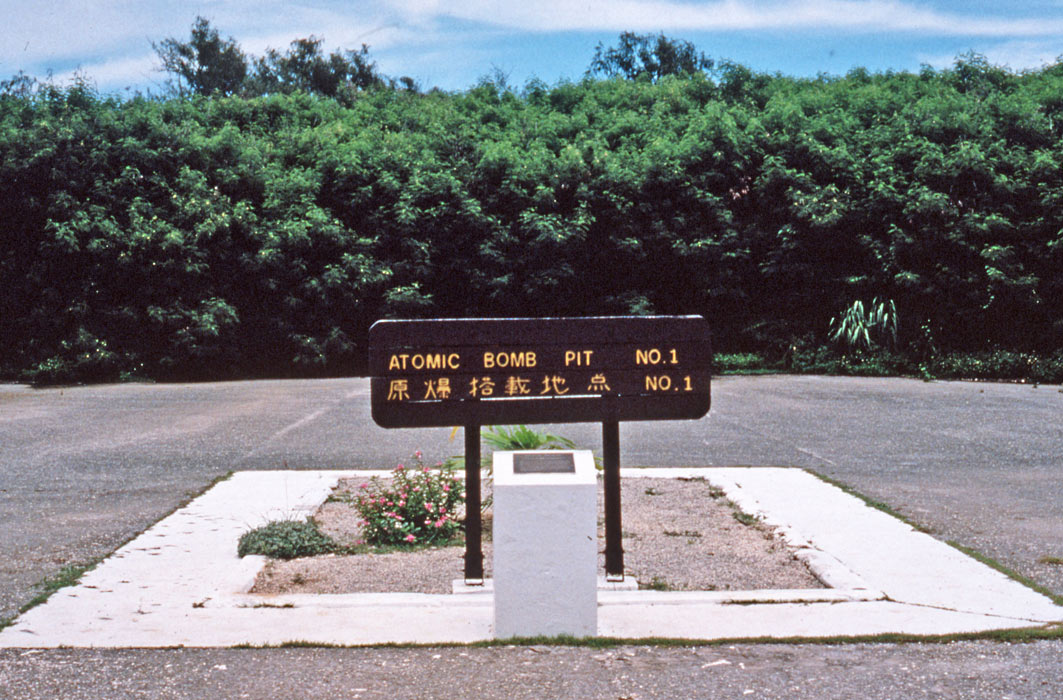
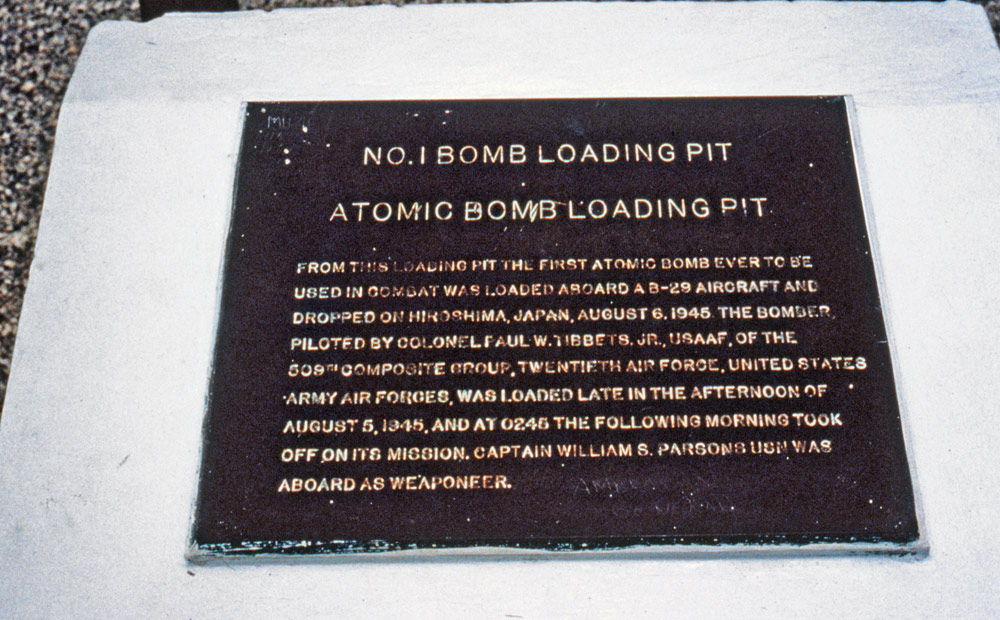
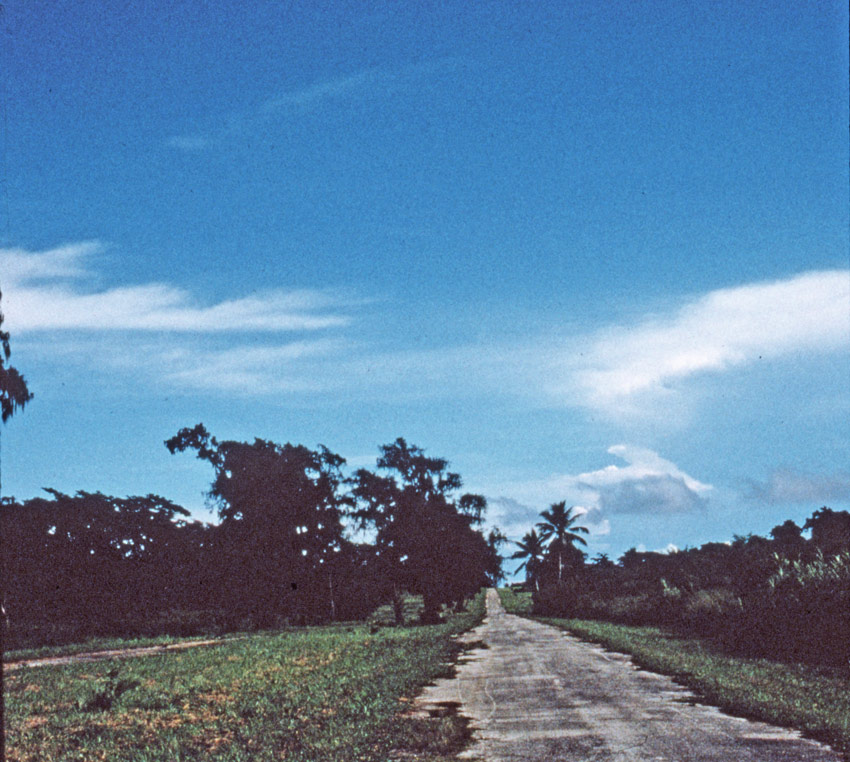
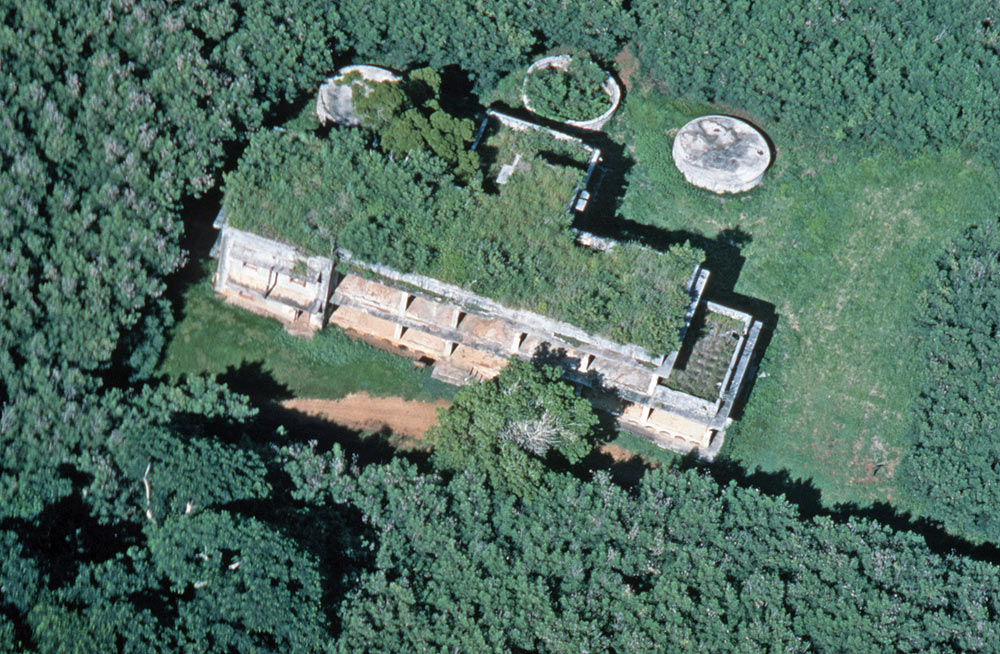
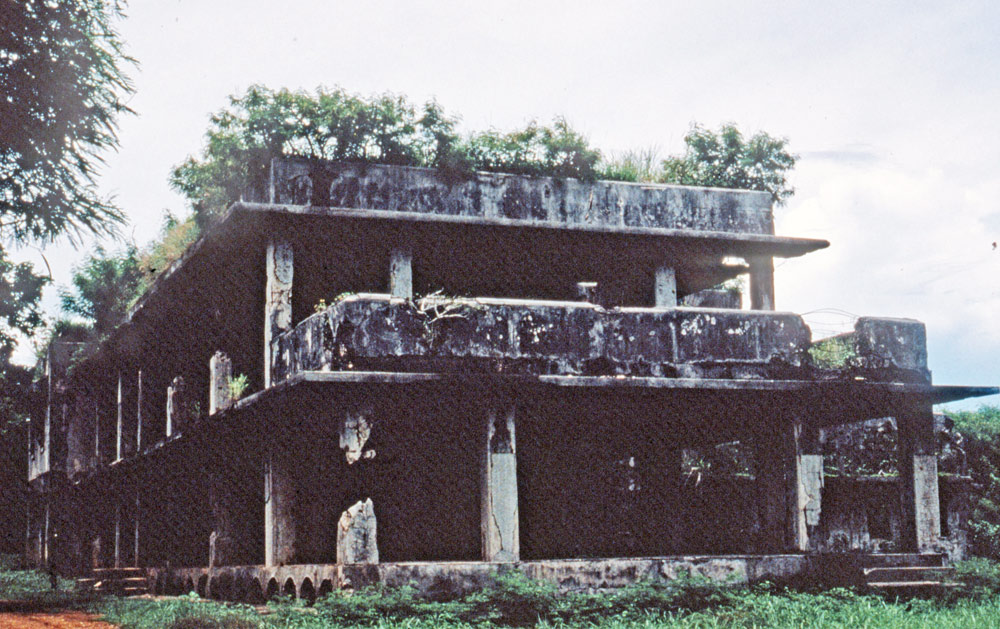
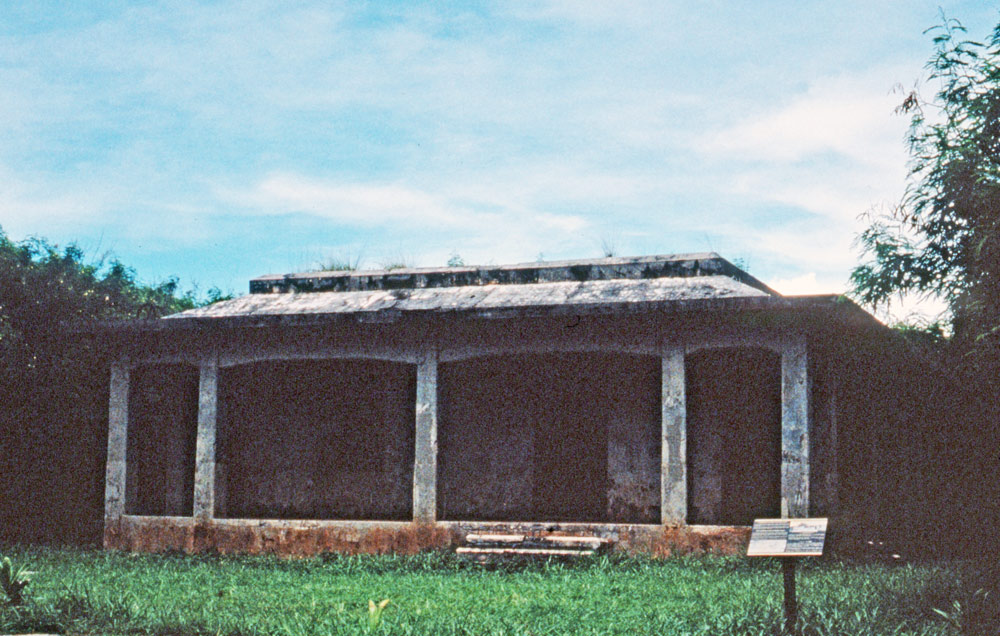
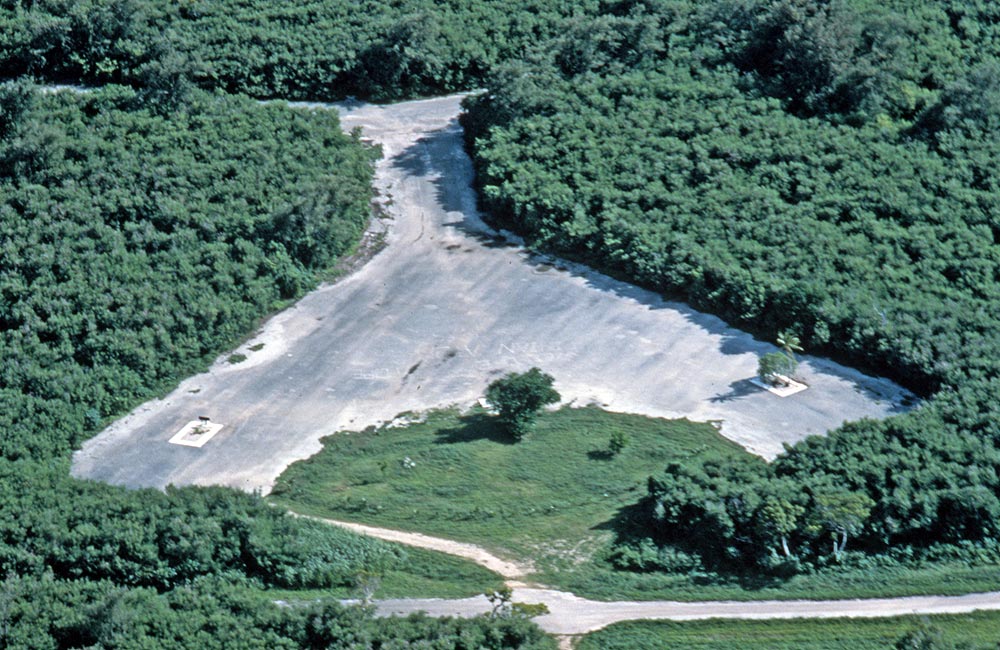
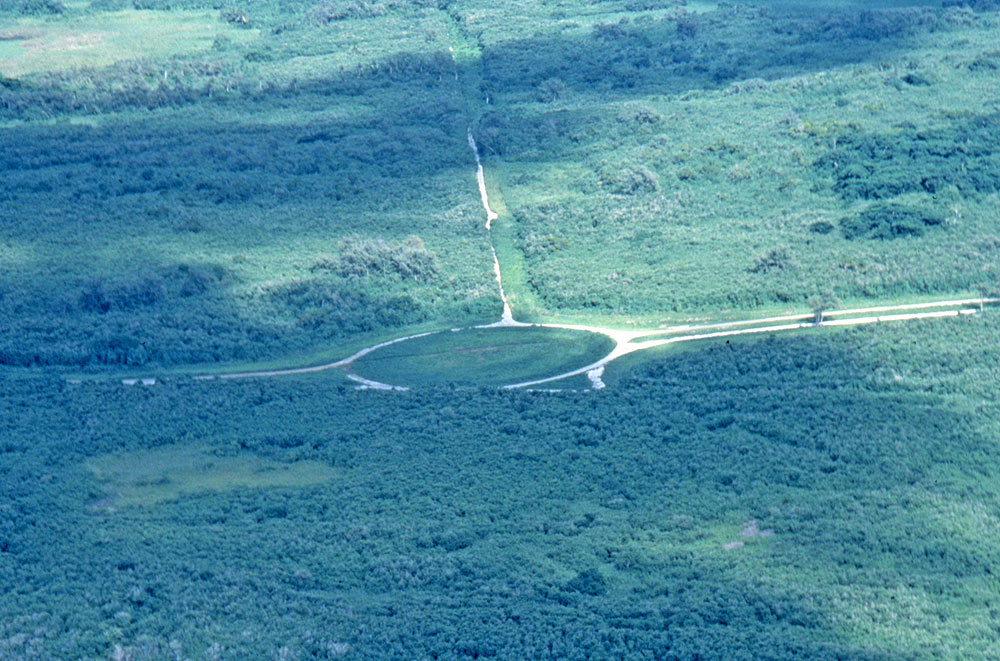
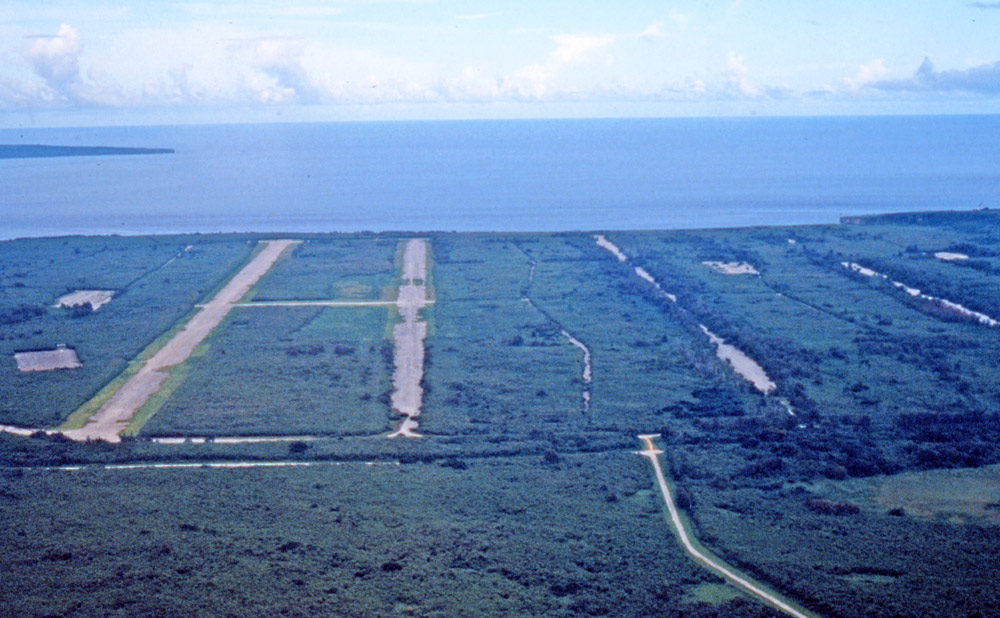
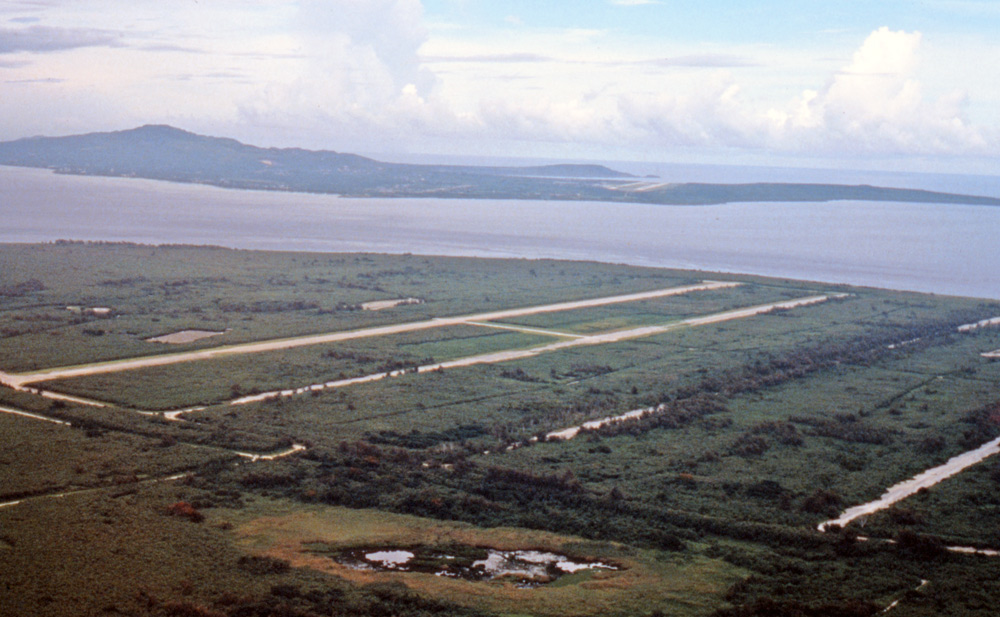
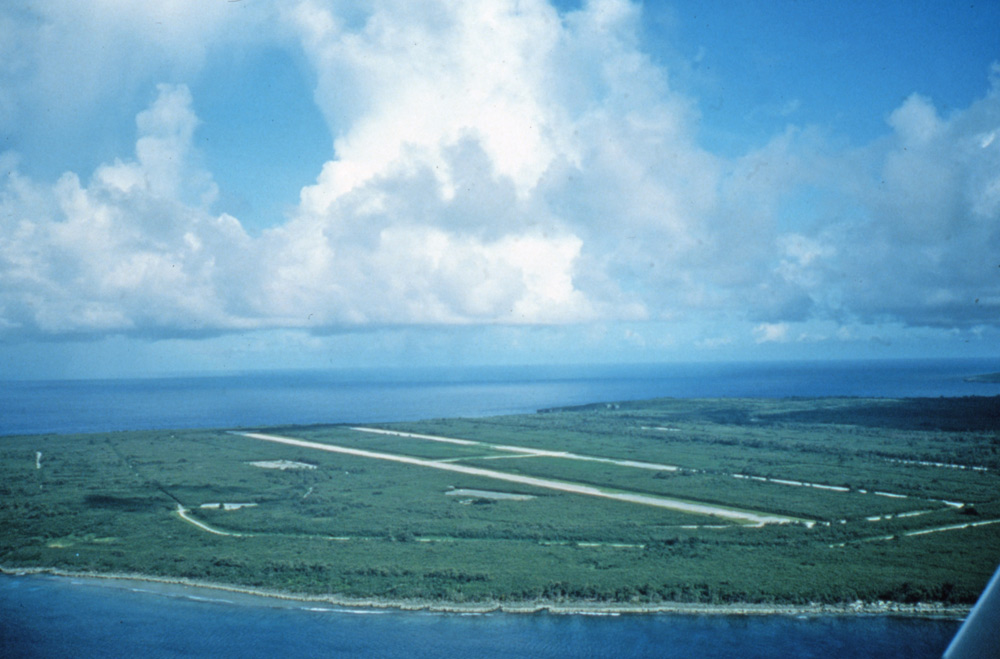
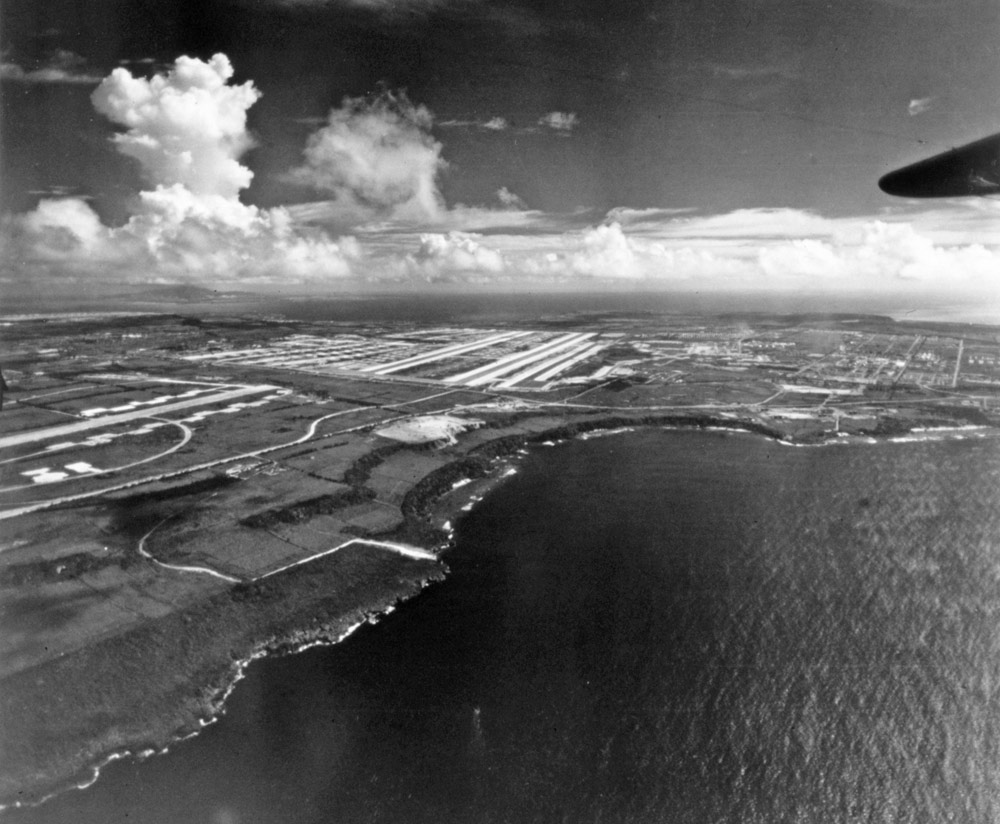
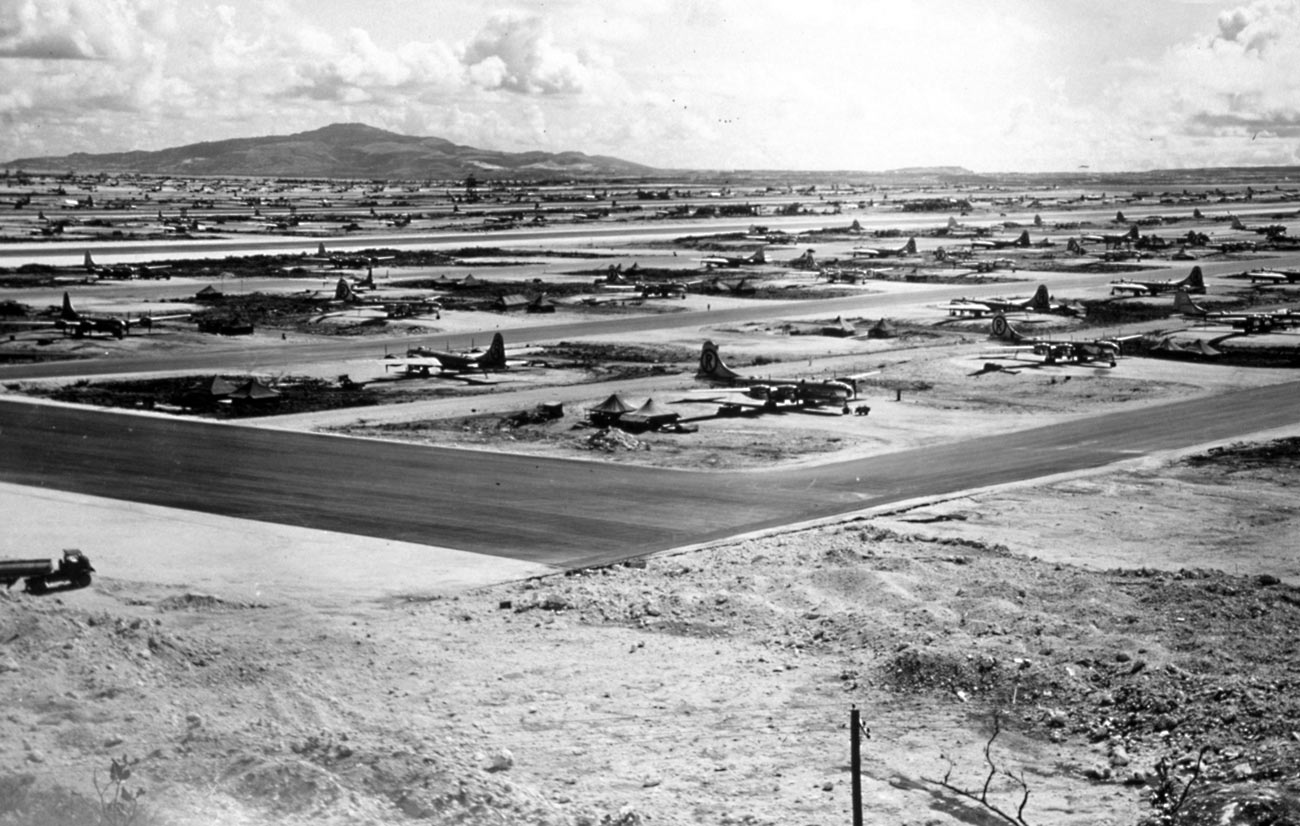
North Field on Tinian Island in the Marianas – launching point for the atomic bomb drops on Hiroshima and Nagasaki, Japan. ©Bill Webster. All Rights Reserved.
TINIAN ISLAND
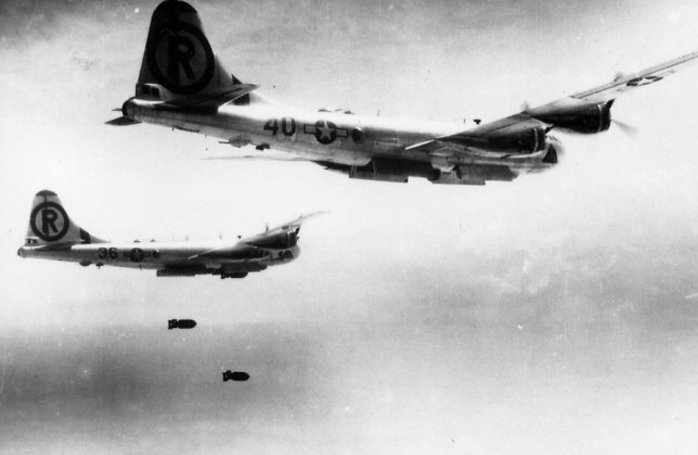
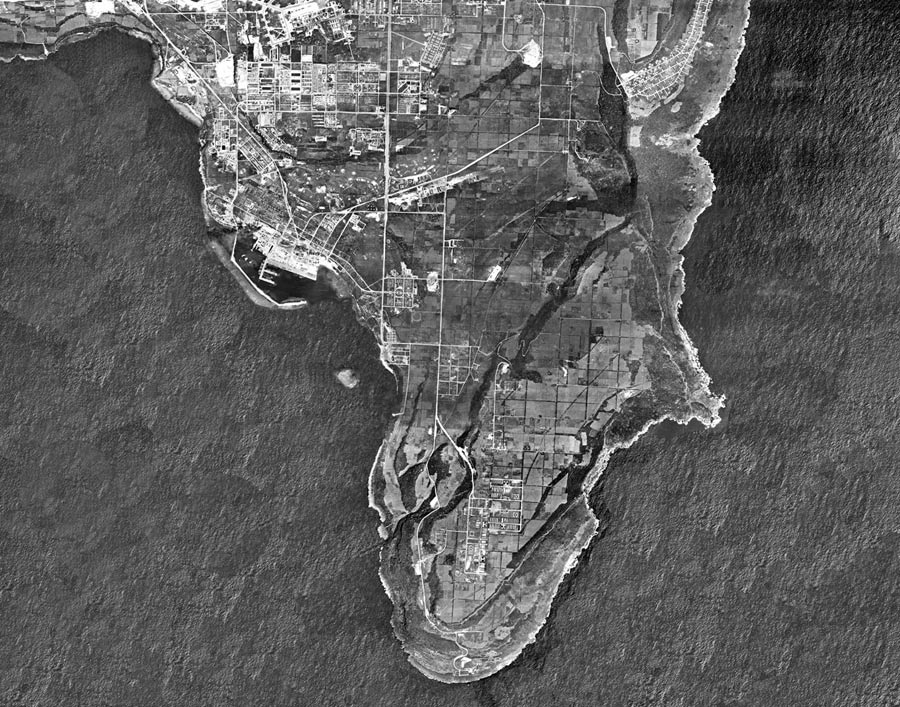
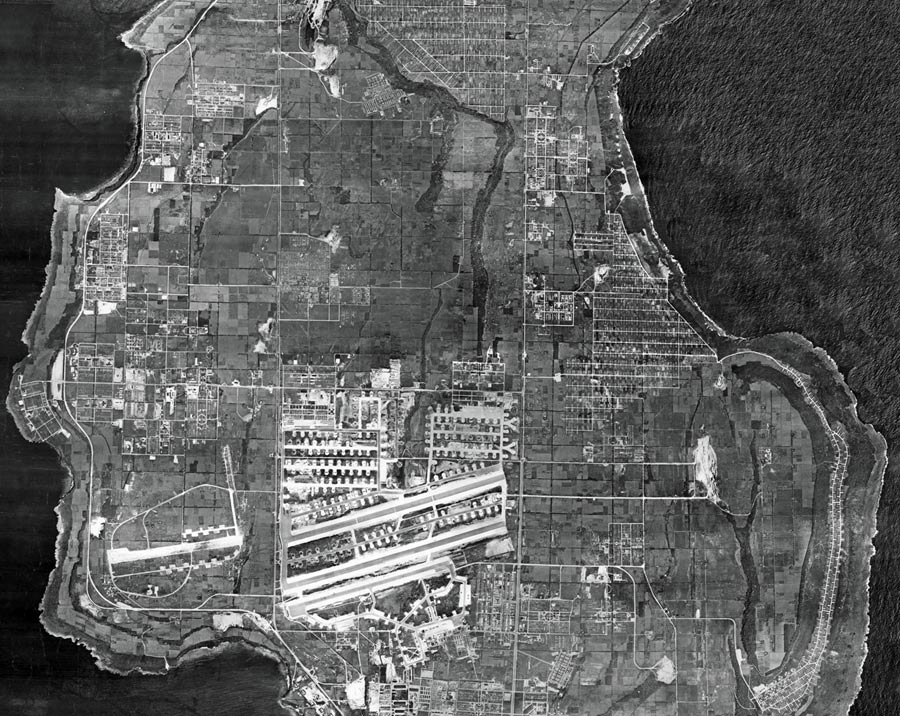
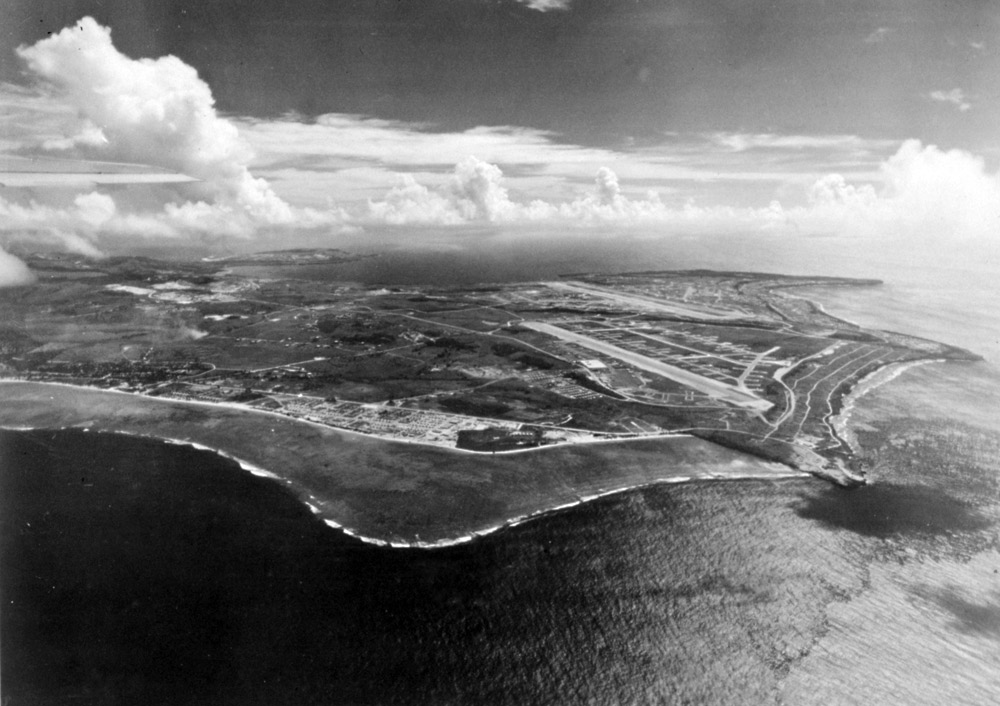
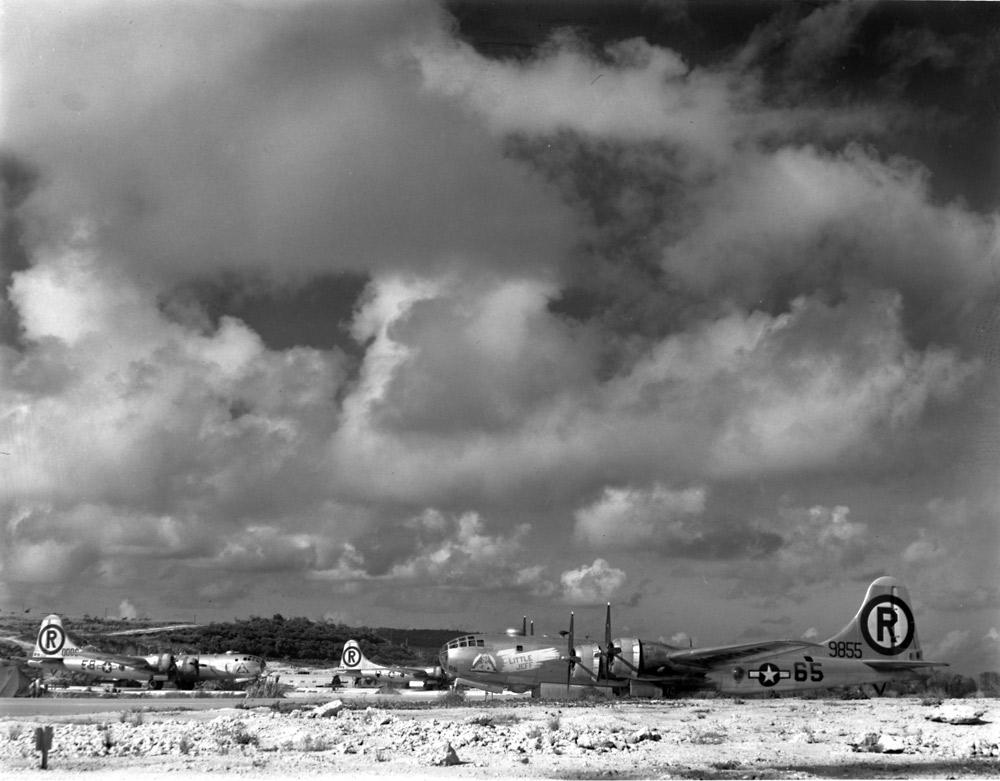
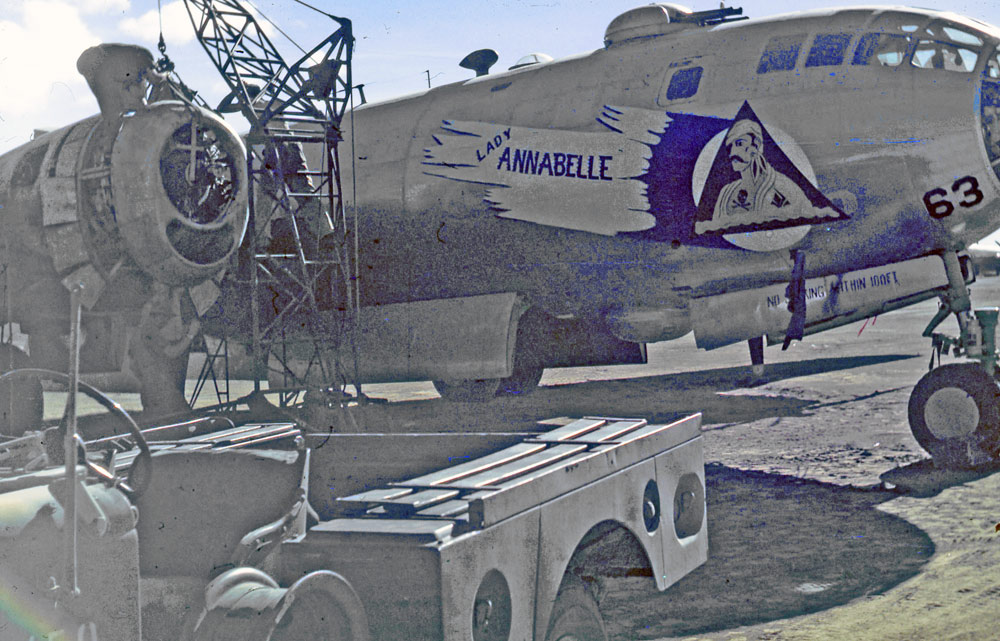
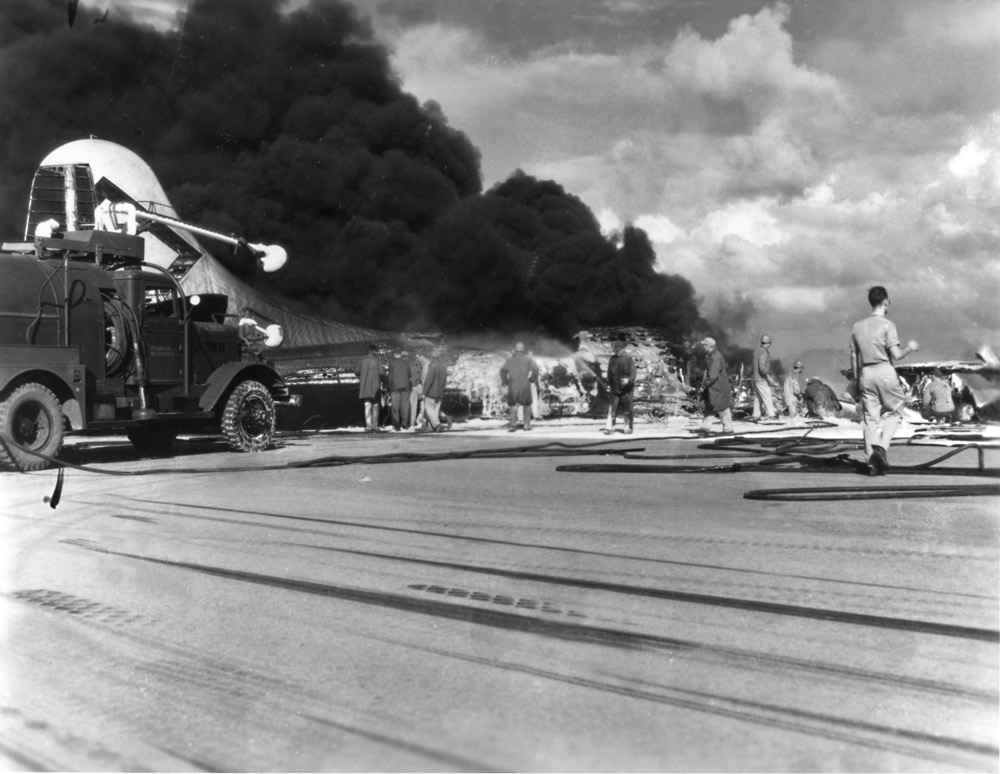
During the Pacific War In 1945 the U.S. B-29 air base at North Field on Tinian Island was the largest airport in the world. From its runways, the U.S. launched the B-29 atomic bomb attacks on Hiroshima and Nagasaki, the devastating B-29 firebomb raids on Japanese cities and the B-29 mine drops on strategic sea channels that collectively brought Japan to surrender and an end to the war.

PACIFIC WAR – OVERVIEW
Brief overview of the Pacific War 1941-1945 >

THE B-29 BOMBER
Tour and specs of the most advanced bomber of WW2 >

Capture and Construction
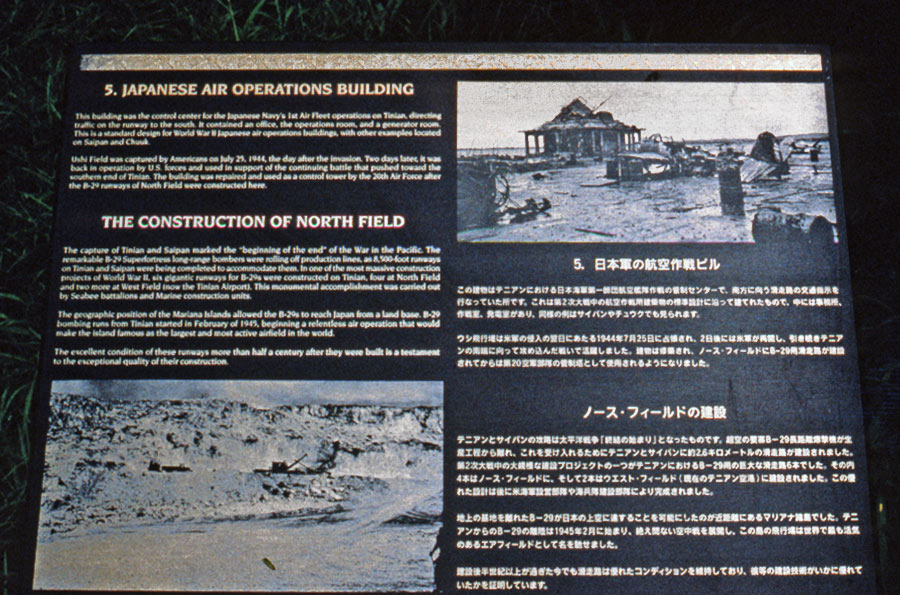
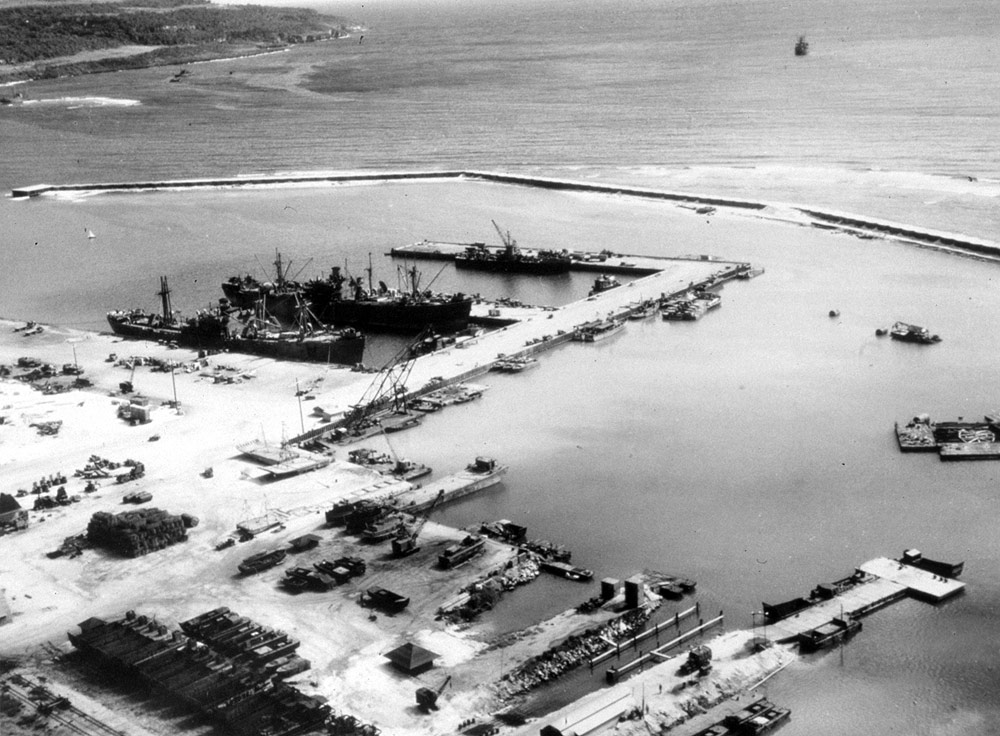
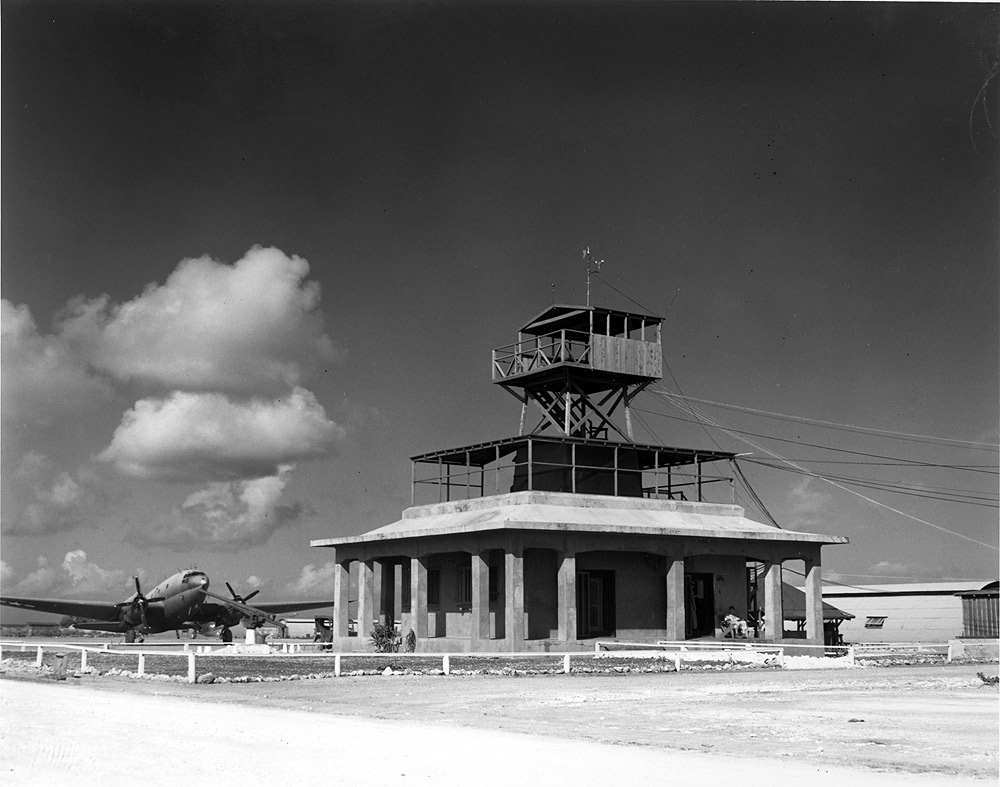
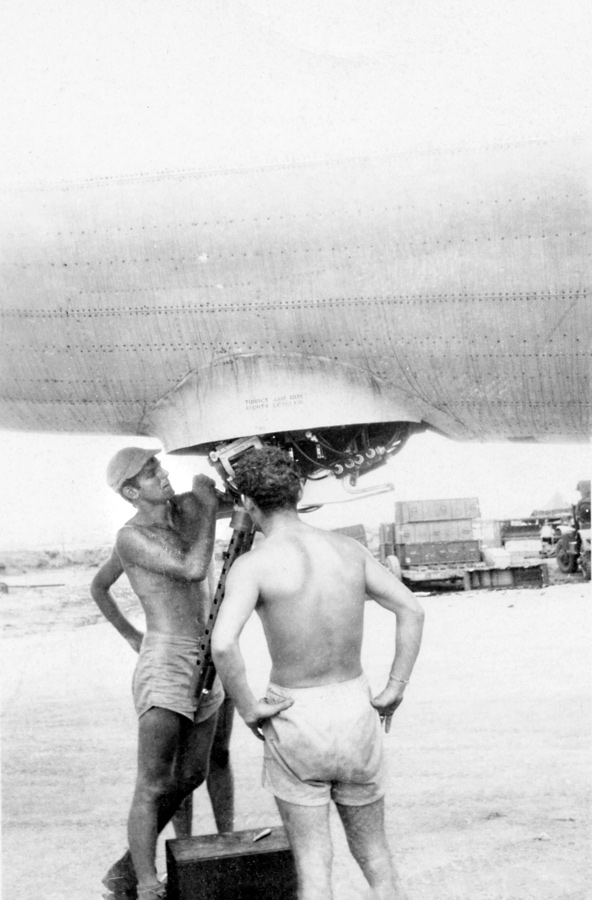
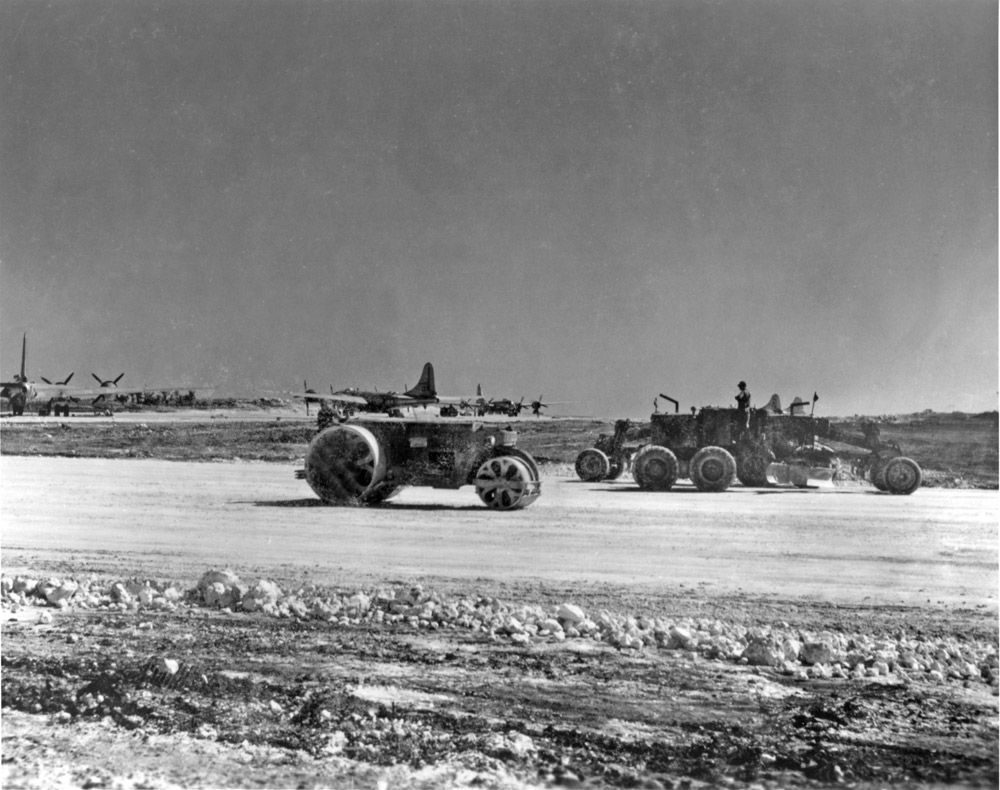
U.S. Marines’ capture of Tinian from Japan on July 24, 1944 (just following capture of neighboring Saipan and Guam) strategically put U.S. forces within striking range of the Japanese mainland by its new B-29 long range bomber. In a “Miracle of Construction”, 15,000 U.S. Seabees constructed Tinian’s North and West Field airbases, their runways, operation buildings, camps and roadways in record time, allowing B-29 combat missions over Japan from North Field to begin Feb. 4, 1945. Battalion runway builders hauled, blasted and packed down enough coral to fill three times the volume of Hoover Dam in six 8500 foot runways.

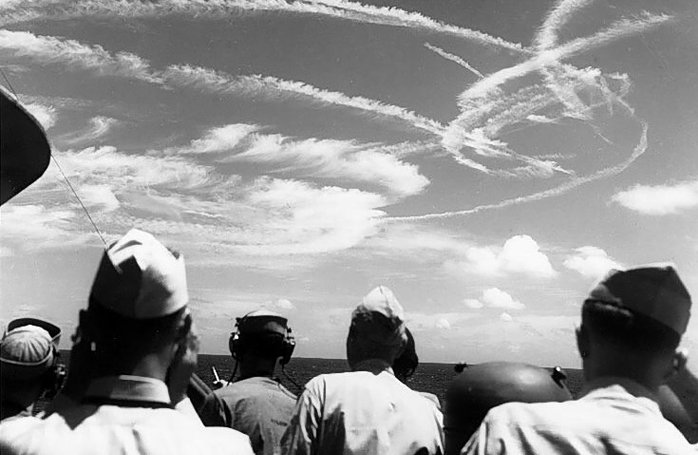
B-29s Landing on Tinian 1944

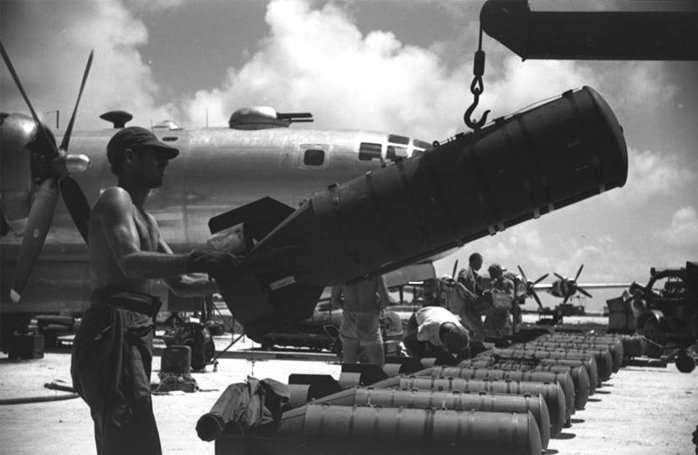
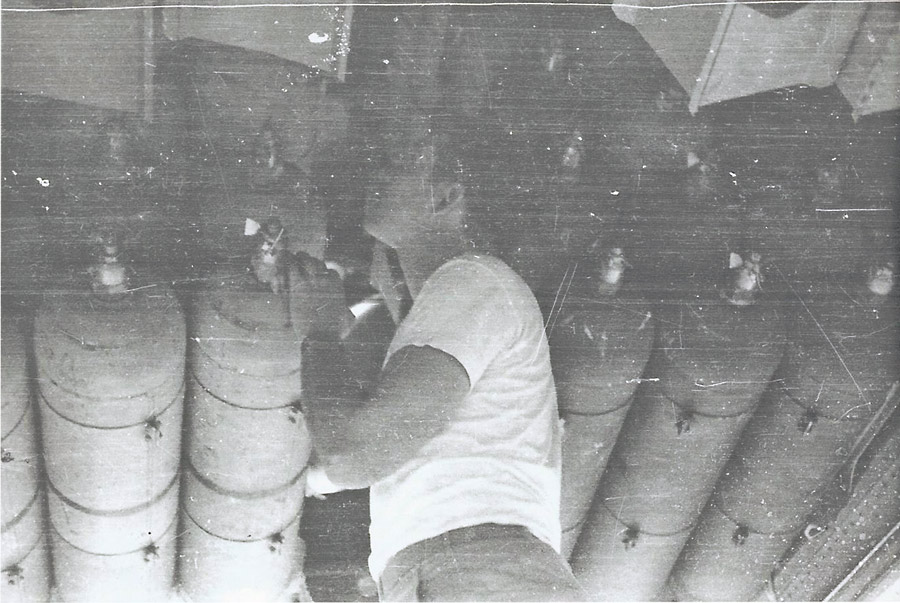
Loading cluster bombs © Irv Winkler. All Rights Reserved
North Field
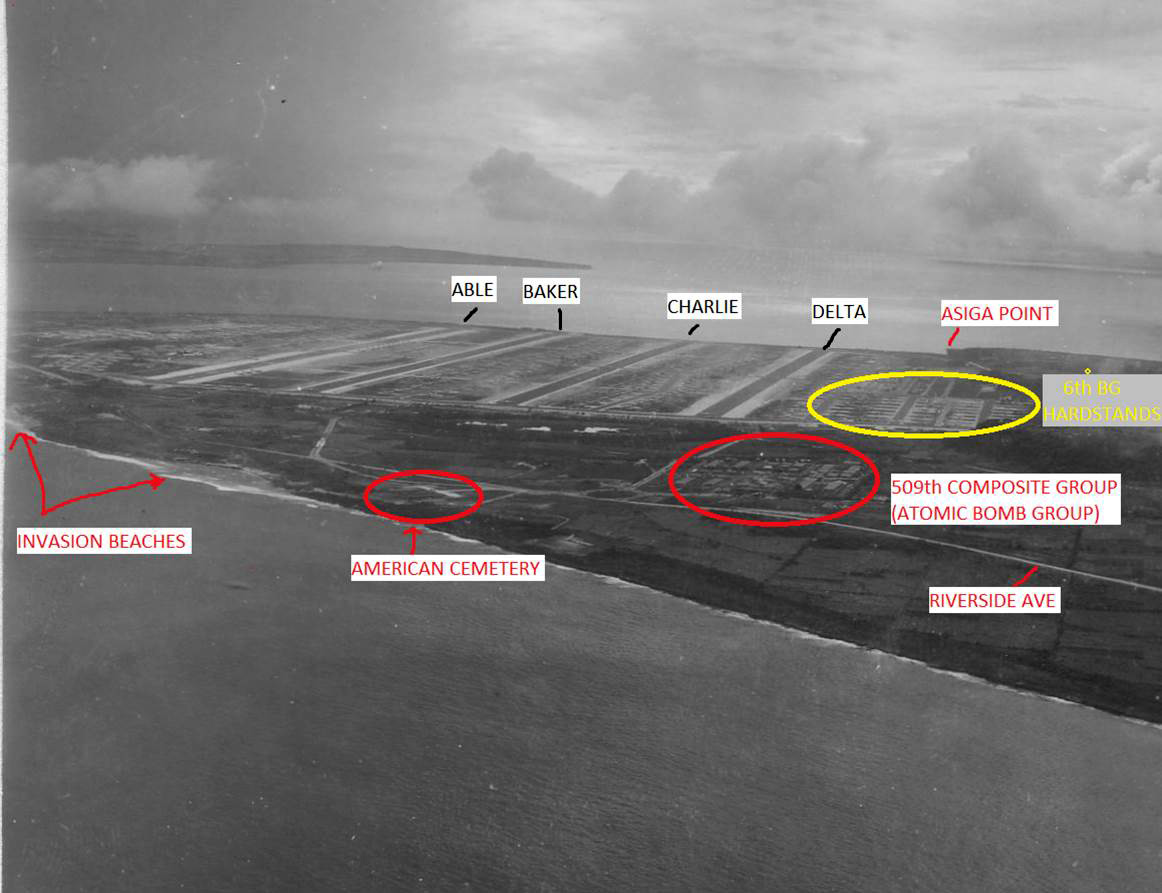
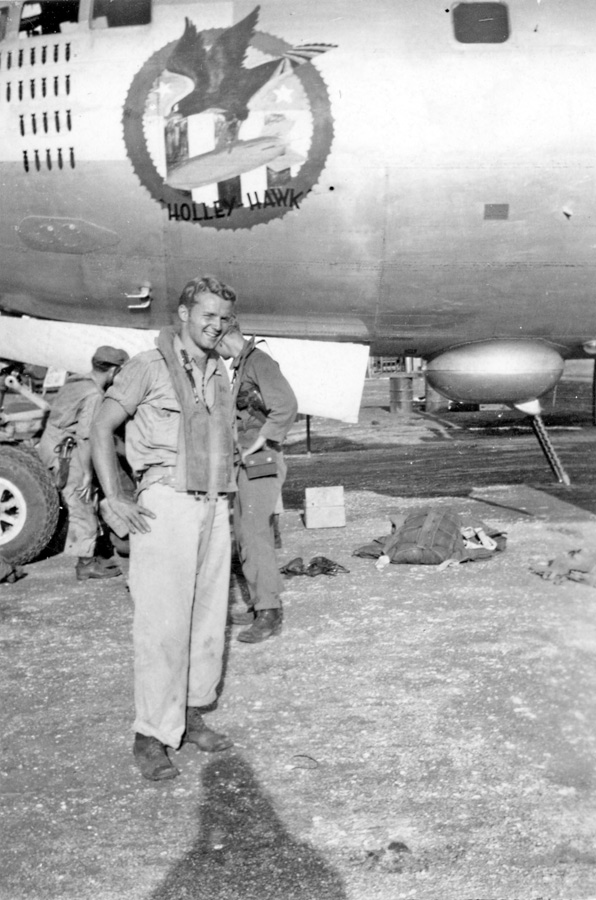
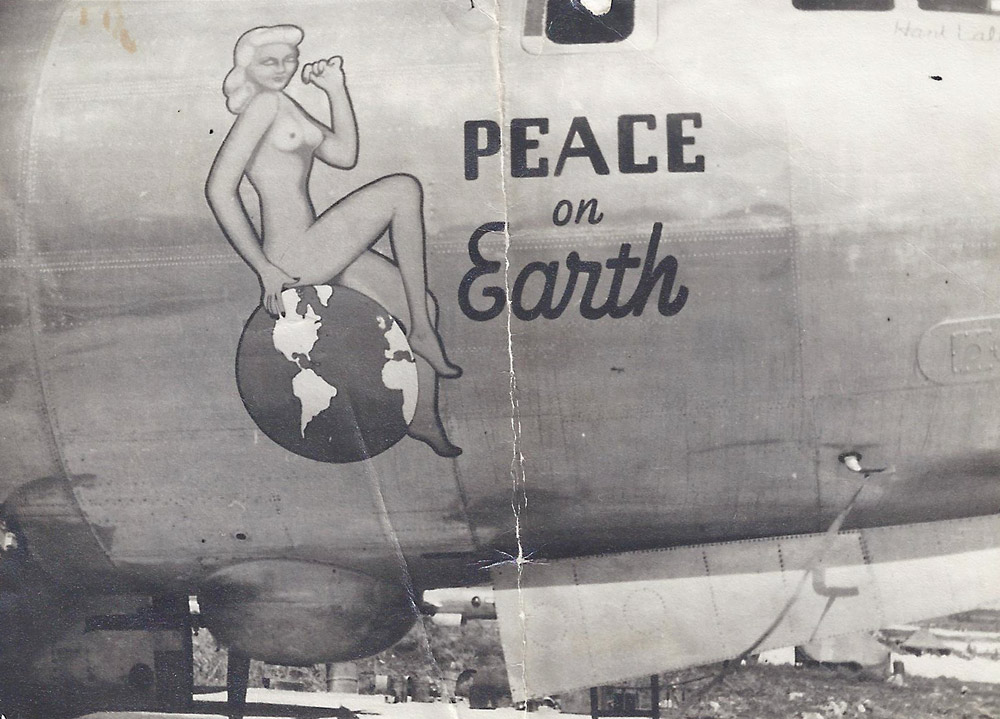
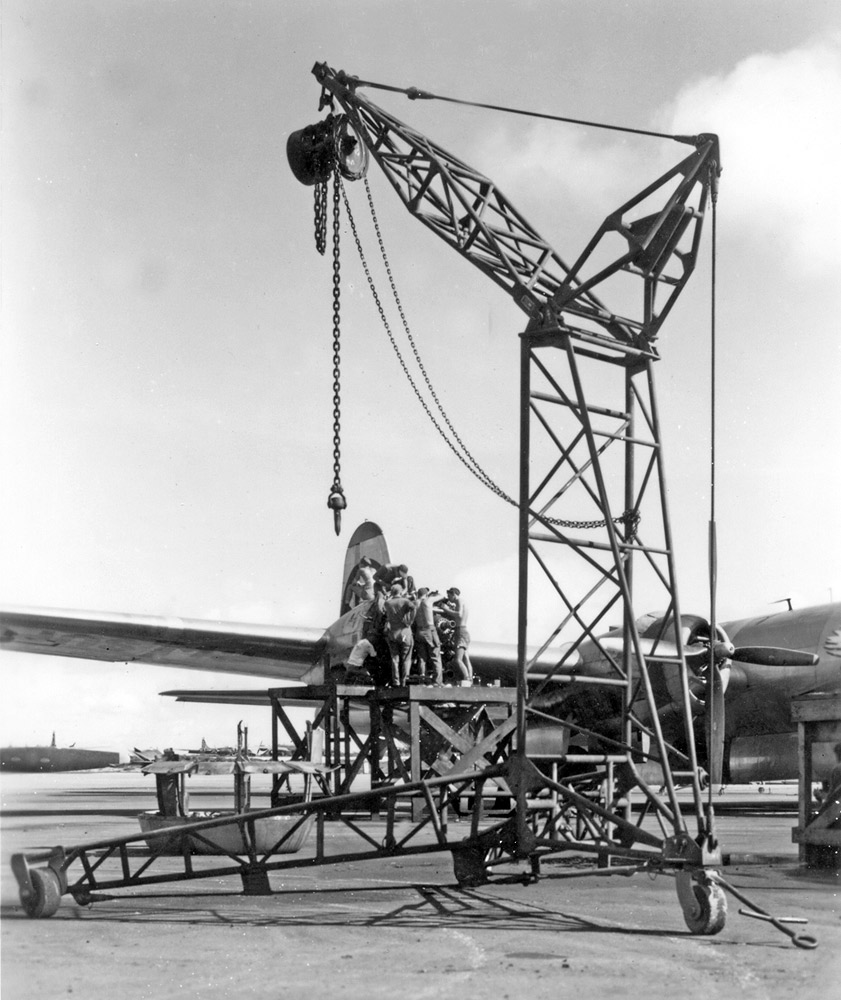
North Field was home to the Army Air Force 313th Bomb Wing, the top secret 509th Composite (atomic bomb) Group and associated Air Service Groups. The field had four 8500 foot runways and B-29 hardstands assigned to the 6th, 9th, 504th and 505th Bomb Groups. The 509th area of the field was isolated, heavily guarded and included atomic bomb assembly buildings and loading pits.
Bomb Group Camps
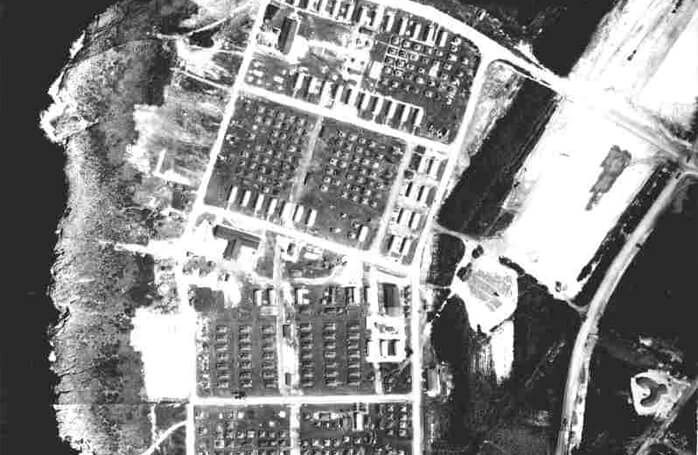
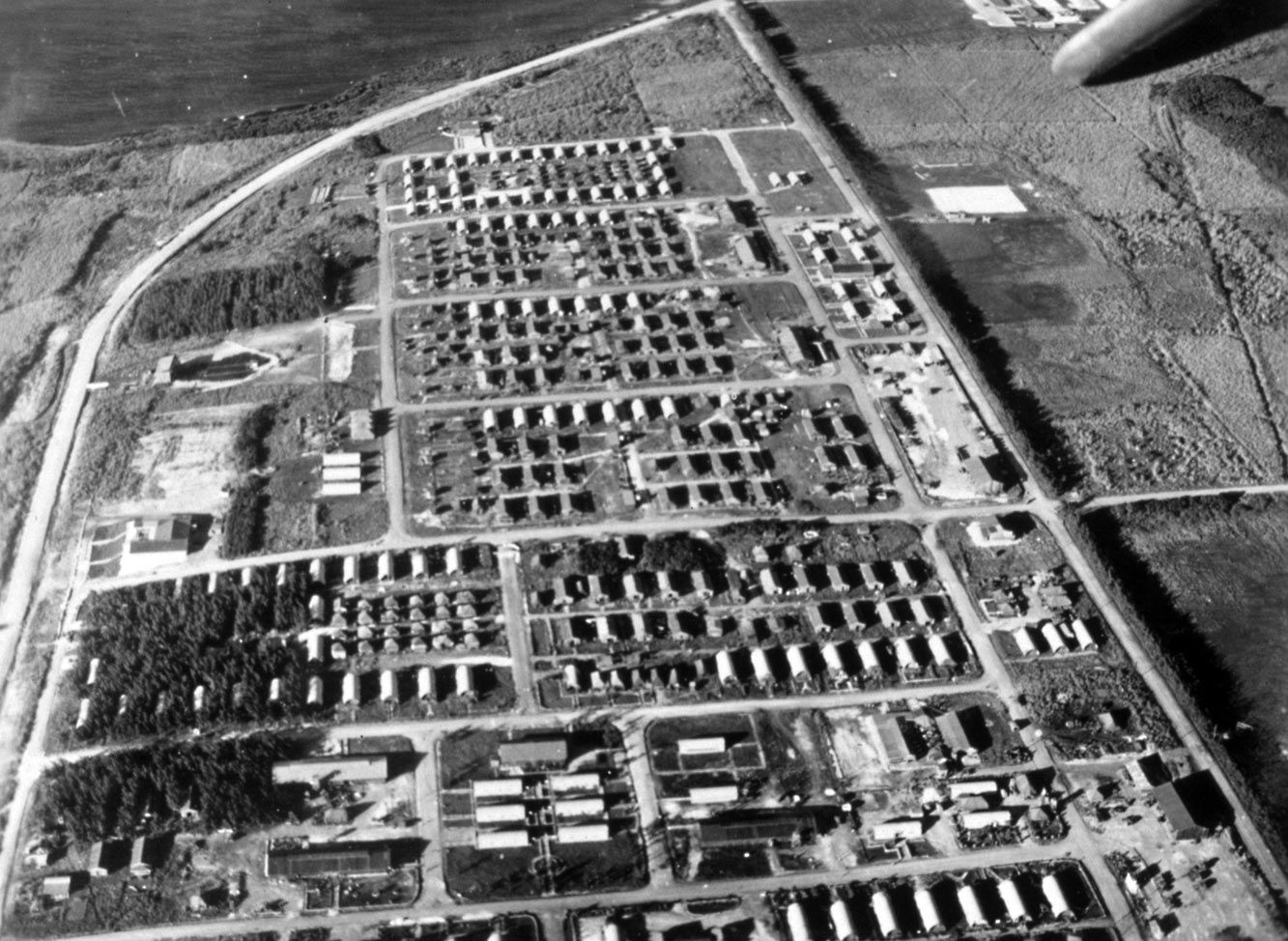
Each of the nine B-29 bomb groups stationed on Tinian Island in 1945 operated from independently functional group camps. Each camp included housing, medical, dental, operations and briefing facilities, entertainment and recreation facilities, mess halls, PX, shops, motor pool, post office, clubs and a religious chapel.

6th Bomb Group Living Area May 1945© Bill Webster. All Rights Reserved

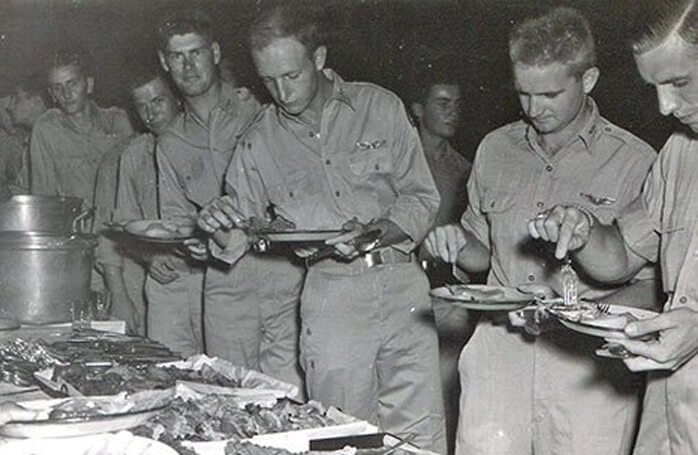
Tinian July 3, 1945 Officers Club ©Roscoe Booth, All Rights Reserved
Life on Tinian
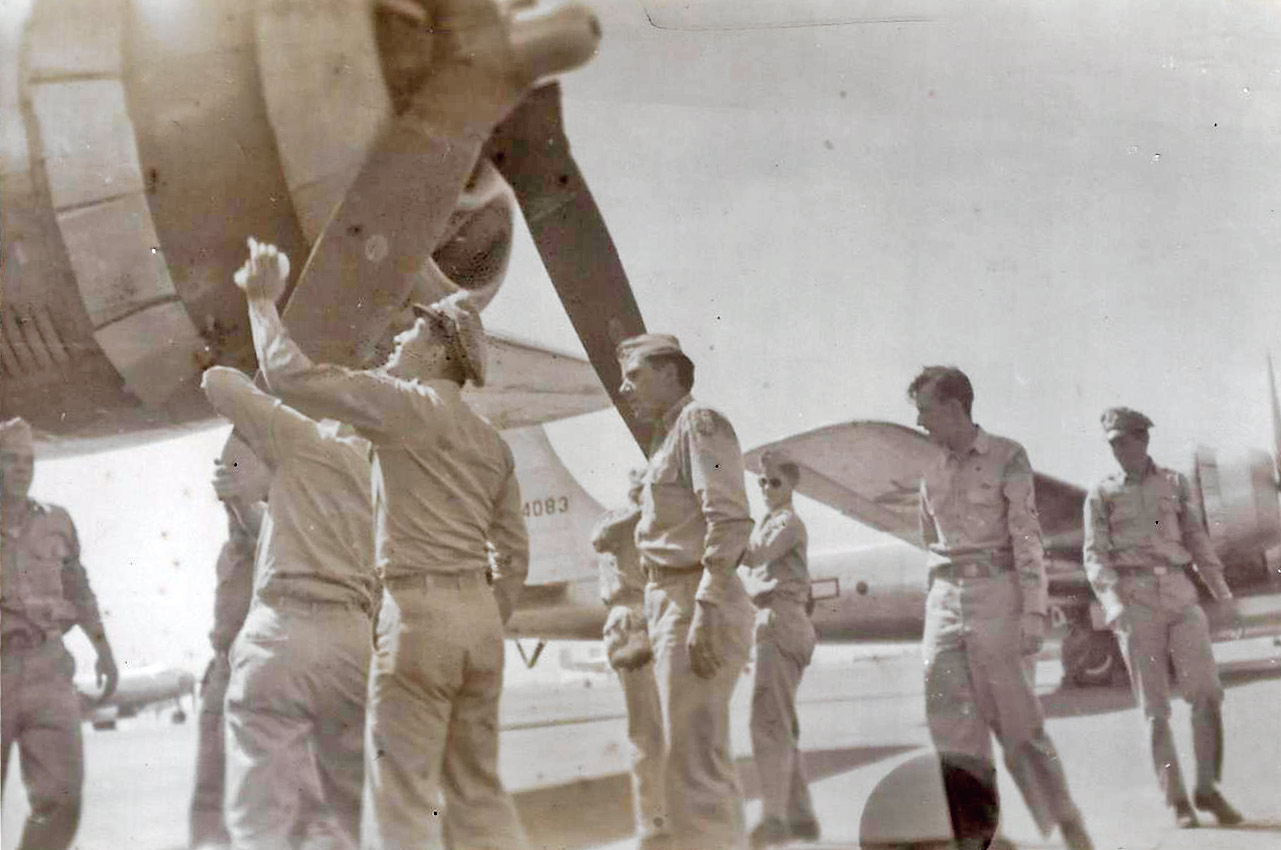
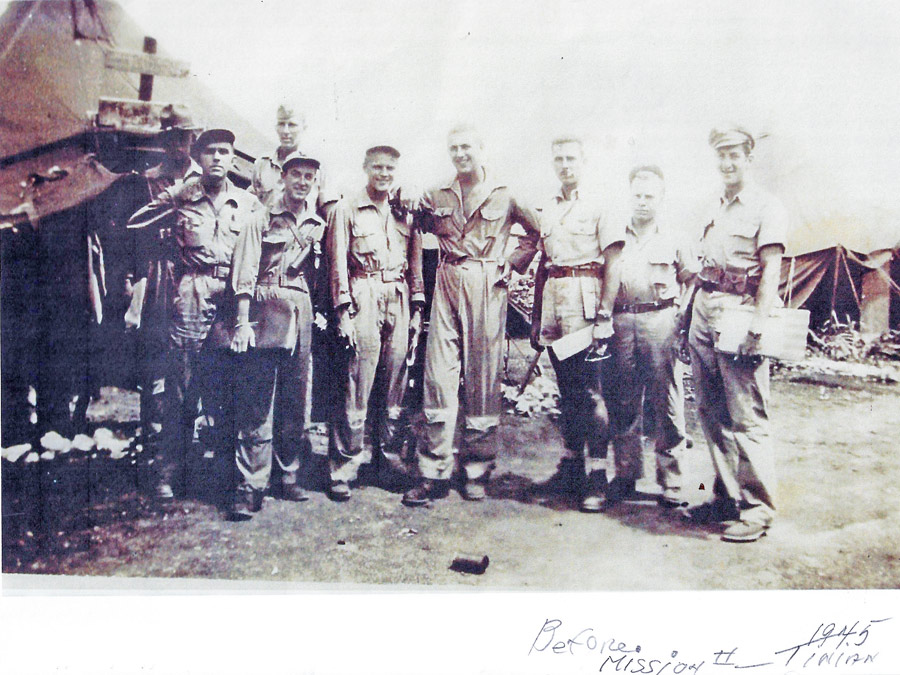
Prior to Seabee completion of the camps, aircrews housed in tents with dirt floors and primitive outdoor toilet facilities. Aircrews thereafter lived rather comfortable lives between combat missions, enjoying days at the beach, taking classes, going to clubs, church and recreation facilities provided in each camp. While brothers in flight, aircrews were separated into officer (flight deck) and enlisted men (gunners, radio operators) camp areas, including separate living quarters, mess halls and clubs.





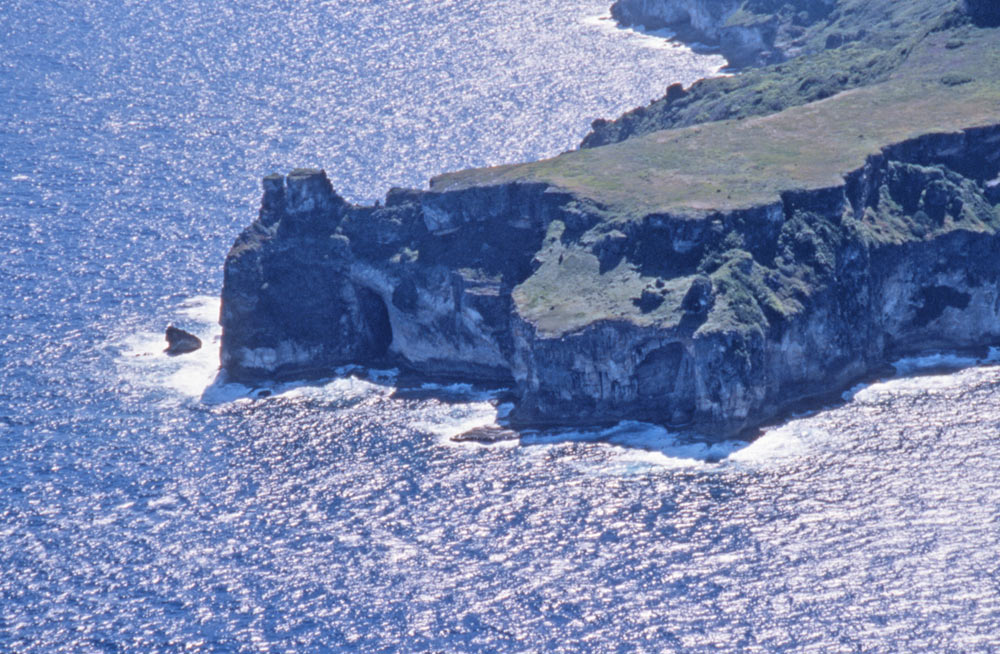
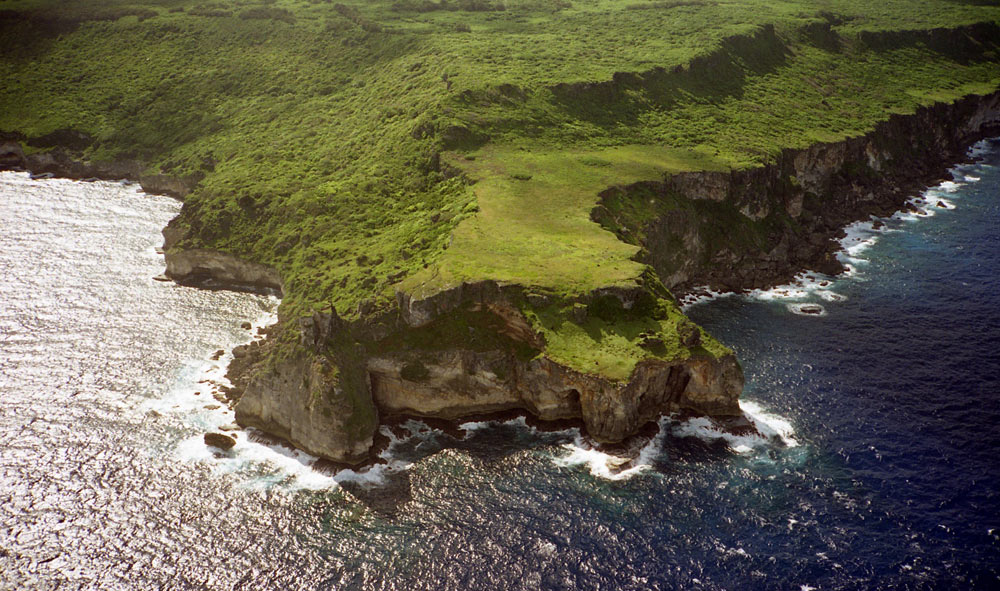
Present Day Tinian